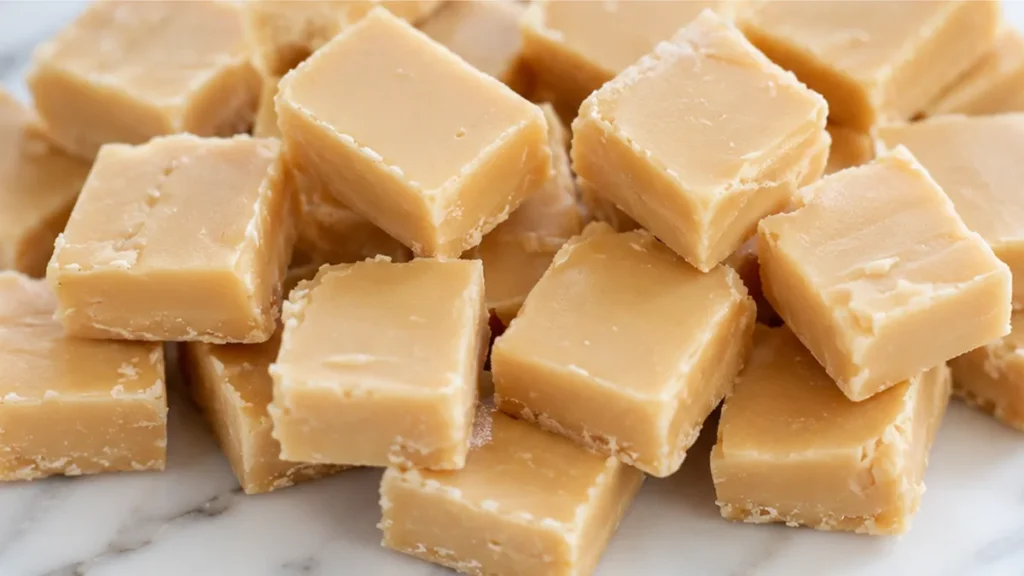
Penuche fudge is a classic confection known for its rich brown sugar and buttery flavor. This penuche fudge recipe delivers a creamy, melt-in-your-mouth texture.
Key takeaways
- Cook sugar mixture to the soft-ball stage (235-240°F) for proper setting.
- Cool the cooked sugar mixture to approximately 110°F before beating to prevent graininess.
- Beat the fudge vigorously after cooling to incorporate air and create a smooth texture.
- Use a candy thermometer for accurate temperature readings; precision is key.
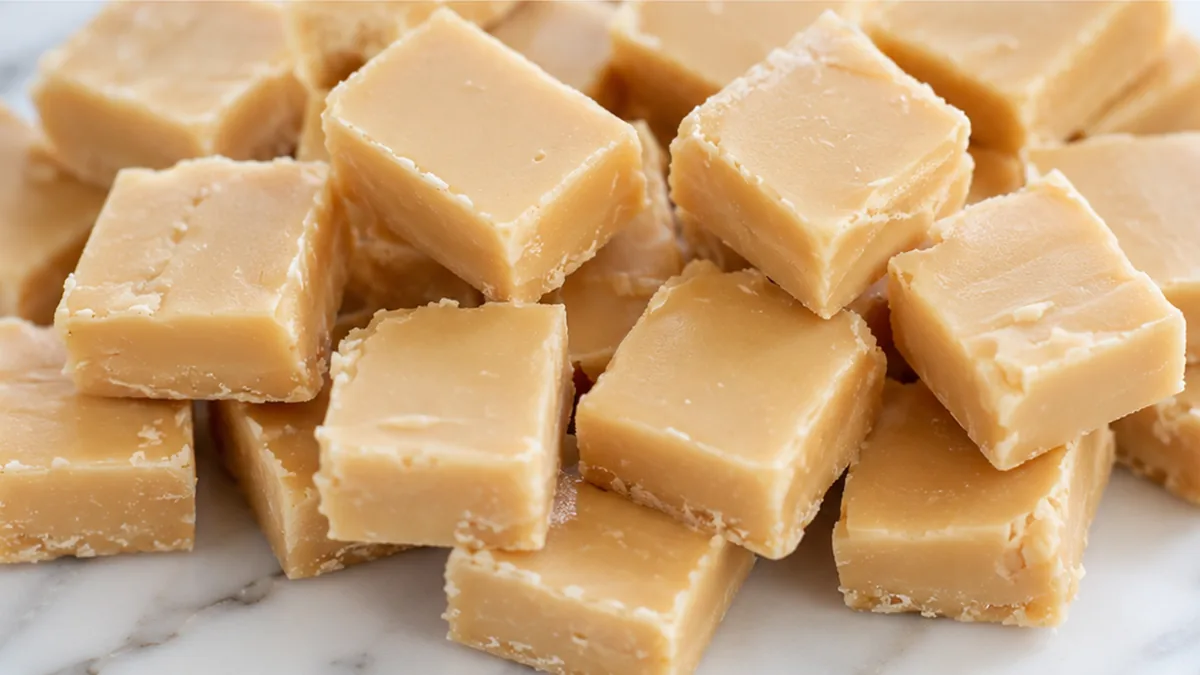
Heavenly Penuche Fudge: Creamy Vanilla Dream!
Ingredients
Method
- Line an 8” square pan with parchment paper.
- Prepare a large heat-safe bowl with cool water for a cold bath.
- Combine granulated sugar, brown sugar, milk, 4 tablespoons butter, corn syrup, and salt in a heavy-bottomed saucepan.
- Cook over medium heat, stirring constantly, until the mixture reaches a rolling boil.
- Attach a candy thermometer and cook without stirring until it reaches 238F (soft ball stage).
- Immediately remove from heat and place the pan in the cool water bath, avoiding water contact with the fudge.
- Add the remaining 2 tablespoons butter to the fudge without stirring.
Notes
– Do not stir the fudge once it reaches a boil and the thermometer is attached; stirring can cause crystallization and a grainy texture.
– Ensure your candy thermometer is accurate by testing it in boiling water (should read 212°F / 100°C). Accuracy is paramount for perfect soft-ball stage penuche fudge.
– Store penuche fudge in an airtight container at room temperature for up to 2 weeks, or refrigerate for longer freshness. It also freezes well for up to 3 months; thaw at room temperature. Nutrition information is an estimate, calculated automatically. Values vary with brands, substitutions and portion sizes.
The Science Behind Silky Penuche Fudge
Penuche fudge, also known as panocha or butterscotch fudge, relies on a delicate balance of sugar crystallization and precise temperature control. Unlike many other fudges that use a starter crystal or corn syrup to inhibit large sugar crystals, penuche achieves its characteristic smooth, almost creamy texture through the careful cooking of brown sugar and milk. The brown sugar, with its inherent molasses content, adds a distinct caramel-like flavor and contributes to the fudge’s softer set. The key is cooking the sugar mixture to the soft-ball stage (around 235-240°F or 113-116°C). This temperature ensures the sugar syrup has evaporated enough water to set firmly but not so much that it becomes brittle. Crucially, the mixture must be cooled undisturbed to around 110°F (43°C) *before* vigorous beating. This cooling period allows larger sugar crystals to dissolve, preventing a grainy texture. The subsequent beating incorporates air and encourages the formation of small, manageable sugar crystals, resulting in a smooth, melt-in-your-mouth consistency. The butter, added at the end, enriches the fudge and contributes to its creamy mouthfeel.
Troubleshooting
- Problem: Grainy Fudge
Fix: This usually occurs if the sugar mixture was stirred too much during the initial cooking or if it wasn’t cooled sufficiently before beating. Ensure you let the mixture cool undisturbed to the specified temperature before starting the vigorous stirring. - Problem: Fudge Too Soft/Won’t Set
Fix: The fudge likely wasn’t cooked to a high enough temperature. Use a reliable candy thermometer and aim for the soft-ball stage (235-240°F). If it’s still too soft after cooling completely, it may need to be re-melted and cooked slightly longer, though this can affect texture. - Problem: Fudge Too Hard/Brittle
Fix: The mixture was likely cooked beyond the soft-ball stage. Overcooking evaporates too much liquid, leading to a harder set. Next time, be sure to remove the mixture from heat precisely at the target temperature. - Problem: Scorched Sugar
Fix: This happens when the heat is too high or the mixture isn’t stirred consistently, especially the bottom. Use medium-low heat and stir frequently, paying attention to the bottom of the pan to prevent scorching the sugars.
Substitutions
- Granulated Sugar: You can substitute with an equal amount of caster sugar for a slightly finer texture, though the difference is minimal in this recipe. Avoid powdered sugar as it contains cornstarch.
- Light Brown Sugar: Dark brown sugar can be used, but it will result in a richer, slightly more molasses-forward flavor and a darker color. The texture should remain similar.
- Whole Milk: 2% milk can be used, but the fudge might be slightly less rich. Avoid non-fat milk, as the fat content contributes to the creamy texture.
- Kosher Salt: Fine sea salt or regular table salt can be substituted, but use slightly less (about ¾ teaspoon) as they are more concentrated in saltiness than kosher salt.
Pro tips
- Use a heavy-bottomed saucepan to prevent scorching and ensure even heat distribution for your penuche fudge.
- Do not stir the fudge once it reaches a boil and the thermometer is attached; stirring can cause crystallization and a grainy texture.
- Ensure your candy thermometer is accurate by testing it in boiling water (should read 212°F / 100°C). Accuracy is paramount for perfect soft-ball stage penuche fudge.
- Store penuche fudge in an airtight container at room temperature for up to 2 weeks, or refrigerate for longer freshness. It also freezes well for up to 3 months; thaw at room temperature.
This Penuche Vanilla Fudge recipe is a timeless classic that brings warmth and sweetness to any occasion. Master the soft ball stage, and you’ll be rewarded with a batch of perfectly creamy, delicious penuche fudge. Enjoy this delightful treat!
Frequently asked questions
Why is my penuche fudge grainy?
Graininess typically results from stirring the sugar mixture too much while it’s cooking or failing to cool it sufficiently before beating. Allowing the mixture to cool undisturbed to around 110°F before vigorous stirring is crucial for preventing large sugar crystals from forming.
My fudge didn’t set. What went wrong?
The most common reason is not cooking the sugar mixture to the correct temperature, the soft-ball stage (235-240°F). Ensure your candy thermometer is accurate and that the mixture reaches this temperature range before cooling and beating.
Can I use a different type of sugar?
While light brown sugar is traditional for its flavor, you can substitute dark brown sugar for a deeper taste. Using only granulated sugar will result in a different flavor profile, closer to a standard vanilla fudge.
How do I prevent the fudge from becoming too hard?
Overcooking is the main culprit for hard fudge. Be precise with your candy thermometer and remove the mixture from heat immediately once it reaches the soft-ball stage. Avoid boiling the mixture vigorously for too long after reaching temperature.
Try this next: Mint Brownies: Fudgy & Irresistible!
More from Gluten-Free Desserts & Sweets →