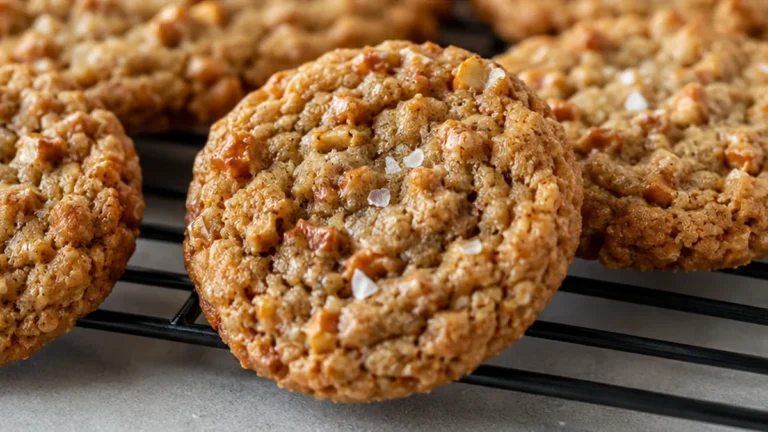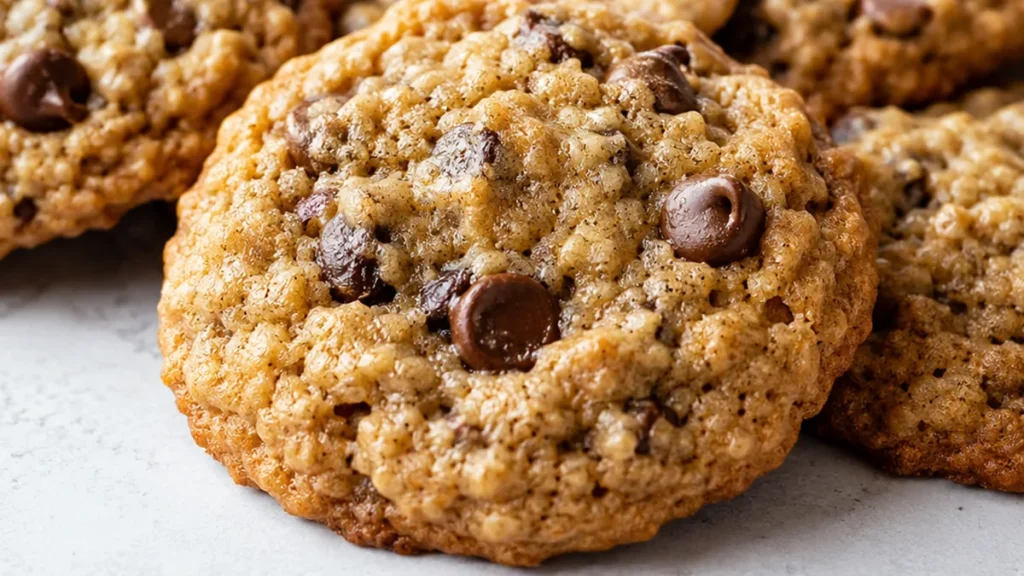
These oatmeal cookies use almond flour for a chewy, gluten-free result. They bake quickly, offering a satisfying option for a healthier treat.
Key takeaways
- The combination of butter and coconut oil creates a tender base.
- Brown sugar is crucial for moisture retention and chewiness.
- Do not overmix the dough once almond flour is added.
- Bake until edges are set, not until the center is firm, for optimal chewiness.
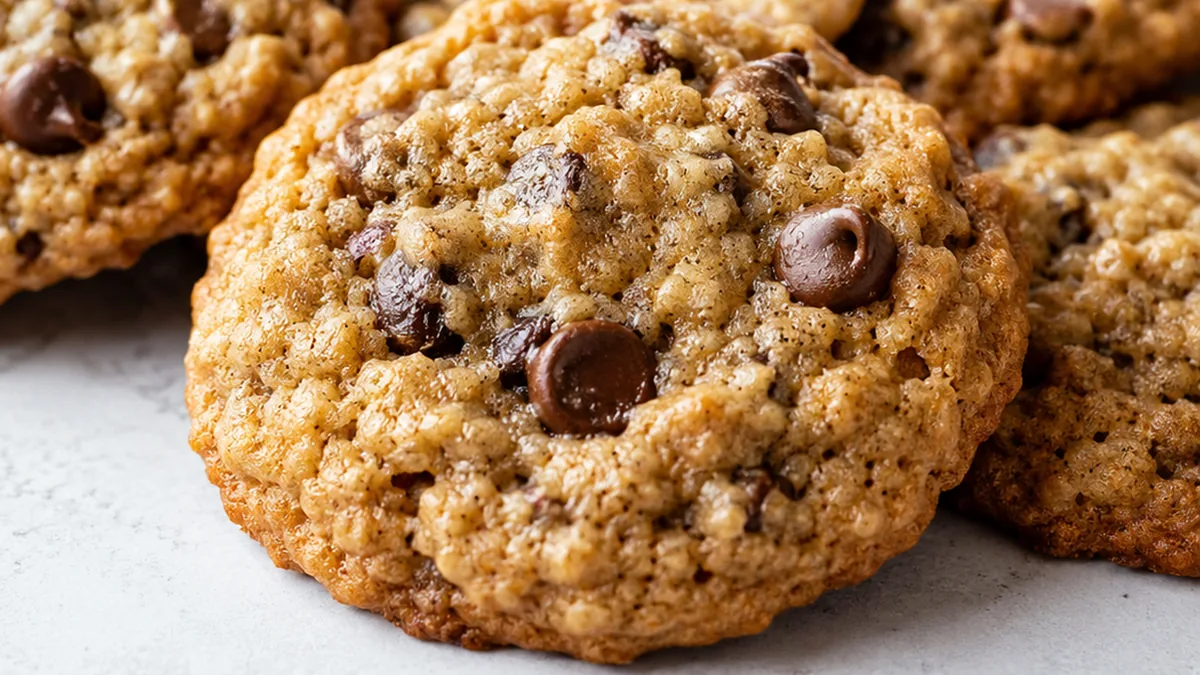
Chewy Almond Flour Oatmeal Cookies
Ingredients
Method
- Preheat oven to 350°F (175°C). Line a baking sheet with parchment paper or a silicone baking mat.
- In the bowl of a stand mixer, cream together the softened butter, coconut oil, and brown sugar until light and fluffy. Add the vanilla extract and eggs, mixing until just incorporated.
- Mix in the baking soda and kosher salt. Gradually add the almond flour, 1 cup at a time, beating well after each addition. Fold in the rolled oats and chocolate chips or raisins until evenly distributed.
- Form the dough into tablespoon-sized rounds and place on the lined baking sheet about 3 inches apart. Bake for 11-13 minutes, or until the edges are golden brown. Cool completely on a wire rack before serving.
Notes
– If the cookie dough feels too sticky, chill it in the refrigerator for 15-20 minutes. This makes it much easier to form into uniform rounds without adding more flour.
– These cookies are best on the day they are baked, but can be stored in an airtight container at room temperature for up to 3 days. For longer storage, freeze the baked cookies for up to 2 months and reheat gently in the microwave or oven. Nutrition information is an estimate, calculated automatically. Values vary with brands, substitutions and portion sizes.
The Technique That Makes Them Chewy
The key to achieving wonderfully chewy oatmeal cookies, especially with almond flour, lies in a few critical factors: fat content, sugar type, and ingredient hydration. The combination of softened butter and coconut oil provides a rich fat base that coats the almond flour particles, preventing them from absorbing too much moisture and becoming tough. Coconut oil, in particular, contributes to a softer texture than butter alone. Brown sugar is essential here; its molasses content not only adds a caramel-like depth of flavor but also attracts and retains moisture, a crucial element for chewiness. Unlike granulated sugar, which promotes crispness, brown sugar ensures the cookies remain soft and pliable. The eggs act as binders and add moisture, contributing to the cookie’s structure and chew. Baking soda, when combined with the acidic components (like brown sugar), causes the cookies to spread and brown, further enhancing their texture. Finally, the gluten-free rolled oats absorb some moisture during baking and provide a pleasant chewiness without developing toughness, which would be a concern with traditional wheat flour.
Troubleshooting
- Cookies are too crumbly: This often happens if the almond flour is not sufficiently hydrated or if there isn’t enough moisture from the fats and eggs. Ensure your butter and coconut oil are properly softened (not melted) and fully incorporated. You might also need to slightly increase the wet ingredients or ensure your almond flour is fresh and not dried out.
- Cookies spread too much and are thin: Over-creaming the butter and sugar can incorporate too much air, causing excessive spreading. Also, if the dough is too warm when baked, it will spread rapidly. Chill the dough for at least 30 minutes before baking to help control spread.
- Cookies are hard and cakey: This can be due to too much flour, not enough fat or sugar, or overbaking. Measure your almond flour accurately by weight if possible. Ensure you are using brown sugar, not granulated, for chewiness. Bake only until the edges are set and lightly golden, not until the centers are firm.
- Oats are too hard: If you prefer softer oats, you can lightly toast the gluten-free rolled oats before adding them to the dough, or soak them briefly in a tablespoon of milk or water for a few minutes. This pre-softens them slightly.
Substitutions
- Butter: You can substitute the butter with an equal amount of additional softened coconut oil or a vegan butter alternative. The cookies may have a slightly different flavor profile and texture, potentially a bit softer.
- Coconut Oil: If you don’t have coconut oil, you can use an equal amount of softened butter. This will result in a cookie that is slightly less tender and may have a more pronounced buttery flavor.
- Brown Sugar: A mix of granulated sugar and molasses (about 3/4 cup granulated + 1-2 tablespoons molasses) can mimic brown sugar, but the texture might be slightly less chewy. Coconut sugar is also a viable alternative, offering a similar caramel note.
- Chocolate Chips/Raisins: Chopped nuts (like walnuts or pecans), dried cranberries, or shredded coconut can be used instead of chocolate chips or raisins for a different flavor and texture profile.
Pro tips
- For the best texture, ensure your butter and coconut oil are properly softened but not melted, making them easier to cream together smoothly.
- If the cookie dough feels too sticky, chill it in the refrigerator for 15-20 minutes. This makes it much easier to form into uniform rounds without adding more flour.
- These cookies are best on the day they are baked, but can be stored in an airtight container at room temperature for up to 3 days. For longer storage, freeze the baked cookies for up to 2 months and reheat gently in the microwave or oven.
Enjoy these delightful almond flour oatmeal cookies as a wholesome treat for any occasion. Feel free to experiment with other additions like dried cranberries or white chocolate chips to personalize your batch! Share your creations with us!
Frequently asked questions
Can I make these cookies vegan?
Yes, you can make these cookies vegan by substituting the butter with a vegan butter alternative and the eggs with a flax egg (1 tablespoon ground flaxseed mixed with 3 tablespoons water, let sit for 5 minutes). Ensure your chocolate chips are also dairy-free if using.
Why are my almond flour cookies spreading too much?
Excessive spreading is often caused by the dough being too warm, too much leavening, or incorrect fat-to-flour ratio. Chilling the dough for at least 30 minutes before baking helps firm up the fats and reduces spread, leading to thicker, chewier cookies.
How should I store these oatmeal cookies?
Store cooled cookies in an airtight container at room temperature for up to 3-4 days. Adding a slice of bread to the container can help maintain their chewiness by providing a source of moisture.
Can I use a different type of flour?
While this recipe is specifically formulated for almond flour to achieve a chewy, gluten-free result, you could experiment with a gluten-free all-purpose flour blend. However, the texture and chewiness will likely differ significantly.
Try this next: ” Chewy Gluten-Free Molasses Cookies”
More from Gluten-Free Desserts & Sweets →