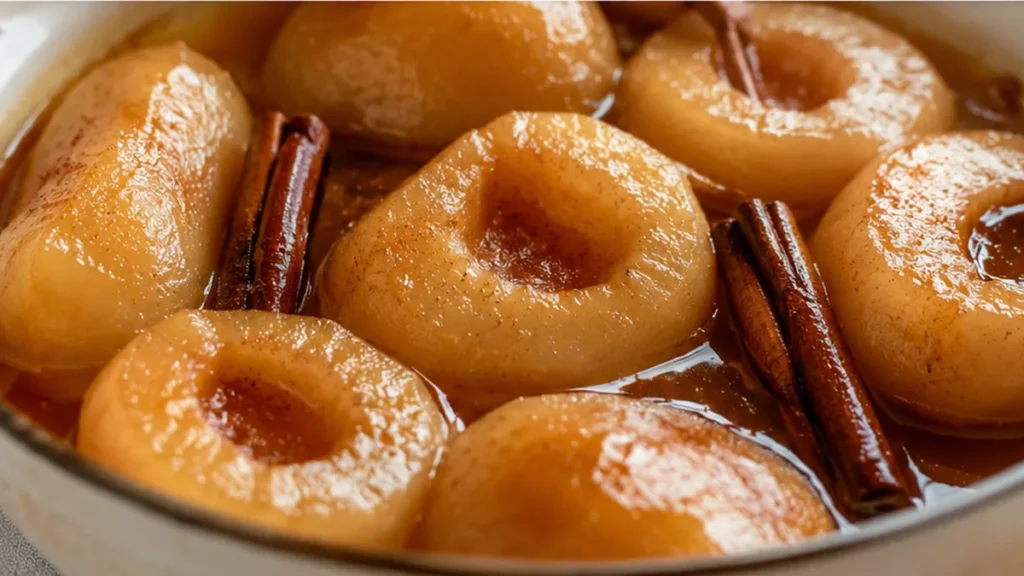
These poached pears are a simple yet impressive dessert. This recipe uses firm pears simmered in spiced apple cider syrup, creating a tender, aromatic treat.
Key takeaways
- Gently poach pears in liquid just below a simmer to ensure even cooking and prevent mushiness.
- Infuse the poaching liquid with spices and sugar for maximum flavor penetration.
- Keep pears fully submerged to prevent discoloration and ensure uniform tenderness.
- Cook until fork-tender but still holding their shape for the best texture.
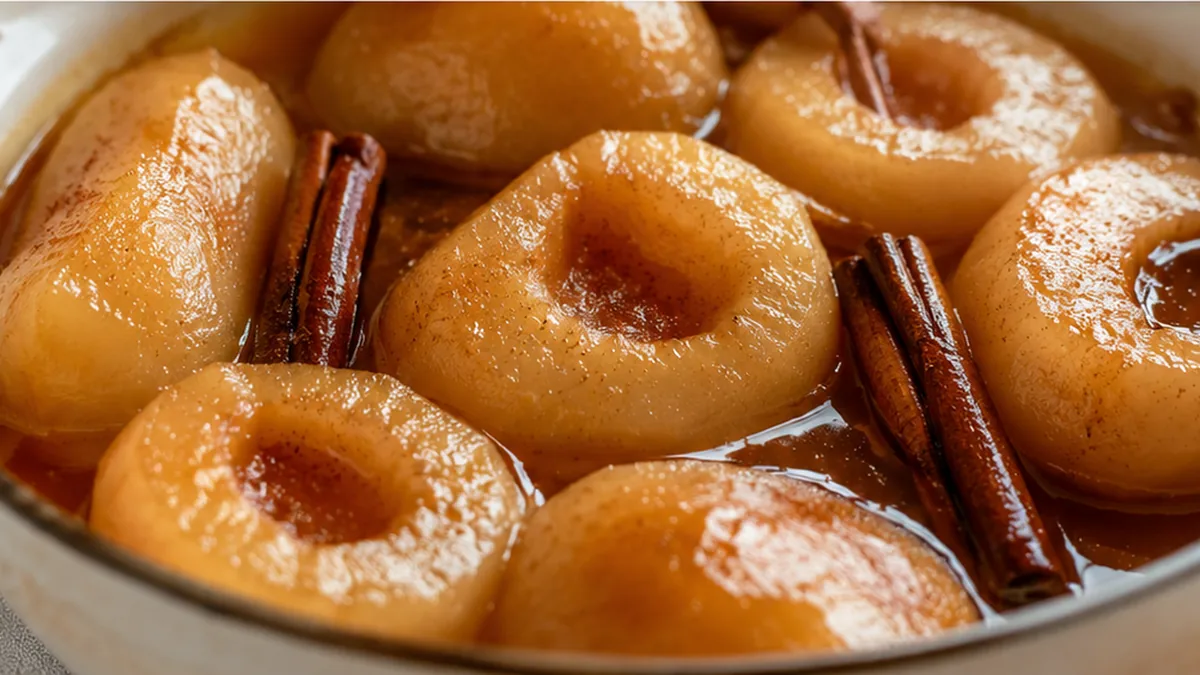
Heavenly Poached Pears: A Dessert Dream!
Ingredients
Method
- In a large heavy-bottomed pot over medium-high heat, combine the apple cider, brown sugar, cinnamon, cardamom, cinnamon stick and vanilla. Bring to a boil, stirring occasionally to dissolve the sugar.
- Carefully place the pear halves into the liquid. Reduce the heat to medium and bring to a simmer. Cover and cook for 20–25 minutes, flipping the pears halfway through, until they are tender and can be easily pierced with a knife.
- Using a slotted spoon, transfer the pears to a large bowl and set aside.
- Increase the heat to medium-high and boil the poaching liquid for about 10 minutes, until it has reduced by about half. Remove the cinnamon stick.
- Pour the reduced poaching liquid over the pears. Cover and let cool to room temperature. Serve warm or refrigerate and serve chilled.
Notes
– For a richer flavor profile, you can add a star anise or a few cloves to the poaching liquid. Experiment with different spices to personalize your poached pears. – Store leftover poached pears in an airtight container with their syrup in the refrigerator for up to 5 days. They can be reheated gently on the stovetop or served chilled. I’ve found they actually taste even better the next day as the flavors meld. Nutrition information is an estimate, calculated automatically. Values vary with brands, substitutions and portion sizes.
The Science of Perfectly Poached Pears
Poaching is a gentle cooking method where food is submerged in a liquid at a controlled temperature, typically below simmering. For pears, this technique is crucial for several reasons. Firstly, it allows the pears to cook evenly and tenderly without becoming mushy. The liquid, in this case, apple cider infused with spices and sugar, not only cooks the pears but also imparts flavor and a beautiful color. The sugar in the poaching liquid helps to draw out some of the pear’s natural moisture through osmosis, while simultaneously softening the fruit’s cell walls. This process, combined with the low, controlled heat, prevents the pears from breaking down too quickly. Maintaining a temperature just below a simmer (around 180-190°F or 82-88°C) is key. If the liquid boils vigorously, the pears will agitate, potentially leading to uneven cooking and a less elegant presentation. The goal is a gentle bubbling, allowing the heat to penetrate the pear flesh gradually, softening it to a fork-tender consistency while retaining its shape.
Troubleshooting
- Problem: Pears are too hard or not cooking through.
Fix: Ensure your poaching liquid is maintained at a consistent temperature just below a simmer. If it cooled too much, gently reheat it. Extend the poaching time, checking for tenderness every 10-15 minutes. Using firmer pear varieties like Bosc or Anjou can also help, as they hold their shape better. - Problem: Pears are too soft or falling apart.
Fix: This usually means the liquid was too hot, causing the pears to overcook. Reduce the heat immediately. For future batches, ensure the liquid is barely simmering. You can also try poaching for a shorter duration, checking for doneness more frequently. - Problem: Pears are not flavorful or bland.
Fix: Ensure all the spices (cinnamon, cardamom) and the cinnamon stick are added to the poaching liquid. Allow the liquid to steep with the spices for at least 15-20 minutes before adding the pears. Adding vanilla extract towards the end of poaching preserves its delicate aroma. - Problem: Pears are discolored or unevenly colored.
Fix: Pears can oxidize and brown when exposed to air. Ensure the pears are fully submerged in the poaching liquid throughout the cooking process. You can place a piece of parchment paper directly on top of the pears and liquid to minimize air exposure.
Substitutions
- Poaching Liquid: Instead of apple cider, you can use white wine, grape juice, or even water. Using wine will add a subtle complexity, while juice will offer a different fruit flavor. The result will be pears poached in the chosen liquid, potentially with a less pronounced apple flavor.
- Sweetener: Granulated sugar or honey can replace brown sugar. Honey will impart a distinct flavor, while granulated sugar will result in a cleaner sweetness. The pears will be sweet, but the caramel notes from brown sugar will be absent.
- Spices: Star anise, cloves, or a strip of orange zest can be used in place of or in addition to cinnamon and cardamom. This will alter the aromatic profile of the poached pears, offering different warm spice notes.
- Vanilla Extract: Almond extract or a splash of brandy can be used. Almond extract will lend a nutty aroma, while brandy will add a touch of warmth and depth. The final flavor will be nuanced by the chosen extract or spirit.
Pro tips
- Choose firm, ripe pears like Bosc or Anjou that hold their shape well during poaching. Overripe pears will turn mushy. Ensure the pears are easily pierced with a knife but not falling apart, indicating perfect tenderness.
- For a richer flavor profile, you can add a star anise or a few cloves to the poaching liquid. Experiment with different spices to personalize your poached pears. – Store leftover poached pears in an airtight container with their syrup in the refrigerator for up to 5 days. They can be reheated gently on the stovetop or served chilled. I’ve found they actually taste even better the next day as the flavors meld.
Elevate your dessert game with these wonderfully spiced poached pears. They offer a comforting yet sophisticated end to any meal, making them a perfect addition to your recipe repertoire. Enjoy this delightful fusion of fruit and spice!
Frequently asked questions
What kind of pears work best for poaching?
Firm, ripe pears that hold their shape well are ideal. Varieties like Bosc, Anjou, or Bartlett (when not overly ripe) are excellent choices. Avoid very soft or mealy pears, as they tend to break down too easily during the poaching process, resulting in a less visually appealing dessert.
How long does it take to poach pears?
The poaching time can vary depending on the size and ripeness of the pears, typically ranging from 20 to 40 minutes. Pears should be tender enough to be easily pierced with a fork but still firm enough to hold their shape. It’s best to check for doneness periodically.
Can I make the poaching liquid ahead of time?
Yes, you can prepare the poaching liquid, including the spices, several hours or even a day in advance. This allows the flavors to meld and deepen. Simply reheat the liquid gently before adding the prepared pears to poach.
What should I do with the leftover poaching liquid?
Don’t discard the flavorful poaching liquid! You can reduce it by simmering it further until it thickens into a syrup. This syrup is delicious drizzled over the poached pears, ice cream, yogurt, or pancakes, adding an extra layer of spiced apple flavor.
Try this next: Heavenly Gluten-Free Peach Crisp!
More from Gluten-Free Desserts & Sweets →