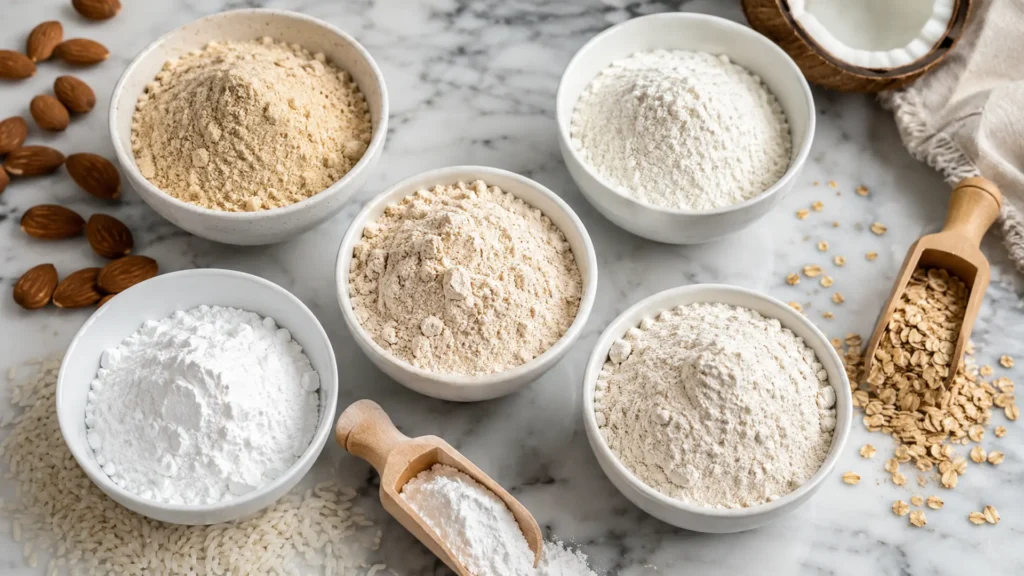
The first thing to know about gluten free flour is that there is no single one that swaps straight into a wheat recipe and behaves itself. Wheat flour does two jobs at once, providing both structure and starch through gluten, and no one gluten-free flour does both. That is why a great gluten-free flour is almost always a blend: a base flour for flavor and substance, a starch for lightness, and a binder like xanthan gum to replace the stretch that gluten used to give. Once you understand that simple formula, gluten-free baking stops being a gamble and starts being predictable.
This guide walks through the main types of gluten-free flour and what each is good for, how xanthan gum and other binders work, how to build or buy a blend that actually performs, how to substitute it in a recipe, and how to fix the usual gritty, crumbly, or gummy results. Whether you are newly diagnosed with celiac disease or just cooking for someone who is, this is the map.
Why You Cannot Just Swap One Gluten-Free Flour for Wheat
In wheat flour, gluten is the protein network that traps gas, stretches, and holds a baked good together, giving bread its chew and cake its tender crumb. Gluten-free flours have no gluten, so a cup of plain rice flour or almond flour dropped into a cake recipe gives you something dense, crumbly, and often gritty. Each gluten-free flour also brings its own weight, absorbency, and flavor, so they are not interchangeable with each other either. The reliable path is never to reach for a single substitute, but to use a balanced blend or a quality all-purpose gluten-free flour engineered to mimic what wheat does.
The Main Types of Gluten-Free Flour
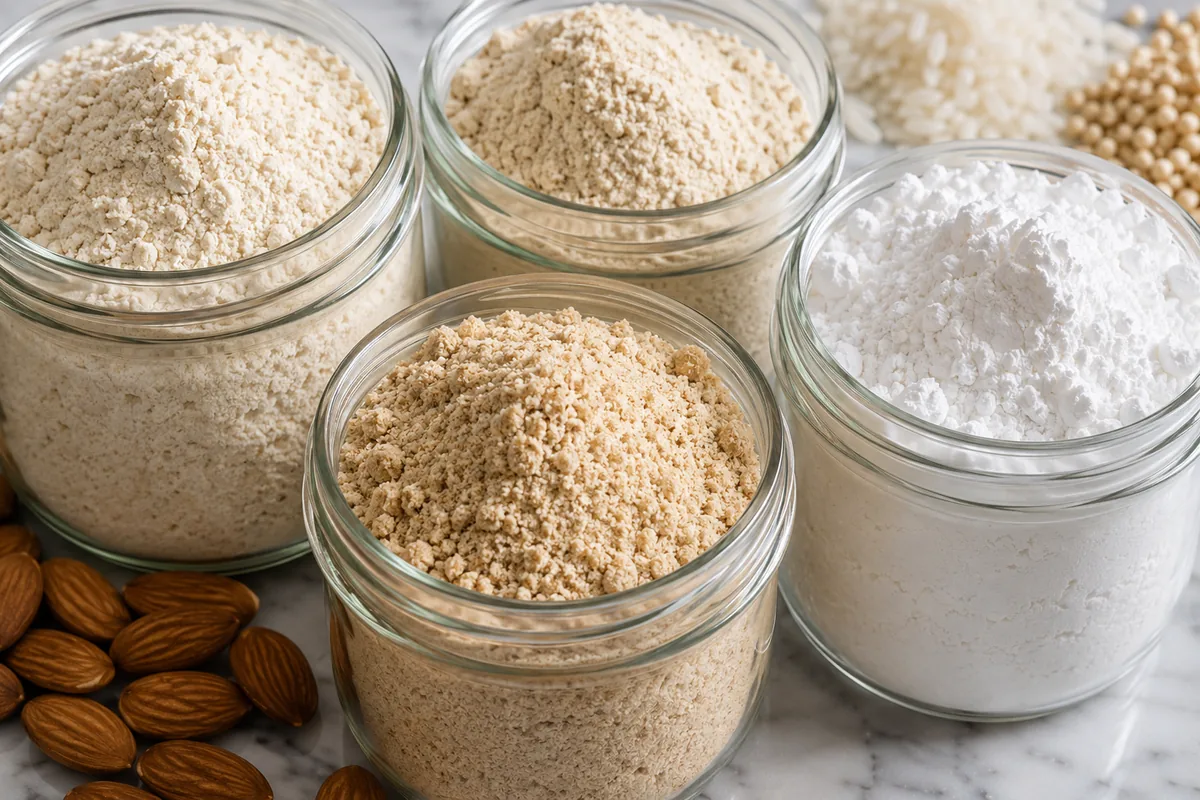
Gluten-free flours fall into a few rough families: grain and seed flours for substance and flavor, nut flours for richness, and starches for lightness and binding. Here are the ones worth knowing.
| Flour | Character | Best for |
|---|---|---|
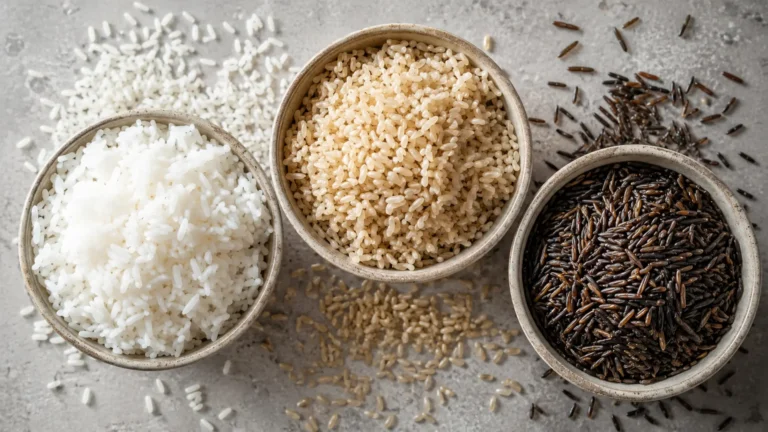
| White rice | Neutral, light, mildly gritty | All-purpose base for blends, cakes, cookies |
| Brown rice | Nuttier, denser, whole-grain | Breads, heartier bakes |
| Almond | Rich, moist, high protein | Cookies, cakes, paleo and low-carb bakes |
| Oat (certified GF) | Soft, sweet, fiber-rich | Cookies, muffins, bars, pancakes |
| Sorghum | Mild, soft, wheat-like | A workhorse base in homemade blends |
| Tapioca starch | Light, chewy, binding | Lightening blends, crisp crusts, chew |
| Potato starch | Light, moisture-holding | Softness in cakes and breads |
| Coconut | Very absorbent, sweet, dense | Needs extra liquid and eggs; small amounts |
| Cassava | Neutral, fine, fairly wheat-like | One-to-one-ish swaps, tortillas, flatbreads |
Notice that the starches, tapioca and potato, are not really flours at all but lightening and binding agents. That is the clue to the whole system: you combine substance with lightness with binding, and that is exactly what a good blend does for you.
The Role of Xanthan Gum and Binders
If gluten is the glue and stretch in wheat baking, xanthan gum is its stand-in. Xanthan and guar gum act as binders and emulsifiers, adding the elasticity and volume that keep gluten-free baked goods from turning crumbly and flat. Without a binder, even a good flour blend tends to fall apart.
A reliable starting point is about one-quarter teaspoon of xanthan gum per cup of gluten-free flour, scaling up toward a half teaspoon for things that need more structure like bread, and down or out for delicate items like cakes. Many commercial all-purpose blends already include xanthan gum, in which case you do not add more, so always check the bag. If you cannot use xanthan, ground psyllium husk and guar gum are common alternatives that do a similar job.
How to Build a Gluten-Free Flour Blend
Making your own blend is cheaper than buying one and lets you tune it to what you bake most. The classic ratio is roughly built in three parts: a whole-grain or base flour for substance and flavor, a lighter starch, and a binder. A simple, dependable template looks like this:
- About 70 percent base flours, such as a mix of white rice, brown rice, and sorghum, for body and a neutral, wheat-like flavor.
- About 30 percent starch, such as tapioca or potato starch, for lightness and tender structure.
- A binder, adding xanthan gum at roughly a quarter to a half teaspoon per cup of the finished blend, unless the recipe adds it separately.
Whisk the flours and starch together thoroughly so they are evenly distributed, then store the blend and use it cup for cup wherever a recipe calls for an all-purpose gluten-free flour. Tuning this template, more starch for lighter cakes, more whole-grain for heartier breads, is how experienced gluten-free bakers get consistent results across a corn muffin and a loaf of bread alike.
Using a One-to-One All-Purpose Gluten-Free Flour
If you would rather skip the chemistry, a quality one-to-one (also sold as cup-for-cup) all-purpose gluten-free flour is the easiest route, and modern blends are genuinely good. These are pre-formulated mixes of flours, starches, and usually a binder, designed to replace wheat flour measure for measure in most recipes from brownies to muffins. They take the guesswork out, which is why they are the best starting point for anyone new to gluten-free baking. The one caveat is that even the best one-to-one blends struggle with yeast breads, which need more structure than a general blend provides, so for sandwich loaves you will often want a recipe written specifically for gluten-free bread. For everyday baking, though, a trusted cup-for-cup blend is reliable in a tray of gluten-free corn muffins or a lemon blueberry quick bread.
How to Substitute Gluten-Free Flour in a Recipe
When you swap gluten-free flour into a recipe written for wheat, a few adjustments stack the odds in your favor. Start with a one-to-one blend rather than a single flour. Expect gluten-free batters to look a little wetter; the flours and starches absorb liquid differently and often need a short rest before baking so the flour fully hydrates and the grittiness softens. Bind it properly, adding xanthan gum if the blend does not include it. And do not overbake, since gluten-free goods dry out faster, so check a few minutes early. Many recipes also benefit from a touch more leavening and an extra egg or a bit more fat for moisture and structure. None of this is difficult, but skipping it is why a straight one-flour swap so often disappoints. For the deeper science of these conversions, the test kitchens at America’s Test Kitchen and food publications like Bon Appetit are worth a read.
Troubleshooting Gluten-Free Flour
- Gritty texture. Usually coarse rice flour or not enough resting time. Use finely milled flour and let the batter sit before baking so the flour hydrates.
- Crumbly and falling apart. Not enough binder. Add xanthan gum, an extra egg, or more fat to hold things together.
- Dense and heavy. Too much whole-grain or nut flour and not enough starch. Increase the proportion of tapioca or potato starch in the blend.
- Gummy or wet center. Too much starch or underbaking. Cut back the starch slightly and give it a few more minutes in the oven.
Choosing Gluten-Free Flour for Specific Bakes
Different bakes ask different things of a flour, and matching the two is half the battle. Knowing what each project needs takes most of the trial and error out of gluten-free baking.
Cookies
Cookies are the most forgiving place to start, since they do not need much structure. A one-to-one blend works well, and almond flour or oat flour can carry a cookie almost on its own, adding richness and a tender, slightly chewy bite. This is why so many people bake their first successful gluten-free treat as a cookie.
Cakes and quick breads
Cakes want lightness, so a blend with a higher proportion of starch and finely milled rice flour gives the most tender crumb. A little extra egg or fat keeps them moist, since gluten-free cakes dry out faster. A one-to-one blend is reliable here, and resting the batter helps the texture.
Yeast breads
Bread is the hardest gluten-free bake because it relies most on gluten for its rise and chew. General one-to-one blends usually fall short, so use a recipe and often a flour blend built specifically for gluten-free bread, with more binder like xanthan gum or psyllium husk for structure. Expect a wetter, more batter-like dough than wheat bread.
Pizza, flatbreads, and tortillas
These want stretch and chew, which is where binding flours shine. Blends featuring tapioca and cassava give the pliable, slightly chewy texture flatbreads need, and a good binder keeps them from cracking when folded.
Single Flours That Can Work Alone
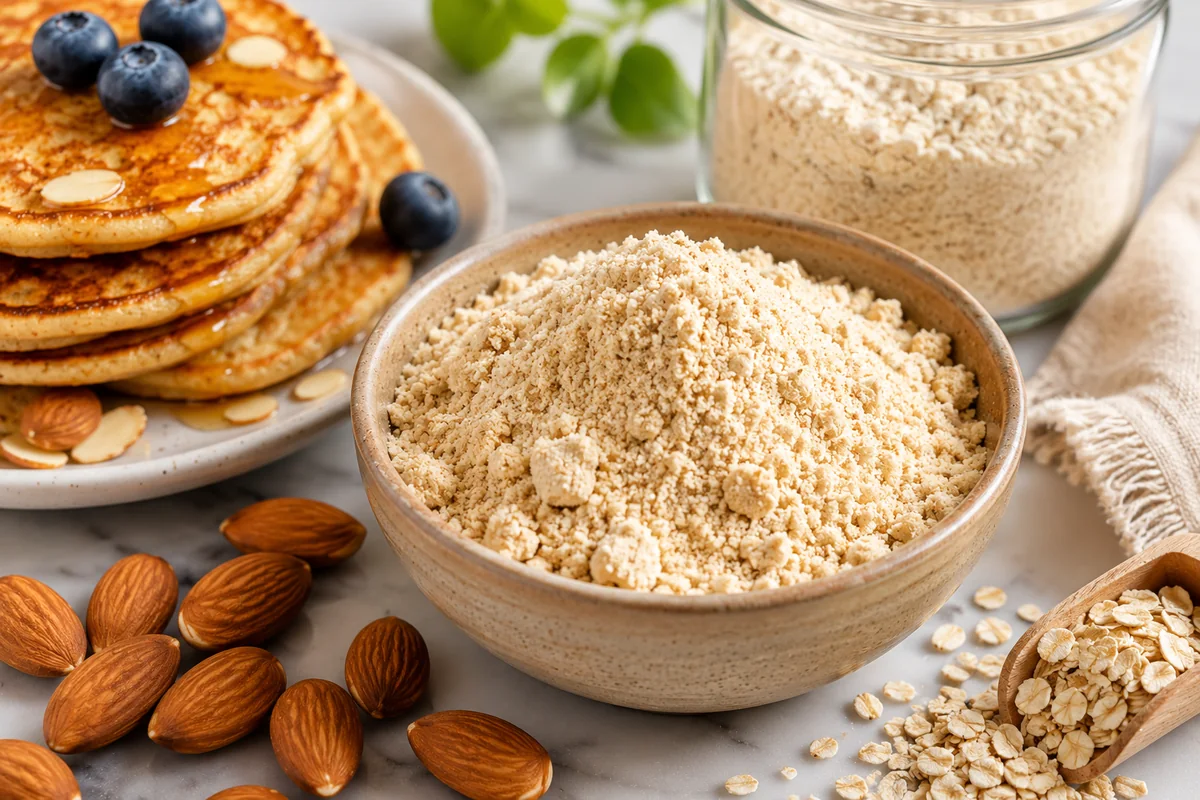
While the rule is to blend, there are a few recipes built around a single gluten-free flour, and they are worth knowing because they are so simple. Almond flour stands on its own in many cookies, cakes, and paleo bakes, where its fat and protein provide both flavor and structure. Oat flour alone makes lovely soft cookies, pancakes, and muffins. Coconut flour works solo too, but only in recipes specifically written for it, because it is so absorbent that it needs far more egg and liquid than any other flour. The key is that these recipes were designed around that one flour from the start; the mistake is taking a wheat recipe and swapping in a single gluten-free flour and hoping for the best.
Is Gluten-Free Flour Healthier?
It is a common assumption that gluten-free automatically means healthier, and that is not quite true. For someone with celiac disease or a genuine gluten sensitivity, gluten-free flour is essential, full stop. But for everyone else, the nutritional picture depends entirely on the flour. Refined blends built mostly on white rice flour and starches can actually be lower in fiber and protein than whole wheat, and they behave much like other refined carbohydrates. On the other hand, flours like almond, chickpea, oat, and teff are genuinely nutrient-dense, bringing protein, fiber, and minerals to the table. So the honest answer is that gluten-free flour is not inherently better or worse for you; it depends on which flours the blend is built from. If you are choosing gluten-free for health rather than necessity, lean toward blends and recipes that feature whole-grain and nut flours rather than starch-heavy white blends.
A Note on Buying Blends
The gluten-free aisle has grown enormously, and most major one-to-one all-purpose blends today perform well, which was not always the case. When you compare bags, two things matter most. First, check whether the blend already contains xanthan gum or another binder, because if it does, you do not add more, and if it does not, you will need to. Second, look at the base, since a blend built on whole-grain flours like brown rice and sorghum will bake and taste differently from one built mostly on white rice and starch. Beyond that, look for a certified gluten-free label if you are baking for someone with celiac disease, which guarantees the product is tested below the threshold for gluten and has not been cross-contaminated. With those boxes checked, most reputable blends will serve you well across everyday baking.
Storing Gluten-Free Flours
Whole-grain and nut flours, like brown rice, oat, and almond, contain more oils and can go rancid, so they keep best in airtight containers in the fridge or freezer, where they last for months. Refined flours and starches, like white rice flour, tapioca, and potato starch, are more shelf-stable and keep well in a cool, dry pantry. Always let refrigerated flour come to room temperature before baking, and label your containers, since many gluten-free flours look nearly identical once they are out of the bag.
Weigh Your Flour for Best Results
One habit improves gluten-free baking more than almost any other: measure your flour by weight with a kitchen scale rather than by the cup. Gluten-free flours and starches vary widely in density, and scooping packs in different amounts each time, which throws off the careful balance of a blend and is a major reason results come out inconsistent. A scale also makes it easy to build your own blends accurately by percentage and to scale recipes up or down. If a recipe gives weights in grams, use them; if it only gives cups, spoon the flour lightly into the measure and level it off rather than scooping, which compacts it. This small change alone fixes a surprising number of dense, dry, or crumbly gluten-free bakes, because it gets the flour-to-liquid ratio right every single time.
Frequently Asked Questions
Can I substitute gluten-free flour one-to-one for regular flour?
Only if you use a blend designed for it. A quality one-to-one (cup-for-cup) all-purpose gluten-free flour is built to replace wheat flour measure for measure in most recipes. A single gluten-free flour like plain rice or almond flour cannot be swapped directly and will give dry, crumbly results.
What is the best all-purpose gluten-free flour?
The best one is a blend rather than a single flour, combining base flours like rice and sorghum with a starch like tapioca and a binder like xanthan gum. A trusted commercial one-to-one blend is the easiest reliable choice, while a homemade blend lets you tune the texture to what you bake.
Do I need xanthan gum in gluten-free baking?
Usually yes, unless your flour blend already contains it. Xanthan gum replaces the binding and elasticity of gluten, keeping baked goods from crumbling. Start with about a quarter teaspoon per cup of flour, more for bread and less for cake. Psyllium husk or guar gum can stand in if needed.
Why are my gluten-free baked goods gritty?
Grittiness usually comes from coarse rice flour or not letting the batter rest. Use finely milled gluten-free flour and let the mixed batter sit for ten to thirty minutes before baking so the flour fully absorbs the liquid and softens.
Is all gluten-free flour the same?
No. Each gluten-free flour has a different flavor, weight, and absorbency, and they are not interchangeable. Rice flour is neutral, almond flour is rich and moist, coconut flour is extremely absorbent, and starches like tapioca add lightness. Good blends combine several to balance these traits.
How should I store gluten-free flour?
Keep whole-grain and nut flours like brown rice, oat, and almond in the fridge or freezer, since their oils can go rancid. Refined flours and starches like white rice and tapioca keep in a cool, dry pantry. Use airtight containers and label them clearly.
Bottom Line
Gluten-free flour works once you stop looking for a single magic substitute and embrace the blend. Combine a base flour for substance, a starch for lightness, and a binder like xanthan gum for structure, or simply buy a trusted one-to-one all-purpose blend and let it do that work for you. Adjust for the extra moisture gluten-free flours need, bind them well, and avoid overbaking, and the gritty, crumbly disappointments give way to tender muffins, moist quick breads, and cookies no one would guess are gluten-free. For a treat that shows off a good blend, a batch of bakery-style chocolate chip cookies is a perfect place to start.