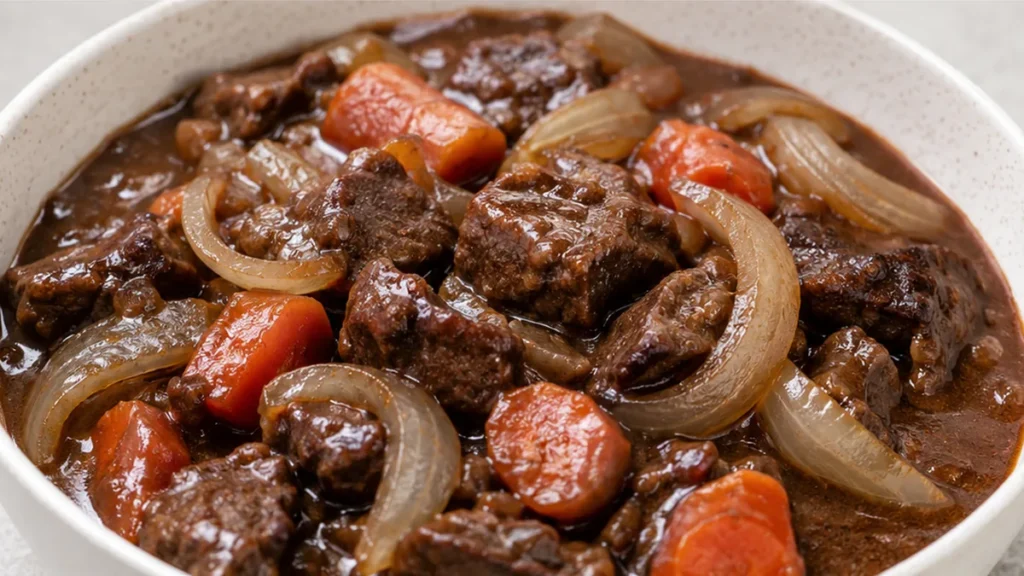
Gluten-free beef stew is the ultimate comfort food, offering a rich, savory experience without compromise for those with dietary needs. This recipe transforms tough cuts of beef into fork-tender morsels, enveloped in a deeply flavored, aromatic sauce. My first attempt at a gluten-free beef stew left the sauce a bit thin; I quickly learned the importance of browning the meat deeply and creating a proper roux with gluten-free flour to achieve that desired thickness and flavor depth. This approach ensures your stew is hearty and satisfying. It’s perfect for a chilly evening or a satisfying weekend meal, bringing warmth and incredible flavor to your table.
Key takeaways
- Sear beef in batches for optimal flavor development.
- Slow, gentle simmering is key to tenderizing the beef.
- Use gluten-free flour or a starch slurry for thickening.
- Don’t overcrowd the pot during searing to avoid steaming.
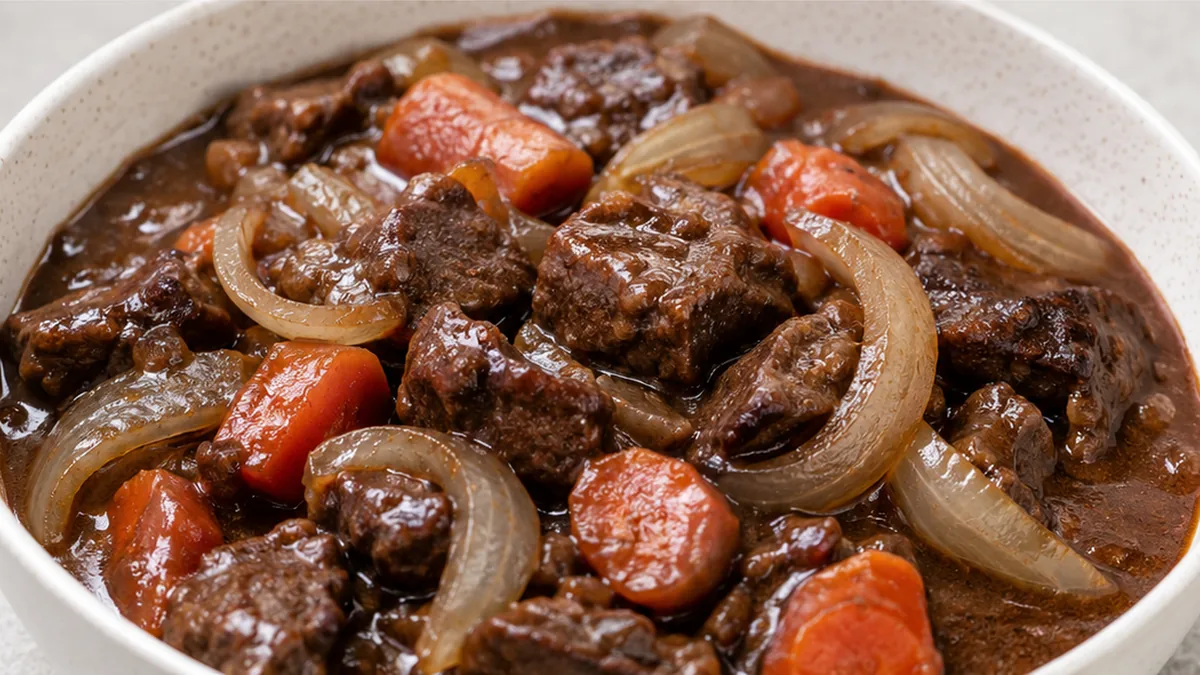
Melt-in-Your-Mouth Gluten-Free Beef Stew
Ingredients
Method
- Pat beef stew meat dry with paper towels. Do not season. Heat 1 tablespoon olive oil in a Dutch oven over high heat until shimmering. Add half of beef and cook until well browned on all sides, about 8 minutes. Reduce the heat if oil begins to smoke or fond begins to burn. Transfer beef to the slow-cooker.
- Repeat with remaining beef and 1 tablespoon olive oil, then add to the slow-cooker.
- Add 2 teaspoons olive oil to the now-empty Dutch oven if needed, add the onion and carrots. Cook, scraping bottom of pan to loosen any browned bits, until onion is softened, 3-4 minutes.
- Add the gluten-free flour and cook, stirring constantly, until no dry flour remains, about 30 seconds. Add garlic and tomato paste and cook, stirring constantly, until fragrant, about 30 seconds.
- Slowly add the red wine, scraping bottom of pan to loosen any browned bits. Increase heat to high and allow wine to simmer until thickened and slightly reduced, about 2 minutes. Whisk in the beef stock/broth.
- Pour the stock/broth mixture into the slow-cooker. Stir in the bay leaves.
- Cook on low for 4-6 hours (or high for 3-4 hours). Enjoy!
Notes
– If using meat, ensure the internal temperature of the beef reaches 145°F (63°C) and rests for 3 minutes for optimal safety and tenderness.
– This stew can be made ahead: it tastes even better the next day! Store in an airtight container in the refrigerator for up to 3-4 days, or freeze portions for up to 3 months.
– For a richer flavor, consider using a good quality, dry red wine that you would enjoy drinking. Nutrition information is an estimate, calculated automatically. Values vary with brands, substitutions and portion sizes.
The Technique Behind Melt-in-Your-Mouth Beef Stew
The secret to an exceptionally tender and flavorful gluten-free beef stew lies in two key techniques: proper searing of the beef and slow, moist cooking. First, searing the beef cubes in batches is crucial. This high-heat process, known as the Maillard reaction, creates complex flavors and a desirable brown crust on the meat. Don’t overcrowd the pan; this prevents steaming and ensures a good sear. The browning develops a rich foundation for the stew’s sauce. Second, the long, slow braise in a liquid medium (beef broth and optional red wine) is what breaks down the tough connective tissues in the beef, like collagen, into gelatin. This gelatin not only adds body and richness to the stew but also contributes to that coveted melt-in-your-mouth texture. The gluten-free flour acts as a thickener, absorbing moisture and helping to create a luscious sauce that coats the meat and vegetables. Ensuring the liquid barely simmers, rather than boils, is vital. Boiling can toughen the meat and make the sauce cloudy. The low, gentle heat allows the collagen to convert to gelatin gradually, resulting in tender beef.
Troubleshooting
- Problem: Stew is too thin. Fix: Whisk together 1 tablespoon of gluten-free flour with 2 tablespoons of softened butter or oil to create a beurre manié. Stir small amounts of this paste into the simmering stew until thickened. Alternatively, create a slurry with 1 tablespoon of cornstarch or arrowroot powder mixed with 2 tablespoons of cold water and stir into the simmering stew.
- Problem: Beef is tough. Fix: The beef needs more time to braise. Ensure the stew is simmering very gently, covered, and continue cooking for another 30-60 minutes, or until fork-tender. Avoid boiling, which can toughen meat further.
- Problem: Stew lacks depth of flavor. Fix: Ensure you achieved a good sear on the beef initially. Deglaze the pan thoroughly with the red wine or broth to lift all the browned bits. Consider adding a splash of gluten-free Worcestershire sauce or a pinch of smoked paprika during the simmering stage for an extra flavor boost.
- Problem: Vegetables are mushy. Fix: Add the carrots during the last 45-60 minutes of cooking time. If using other vegetables like potatoes or peas, add them even later in the cooking process to maintain their texture.
Substitutions
- Red Wine: Substitute with an additional 1 cup of gluten-free beef broth or stock. The stew will be less complex in flavor but still rich and hearty.
- Olive Oil: Use any neutral cooking oil like canola, vegetable, or avocado oil for searing the beef. The flavor impact will be minimal.
- Gluten-Free Flour: Use a gluten-free all-purpose flour blend or a mix of cornstarch or arrowroot powder (use about half the amount, added as a slurry at the end). The stew will still thicken, though the texture might be slightly different.
- Beef Broth/Stock: Vegetable broth can be used for a lighter flavor, but beef broth provides the classic depth. Ensure any substitute is certified gluten-free.
Pro tips
- Browning the beef thoroughly is crucial for developing deep, rich flavors. Don’t overcrowd the pot; work in batches to ensure a good sear.
- If using meat, ensure the internal temperature of the beef reaches 145°F (63°C) and rests for 3 minutes for optimal safety and tenderness.
- This stew can be made ahead: it tastes even better the next day! Store in an airtight container in the refrigerator for up to 3-4 days, or freeze portions for up to 3 months.
- For a richer flavor, consider using a good quality, dry red wine that you would enjoy drinking.
This gluten-free beef stew is a testament to how delicious and satisfying a meal can be, even with dietary considerations. Share your hearty creations and enjoy the comforting flavors!
Frequently asked questions
What is the best way to sear the beef for this stew?
Sear the beef cubes in batches over medium-high heat in a hot skillet with olive oil until deeply browned on all sides. This Maillard reaction builds essential flavor. Avoid overcrowding the pan, as this will cause the beef to steam instead of sear, resulting in less flavor and a pale appearance.
Can I make this gluten-free beef stew ahead of time?
Yes, this stew often tastes even better the next day! The flavors meld and deepen overnight. Reheat gently on the stovetop or in a slow cooker on low heat, ensuring it reaches a safe temperature before serving.
How can I make the beef extra tender?
The key is slow and low cooking. Ensure your stew is barely simmering, not boiling, after searing and adding liquids. Continue this gentle cooking for at least 1.5 to 2 hours, or until the beef is fork-tender. Covering the pot tightly helps maintain moisture.
What can I use if I don’t have red wine?
You can substitute the red wine with an additional 1 cup of gluten-free beef broth or stock. While the wine adds a layer of complexity and depth, the stew will still be delicious and rich using only broth.
Try this next: Melt-in-Your-Mouth Gluten-Free Pot Roast
More from Gluten-Free Dinners & Mains →