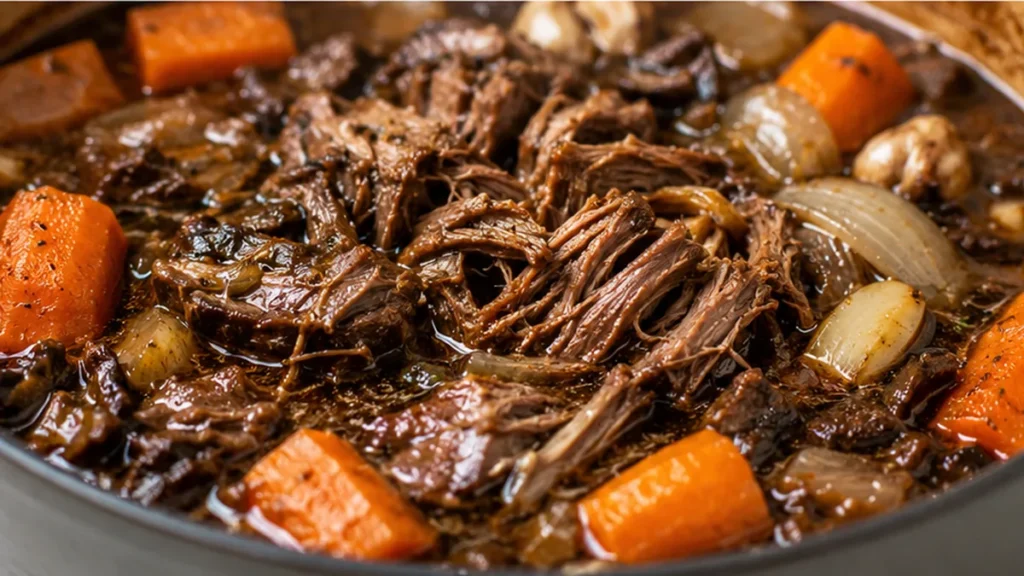
The gluten-free pot roast is the ultimate comfort food, a classic dish that brings warmth and flavor to any table. This recipe focuses on creating a deeply tender chuck roast bathed in an aromatic gravy, making it perfect for cozy weeknights or special gatherings. Crafting a truly exceptional gluten-free pot roast means understanding how low-and-slow cooking transforms tougher cuts of meat into melt-in-your-mouth goodness. I’ve found that patience is key here; rushing the process will never yield the same depth of flavor or tenderness.
Key takeaways
- Achieve tenderness through low and slow braising to break down connective tissues.
- Ensure a deep sear on the roast for maximum flavor development (Maillard reaction).
- Rest the pot roast after cooking to allow juices to redistribute.
- Don’t skip the umami-rich porcini mushrooms and Worcestershire sauce for depth.
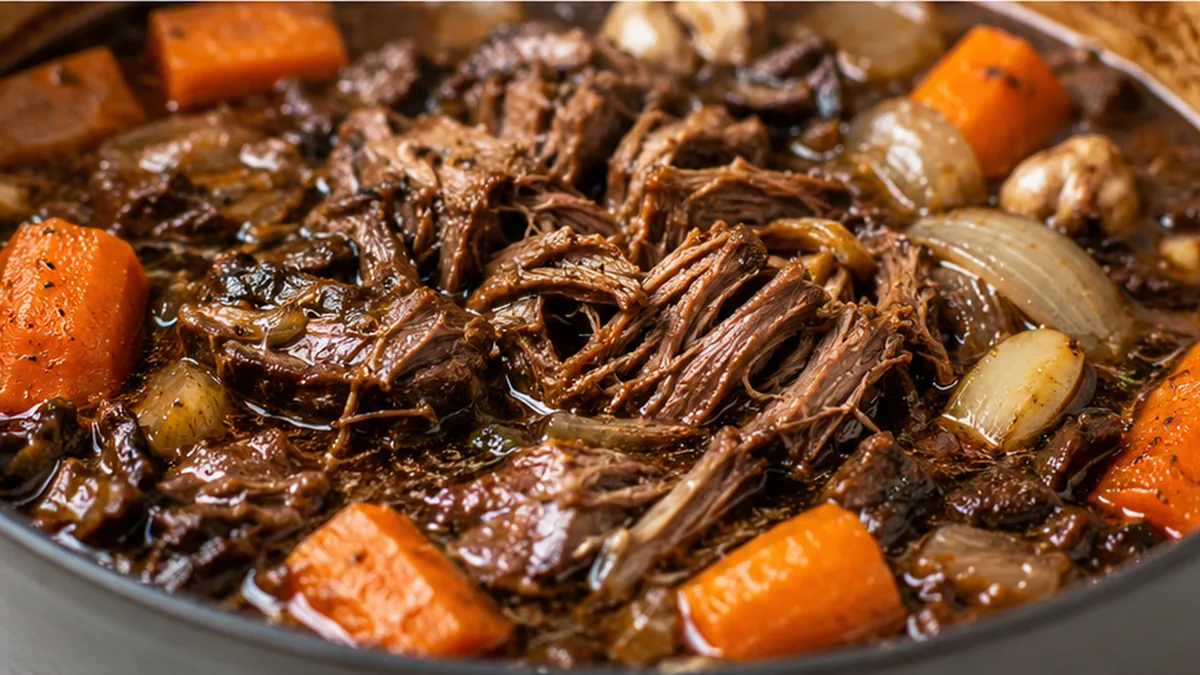
Melt-in-Your-Mouth Gluten-Free Pot Roast
Ingredients
Method
- Pat the beef dry with paper towels and season with salt and pepper.
- Heat 2 tablespoons of olive oil in a large dutch oven or heavy-bottomed pan over medium-high heat. Add the beef and cook until browned on all sides, about 10-15 minutes.
- Remove the beef from the dutch oven and place it in the slow-cooker. Add the onions, carrots, and celery to the now empty dutch oven and cook until tender, about 6-8 minutes.
- Add the garlic, rosemary, and thyme and cook for another 30 seconds. Pour in the wine and scrape up all the browned bits from the bottom of the pan (all the flavor!). Allow the wine to cook and reduce for 3-4 minutes.
- Pour the wine/vegetable mixture over the beef in the slow-cooker. Add the porcini mushrooms, Worcestershire sauce, bay leaves, and 1 cup beef broth.
- Cook on low for 6-8 hours or on high for 3-4 hours until the roast is tender. If using, add potatoes and additional carrots to the slow-cooker on top of the meat during the last 2 hours of cooking.
- After the roast is done cooking, remove the meat (and potatoes/carrots – the smaller chopped carrots can be blended up with the gravy) from the slow-cooker and place it on a serving platter tented with foil.
- Remove and discard the rosemary sprigs, thyme sprigs, and bay leaves. Skim as much fat as you can off the surface of the remaining liquid. Pour the liquid, including all the vegetables, into a blender and blend until smooth.
Notes
– Store leftover pot roast and gravy in an airtight container in the refrigerator for up to 3-4 days. It also freezes well for up to 3 months; thaw overnight in the fridge and reheat gently.
– To achieve a rich, deep brown crust on your roast, pat the meat thoroughly dry before searing. Any moisture on the surface will steam the meat instead of browning it. Nutrition information is an estimate, calculated automatically. Values vary with brands, substitutions and portion sizes.
The technique that makes it
The magic of a melt-in-your-mouth pot roast lies in a combination of techniques that break down the tough connective tissues in the chuck roast, rendering it incredibly tender. The initial searing of the chuck roast is crucial. This Maillard reaction creates a flavorful crust and develops complex aromas that permeate the entire dish. Ensure the roast is thoroughly dried before searing to achieve a deep brown color, not a steamed grey. Low and slow cooking is the cornerstone of tenderness. Braising the roast in liquid (red wine, beef broth, and the moisture released from the vegetables and mushrooms) at a low temperature (around 300-325°F or 150-160°C) for several hours allows the collagen in the meat to gradually convert into gelatin. This gelatin lubricates the muscle fibers, making the meat tender and succulent. The addition of dry porcini mushrooms, even though rinsed, contributes significant umami depth and aids in creating a richer sauce. The acidity from the red wine also helps to tenderize the meat. Finally, resting the pot roast after cooking allows the juices to redistribute throughout the meat, ensuring every bite is moist and flavorful.
Troubleshooting
- Tough Meat: If the meat is still tough after the initial cooking time, it likely needs more time to braise. Continue cooking at a low temperature until tender. Ensure the liquid level is sufficient to keep the bottom half of the roast submerged.
- Watery Sauce: If the sauce is too thin, remove the roast and vegetables, then simmer the liquid on the stovetop over medium-high heat until it reduces to your desired consistency. You can also thicken it with a cornstarch slurry (1 tablespoon cornstarch mixed with 2 tablespoons cold water) stirred into the simmering liquid.
- Bland Flavor: Ensure you’ve achieved a good sear on the roast. Taste the sauce before serving and adjust seasoning with salt, pepper, or a splash more Worcestershire sauce if needed. The porcini mushrooms are key for umami; ensure they were well-rinsed but not omitted.
- Mushy Vegetables: Chopping the vegetables into larger, uniform pieces helps them hold their shape during the long cooking time. If they become too soft, they can be removed from the braising liquid earlier or pureed into the sauce for added body.
Substitutions
- Red Wine: Substitute with an equal amount of additional beef broth or a non-alcoholic red wine substitute. The flavor will be less complex, but the tenderness will be preserved.
- Dry Porcini Mushrooms: Use 1/2 ounce of other dried mushrooms like shiitake or cremini, or omit them. The umami depth will be reduced.
- Fresh Rosemary/Thyme: Use 1/2 teaspoon of dried rosemary and 1/2 teaspoon of dried thyme for each sprig of fresh herb. Be mindful that dried herbs are more potent.
- Beef Broth: Chicken broth or vegetable broth can be used, though beef broth provides the most traditional and robust flavor profile for pot roast.
Pro tips
- For the most tender roast, ensure your chuck roast reaches an internal temperature of 200-205°F (93-96°C) for optimal collagen breakdown, allowing it to shred easily.
- Store leftover pot roast and gravy in an airtight container in the refrigerator for up to 3-4 days. It also freezes well for up to 3 months; thaw overnight in the fridge and reheat gently.
- To achieve a rich, deep brown crust on your roast, pat the meat thoroughly dry before searing. Any moisture on the surface will steam the meat instead of browning it.
This slow-cooked gluten-free pot roast delivers comforting flavors and incredible tenderness with minimal effort. Don’t hesitate to make it your next family meal!
Frequently asked questions
Why is my pot roast tough?
Toughness usually means it needs more time to braise. The collagen in chuck roast requires slow, moist heat to convert into tender gelatin. Continue cooking at a low temperature until the meat easily shreds with a fork.
Can I use a different cut of beef?
While chuck roast is ideal for its marbling and connective tissue, other cuts like brisket or bottom round can work. However, they may require adjusted cooking times and might not yield the same melt-in-your-mouth texture.
How do I make the sauce richer?
To enrich the sauce, ensure you’ve properly seared the roast and use the deglazed pan drippings. The porcini mushrooms and Worcestershire sauce add significant umami. Reducing the sauce slightly at the end also concentrates its flavor.
What can I do if I don’t have red wine?
You can substitute the red wine with an equal amount of beef broth. For a touch of acidity, you could also add a tablespoon of red wine vinegar or balsamic vinegar to the beef broth. The final flavor will be slightly different but still delicious.
Try this next: Gluten-Free Tamales: A Taste of Tradition!
More from Gluten-Free Dinners & Mains →