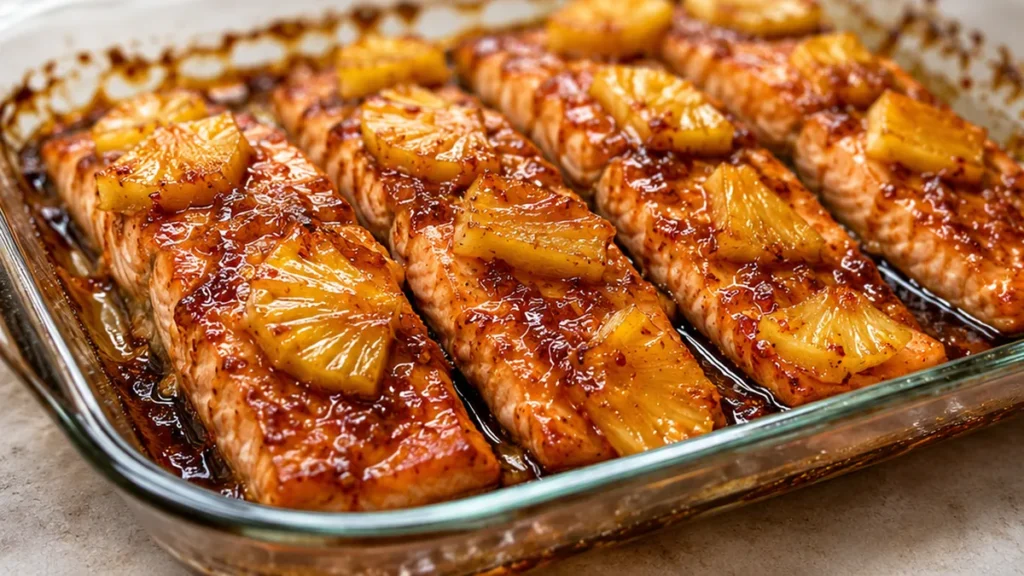
This glazed pineapple salmon recipe brings a burst of tropical flavor and healthy protein to your table with minimal effort. The key to truly delicious pineapple salmon lies in balancing the sweet and savory notes, ensuring both the fruit and fish are perfectly cooked. I remember the first time I tried combining pineapple with salmon; I was skeptical, but the sweet acidity of the pineapple beautifully complements the rich, flaky texture of the salmon. This recipe is designed to be straightforward, making it ideal for busy weeknights or when you want to impress without spending hours in the kitchen. Pineapple salmon offers a fantastic way to enjoy a lean protein with vibrant flavors that feel both indulgent and light.
Key takeaways
- Balance sweet, tangy, and spicy elements for optimal flavor.
- Monitor baking closely to prevent overcooking and burning.
- Use an instant-read thermometer for perfectly cooked salmon.
- Adjust spice levels and ingredients to personal preference.
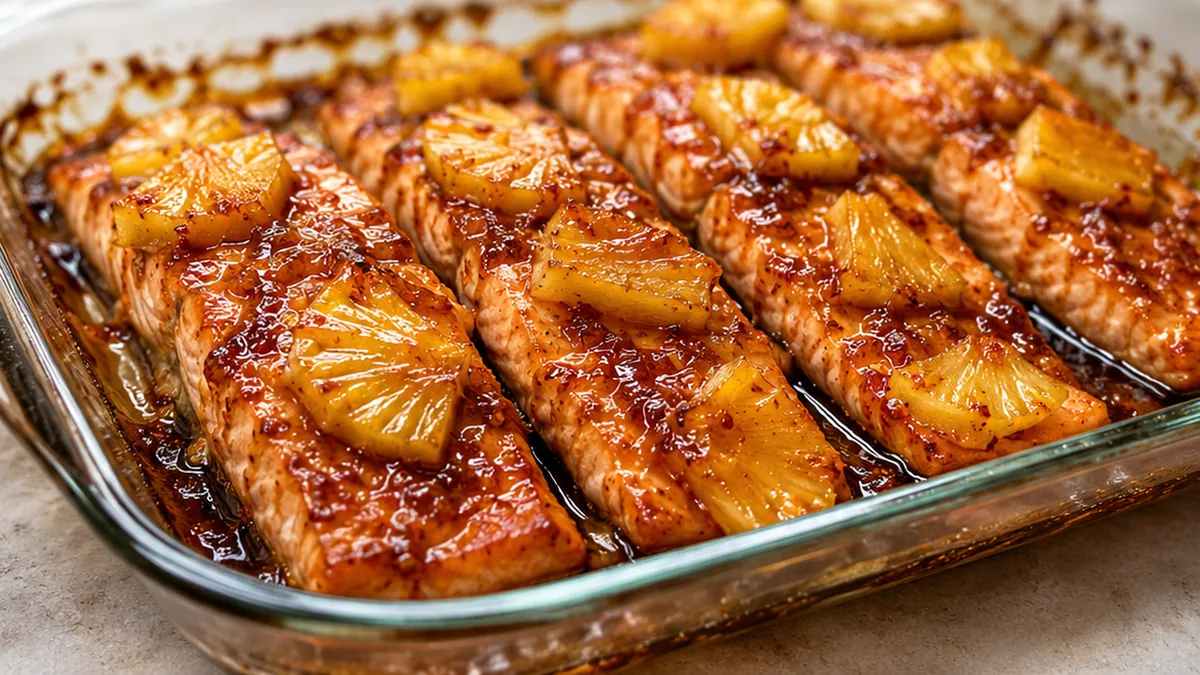
Sweet & Spicy Pineapple Salmon Bake!
Ingredients
Method
- Mix together the ginger, lemon juice, soy sauce, and 1/4 cup maple syrup for the marinade. Pour over the salmon fillets in a shallow dish and let sit at room temperature for 15 minutes, turning half-way through.
- Preheat the broiler with the rack in the top position. Mix together the remaining maple syrup and cayenne pepper for the glaze.
- Remove the salmon from the marinade and pat dry with paper towels. Season lightly with salt. Place the salmon fillets and pineapple slices on a rimmed baking sheet. Brush the salmon and pineapple with the glaze.
- Broil until the salmon is cooked through, 8-11 minutes, brushing the pineapple and salmon with more glaze halfway through. Serve the salmon topped with the pineapple and lime wedges if desired. Enjoy!
Notes
– Don’t overcrowd your baking sheet; give the salmon and pineapple space to caramelize evenly. If crowded, they will steam instead of broil.
– This glazed pineapple salmon can be stored in an airtight container in the refrigerator for up to 3 days. Reheat gently in the oven at 300°F (150°C) for 10-15 minutes to prevent drying out. Nutrition information is an estimate, calculated automatically. Values vary with brands, substitutions and portion sizes.
The Technique That Makes It: Balancing Sweetness and Spice
The success of this pineapple salmon bake hinges on achieving a delicate balance between the sweet, tangy pineapple and maple syrup, and the spicy kick from the ginger and cayenne pepper. The key technique here is controlled baking to allow the glaze to caramelize without burning. Salmon, being a rich fish, benefits from this sweet and spicy marinade which helps to cut through its fattiness. The lemon juice and soy sauce (or coconut aminos) form the base of the glaze, providing acidity and umami. As the salmon bakes, the natural sugars in the pineapple and maple syrup will break down and caramelize, creating a sticky, flavorful coating. It’s crucial to monitor the oven temperature and the salmon’s internal temperature to prevent overcooking, which can lead to dry fish and a burnt glaze. The pineapple slices not only add flavor and moisture but also help to steam the salmon slightly, keeping it tender.
Troubleshooting
- Problem: Glaze is too thin and watery. Fix: Remove the salmon and pineapple from the baking dish. Simmer the remaining liquid on the stovetop over medium heat until it reduces and thickens to a syrupy consistency. Return the salmon and pineapple to the thickened glaze before serving.
- Problem: Salmon is dry and overcooked. Fix: Use an instant-read thermometer to check for doneness. Salmon is cooked when it flakes easily with a fork and reaches an internal temperature of 135-140°F (57-60°C) for medium-rare to medium. For future attempts, reduce baking time or lower the oven temperature slightly.
- Problem: Glaze is burnt on the edges. Fix: If the glaze starts to burn before the salmon is cooked, loosely tent the baking dish with aluminum foil to shield it from direct heat. You can also reduce the oven temperature by 25°F (15°C) for the remainder of the cooking time.
- Problem: Salmon lacks flavor. Fix: Ensure the ginger is freshly grated and the cayenne pepper is potent. Allow the salmon to marinate in the glaze for at least 15-30 minutes before baking to allow the flavors to penetrate the fish.
Substitutions
- Pineapple: Mango slices can be used as a substitute for pineapple. The resulting dish will have a similar tropical sweetness but with a slightly different texture and a milder tang.
- Maple Syrup: Honey or agave nectar can replace maple syrup. The sweetness profile will be similar, though honey may impart a slightly different floral note.
- Cayenne Pepper: Red pepper flakes can be used for heat. The flavor will be similar, but red pepper flakes may provide larger visible flecks in the glaze. Adjust the quantity to your spice preference.
- Gluten-Free Soy Sauce/Coconut Aminos: Tamari (if not gluten-free) or a Worcestershire sauce (check for gluten) can be used. These will add a different umami depth and saltiness to the glaze.
Pro tips
- For the perfect doneness, use an instant-read thermometer. Salmon is cooked when it reaches an internal temperature of 145°F (63°C) at its thickest part.
- Don’t overcrowd your baking sheet; give the salmon and pineapple space to caramelize evenly. If crowded, they will steam instead of broil.
- This glazed pineapple salmon can be stored in an airtight container in the refrigerator for up to 3 days. Reheat gently in the oven at 300°F (150°C) for 10-15 minutes to prevent drying out.
This sweet and spicy glazed pineapple salmon is a delightful meal that’s both easy to prepare and incredibly satisfying. Give it a try and enjoy a taste of the tropics at home!
Frequently asked questions
How do I prevent the glaze from burning?
To prevent the glaze from burning, keep a close eye on it during the last few minutes of baking. If it starts to darken too quickly, you can loosely tent the dish with foil or slightly reduce the oven temperature. Ensure your oven temperature is accurate.
Can I marinate the salmon longer?
Yes, you can marinate the salmon for up to 30 minutes before baking. This will allow the flavors of the ginger, lemon, soy sauce, maple syrup, and cayenne to penetrate the fish more deeply, resulting in a more flavorful final dish.
What is the best way to tell if the salmon is cooked?
The most reliable way is to use an instant-read thermometer. Insert it into the thickest part of the fillet. Salmon is perfectly cooked when it reaches an internal temperature of 135-140°F (57-60°C). It should also flake easily with a fork.
Can I use canned pineapple instead of fresh?
While fresh pineapple is recommended for its texture and moisture, you can use drained canned pineapple chunks or tidbits in a pinch. Be aware that canned pineapple is often sweeter and softer, which might alter the final glaze consistency and sweetness.
Try this next: Honey Lime Salmon Stir-Fry: Quick & Zesty!
More from Gluten-Free Dinners & Mains →