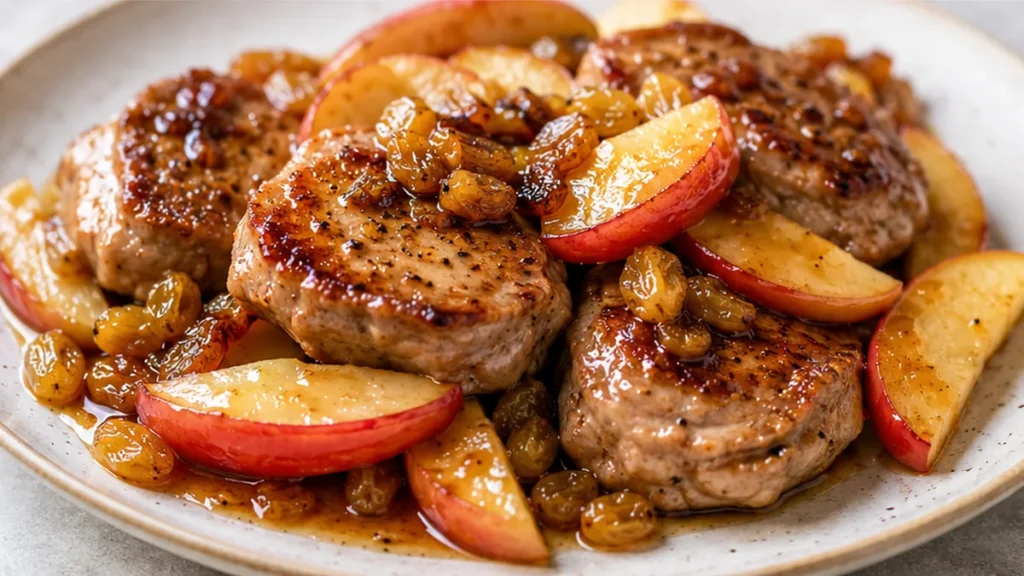
This pork tenderloin recipe features tender pork medallions paired with sweet, caramelized apples. It’s a straightforward dish, perfect for a weeknight dinner or a special meal.
Key takeaways
- Sear pork tenderloin quickly over medium-high heat to develop flavor and retain moisture.
- Rest the cooked pork for 5-10 minutes before slicing to allow juices to redistribute.
- Cook apples with sugar to draw out moisture for caramelization, creating a flavorful sauce base.
- Use a cornstarch slurry to thicken the apple sauce to a luscious consistency.
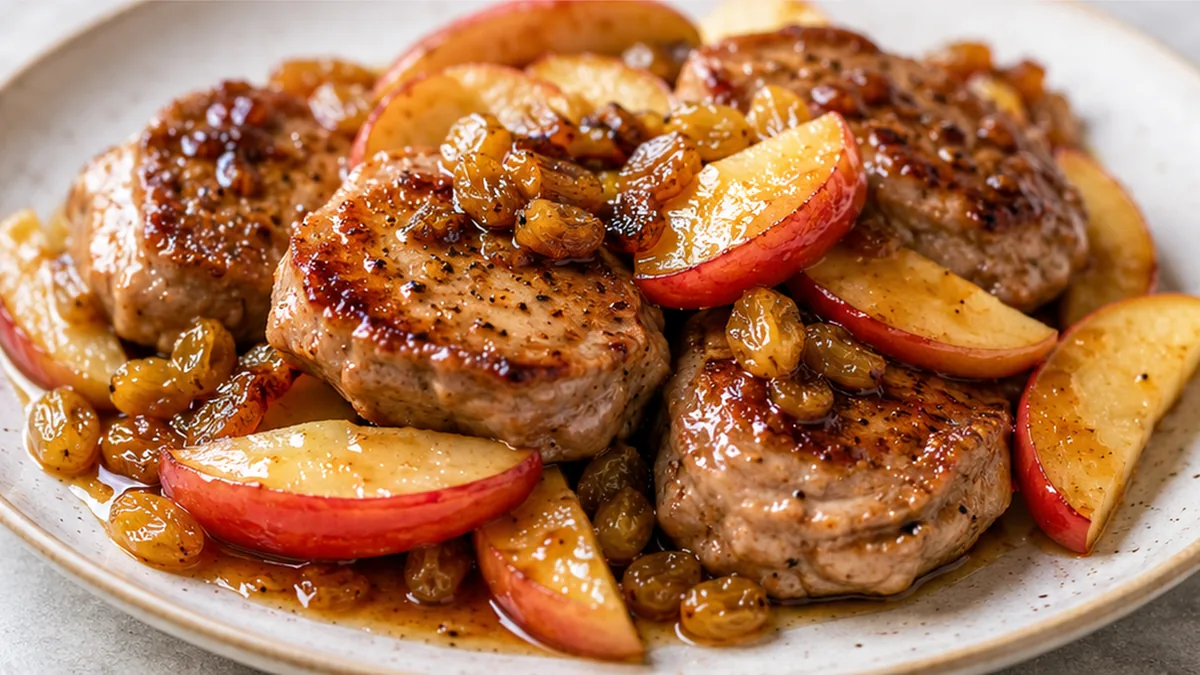
Pork Medallions with Caramelized Apples
Ingredients
Method
- Combine all the ingredients for the applesauce (apples, lemon juice, golden raisins, ginger root, brown sugar, apple juice, cinnamon, nutmeg, salt) in a medium pot over medium-high heat. Bring to a simmer and cook until a chunky sauce forms, about 15 minutes, stirring occasionally.
- Once apples are soft and the sauce has reduced slightly, whisk in the cornstarch/water mixture. Simmer for another 3-4 minutes. Remove from the heat and discard the ginger.
- Meanwhile, cook the pork. Slice the pork tenderloins into 2-inch medallions. Flatten each piece slightly and dry with paper towels. Sprinkle both sides generously with salt and pepper.
- Heat the olive oil over medium-high heat until shimmering, add the pork (you may have to do this in 2 batches) and cook without moving for 3-4 minutes. Flip and cook on the other side for another 2-3 minutes. Transfer to a plate and tent loosely with foil until ready to serve. Top with the warm applesauce and enjoy!
Notes
– For a make-ahead option, prepare the applesauce up to 3 days in advance and store it in an airtight container in the refrigerator. Gently reheat on the stovetop before serving with freshly cooked pork.
– If you don’t have Gala apples, Honeycrisp or Fuji apples make excellent substitutes for the applesauce, offering a similar balance of sweetness and tartness. Nutrition information is an estimate, calculated automatically. Values vary with brands, substitutions and portion sizes.
The Science of Perfectly Caramelized Apples and Tender Pork
This recipe hinges on two key techniques: achieving tender, succulent pork medallions and developing a rich, deeply flavored caramelized apple sauce. For the pork, the crucial element is not overcooking. Pork tenderloin is a lean cut that cooks very quickly. Searing it over medium-high heat on all sides develops a flavorful crust through the Maillard reaction, while keeping the interior moist and tender. The goal is an internal temperature of 145°F (63°C) for medium-rare to medium, followed by a short resting period of 5-10 minutes. This resting allows the juices to redistribute throughout the meat, ensuring each bite is succulent rather than dry. For the apples, the magic lies in controlled caramelization and flavor infusion. Cooking the apples with brown sugar draws out their natural moisture, which then combines with the sugar to create a syrupy base. The whole ginger piece acts as a gentle, aromatic infusion, releasing its spicy notes slowly without becoming overpowering. Adding apple juice and spices builds a complex sauce. The cornstarch slurry (or arrowroot) is the final step, acting as a thickener. It works by gelatinizing when heated, trapping water molecules and increasing the viscosity of the liquid, transforming the apple mixture into a luscious sauce that coats the pork beautifully.
Troubleshooting
- Problem: Pork is dry and tough. Fix: The pork was likely overcooked. Use an instant-read thermometer to check for an internal temperature of 145°F (63°C) and allow the meat to rest for at least 5 minutes before slicing.
- Problem: Apple sauce is too thin. Fix: Ensure the cornstarch slurry is properly mixed with cold water or apple juice before adding it to the hot apple mixture. Bring the sauce back to a simmer and cook for 1-2 minutes, stirring, until thickened.
- Problem: Apples are mushy and lack texture. Fix: Avoid overcrowding the pan when sautéing the apples initially. Cook them in batches if necessary to allow for proper searing and caramelization rather than steaming.
- Problem: Sauce is too sweet. Fix: Taste the sauce before thickening. If too sweet, a small splash of apple cider vinegar or a squeeze of lemon juice can add a balancing tartness.
Substitutions
- Apples: Honeycrisp or Fuji apples can be used instead of Gala. They offer a similar balance of sweetness and tartness, resulting in a comparable sauce texture and flavor.
- Golden Raisins: Dried cranberries or chopped dates can be substituted. This will alter the sweetness profile and add a different chewiness to the sauce.
- Brown Sugar: Maple syrup can replace brown sugar, offering a distinct maple flavor and slightly different caramelization. Adjust quantity to taste as maple syrup is sweeter.
- Ginger: A pinch of ground ginger can be used if fresh ginger is unavailable. Start with 1/4 teaspoon and add more to taste, as ground ginger is more potent.
Pro tips
- To ensure your pork tenderloin is perfectly cooked and juicy, aim for an internal temperature of 145°F (63°C) with a 3-minute rest before slicing. This keeps the meat incredibly tender.
- For a make-ahead option, prepare the applesauce up to 3 days in advance and store it in an airtight container in the refrigerator. Gently reheat on the stovetop before serving with freshly cooked pork.
- If you don’t have Gala apples, Honeycrisp or Fuji apples make excellent substitutes for the applesauce, offering a similar balance of sweetness and tartness.
Give this pork tenderloin recipe a try for a meal that’s both elegant and comforting. It’s a fantastic way to enjoy lean pork with a burst of autumnal flavors. Bon appétit!
Frequently asked questions
What internal temperature should the pork reach?
For tender and juicy pork, aim for an internal temperature of 145°F (63°C) when checked with an instant-read thermometer. This ensures the pork is cooked through but still moist. Remember to let it rest after cooking.
Can I prepare the apple sauce ahead of time?
Yes, the apple sauce can be made a day or two in advance and stored in the refrigerator. Gently reheat it on the stovetop before serving, adding a splash more apple juice if it has become too thick.
What if I don’t have apple juice?
You can substitute with other fruit juices like white grape juice or even water. However, apple juice complements the apples best and contributes to the overall flavor profile of the sauce.
How do I prevent the pork from drying out?
The key is to avoid overcooking. Sear the tenderloin quickly on all sides and use a thermometer. Crucially, let the pork rest for at least 5 minutes after cooking before slicing to allow the juices to settle.
Try this next: Instant Pot Beef Burgundy Delight
More from Gluten-Free Dinners & Mains →