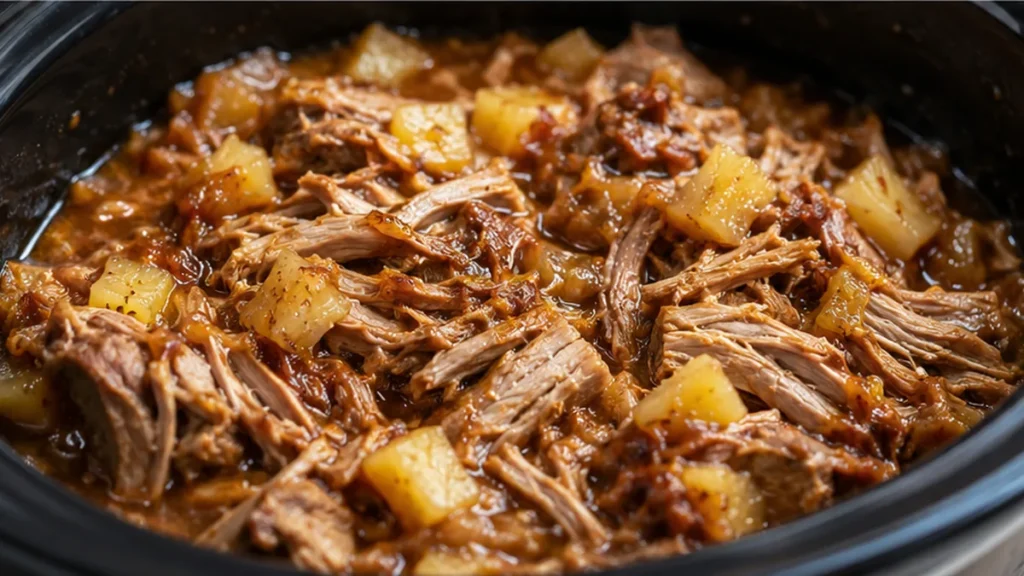
The secret to truly tender pork that falls apart with just a fork lies in slow cooking, and this Sweet Island Pork recipe perfects the method. I remember the first time I made this dish, I was amazed at how little effort yielded such a rich, flavorful result. This Sweet Island Pork offers a delightful balance of sweet and savory notes, making it a fantastic centerpiece for family dinners or a crowd-pleasing potluck dish. It’s a forgiving recipe, ideal for both seasoned cooks and beginners looking to explore the magic of slow cooking.
Key takeaways
- Slow cooking breaks down tough connective tissues in pork shoulder for extreme tenderness.
- Pineapple’s enzymes and acidity further tenderize the meat while adding sweet flavor.
- Ensure sufficient cooking time and internal temperature for fall-apart results.
- Adjust liquid and spices to customize the flavor and consistency of the sauce.
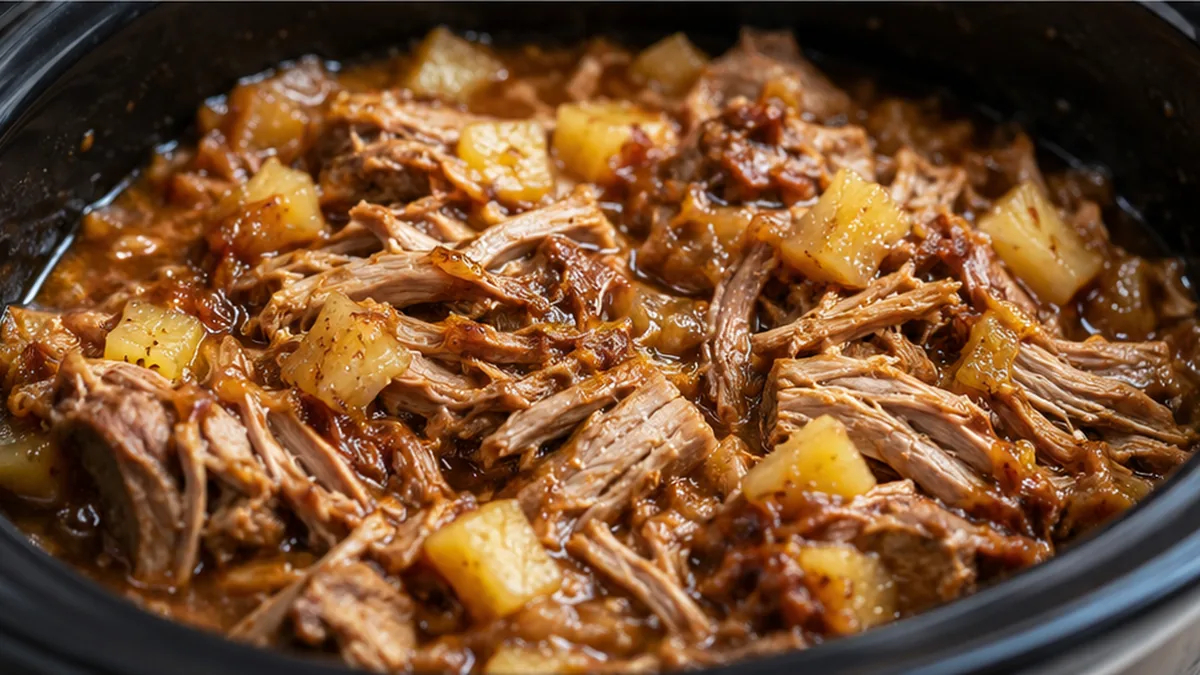
Slow-Cooker Pineapple Pork: Fall-Apart Tender!
Ingredients
Method
- On a large plate, combine the salt, pepper, cumin, chili powder, and cinnamon. Rub the spice mixture evenly over the pork shoulder.
- Heat the olive oil over medium-high heat in a large skillet. Add the pork and brown on all sides, 4-5 minutes per side. Remove the pork from the pan.
- Add ½ cup of water to the hot, now-empty pan and scrape any browned bits to deglaze. Pour the liquid into the slow cooker.
- Add the browned pork, crushed pineapple (undrained), and chopped garlic to the slow cooker. Stir gently to combine.
- Cook on low for 6-8 hours or on high for 3-4 hours, until the pork is fall-apart tender.
- Remove the pork from the slow cooker and shred it using two forks. Return the shredded pork to the slow cooker and mix with the sauce. Serve warm.
Notes
– The pork is done when it reaches an internal temperature of 145°F (63°C) and rests for 3 minutes, but for shreddable pork, aim for 190-205°F (88-96°C).
– Make ahead and store: Leftovers can be refrigerated in an airtight container for up to 3-4 days. For longer storage, freeze for up to 2-3 months. Reheat gently on the stovetop or in the microwave, adding a splash of broth if needed. Nutrition information is an estimate, calculated automatically. Values vary with brands, substitutions and portion sizes.
The Science Behind the Tender Pork
The magic of this sweet island pork recipe lies in the slow-cooking process and the interaction of ingredients. Pork shoulder (or butt) is an ideal cut for slow cooking due to its high collagen and fat content. As the pork cooks at a low, consistent temperature for an extended period (typically 6-8 hours on low or 3-4 hours on high in a slow cooker), the tough connective tissues, primarily collagen, break down into gelatin. This gelatin lubricates the muscle fibers, resulting in incredibly tender, fall-apart meat. The crushed pineapple plays a crucial role beyond just flavor; its natural enzymes, particularly bromelain, act as a meat tenderizer. While the heat of cooking deactivates most enzymes, the initial exposure and the acidic nature of pineapple juice help to further break down protein structures. The water and pineapple juice create steam, ensuring the pork stays moist and doesn’t dry out during the long cooking time. The dry rub of salt, pepper, cumin, chili powder, and cinnamon not only seasons the meat but also helps to form a flavorful crust through the Maillard reaction as the exterior of the pork browns slightly before or during the initial stages of slow cooking, especially if you choose to sear it first.
Troubleshooting
- Problem: Pork is dry and tough.
Fix: This usually indicates insufficient cooking time or temperature. Ensure the pork has reached an internal temperature of at least 195-205°F (90-96°C) for shreddable tenderness. Also, ensure enough liquid was present in the slow cooker to create steam. - Problem: Sauce is too thin.
Fix: Remove the pork from the slow cooker and let the sauce simmer uncovered on the stovetop or in the slow cooker on high for 15-30 minutes to reduce and thicken. Alternatively, you can whisk together a slurry of 1-2 tablespoons of cornstarch with an equal amount of cold water and stir it into the hot liquid, simmering until thickened. - Problem: Pork lacks flavor.
Fix: Ensure the dry rub was applied evenly and generously to all sides of the pork before cooking. For a deeper flavor, consider searing the pork shoulder on all sides in a hot skillet with olive oil before adding it to the slow cooker. - Problem: Pineapple flavor is overpowering or too acidic.
Fix: While pineapple is key, if you find it too strong, you can reduce the amount of crushed pineapple slightly in future attempts. Ensure you are using undrained pineapple, as the juice is essential for both flavor and tenderizing.
Substitutions
- Pineapple: If crushed pineapple is unavailable, you can substitute with an equal amount of pineapple chunks (pulsed briefly in a food processor) or unsweetened applesauce for a similar moisture and slight sweetness, though the tenderizing enzyme effect will be reduced.
- Pork Cut: Pork loin or tenderloin can be used, but they are much leaner and will not achieve the same fall-apart tenderness. They require a significantly shorter cooking time (around 2-3 hours on low) and are best cooked to medium (145°F/63°C) to avoid drying out.
- Spices: Adjust the spice blend to your preference. For a spicier kick, increase the chili powder or add a pinch of cayenne pepper. For a more savory profile, consider adding a teaspoon of smoked paprika.
- Garlic: If fresh garlic is not on hand, substitute with 1 tablespoon of pre-minced garlic from a jar or 1 teaspoon of garlic powder. The flavor will be slightly less pungent but still effective.
Pro tips
- Don’t skip browning the pork: This step develops a rich crust and deepens the flavor before slow cooking.
- The pork is done when it reaches an internal temperature of 145°F (63°C) and rests for 3 minutes, but for shreddable pork, aim for 190-205°F (88-96°C).
- Make ahead and store: Leftovers can be refrigerated in an airtight container for up to 3-4 days. For longer storage, freeze for up to 2-3 months. Reheat gently on the stovetop or in the microwave, adding a splash of broth if needed.
This Sweet Island Pork recipe is a testament to how simple ingredients and slow cooking can create something truly special. Experiment with serving options, from tacos to sliders, and make it your own!
Frequently asked questions
Can I use a different cut of pork?
While pork shoulder or butt is recommended for its fat and collagen content that yields tender results, you can use leaner cuts like pork loin. However, these cuts cook much faster and are prone to drying out, so adjust cooking time significantly and aim for a lower internal temperature.
How do I make the sauce thicker?
If the sauce is too thin after cooking, you can thicken it by simmering it uncovered on high heat to reduce the liquid, or by creating a cornstarch slurry (1-2 tbsp cornstarch mixed with equal cold water) and stirring it into the sauce until thickened.
What if I don’t have crushed pineapple?
You can use pineapple chunks, but process them briefly in a blender or food processor to break them down. Unsweetened applesauce is another option for moisture and sweetness, though it won’t provide the same tenderizing enzymes.
How long should I cook the pork?
Cook on LOW for 6-8 hours or on HIGH for 3-4 hours, or until the pork is easily shredded with a fork and reaches an internal temperature of 195-205°F (90-96°C) for maximum tenderness.
Try this next: Pork Medallions with Caramelized Apples
More from Gluten-Free Dinners & Mains →