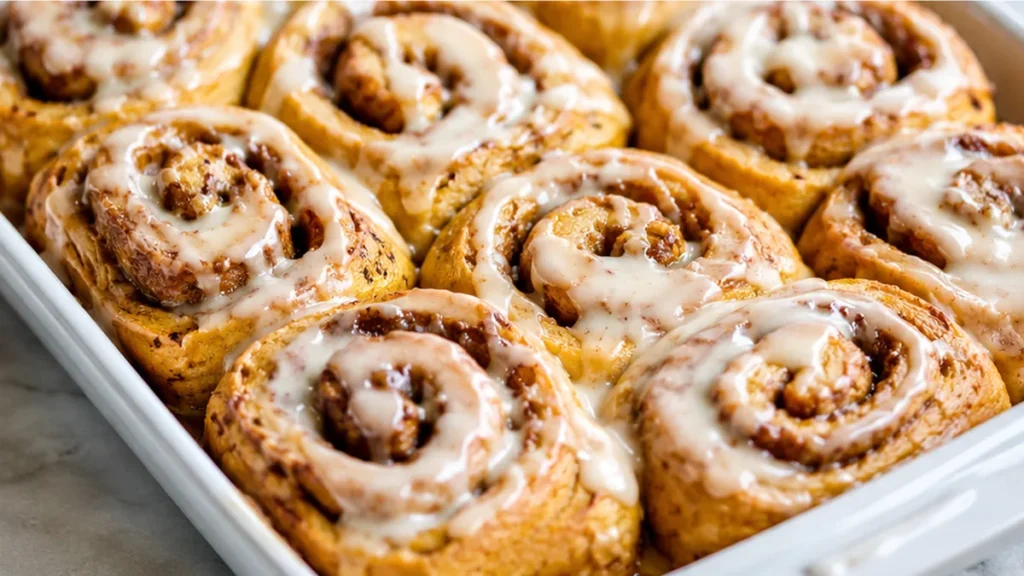
These pumpkin cinnamon rolls are a perfect fall treat, offering comforting flavors in a soft, gluten-free package. I remember the first time I perfected this recipe.
Key takeaways
- Ensure liquids are warm, not hot, to activate yeast properly.
- Incorporate pumpkin puree evenly for consistent texture and flavor.
- Allow dough to proof sufficiently until doubled in size for a light, airy crumb.
- Avoid over-baking to prevent dryness in gluten-free rolls.
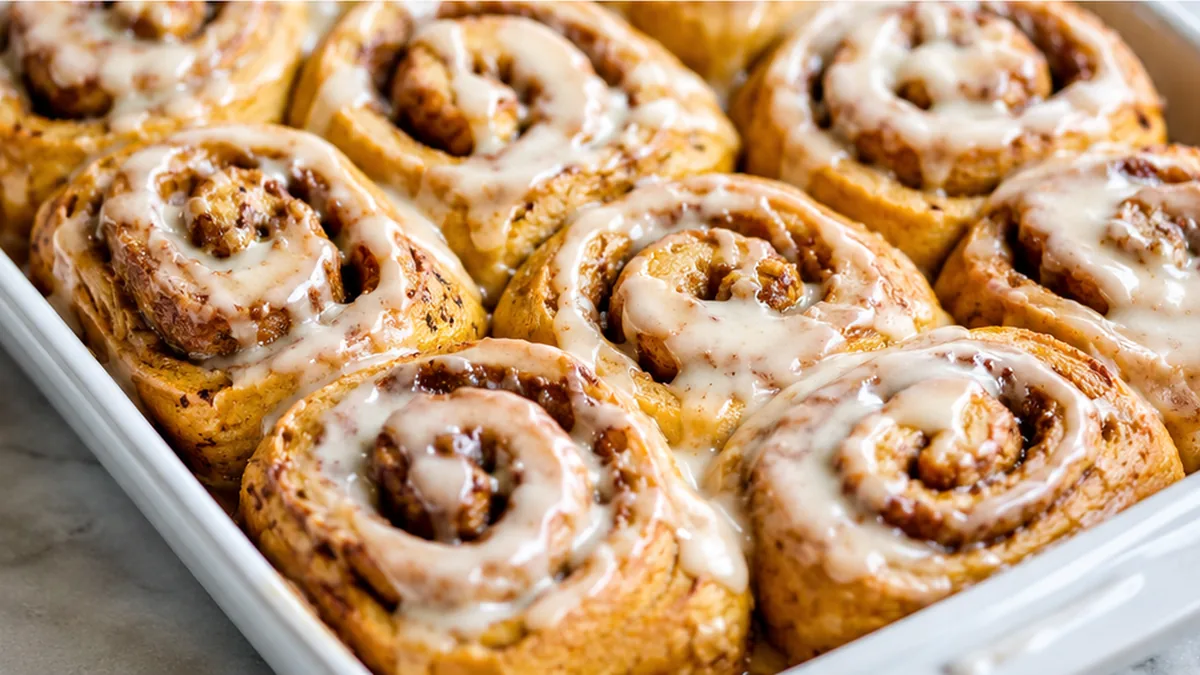
Pumpkin Cinnamon Rolls: Fall Dream!
Ingredients
Method
- In a stand mixer bowl, combine gluten-free bread flour, granulated sugar, instant yeast, salt, and baking powder.
- Add warm water, milk, egg, pumpkin puree, and 4 tablespoons melted butter. Mix on medium for 3 minutes until thick.
- Refrigerate the dough for 20 minutes, then roll it into a 15×15-inch square on a lightly floured surface.
- For the filling, mix brown sugar, cinnamon, ginger, nutmeg, and cloves in a small bowl.
- Spread 2 tablespoons melted butter over the dough, then sprinkle with the cinnamon-sugar mixture.
- Cut the square into twelve 1¼-inch wide strips and arrange in a greased 9×13-inch baking pan.
Notes
– For perfect doneness, the internal temperature of the rolls should reach 200-205°F (93-96°C) when tested with an instant-read thermometer.
– These rolls store beautifully: cover tightly and refrigerate for up to 3 days, or freeze unbaked rolls for up to 1 month. Thaw overnight and bake as usual.
– For a richer flavor, toast your spices lightly before mixing them into the filling. This really brings out their aromatic qualities. Nutrition information is an estimate, calculated automatically. Values vary with brands, substitutions and portion sizes.
The technique that makes it
The success of these pumpkin cinnamon rolls hinges on several key factors, primarily related to dough hydration, yeast activity, and the careful incorporation of pumpkin puree. The gluten-free bread flour blend, while designed for structure, requires precise liquid ratios to achieve the correct dough consistency. The warm water and milk (around 105-115°F or 40-46°C) are crucial for activating the instant yeast. Too hot, and you’ll kill the yeast, resulting in a dense, flat roll. Too cool, and the yeast won’t activate sufficiently, leading to poor rise. The pumpkin puree adds moisture and flavor but also density. It’s important to ensure it’s well-integrated into the wet ingredients to avoid pockets of uncooked puree and to maintain a smooth dough texture. The resting period allows the yeast to ferment, producing carbon dioxide gas that creates the characteristic light and airy texture. Proper proofing (allowing the dough to double in size) before baking is essential for achieving that desired fluffy, tender crumb. The combination of sugar, cinnamon, ginger, nutmeg, and cloves in the filling, along with the melted butter, creates a rich, spiced flavor profile that infuses into the dough during baking.
Troubleshooting
- Problem: Rolls are dense and do not rise.
Fix: Ensure your water and milk were at the correct warm temperature (105-115°F) to properly activate the yeast. Old or inactive yeast can also be the culprit; check the expiration date and consider using fresh yeast.
- Problem: Filling oozes out during baking.
Fix: Make sure the dough is adequately chilled before rolling and filling. Also, avoid over-filling the rolls. A thin, even layer of the butter-sugar-spice mixture is sufficient.
- Problem: Dough is too sticky to handle.
Fix: Gluten-free doughs can be stickier. Lightly flour your work surface and hands with more gluten-free flour, or use a bench scraper to help manage the dough. Avoid adding too much extra flour, which can make the rolls tough.
- Problem: Rolls are dry or crumbly.
Fix: This can be due to insufficient hydration or over-baking. Ensure all wet ingredients are measured accurately, and bake only until the centers are set and lightly golden. Over-baking gluten-free goods can quickly lead to dryness.
Substitutions
- Pumpkin Puree: You can substitute with an equal amount of butternut squash puree for a similar texture and slightly different flavor profile. The color will be similar.
- Gluten-Free Bread Flour: A good quality all-purpose gluten-free flour blend that contains xanthan gum can be used, though the texture might be slightly less chewy.
- Milk: Use a lactose-free milk or a plain, unsweetened plant-based milk like almond or soy milk. The richness might vary slightly.
- Brown Sugar: Coconut sugar can be used as a substitute for light brown sugar in the filling, which will impart a slightly different caramel note and color.
Pro tips
- Don’t be tempted to skip the refrigeration step; it makes the dough much easier to handle and roll, preventing sticking and tearing.
- For perfect doneness, the internal temperature of the rolls should reach 200-205°F (93-96°C) when tested with an instant-read thermometer.
- These rolls store beautifully: cover tightly and refrigerate for up to 3 days, or freeze unbaked rolls for up to 1 month. Thaw overnight and bake as usual.
- For a richer flavor, toast your spices lightly before mixing them into the filling. This really brings out their aromatic qualities.
Dive into the warm, comforting world of these gluten-free pumpkin cinnamon rolls. They’re a delightful way to celebrate the flavors of fall. Share your creations with friends and family!
Frequently asked questions
Why are my pumpkin cinnamon rolls not rising?
This is often due to inactive yeast or incorrect liquid temperature. Ensure your water and milk are warm (105-115°F) to activate the yeast. If the yeast is old, it may not produce enough gas for rising. Check the expiration date and consider using fresh yeast if needed.
Can I use fresh pumpkin instead of puree?
While possible, it’s not recommended for this recipe. Fresh pumpkin needs to be roasted and pureed very smoothly, and its moisture content can vary significantly, affecting the dough consistency. Canned pumpkin puree offers a more reliable and consistent result for baking.
How do I prevent the filling from leaking out?
Chill the dough slightly before rolling and filling. Ensure the butter used for the filling is softened but not melted, and spread the filling evenly without going too close to the edges. This helps the filling stay contained during baking.
Why are my gluten-free cinnamon rolls tough?
Adding too much extra flour when handling sticky gluten-free dough can make the rolls tough. Use a light hand with additional flour, or employ a bench scraper to manage the dough. Proper hydration and avoiding over-mixing are key.
Try this next: Flourless Pumpkin Muffins Recipe
More from Gluten-Free Breakfast & Brunch →