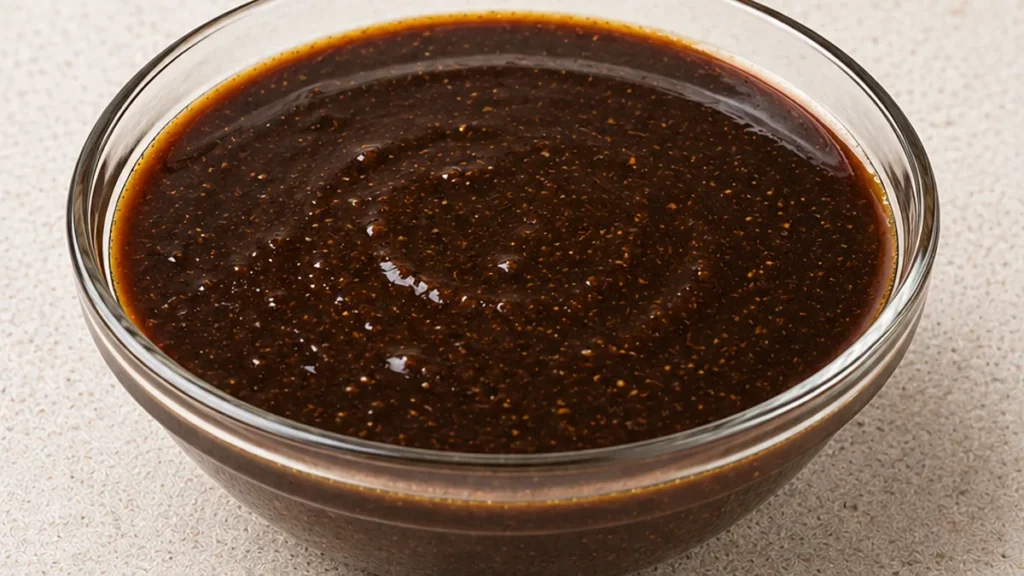
Unlock the rich, savory depth of authentic Worcestershire sauce with this easy homemade, gluten-free recipe. Say goodbye to mystery ingredients and hello to pure, delicious flavor! This recipe is perfect for anyone looking to control their ingredients or simply improve their home cooking. Crafted with accessible ingredients, this Worcestershire sauce offers a complex taste profile that will become a staple in your kitchen for marinades, dressings, and beyond.
Key takeaways
- The key to authentic Worcestershire sauce is the slow simmering and melding of umami-rich ingredients like anchovies and soy sauce with vinegar and molasses.
- Ensure all solids are strained out for a smooth, pourable consistency.
- Adjust sweetness, acidity, and umami levels during or after simmering to achieve the desired balance.
- Substitutions are possible, but be aware they will alter the final flavor profile.
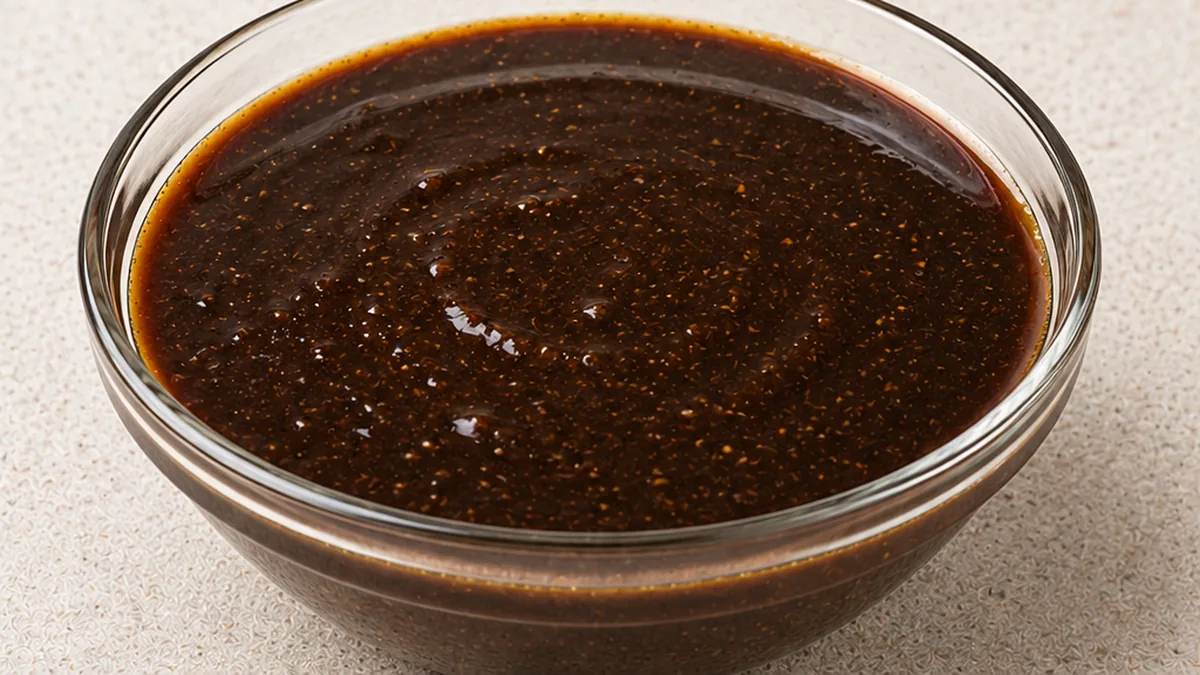
Homemade Worcestershire Sauce Recipe
Ingredients
Method
- Combine the raisins and 1/4 cup water. Set aside and let the raisins soak for 15 minutes.
- Heat the olive oil in a small skillet over medium-low heat. Add the onion and cook for 3-5 minutes until softened. Stir in the garlic, ginger paste and anchovy paste and cook for 1 minute.
- Transfer the onion mixture to a blender. Add the raisin/water mixture and apple cider vinegar. Blend until smooth.
- Pour the mixture into a medium saucepan. Whisk in the remaining 1/2 cup water, 2 tbsp tamarind paste, 1 tbsp fish sauce, 2 tbsp soy sauce, 1 tsp black pepper, 1 tsp dry mustard, 1/2 tsp cardamom, 1/4 tsp cinnamon, 1/8 tsp cloves, and a pinch of cayenne pepper.
- Bring to a simmer over medium-low heat. Simmer for 5-8 minutes.
- Remove from the heat. Put a lid onto the saucepan and leave to steep and cool for 1 hour.
- Strain the mixture through a fine-mesh sieve. Store in an airtight jar or container in the refrigerator for up to 3 months.
Notes
– Don’t skip the steeping time; it allows flavors to meld.
– For a smoother sauce, strain twice through a finer cloth if needed. Nutrition information is an estimate, calculated automatically. Values vary with brands, substitutions and portion sizes.
The technique that makes it
What makes homemade Worcestershire sauce work is the slow, controlled melding of its complex ingredients. The core technique involves a gentle simmer that allows the deep umami flavors from anchovies, fish sauce, and soy sauce to infuse the base. The apple cider vinegar provides necessary acidity to cut through the richness and preserve the sauce, while molasses and tamarind paste contribute sweetness and a characteristic tangy depth. Grated ginger and garlic add aromatic pungency. The initial step of rehydrating raisins in water helps to soften them, making them easier to blend and releasing their subtle sweetness into the liquid. This liquid then forms part of the sauce’s body.
Crucially, the process requires patience. A low simmer prevents the vinegar from evaporating too quickly and allows the spices and aromatics to bloom without scorching. The longer the sauce simmers, the more the flavors will deepen and harmonize. After simmering, the mixture needs to be strained thoroughly to achieve the smooth consistency expected of Worcestershire sauce. Using a fine-mesh sieve, and potentially cheesecloth for an extra-fine result, is essential to remove all solids, ensuring a clear, pourable sauce. The final aging period, even a short one of a day or two, allows the flavors to further meld and mature, resulting in a more rounded and complex taste profile.
Troubleshooting
- Problem: Sauce is too thin. Fix: Simmer uncovered for an additional 15-30 minutes on low heat, stirring occasionally, to allow excess liquid to evaporate and thicken the sauce naturally.
- Problem: Sauce lacks depth or umami. Fix: Ensure you used good quality anchovy paste and fish sauce. You can also add an extra teaspoon of soy sauce or a tiny pinch of MSG (if not avoiding it) to boost savoriness.
- Problem: Sauce is too sweet or too vinegary. Fix: Adjust by adding a little more vinegar if too sweet, or a touch more molasses or a teaspoon of sugar if too vinegary. Reheat gently to incorporate.
- Problem: Spices are overpowering or taste raw. Fix: Simmer for an additional 10-15 minutes to allow the spices to mellow and meld further into the sauce. Ensure spices were fresh.
Substitutions
- Raisins: Can be substituted with dried dates or figs for a similar sweetness and body, though the flavor profile will be slightly different.
- Anchovy paste: For a vegetarian/vegan version, omit. You can try adding a teaspoon of miso paste or extra soy sauce for umami, though the classic anchovy note will be absent.
- Fish sauce: Use an additional tablespoon of soy sauce or tamari for a similar salty, umami boost. The flavor will be less complex.
- Apple Cider Vinegar: White wine vinegar or rice vinegar can be used, but the flavor will be less robust and slightly different. Avoid balsamic as it will overpower.
Pro tips
- Use high-quality anchovy paste for the best flavor.
- Don’t skip the steeping time; it allows flavors to meld.
- For a smoother sauce, strain twice through a finer cloth if needed.
This homemade gluten-free Worcestershire sauce is a real upgrade. Enjoy its authentic flavor in all your favorite recipes!
Try this next: 5-Minute Gluten-Free BBQ Sauce Recipe
More from blog →
Frequently asked questions
Can I make Worcestershire sauce without anchovies?
Yes, you can create a vegan version by substituting the anchovies with a tablespoon of nutritional yeast and a teaspoon of miso paste for that umami depth. This provides a similar savory flavor profile without using any fish products. Adjust seasoning to taste.
How long does homemade Worcestershire sauce last?
Properly stored in an airtight container in the refrigerator, your homemade Worcestershire sauce should last for at least 6 months. Ensure it’s cooled completely before bottling and that your container is clean to maximize shelf life and prevent spoilage.
What can I use instead of tamarind paste in Worcestershire sauce?
If tamarind paste is unavailable, you can substitute it with an equal amount of balsamic vinegar or a combination of 2 parts apple cider vinegar to 1 part brown sugar. These options will provide tanginess and a touch of sweetness, though the flavor will be slightly different.
How do I store homemade Worcestershire sauce?
Store your homemade Worcestershire sauce in a clean, airtight glass bottle or jar. Keep it refrigerated to maintain its quality and prevent spoilage. It’s best to use within six months for optimal flavor. Shake well before each use.