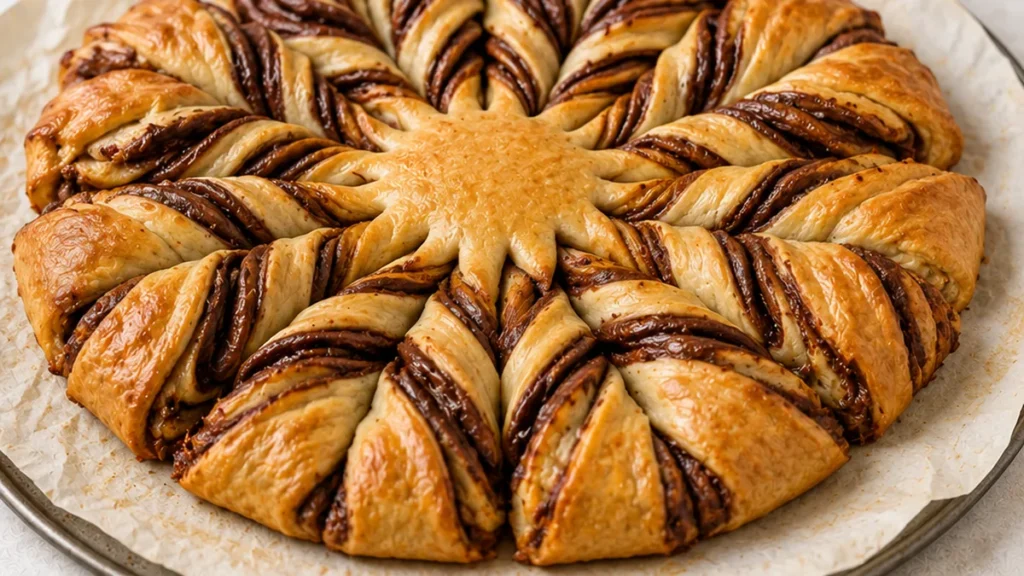
Nutella Star Bread is a visually appealing dessert featuring a rich hazelnut-chocolate filling within a gluten-free dough. This recipe guides you through creating the classic star shape for a beautiful presentation.
Key takeaways
- Ensure liquids are the correct warm temperature for yeast activation.
- Gluten-free doughs are naturally stickier; resist adding too much extra flour.
- Proper hydration is key to a tender, non-crumbly gluten-free bread.
- Accurate cutting and careful handling are important for shaping the star.
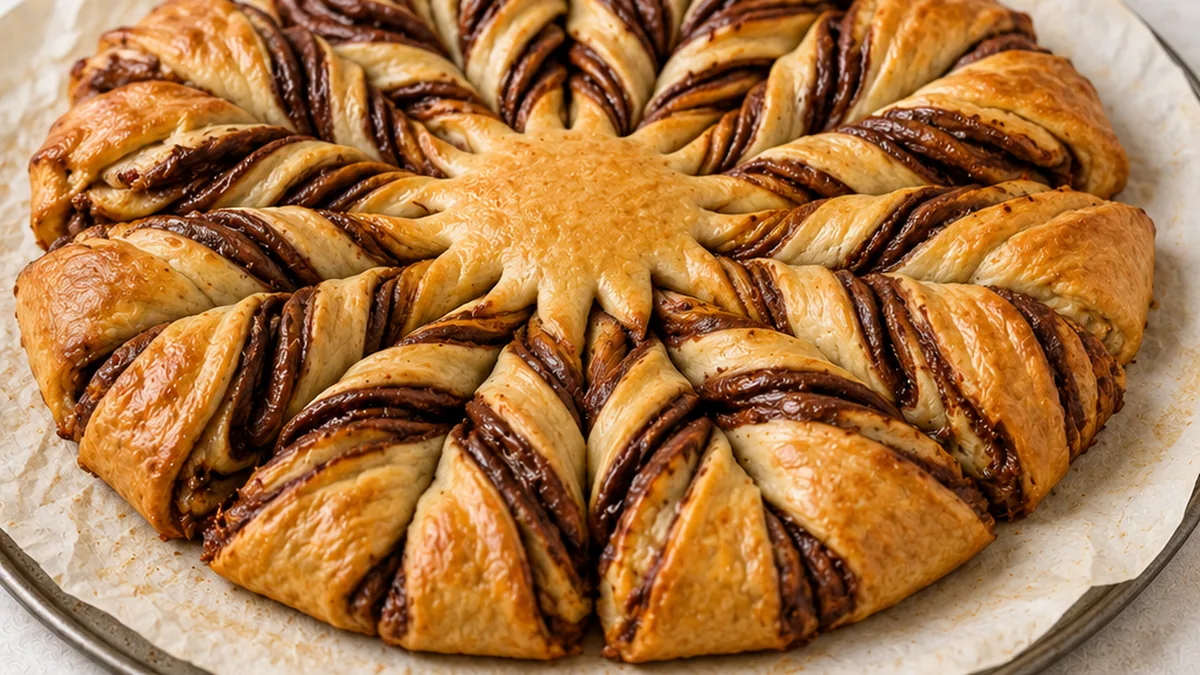
” Gluten-Free Nutella Star Bread”
Ingredients
Method
- In the bowl of a stand mixer fitted with the paddle attachment, add the gluten-free bread flour, sugar, instant yeast, salt and baking powder. Mix to combine.
- With the mixer running on low, slowly add the water, milk, egg and melted butter. Increase the speed to medium and mix for 3 minutes. The dough will resemble thick cookie dough, this is normal.
- Using an oiled rubber spatula, scrape down the bottom and sides of the bowl. Cover the bowl tightly with plastic wrap and let rise in a warm place for 45-60 minutes.
- Lay a piece of parchment paper on a 12-inch pizza tray so that it overhangs a little.
Notes
– Doneness signal: The bread is ready when it’s golden brown and sounds hollow when tapped. An internal temperature of 200-205°F is ideal.
– Storage: Store leftover star bread in an airtight container at room temperature for up to 2 days, or freeze individual slices for up to 1 month. Nutrition information is an estimate, calculated automatically. Values vary with brands, substitutions and portion sizes.
The Science Behind the Star: Hydration and Yeast Activation
The success of this gluten-free Nutella Star Bread hinges on two critical elements: proper hydration and effective yeast activation. Gluten-free flours, like the King Arthur blend used here, behave differently than their wheat counterparts. They lack gluten, the protein network that provides structure and elasticity in traditional bread. Therefore, achieving the right dough consistency is paramount. The combination of warm water (around 105-115°F or 40-46°C) and warm milk (at the same temperature) is crucial for activating the instant yeast. Too cold, and the yeast won’t wake up sufficiently, leading to a dense loaf. Too hot, and you risk killing the yeast, also resulting in poor rise.
The recipe calls for a relatively high liquid-to-flour ratio (approximately 1.5 cups liquid for 3 cups flour). This higher hydration is necessary to compensate for the absorbent nature of gluten-free starches and gums, ensuring a tender crumb rather than a dry, crumbly texture. The melted butter adds richness and contributes to the dough’s softness. The baking powder provides an extra lift, acting as a chemical leavener to supplement the yeast, which is particularly helpful in gluten-free baking where the structure is less robust.
Troubleshooting
- Problem: Dough is too sticky and unmanageable.
Fix: Gluten-free doughs are often stickier than wheat doughs. Instead of adding more flour (which can make it dense), lightly flour your hands and work surface, or use a bench scraper to help shape and transfer the dough. A slightly tacky dough is often desirable for tenderness. - Problem: Bread did not rise well.
Fix: Ensure your water and milk were the correct warm temperature for yeast activation. Check the expiration date of your instant yeast; old yeast loses potency. Also, ensure your kitchen is warm enough; a drafty, cold room can significantly slow down yeast activity. - Problem: Star points are not well-defined or dough spread too much.
Fix: This can happen if the dough was over-proofed or if the cuts were made too close to the center. Ensure you are chilling the dough briefly after shaping if it becomes too soft to handle. Make clean, decisive cuts with a sharp knife or pizza cutter. - Problem: Bread is dry or crumbly.
Fix: This usually indicates insufficient hydration or overbaking. Double-check the liquid measurements. Ensure the dough is soft and slightly sticky before baking. Avoid baking for longer than necessary; bake until just golden brown.
Substitutions
- Milk: You can substitute the whole milk with lactose-free milk or a plain, unsweetened plant-based milk like almond or soy milk. The results will be similar, though whole milk provides a richer flavor and slightly softer texture.
- Butter: For a dairy-free option, substitute the melted butter with a neutral-flavored oil like vegetable or canola oil, or a dairy-free butter substitute. The bread will still be tender, though the flavor profile might change slightly.
- Nutella: If you cannot find Nutella or prefer a different filling, you can use other chocolate-hazelnut spreads, thick fruit preserves (like raspberry or apricot), or even a cinnamon-sugar mixture. The consistency of the filling will affect how it spreads and bakes.
- Gluten-Free Flour Blend: While this recipe is specifically tested with King Arthur Gluten-Free Bread Flour, other 1-to-1 gluten-free baking blends containing xanthan gum can be used. Results may vary slightly depending on the specific blend’s composition.
Pro tips
- Make ahead: The star bread can be assembled and refrigerated for up to 12 hours before baking. Simply take it out 30 minutes before baking to come to room temperature.
- Doneness signal: The bread is ready when it’s golden brown and sounds hollow when tapped. An internal temperature of 200-205°F is ideal.
- Storage: Store leftover star bread in an airtight container at room temperature for up to 2 days, or freeze individual slices for up to 1 month.
This Nutella Star Bread is not just a dessert; it’s a centerpiece that promises ‘wows’ and satisfied smiles. Give it a try and share your stunning creations!
Frequently asked questions
Can I use active dry yeast instead of instant yeast?
Yes, but you’ll need to activate it first. Dissolve the active dry yeast in the warm water (not milk) with a pinch of sugar and let it sit for 5-10 minutes until foamy before adding it to the other wet ingredients. Instant yeast can be mixed directly with dry ingredients.
How do I know when the dough has proofed enough?
The dough should look puffy and nearly doubled in size. Gently poke the dough with a floured finger; if the indentation slowly springs back, it’s ready. If it springs back immediately, it needs more time. If it stays indented, it may be over-proofed.
What is the best way to cut the star shape?
After spreading the Nutella and layering the dough, use a sharp knife or pizza cutter to make four cuts from the center outwards, dividing the dough into quarters. Then, make two diagonal cuts within each quarter, resulting in eight points. Twist each point outward to form the star shape.
Can I make this bread ahead of time?
You can prepare the dough and let it do its first rise in the refrigerator overnight. Shape and let it proof at room temperature before baking. Baked bread is best enjoyed the same day but can be stored in an airtight container for 1-2 days.
Try this next: The ULTIMATE Gluten-Free Pumpkin Bread!
More from Gluten-Free Bread & Baking →