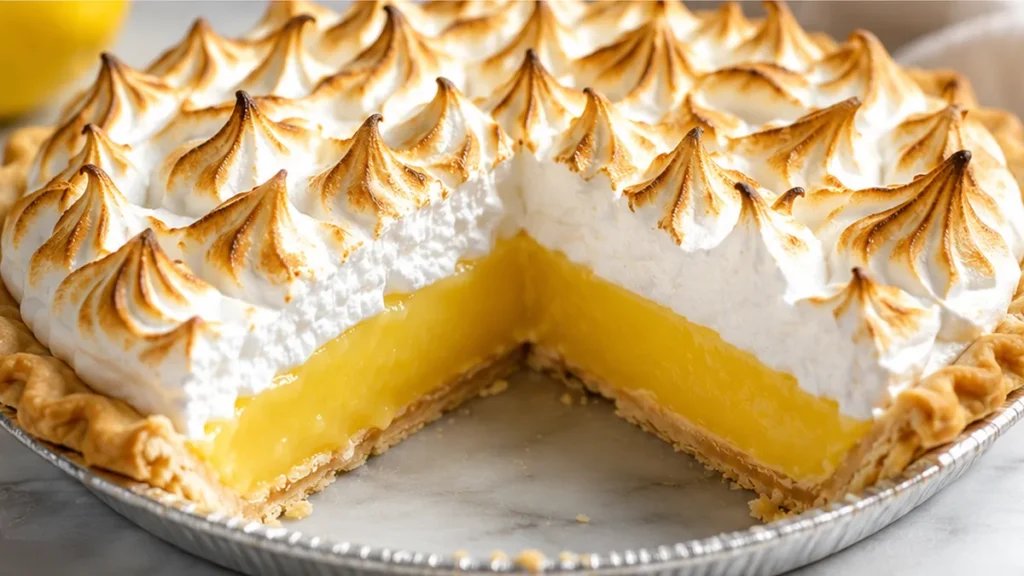
The ultimate gluten-free lemon meringue pie recipe for those seeking a bright, tangy, and utterly delicious dessert without the gluten. This recipe delivers a perfectly crisp, buttery crust, a zesty lemon filling, and a cloud-like meringue topping, proving that gluten-free can be extraordinary. Crafted with care, this gluten-free lemon meringue pie is designed to impress. Whether you’re a seasoned baker or new to gluten-free cooking, this guide will help you achieve a spectacular result that rivals any traditional pie. Get ready to brighten your table with this showstopper.
Key takeaways
- The key to a great gluten-free lemon meringue pie is a flaky crust and a stable, smooth filling.
- Cold ingredients and minimal handling are crucial for the gluten-free crust.
- Thoroughly cooking the cornstarch filling ensures thickness and prevents a starchy taste.
- Properly tempering egg yolks and baking the meringue prevents weeping and collapsing.
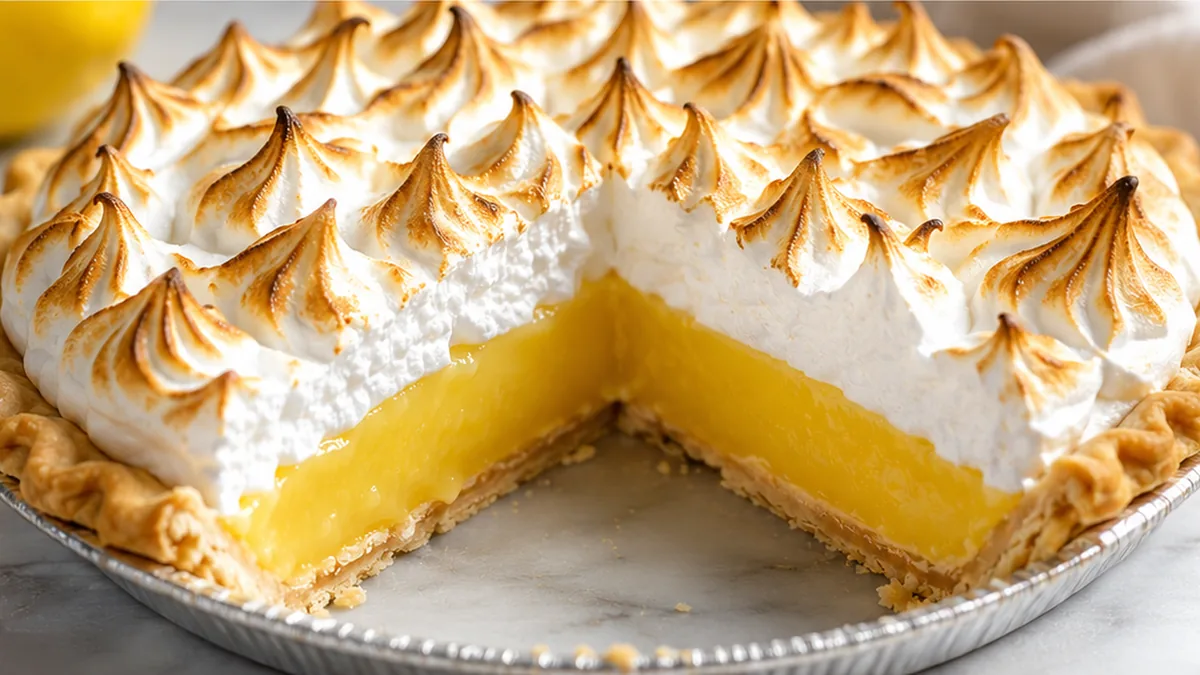
Ultimate Gluten-Free Lemon Meringue Pie Recipe
Ingredients
Method
- Place the gluten-free flour, sugar, salt, and butter in a food processor and pulse a few times until coarse and a few pea-sized pieces of butter are visible.
- Add the apple cider vinegar and one tablespoon of water at a time, and pulse 2 times after each tablespoon of water. Add water until the dough comes together and forms large clumps.
- Shape the dough into a disk without kneading and wrap tightly in plastic wrap. Chill for 1 hour or up to 2 days.
- Preheat oven to 350°F (180°C).
- Roll the chilled pie crust into a ¼-inch thick circle and carefully transfer to a 9-inch pie dish and pierce a few times with a fork.
- Line the crust with a piece of parchment paper and fill it with baking beans, uncooked beans, or uncooked rice. Bake for 20 minutes, then carefully remove the parchment paper and the baking beans and bake the crust an additional 5 minutes. Remove from the oven and set aside while you prepare the filling.
- In a small bowl, whisk egg yolks and cornstarch until combined, about 1 minute.
- In a medium saucepan, bring water, lemon juice, sugar, and salt to a simmer. Stir constantly, and cook until thickened about 3-4 minutes.
Notes
– Use fresh lemon juice for the most vibrant flavor.
– Don’t overwork the pie dough to maintain a tender crust.
– Chill the dough sufficiently for easier handling. Allergens: Eggs, Milk. Nutrition information is an estimate, calculated automatically. Values vary with brands, substitutions and portion sizes.
The technique that makes it
The success of a truly great lemon meringue pie hinges on two key components: the gluten-free crust and the silky, stable lemon filling. For the crust, the cold butter and minimal water are crucial. The cold butter creates steam pockets as it bakes, resulting in a flaky texture, a characteristic often difficult to achieve with gluten-free flours. The apple cider vinegar tenderizes the gluten-free flour’s structure, preventing a tough or crumbly base. Ensuring the butter is truly cold and the water is added sparingly prevents overworking the dough, which can lead to toughness. For the lemon filling, the cornstarch is the primary thickening agent. It needs to be cooked thoroughly to eliminate any starchy taste and to fully hydrate, creating a stable gel. The egg yolks add richness and contribute to the filling’s smooth, custardy texture. It’s important to temper the egg yolks by slowly whisking a small amount of the hot lemon mixture into them before adding them back to the pot. This gradual heating prevents the yolks from scrambling, ensuring a velvety smooth filling.
Troubleshooting
- Meringue weeping (liquid pooling on top): This is often caused by undercooked sugar in the meringue or too much humidity. Ensure the sugar is fully dissolved by rubbing a bit between your fingers; it should feel smooth, not gritty. Bake the meringue briefly at a slightly lower temperature if humidity is high.
- Meringue shrinking or collapsing: This can happen if the meringue is not cooked long enough, or if the filling is too hot when the meringue is applied. Ensure the filling has cooled slightly, and bake the meringue until it’s set and lightly golden.
- Tough gluten-free crust: Overworking the dough or using too much water can lead to a tough crust. Handle the dough as little as possible and add water just until it comes together. Chilling the dough before baking also helps relax the gluten-free flours.
- Runny lemon filling: Insufficient cooking time for the cornstarch is the usual culprit. The filling must reach a thick, pudding-like consistency and be cooked for at least a minute after thickening to ensure the cornstarch is fully activated.
Substitutions
- Gluten-free flour blend: While a 1:1 blend is recommended, if you are using a blend without xanthan gum, you may need to add it (follow package directions) for binding. The texture might vary slightly depending on the specific blend.
- Butter: Dairy-free butter sticks designed for baking can be used in the crust with similar results. For the filling, if omitting butter entirely, the richness will be slightly reduced, but the texture will remain smooth due to the cornstarch and egg yolks.
- Cornstarch: Tapioca starch or arrowroot powder can be used as substitutes for cornstarch, but they may require slightly different cooking times and can sometimes result in a slightly less stable gel.
- Lemon juice: A combination of lemon and lime juice can offer a slightly different citrus profile, but ensure the total liquid volume remains the same to maintain the correct filling consistency.
Pro tips
- Ensure your gluten-free flour is well-mixed before measuring.
- Use fresh lemon juice for the most bright, fresh flavor.
- Don’t overwork the pie dough to maintain a tender crust.
- Chill the dough sufficiently for easier handling.
Enjoy this delightful gluten-free lemon meringue pie, a perfect balance of tart and sweet. Share this sunshine on a plate with your loved ones!
Try this next: Gluten-Free Key Lime Pie Recipe
More from Gluten-Free Desserts & Sweets →
Frequently asked questions
Can I make gluten-free lemon meringue pie ahead of time?
Yes, the crust and lemon filling can be made a day in advance. Store the cooled filling in the refrigerator and the baked crust at room temperature. Assemble and top with meringue just before serving for the best texture and appearance.
What is the best gluten-free flour for pie crust?
A blend of gluten-free flours like rice flour, tapioca starch, and potato starch works well for a flaky crust. Adding a binder like xanthan gum is crucial for structure. Ensure your blend is specifically formulated for baking to achieve optimal results.
How do I prevent meringue from weeping or beading?
Ensure your egg whites are at room temperature and free of any yolk. Beat them until stiff peaks form, gradually adding sugar. Spread the meringue evenly over the hot filling, sealing it to the crust edges to prevent moisture loss and weeping.
How long does gluten-free lemon meringue pie last?
Store the assembled pie in the refrigerator. It’s best consumed within 1-2 days. The meringue may start to weep or become soggy over time, so for optimal freshness, enjoy it the day it’s made or the following day.