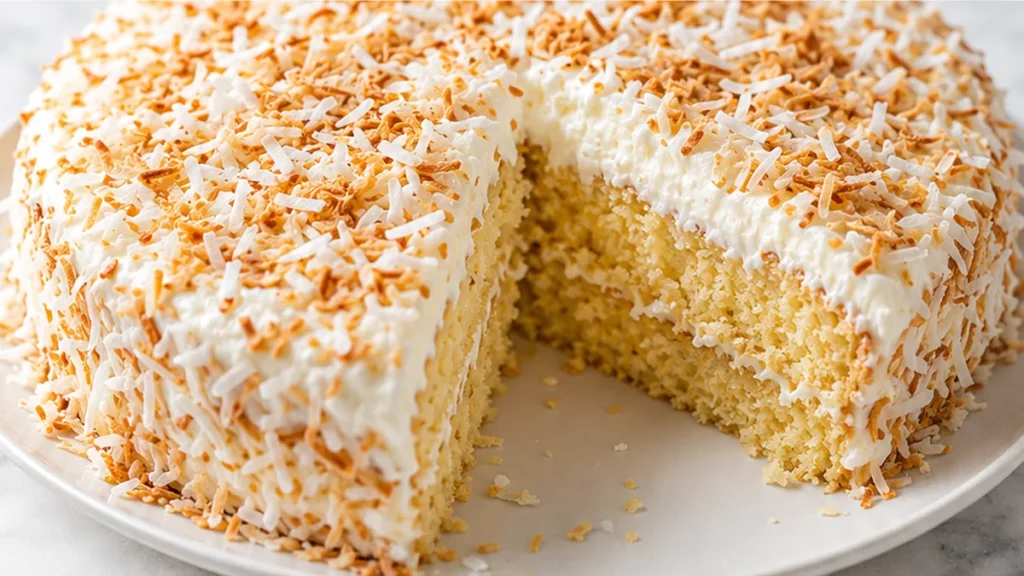
This gluten-free coconut cake is an absolute showstopper, offering a moist crumb and an explosion of tropical flavor in every bite. Perfect for those with gluten sensitivities or anyone craving a taste of paradise, this recipe simplifies the process without sacrificing taste or texture. You’ll be amazed at how easy it is to create a bakery-worthy dessert right in your own kitchen. We’ve perfected this coconut cake recipe to ensure a tender crumb and a delightful coconut aroma that fills your home as it bakes. It’s a versatile dessert that pairs beautifully with a rich cream cheese frosting, making it ideal for birthdays, holidays, or simply a special weekend treat.
Key takeaways
- Room temperature ingredients are key for proper emulsification and even baking.
- Full-fat coconut milk and oil ensure a moist, tender crumb in gluten-free baking.
- Accurate flour measurement and avoiding overmixing prevent a dense cake.
- Toasting coconut flakes can enhance their flavor contribution.
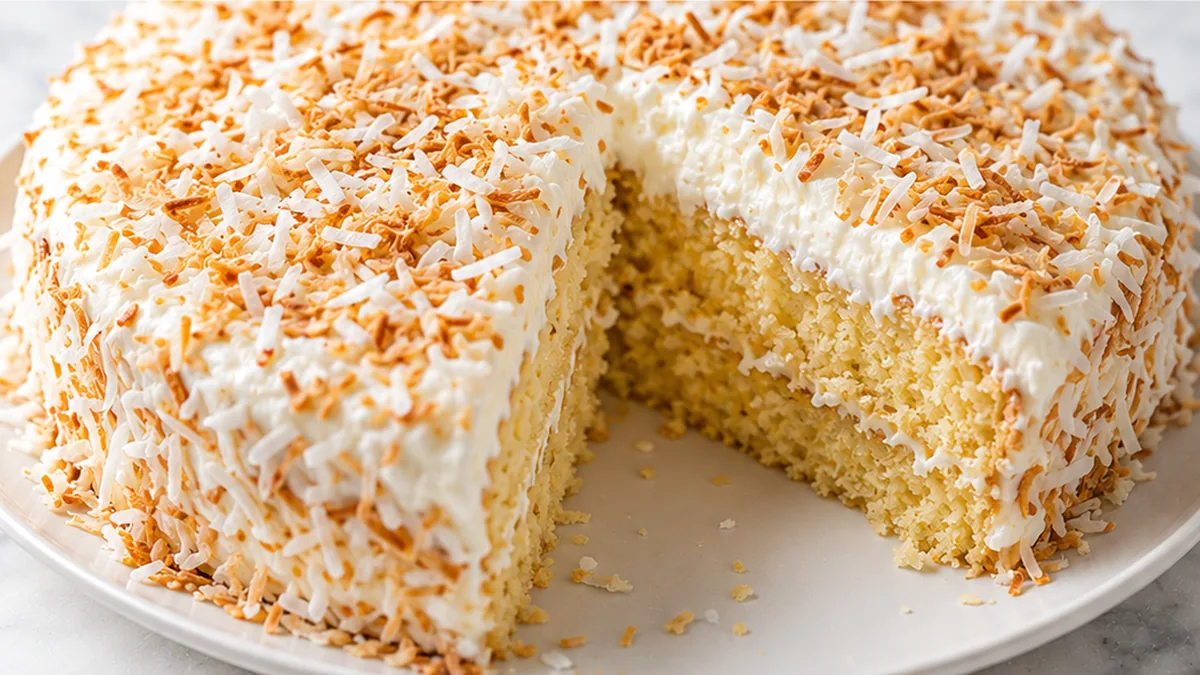
Tropical Coconut Dream Cake
Ingredients
Method
- Preheat oven to 350°F (180°C). Grease and line two 8-inch cake pans with parchment paper.
- In a medium bowl, whisk together the gluten-free flour, shredded coconut, baking powder, and salt.
- In a large bowl, mix eggs and sugar until combined. Add coconut milk, vegetable oil, vanilla extract, and coconut extract.
- Gradually add the dry ingredients to the wet ingredients, stirring until just combined. Do not overmix.
- Pour batter evenly into prepared pans and bake for 20-25 minutes, or until a toothpick inserted into the center comes out clean.
- Let cakes cool in pans for 10 minutes before inverting onto a wire rack to cool completely.
- Prepare frosting: Beat butter and cream cheese until fluffy. Gradually add powdered sugar, then vanilla, salt, and coconut milk until smooth.
- Once cakes are fully cooled, assemble by frosting between layers and over the entire cake.
Notes
– Ensure eggs and coconut milk are at room temperature for best incorporation.
– For extra coconut flavor, toast the shredded coconut lightly before adding.
– Don’t overmix the batter after adding dry ingredients to maintain a tender crumb. Allergens: Wheat. Nutrition information is an estimate, calculated automatically. Values vary with brands, substitutions and portion sizes.
The technique that makes it
The success of this Tropical Coconut Dream Cake hinges on a few key techniques that ensure a moist, tender crumb and a distinct coconut flavor. Firstly, using room temperature eggs and coconut milk is crucial. Room temperature ingredients emulsify more easily, creating a smoother batter that bakes evenly. Cold liquids can cause the fats to seize, resulting in a denser cake. Secondly, the combination of full-fat coconut milk and vegetable oil provides ample moisture and richness, preventing the gluten-free flour from drying out. Gluten-free flours can sometimes absorb more liquid, so ensuring adequate fat and moisture is vital. The shredded coconut flakes not only add texture but also infuse the cake with concentrated coconut flavor as they bake. Lastly, the precise ratio of baking powder to flour is important for lift. Gluten-free baked goods can sometimes be heavy, so the leavening agent needs to be balanced correctly with the flour blend to achieve a light, airy texture without sacrificing structure.
Troubleshooting
- Cake is dry and crumbly: This often happens with gluten-free cakes. Ensure you measured the flour accurately (spoon and level method). Using full-fat coconut milk and not overbaking are also key. Try reducing the baking time by a few minutes next time.
- Cake is too dense: Ensure your eggs and coconut milk were at room temperature. Overmixing the batter after adding wet ingredients can also develop toughness in gluten-free flours. Mix only until just combined.
- Coconut flavor is weak: Ensure you are using full-fat coconut milk, not light. Toasting the shredded coconut flakes lightly before adding them to the batter can also intensify their flavor.
- Cake sinks in the middle: This can be due to underbaking or too much leavening. Make sure a toothpick inserted into the center comes out clean. Ensure your baking powder is fresh.
Substitutions
- Gluten-free flour blend: A good quality all-purpose gluten-free flour blend containing xanthan gum will work. Results may vary slightly depending on the blend’s composition.
- Vegetable oil: Melted coconut oil or a neutral-flavored oil like canola or grapeseed oil can be used. This will slightly alter the fat profile and potentially the flavor.
- Full fat coconut milk: Canned full-fat coconut milk is best for richness. In a pinch, you could use regular milk or a dairy-free alternative like almond milk, but the cake will be less rich and moist.
- Sweetened shredded coconut flakes: Unsweetened shredded coconut can be used, but you may need to slightly increase the sugar in the recipe to compensate for the lack of sweetness.
Pro tips
- Use full-fat canned coconut milk for the richest flavor and texture.
- Ensure eggs and coconut milk are at room temperature for best incorporation.
- For extra coconut flavor, toast the shredded coconut lightly before adding.
- Don’t overmix the batter after adding dry ingredients to maintain a tender crumb.
Enjoy this delightful gluten-free coconut cake, a guaranteed crowd-pleaser that’s both easy to make and incredibly delicious. Feel free to add a touch of lime zest for a tropical twist!
Try this next: OMG! The BEST Almond Flour Carrot Cake!
More from Gluten-Free Desserts & Sweets →
Frequently asked questions
Can I use a different flour for this coconut cake?
Yes, you can substitute a gluten-free all-purpose flour blend for the coconut flour. Ensure your blend contains xanthan gum. If it doesn’t, add 1/2 teaspoon. Almond flour can also work, but may result in a denser cake. Adjust liquid as needed.
How do I know when the Tropical Coconut Dream Cake is done baking?
The cake is done when a toothpick inserted into the center comes out clean. The edges should also be pulling away slightly from the sides of the pan. Avoid overbaking to maintain moisture. Watch for a golden-brown color.
Can I make this coconut cake ahead of time?
Absolutely. The unfrosted cake can be baked a day in advance and stored tightly wrapped at room temperature. For best results, frost the cake just before serving or up to a few hours ahead. Ensure it’s completely cooled before wrapping.
How should I store leftover Tropical Coconut Dream Cake?
Store any leftover cake in an airtight container at room temperature for up to 2 days. If frosted with cream cheese or dairy-based frosting, refrigerate it and bring to room temperature before serving for optimal texture. Avoid direct sunlight.