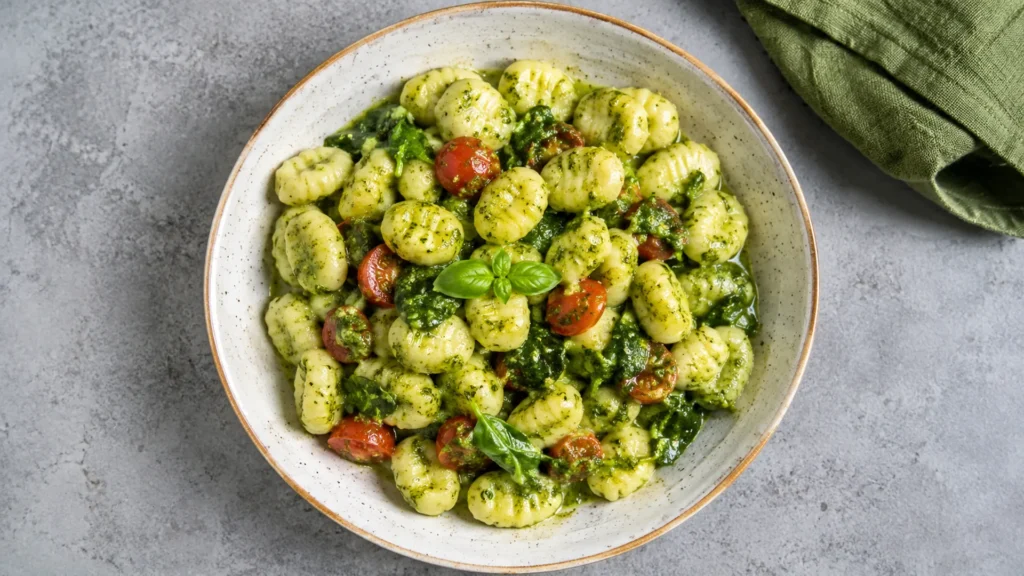
If you want gluten free gnocchi that comes out soft and pillowy instead of gummy and dense, the first thing to know is that traditional gnocchi is not gluten free at all. Classic Italian potato gnocchi leans on wheat flour to bind the dough, and many shelf brands tuck a little semolina or “00” flour in there too. That is a real problem if you have celiac disease or a gluten sensitivity, because gnocchi looks innocent and most people assume it is just potato. It is not. The good news is that a safe, genuinely delicious version is completely within reach, whether you grab a bag off the shelf or roll your own dumplings at the kitchen counter. I have made both more times than I can count, and the difference between a sad, sticky batch and a tender, golden one comes down to a handful of habits I will walk you through here.
My goal with this guide is simple. I want you to leave knowing exactly which store brands are trustworthy, how to read a label so a sneaky binder never gets past you, how to build a homemade dough that holds together without turning to glue, and how to cook either kind so the outside crisps while the inside stays soft. We will talk potatoes, flour blends, eggs, sauces, and the small mistakes that wreck a batch. By the end you should feel confident enough to make gnocchi on a weeknight without a single second of dread about whether it is safe to eat.
Why Traditional Gnocchi Is Not Gluten Free
Gnocchi is an Italian dumpling, and the most familiar style is made from cooked potato bound with flour and sometimes egg. That flour is almost always wheat. Wheat does two jobs in classic gnocchi. It soaks up moisture from the potato so the dough is workable, and its gluten gives the dumpling enough structure to survive a boil without dissolving. Take the wheat out and you lose both of those things at once, which is exactly why a naive swap to a plain starch usually fails. Ricotta gnocchi and the Roman semolina style called gnocchi alla Romana also rely on wheat or wheat semolina, so they are off the table too unless they are specifically built to be gluten free.
This matters because gnocchi hides in a lot of places. A restaurant might toss it in brown butter and never mention the flour. A frozen dinner might list it as a side. A deli case might sell it fresh next to gluten free pasta and let you assume they are the same. They are not. If you react to even small amounts of gluten, you have to treat every plate of gnocchi as suspect until proven otherwise. The same caution you would apply to ordinary wheat pasta applies here, and if you want a refresher on how broad that wheat trap really is, my rundown on gluten free choices in my gluten free bread guide covers the same label-reading instincts that keep you safe at the gnocchi shelf.
There is one more wrinkle worth flagging. “Cauliflower gnocchi” sounds like an automatic safe bet, but it is not. Some cauliflower gnocchi products use wheat flour as a binder even though cauliflower is the headline ingredient. Never let a vegetable on the front of the bag stand in for actually reading the back. A product is only gluten free if the label says so or the ingredient list is clean, and ideally if it carries a certification. We will get into specific brands in a moment.
Store-Bought Gluten Free Gnocchi: Brands That Work
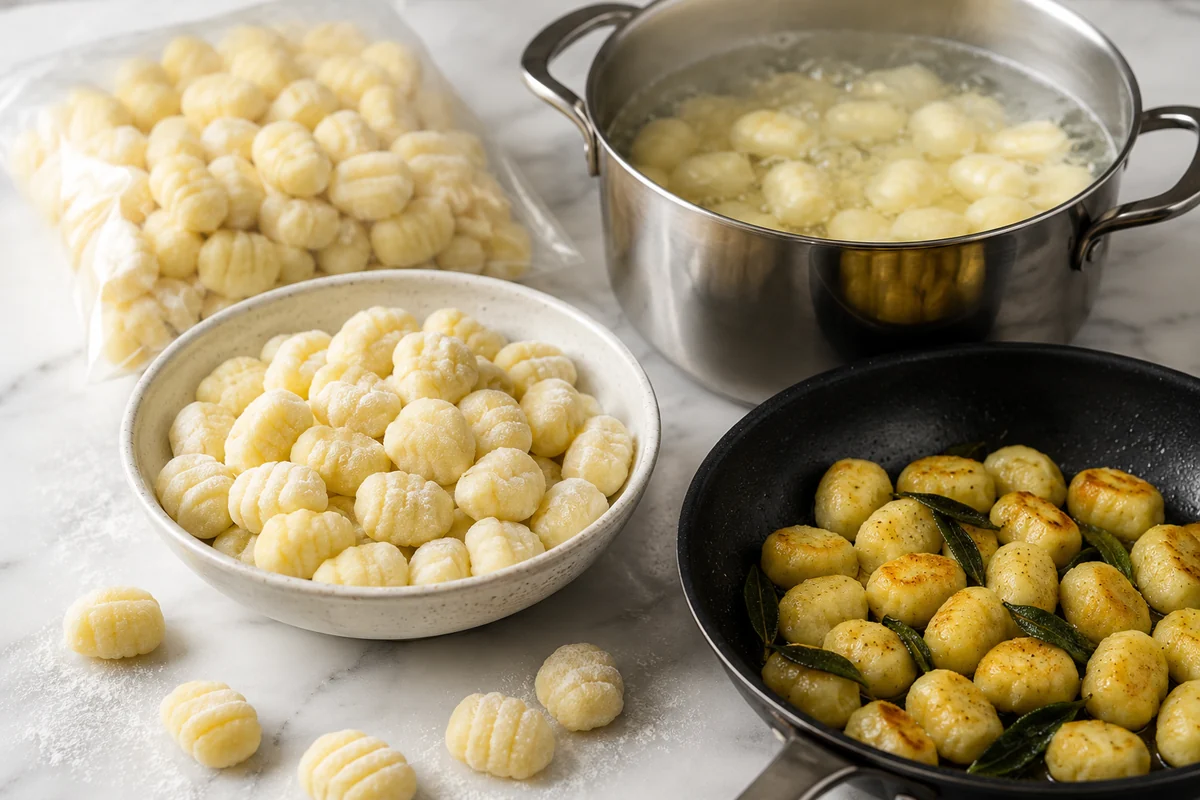
When you do not have an hour to mash potatoes, a good bag of store-bought gluten free gnocchi is a genuine weeknight rescue. The market has grown a lot, and there are now a few options that are easy to find in the United States. The most established is DeLallo Gluten Free Gnocchi, which is built mainly from potato and rice flour, roughly eighty-five percent potato, and is produced in a dedicated gluten free facility in Abruzzo, Italy. That dedicated facility detail is a big deal for celiac shoppers because it means there is no shared line with wheat products. DeLallo comes in a standard size and a mini size, and you can find it at Walmart, at many Aldi stores, and online.
Then there is the cauliflower category, which is popular because it is lower in carbs and quick to crisp. Caulipower makes a cauliflower gnocchi that is gluten free with a mild vegetable flavor. Trader Joe’s Cauliflower Gnocchi is the cult favorite, built from cauliflower, cassava flour, potato starch, olive oil, and salt, which means cassava is doing the binding rather than wheat. It is gluten free, but read your specific bag every time because formulas can change. The thing to understand about all cauliflower gnocchi is that it does not behave like potato gnocchi. It is softer, a little more delicate, and it shines when you pan-fry it dry rather than boil it. Boiling cauliflower gnocchi tends to turn it mushy.
Below is a quick comparison to help you choose at the shelf. Treat it as a starting point, not gospel, because availability and recipes shift over time.
One practical tip for store bags: do not crowd the pan. Whether you are searing potato gnocchi after a quick boil or crisping cauliflower gnocchi straight from frozen, give the pieces room so they brown instead of steaming each other into a soft pile. A single layer in a hot skillet with a little oil is the whole secret to that crispy outside, pillowy inside contrast everyone loves.
How to Make Gluten Free Gnocchi at Home
Homemade gluten free gnocchi is not hard, but it is unforgiving of shortcuts. The whole game is moisture control. Too much water in your potato and you will keep adding flour to compensate, which gives you dense, gluey dumplings that taste like paste. Get the potato dry and your dough needs less flour, which keeps the gnocchi light. Start with starchy potatoes, not waxy ones. Russets are the classic American choice, and Yukon Gold works well too. Avoid red or new potatoes, which hold too much water.
The single most important decision is how you cook the potato. Do not boil it. Boiling waterlogs the flesh and forces you into the flour spiral I just described. Instead, bake the potatoes whole at around 400 degrees Fahrenheit for forty-five minutes to an hour, until they are completely soft when pierced. Baking in dry oven heat drives off moisture and gives you a fluffy interior that needs very little flour to come together. The moment they are cool enough to handle, scoop the flesh out and pass it through a potato ricer or a food mill. A ricer matters more than people think. It produces fine, even strands without overworking the starch. A food processor or heavy mashing does the opposite, releasing sticky starch and guaranteeing a gummy result.
Once the potato is riced and has steamed off for a few minutes, you add your gluten free flour, salt, and egg. For most home cooks the easiest path is a good one-to-one or cup-for-cup gluten free flour blend that already contains xanthan gum, because that gum stands in for the missing wheat structure and helps the dumplings hold their shape. If your blend has no xanthan gum, add about a quarter teaspoon per cup of flour. Egg is the other binder. A whole egg gives reliable structure, while egg yolk alone gives a richer, more tender dumpling, which is the choice many Italian cooks prefer. Work the dough only until it just comes together. The instant it forms a soft, slightly tacky ball that does not stick to your hands, stop. Overworking is the enemy.
To shape, divide the dough into pieces and roll each into a rope about three-quarters of an inch thick on a lightly floured surface, then cut the rope into bite-size pillows. If you want the classic ridges that grab sauce, press each piece against the tines of a fork or a gnocchi board and let it roll off. The ridges are not just decoration. They create more surface for sauce to cling to and they help the dumpling cook evenly. Dust the finished gnocchi lightly with more gluten free flour so they do not stick to each other while you finish the batch.
Flour Blends and Binders That Actually Hold
The flour question is where a lot of homemade attempts go sideways, so it is worth slowing down. Plain rice flour on its own tends to be gritty and can taste powdery, and pure white starches alone go gummy fast because they have no protein at all to provide structure. A blend works far better than any single flour. The reliable shortcut is a quality cup-for-cup blend with xanthan gum, the same kind you would reach for if you were exploring gluten free baking more broadly. If you like to build your own, a mix that leans on a fine flour for body plus a starch like tapioca for chew tends to give the most gnocchi-like bite, and a small amount of xanthan gum ties it together.
Here is a quick look at common options and what to expect from each.
Whatever you choose, add the flour gradually. Start with less than you think you need, work it in, and only add more if the dough is still too wet to roll. Every batch of potatoes carries a slightly different amount of water, so a fixed number on a recipe card is just a guideline. You are looking for a dough that is soft and barely tacky, not stiff and dry. A dry, over-floured dough makes heavy gnocchi. The skill is in reading the dough by feel, and after a batch or two your hands will know it.
The Cooking Technique: Boil Until They Float, Then Sear
Cooking gnocchi is fast, which is part of why it makes such a great weeknight dinner. Bring a large pot of well-salted water to a rolling boil and drop the gnocchi in a batch at a time so you do not crash the temperature. They will sink at first. Within a couple of minutes they begin to float, and floating is your signal that they are essentially cooked through. Give them another thirty to sixty seconds after they rise, then lift them out with a slotted spoon rather than pouring the whole pot into a colander, which can bruise the delicate dumplings. Work in batches so the pot is never crowded.
Here is the move that turns good gnocchi into great gnocchi, and it is the step the boil-only recipes skip. After the dumplings float and you scoop them out, finish them in a hot skillet. Melt a little butter or warm a slick of olive oil over medium-high heat, lay the gnocchi in a single layer, and let them sit undisturbed until the bottoms turn golden and crisp before you toss them. That two-stage method, boil then sear, gives you a crackly, caramelized exterior wrapped around a soft center. It is the same logic that makes store-bought cauliflower gnocchi so good when you pan-fry it. For potato gnocchi the boil sets the structure first, and the sear adds the texture and the flavor. Do not skip the resting moment in the pan. If you stir too soon, you steam them instead of browning them, and you lose the whole point.
If you are short on time and using a frozen store bag, you can often skip the boil entirely and go straight to the skillet, especially with cauliflower gnocchi. Add the frozen pieces to a hot, lightly oiled pan, leave them alone to thaw and brown on one side, then toss and finish. Covering the pan for a minute or two early on helps them cook through before the outside overbrowns. The result is fast, crisp, and satisfying with almost no effort.
Why Gluten Free Gnocchi Goes Gluey and How to Avoid It
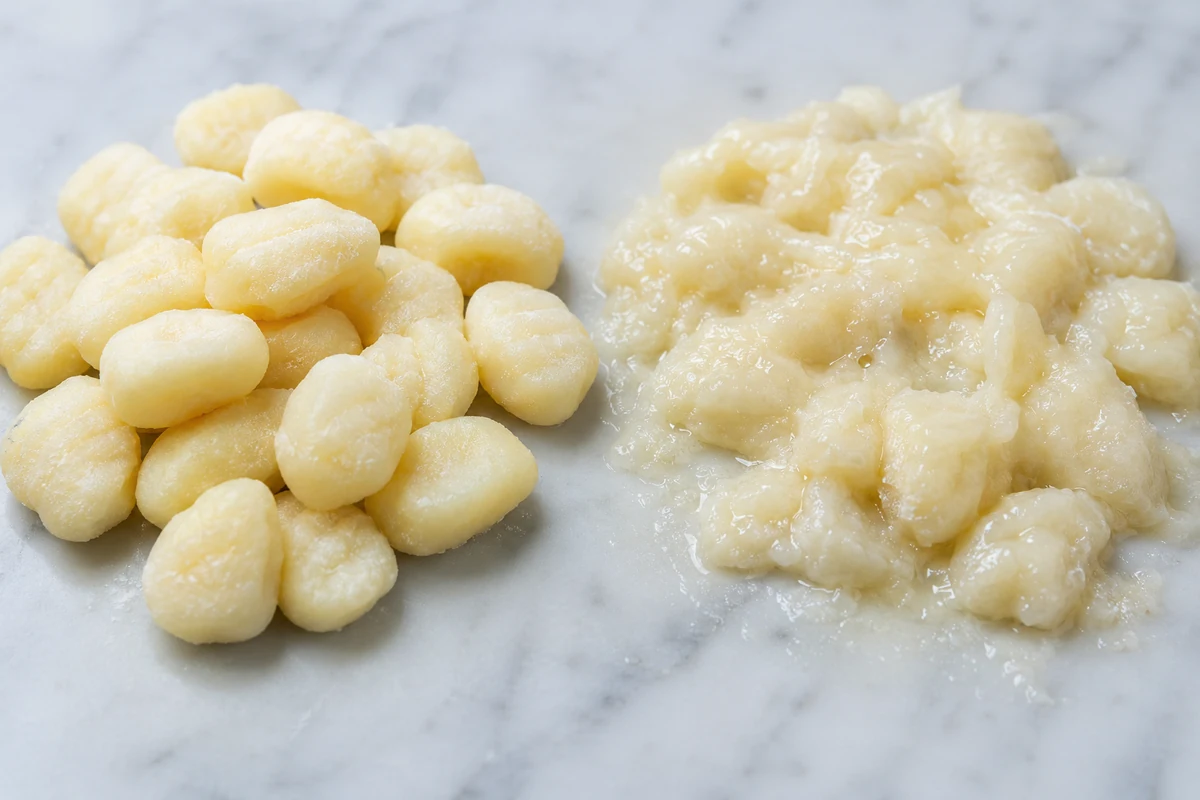
Gluey, dense, paste-like gnocchi is the single most common complaint, and almost every cause traces back to moisture and overworking. Let me lay out the culprits plainly so you can sidestep all of them. First, wet potatoes. If you boil the potato instead of baking it, the flesh is full of water, you compensate with extra flour, and the extra starch plus the extra flour cook into glue. Bake the potato and the problem largely solves itself. Second, the wrong potato. Waxy varieties hold water and never get fluffy, so they fight you the whole way. Use starchy russets or Yukon Gold.
Third, overworking the potato or the dough. Every time you mash hard, run the potato through a food processor, or knead the dough longer than necessary, you release more sticky starch. Rice the potato gently and stop kneading the moment the dough comes together. Fourth, too much flour. It feels safe to add more flour when the dough is sticky, but past a point you are just building a dense dumpling. Add flour gradually and accept a slightly tacky dough rather than a stiff one. Fifth, relying on a single starch with no structure. A plain white starch or rice flour alone has no protein scaffolding, so it collapses into gum. Use a blend, and use xanthan gum to stand in for the gluten you removed.
There is also a temperature trick that helps. Letting the riced potato cool for a few minutes, or even chilling the mash briefly before adding flour, reduces stickiness and makes the dough easier to handle. And when you boil, do not let the gnocchi sit in the water long after they float. Overcooked gnocchi waterlog and turn mushy. Pull them promptly. If you internalize just two rules, make them these: dry potato, light hands. Almost every gluey batch violates one or both. Get those right and your gnocchi will be tender every time, which is the same patience-over-speed mindset that pays off across gluten free cooking, from dumplings to a tricky loaf.
Sauces and Serving Ideas
Gnocchi is a blank canvas, and the right sauce makes the plate. The most classic and arguably the best for showing off a good dumpling is brown butter with crisped sage leaves. You melt butter until it smells nutty and just begins to turn golden, toss in whole sage leaves until they sizzle, and fold in your seared gnocchi with a shower of grated cheese and black pepper. It is fast, it is simple, and it lets the texture of the gnocchi carry the plate. Pesto is another easy win, clinging to those fork ridges beautifully, though if you buy pesto check the label since some jarred versions can carry surprises.
For something heartier, a simple tomato marinara works, especially baked into a quick gnocchi al forno with melted mozzarella on top. Creamy options are wonderful too, like a mushroom and garlic cream sauce or a brown butter and Parmesan toss. If you are watching cross-contamination, build your sauce from whole ingredients you control rather than mystery jars, and verify any prepared sauce is labeled gluten free. Gnocchi also plays nicely in soups, where the little potato pillows behave almost like dumplings, and it pairs well alongside other naturally gluten free dishes if you are pulling together a fuller menu around grains like the ones in my quinoa guide, which is a handy companion when you want a safe, filling side that is not another plate of starch.
Celiac Safety and Cross-Contamination
Because gnocchi is so easy to assume is safe, a quick word on staying genuinely protected. If you have celiac disease, look for a gluten free certification or a clearly labeled gluten free product, and give real weight to brands made in a dedicated gluten free facility, since that removes the shared-line risk that worries celiac shoppers most. Authoritative patient resources from organizations like Celiac Disease Foundation and Beyond Celiac are good places to ground your label-reading habits and understand how even trace gluten can cause harm. When you eat out, ask directly whether the gnocchi is made with wheat flour, because in most kitchens it is, and a server who is not sure should be treated as a no.
At home, the homemade route gives you the most control, since you choose every ingredient and your kitchen is presumably wheat free if you are cooking gluten free. If you share a kitchen with wheat flour, clean your surfaces, use a fresh pot of water, and keep your gluten free flour stored away from any airborne wheat dust. For the cooking craft itself, general technique resources like the gnocchi guidance at Serious Eats are useful for understanding how dumplings behave, just remember to translate any wheat-based method into your gluten free blend. Pair that with the celiac-specific advice above and you get both safety and a genuinely good plate of food, which is the whole point.
Frequently Asked Questions
Is gnocchi gluten free?
Traditional gnocchi is not gluten free because it is made with wheat flour, and many fresh and frozen versions also contain semolina or other wheat. You can only count on gnocchi being safe if it is specifically labeled gluten free or if you make it yourself with a gluten free flour blend. Always read the ingredient list rather than assuming the potato base makes it safe.
What store-bought gluten free gnocchi is best?
DeLallo Gluten Free Gnocchi, made from potato and rice flour in a dedicated gluten free facility, is the closest to classic and is widely available. For a lighter, lower-carb option, Trader Joe’s Cauliflower Gnocchi and Caulipower are both gluten free and excellent pan-fried. Boil the potato-based DeLallo and then sear it, but cook the cauliflower versions in a dry hot skillet rather than boiling them.
Is cauliflower gnocchi always gluten free?
No. Some cauliflower gnocchi products use wheat flour as a binder even though cauliflower is the main ingredient. Trader Joe’s version uses cassava flour and is gluten free, but you should still read every label because formulas change. Never assume a vegetable-based product is gluten free without confirming the ingredients.
Why does my homemade gluten free gnocchi turn out gummy?
Gumminess comes mostly from too much moisture and overworking. Bake the potatoes instead of boiling them so the flesh stays dry, rice the potato gently rather than mashing or processing it, add flour gradually, and stop kneading the moment the dough comes together. Using a blend with xanthan gum instead of a single plain starch also prevents that gluey, paste-like result.
What flour is best for gluten free gnocchi?
A quality one-to-one or cup-for-cup gluten free flour blend that already contains xanthan gum is the most reliable choice. Rice flour or plain starches used alone tend to be gritty or gummy, so they work better as part of a blend that includes something like tapioca for chew. If your blend lacks xanthan gum, add about a quarter teaspoon per cup of flour.
How do you cook gluten free gnocchi so it crisps?
Boil the gnocchi until they float, about two minutes, then scoop them out and finish them in a hot skillet with butter or oil. Lay them in a single layer and let the bottoms turn golden before tossing, so they brown instead of steaming. With frozen store-bought cauliflower gnocchi you can often skip the boil and pan-fry straight from frozen for a crispy outside and soft center.