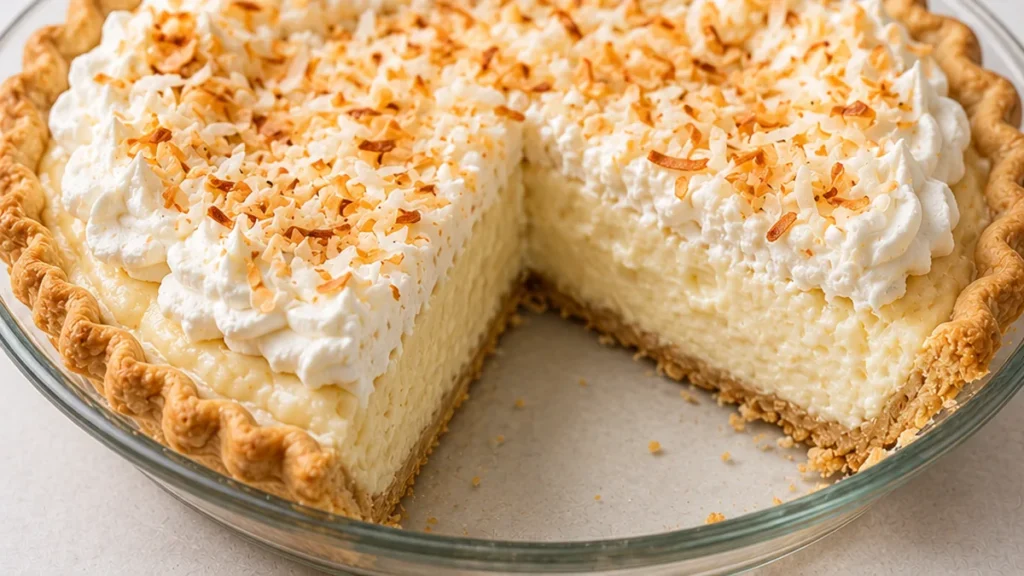
This gluten-free coconut cream pie is the ultimate Southern comfort dessert, delivering unparalleled creaminess and a delicate coconut flavor. It’s surprisingly easy to make, perfect for both novice bakers and seasoned dessert enthusiasts. Experience the magic of a truly decadent coconut cream pie without the gluten. This recipe focuses on simple techniques to achieve a velvety smooth filling and a delightful toasted coconut topping, making it a showstopper for any gathering.
Key takeaways
- Achieve a silky smooth coconut cream pie filling by properly cooking the cornstarch until it boils and thickens.
- Temper egg yolks carefully to prevent scrambling and ensure a rich, emulsified texture.
- Use full-fat canned coconut milk for the best flavor and creaminess.
- Toast the shredded coconut to enhance its nutty notes and add textural contrast.
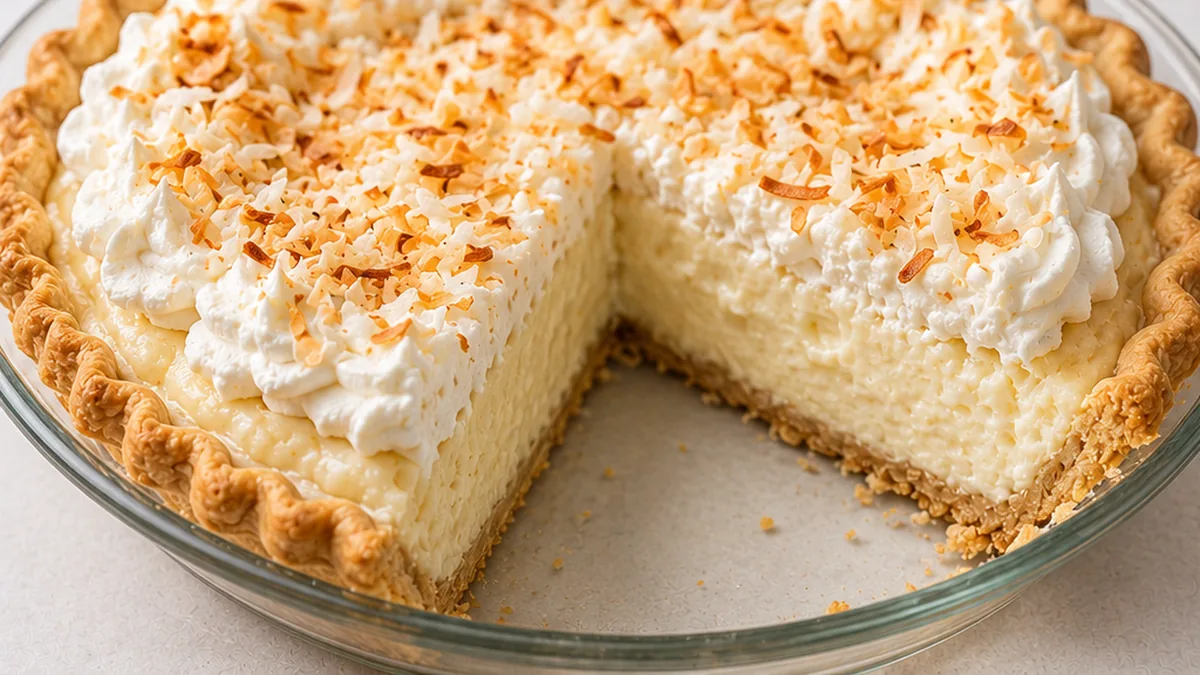
Dreamy Coconut Cream Pie Recipe
Ingredients
Method
- In a medium bowl, whisk together the egg yolks, cornstarch and ¼ cup of milk.
- In a medium heavy-bottomed saucepan, combine the remaining 1 cup milk, canned coconut milk, granulated sugar and salt. Set over medium heat and bring to a simmer, stirring occasionally.
- While whisking constantly, slowly drizzle some of the hot milk into the egg yolks. Continue whisking until you’ve added about ½ of the hot milk.
- Pour the egg-milk mixture into the saucepan over medium-low heat and cook, whisking constantly, until thickened and coats the back of a spoon, about 2-3 minutes.
- Remove from heat. Mix in the butter, vanilla extract and coconut extract until butter melts. Stir in ¾ cup of the toasted coconut (reserve the rest for topping). Refrigerate filling for 10 minutes, stirring often.
- Pour filling into a cooled, baked pie crust. Cover surface with plastic wrap or parchment to prevent a skin. Refrigerate for at least 4 hours, or up to 2 days.
Notes
– Toasting the shredded coconut enhances its flavor and adds a lovely crunch.
– Cover the filling directly with plastic wrap while chilling to prevent a skin from forming.
– For a richer flavor, consider adding a pinch of nutmeg to the filling. Nutrition information is an estimate, calculated automatically. Values vary with brands, substitutions and portion sizes.
The technique that makes it
The magic of a truly dreamy coconut cream pie lies in achieving a silken, luscious filling that is both rich and stable. This recipe employs a classic pastry cream base, but with a crucial enhancement: the incorporation of full-fat coconut milk alongside whole milk. The higher fat content of the coconut milk contributes to a creamier mouthfeel and a more pronounced coconut flavor. The key to its success is the careful tempering of the egg yolks and the proper cooking of the cornstarch.
Cornstarch requires sufficient heat to fully gelatinize, which is what thickens the filling and prevents a grainy texture. The filling must be brought to a gentle boil and cooked for at least one minute after thickening to ensure the starch is fully activated and any raw starch flavor is eliminated. Whisking constantly during this stage is paramount to prevent scorching and lumps. The butter, added off the heat, emulsifies into the hot pastry cream, adding richness and a glossy sheen. Finally, the vanilla and coconut extracts are stirred in at the end to preserve their delicate aromas. Toasting the shredded coconut before folding it in intensifies its nutty flavor and adds a delightful textural contrast to the smooth filling.
Troubleshooting
- Failure: Lumpy filling. Fix: Ensure you whisk the cornstarch and a small amount of milk together into a smooth slurry before adding it to the hot milk mixture. If lumps form during cooking, immediately remove from heat and vigorously whisk them out, or strain the filling through a fine-mesh sieve.
- Failure: Runny filling. Fix: The filling may not have been cooked long enough for the cornstarch to fully activate. Return the filling to medium heat and cook, whisking constantly, until it reaches a gentle boil and thickens significantly. Cook for at least one minute after boiling.
- Failure: Grainy filling. Fix: This often indicates the cornstarch was not fully cooked or the egg yolks were overheated during tempering, causing them to scramble. Ensure the filling reaches a boil and is cooked for the specified time. Temper the yolks gradually with the hot liquid.
- Failure: Coconut flavor is weak. Fix: Ensure you are using full-fat canned coconut milk, not the carton beverage type. Toasting the shredded coconut also significantly boosts its flavor. Consider adding a touch more coconut extract if desired, but be mindful not to overpower the other flavors.
Substitutions
- Whole milk: You can substitute with half-and-half for an even richer filling, or use a lactose-free whole milk. Non-dairy milks like almond or soy can be used, but may result in a less rich and creamy texture, and potentially a thinner filling.
- Cornstarch: While cornstarch provides a clean, neutral thickening, you could use an equal amount of tapioca starch or arrowroot powder. Note that these may yield a slightly glossier or more gelatinous texture. Avoid using flour as it can impart a beany flavor.
- Butter: For a dairy-free version, substitute with a high-quality vegan butter alternative. The texture and flavor may vary slightly.
- Sweetened shredded coconut: Unsweetened shredded coconut can be used, but you will need to increase the sugar in the filling slightly to compensate for the lack of sweetness. Toasted flaked coconut offers a larger textural element.
Pro tips
- Use full-fat canned coconut milk for the creamiest texture.
- Toasting the shredded coconut enhances its flavor and adds a lovely crunch.
- Cover the filling directly with plastic wrap while chilling to prevent a skin from forming.
- For a richer flavor, consider adding a pinch of nutmeg to the filling.
Enjoy this delightful gluten-free coconut cream pie, a true taste of Southern hospitality that’s sure to impress everyone!
Try this next: Dairy-Free Banana Cream Pie Recipe
More from Gluten-Free Desserts & Sweets →
Frequently asked questions
Why do I need to cook the filling until it boils?
Cooking the filling until it reaches a boil and continues to bubble gently for at least one minute is crucial for the cornstarch to fully gelatinize. This process thickens the pie filling properly and eliminates any raw starch taste, ensuring a smooth, palatable texture.
How can I prevent my egg yolks from scrambling?
To prevent scrambled eggs, temper the egg yolks by slowly whisking a small amount of the hot milk mixture into them before adding the yolk mixture back into the main pot. This gradually raises the temperature of the yolks without cooking them into curds.
Can I use light coconut milk instead of full-fat?
Using light coconut milk will result in a less rich and creamy filling. Full-fat canned coconut milk contains a higher percentage of fat, which is essential for achieving the luxurious texture characteristic of a dreamy coconut cream pie.
My pie filling seems too thick after chilling. What went wrong?
Pie filling thickens considerably as it cools. If it seems excessively thick, it might have been cooked slightly too long or too much cornstarch was used. However, a very thick filling can often be loosened slightly with a tablespoon or two of milk before serving.