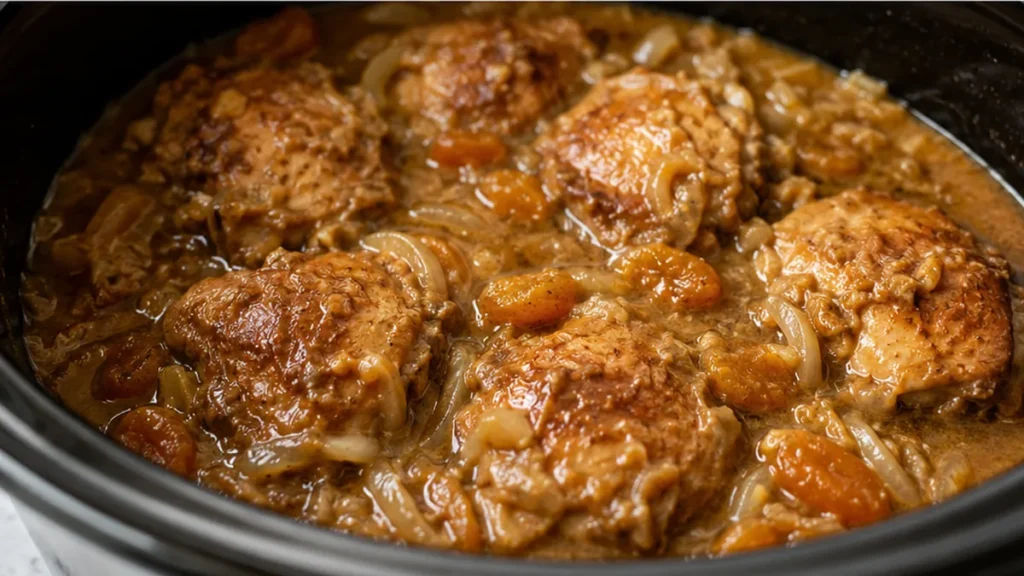
Moroccan chicken, a truly aromatic and tender dish, becomes effortlessly delicious when prepared in a slow cooker. This recipe focuses on melding sweet and savory notes, creating a deeply satisfying meal that requires minimal hands-on time. It’s an ideal choice for busy weeknights or for those who appreciate robust flavors without the fuss. I first discovered the magic of slow-cooked Moroccan chicken when I was looking for a hands-off meal for a dinner party. The aroma filling my kitchen was incredible, and the chicken turned out perfectly succulent, falling off the bone. This version, with its blend of spices and sweet apricots, is a consistent crowd-pleaser and a staple in my cooking rotation.
Key takeaways
- Use chicken thighs for optimal tenderness due to their fat content.
- Sautéing onions and garlic first builds essential flavor depth.
- Almond butter emulsifies the sauce, creating a rich, creamy coating.
- Low, slow cooking allows flavors to meld and chicken to become fork-tender.
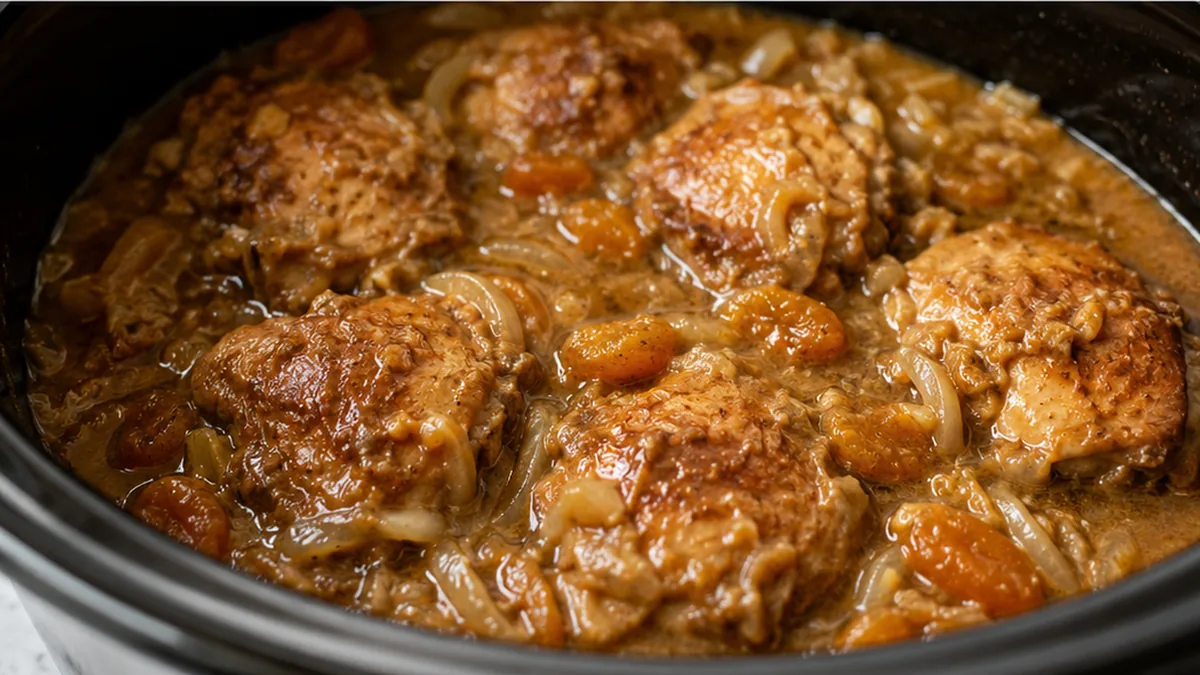
Slow-Cooker Moroccan Chicken: Unforgettable!
Ingredients
Method
- Season the chicken on both sides with salt and pepper. In a large skillet, heat 1 tablespoon of olive oil over medium-high heat. When hot, add 1/2 the chicken thighs and cook on each side for 3-4 minutes. The chicken doesn’t need to be cooked through, just browned on the outside for flavor. Transfer the chicken to the slow-cooker then repeat with the remaining chicken thighs.
- Over medium heat, add the sliced onions to the now-empty skillet. Cook, scraping up the brown bits off the bottom of the pan until softened, about 3-4 minutes. Add the garlic and cook for 30 seconds.
- Add the chicken stock and scrape the bottom of the pan. Whisk in the almond butter, salt, sugar, and spices.
- Add the onion/stock mixture to the slow-cooker. Stir to combine. Cook for 4 hours on low.
- After 4 hours, add the apricots and cook for another 1-2 hours.
- Shred the meat slightly and serve over cooked quinoa. Enjoy!
Notes
– If the sauce seems too thin at the end, remove the chicken, switch the slow cooker to high, and let it reduce for 15-20 minutes, stirring occasionally.
– Make ahead: This Moroccan chicken tastes even better the next day. Store leftovers in an airtight container in the refrigerator for up to 3-4 days. Nutrition information is an estimate, calculated automatically. Values vary with brands, substitutions and portion sizes.
The Technique That Makes It: Slow-Cooker Magic and Flavor Infusion
The magic of this Moroccan chicken lies in the slow-cooker’s ability to gently tenderize the chicken thighs while allowing the complex flavors to meld and deepen. Chicken thighs are ideal here due to their higher fat content, which prevents them from drying out during the extended cooking time. The process relies on low, consistent heat to break down connective tissues in the chicken, resulting in a fall-apart tender texture. The initial sauté of the onion and garlic builds an aromatic base, a crucial step for developing depth of flavor that might be missed if all ingredients were simply added raw to the slow cooker. The almond butter acts as a thickening agent and emulsifier, creating a rich, creamy sauce that coats the chicken beautifully. Combining it with chicken stock and sugar helps to balance the savory notes and create a glossy finish. The dried apricots rehydrate in the sauce, adding bursts of sweetness and a slightly chewy texture that contrasts with the tender chicken.
Troubleshooting
- Chicken is dry: Ensure you are using chicken thighs, not breasts. If using breasts, reduce the slow-cooking time significantly to prevent overcooking. Make sure the slow cooker is on a low setting.
- Sauce is too thin: Remove the chicken and apricots, and cook the sauce on high for 20-30 minutes, or thicken with a cornstarch slurry (1 tbsp cornstarch mixed with 2 tbsp cold water) stirred into the hot liquid.
- Flavors are bland: Ensure you’ve used enough salt and pepper during the initial searing of the chicken and onion. Consider adding a pinch more cumin or a touch of paprika for added complexity.
- Apricots are too hard: Ensure the apricots are fully submerged in the liquid during cooking. If they remain firm, they may need to be simmered separately in a little water or stock until softened before adding to the dish.
Substitutions
- Chicken thighs: Boneless, skinless chicken breasts can be used, but reduce cooking time to 2-3 hours on low to avoid dryness. The texture will be less rich.
- Almond butter: Peanut butter or cashew butter can be substituted. The flavor profile will shift slightly, with peanut butter adding a more pronounced nutty taste.
- Dried apricots: Raisins or dried cranberries can be used. These will offer a different sweetness and texture; raisins will be sweeter, cranberries more tart.
- Chicken stock: Vegetable stock or water can be used, but the final sauce may be less rich in flavor. Adjust seasoning accordingly.
Pro tips
- For the most tender chicken, ensure it reaches an internal temperature of 165°F (74°C) using a meat thermometer.
- If the sauce seems too thin at the end, remove the chicken, switch the slow cooker to high, and let it reduce for 15-20 minutes, stirring occasionally.
- Make ahead: This Moroccan chicken tastes even better the next day. Store leftovers in an airtight container in the refrigerator for up to 3-4 days.
This slow-cooker Moroccan chicken is a testament to how simple ingredients can create extraordinary flavors. Give it a try and savor the rich, aromatic experience!
Frequently asked questions
Can I use chicken breasts instead of thighs?
Yes, but chicken breasts are leaner and can dry out quickly in a slow cooker. If using breasts, reduce the cooking time to 2-3 hours on low and check for doneness frequently to maintain a tender texture.
My sauce seems too thin. How can I thicken it?
To thicken a thin sauce, remove the chicken and apricots. Cook the liquid on high in the slow cooker for 20-30 minutes, or create a slurry with 1 tablespoon of cornstarch and 2 tablespoons of cold water, then stir it into the hot liquid until thickened.
What if I don’t have almond butter?
You can substitute peanut butter or cashew butter. The flavor will change slightly, with peanut butter offering a more distinct nutty taste, but it will still create a creamy, emulsified sauce.
Can I add vegetables to this recipe?
Certainly. Root vegetables like carrots or sweet potatoes, cut into bite-sized pieces, can be added during the last 1-2 hours of cooking. Softer vegetables like bell peppers or zucchini should be added in the final 30 minutes to prevent them from becoming mushy.
Try this next: Instant Pot BBQ Chicken: Juicy & Easy!
More from Gluten-Free Dinners & Mains →