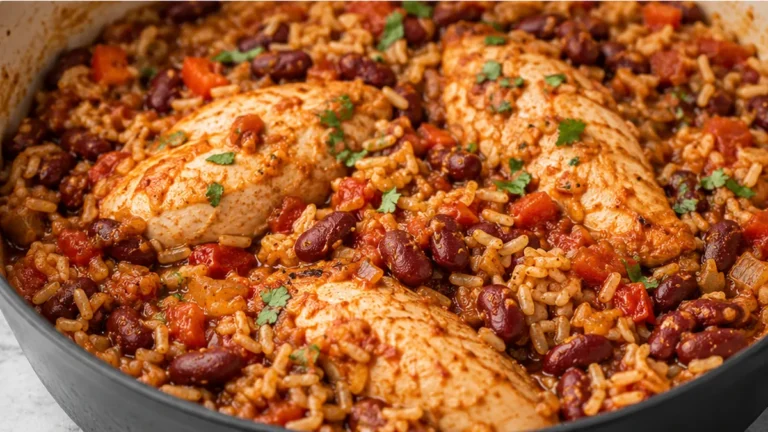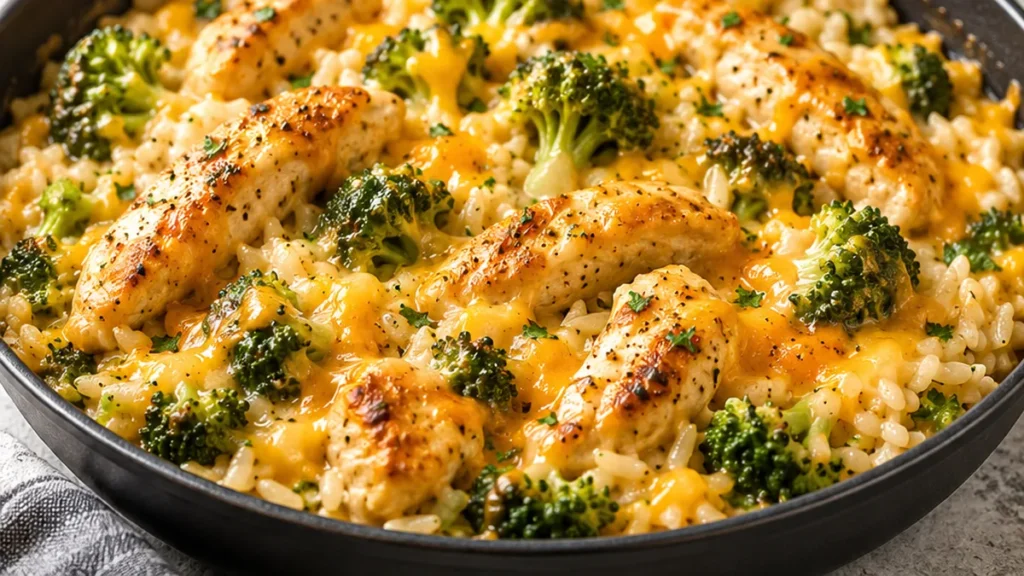
This chicken broccoli skillet meal is a fantastic way to bring comfort and flavor to your dinner table, especially if you’re looking for a satisfying gluten-free option. The beauty of this dish lies in its simplicity and the fact that it all comes together in one pan, minimizing cleanup. I remember the first time I made a similar chicken broccoli dish, I was amazed at how much flavor I could develop without using multiple pots and pans. This recipe builds on that idea, creating a harmonious blend of tender chicken, vibrant broccoli, and creamy cheddar rice that truly hits the spot.
Key takeaways
- The key is proper liquid-to-rice ratio for tender, evenly cooked grains.
- Gentle simmering allows the rice to absorb flavors without scorching.
- Adding cheese at the end helps to emulsify and thicken the sauce.
- Uniformly cut chicken ensures even cooking alongside the rice.
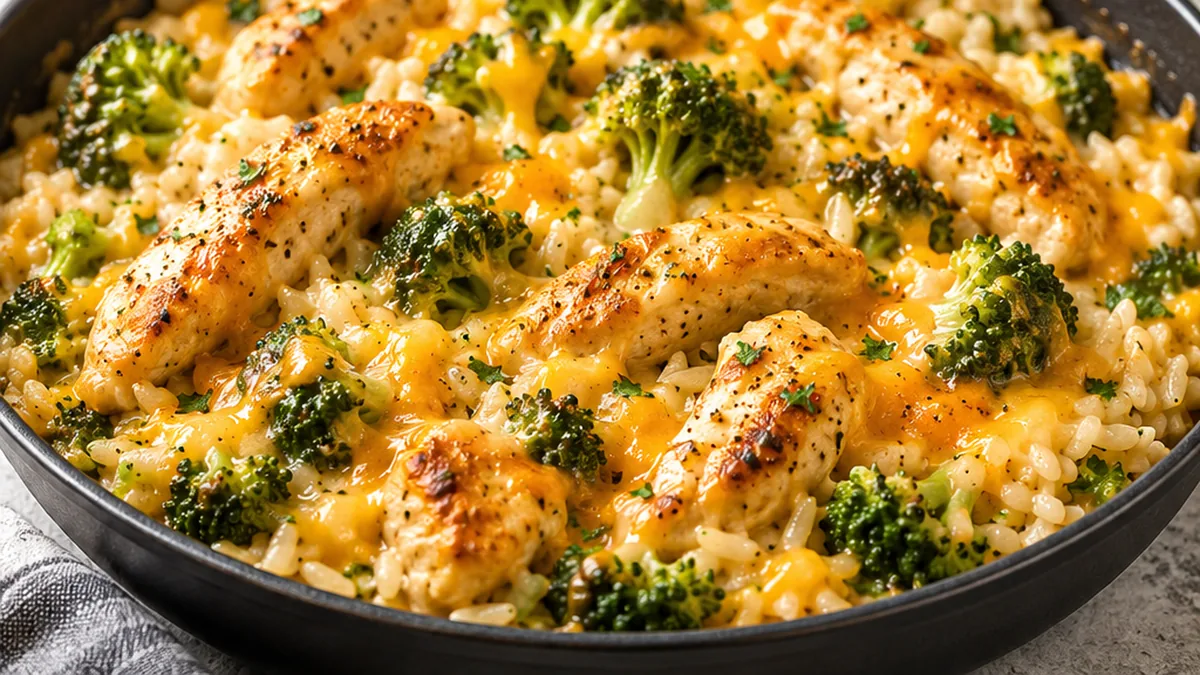
One-Pan Cheesy Chicken & Broccoli Rice!
Ingredients
Method
- Place the flour in a shallow dish. Pat the chicken dry then season on both sides with salt and pepper. Dredge the chicken in the flour and shake off the excess.
- Heat 2 tablespoons oil in a 12-inch skillet over medium-high heat until shimmering. Brown the chicken on one side, about 4-5 minutes. Transfer to a plate and set aside. You aren’t trying to cook the chicken through on this step, but rather just giving it a little color/flavor.
- Add the broccoli florets to the now empty pan (adding a bit more oil if needed) along with a pinch of salt and cook briefly, for about 3-4 minutes. Transfer the broccoli to a bowl.
- Add the remaining tablespoon of oil to the pan along with the minced onion and 1/2 teaspoon salt. Cook until softened, about 5 minutes. Stir in the rice and garlic and cook until fragrant, about 30 seconds.
- Increase the heat to high and pour in the chicken stock. Nestle the chicken into the rice, browned side up. Bring to a boil, then cover and reduce to a simmer over low heat. Cook covered for 12-15 minutes.
- When the rice is done cooking, stir in the broccoli, 1/2 cup of the cheese and the Tabasco sauce. Combine evenly then smooth the top and sprinkle with the remaining cheese. Turn off the heat, cover the pan and let sit until the cheese melts and the broccoli is warmed, about 5-10 minutes. Enjoy!
Notes
The Technique That Makes It: Hydration and Starch Gelatinization
The success of this one-pan dish hinges on the careful balance of liquid and rice, allowing the rice to cook evenly and absorb flavor while preventing a mushy texture. The chicken stock provides the necessary moisture for the rice to hydrate and undergo gelatinization – a process where starch granules absorb water, swell, and release starch, thickening the liquid into a creamy sauce. The initial searing of the chicken builds a foundation of flavor through the Maillard reaction, and the subsequent simmering in the stock ensures it cooks through while infusing the rice with savory notes. Controlling the heat is crucial; a gentle simmer allows the rice to cook without scorching the bottom of the pan, ensuring all grains are tender and the dish achieves a cohesive, cheesy consistency.
Troubleshooting
- Problem: Rice is crunchy or undercooked. Fix: Ensure the pan is covered tightly during the simmer to trap steam, which is essential for cooking the rice. You may need to add a little more chicken stock, a tablespoon at a time, and continue simmering until tender.
- Problem: Dish is too watery or soupy. Fix: This can happen if too much liquid was added initially or if the simmer was too vigorous, not allowing enough evaporation. Stir in the shredded cheddar cheese vigorously; the cheese will help emulsify and thicken the sauce as it melts. If still too thin, you can remove the lid and simmer for a few extra minutes on low heat, stirring occasionally.
- Problem: Chicken is dry or overcooked. Fix: Ensure the chicken tenders are cut into uniform pieces so they cook at the same rate. Avoid over-simmering after the chicken is cooked through; add it back to the pan towards the end of the rice cooking time if necessary, or ensure it’s fully submerged in the liquid during the initial simmer.
- Problem: Bottom of the pan is scorched. Fix: This indicates the heat was too high. Use a medium-low simmer and stir the rice mixture occasionally, especially towards the end of cooking, to prevent sticking and burning. A heavier-bottomed skillet can also help distribute heat more evenly.
Substitutions
- Chicken: Boneless, skinless chicken thighs cut into bite-sized pieces can be used. They will offer a richer flavor and remain more moist than chicken breast.
- Broccoli: Frozen broccoli florets can be substituted. Add them during the last 5-7 minutes of the rice cooking time to prevent them from becoming overly soft.
- Rice: Brown rice can be used, but it will require a longer cooking time and potentially more liquid (start with 2 1/2 cups broth). The final texture will be chewier.
- Cheese: Monterey Jack or a mild cheddar can replace the sharp cheddar for a different flavor profile. A blend of cheddar and Monterey Jack also works well.
Pro tips
– For extra crispy chicken, ensure the skillet is very hot before adding the chicken and don’t overcrowd the pan. Work in batches if necessary. – To ensure the chicken is safely cooked through when it’s nestled in the rice, use a meat thermometer. Poultry should reach an internal temperature of 165°F (74°C). – Storage: Leftovers can be stored in an airtight container in the refrigerator for up to 3-4 days. Reheat gently in the microwave or on the stovetop with a splash of chicken stock to prevent drying out.
This one-pan chicken and broccoli with cheddar rice is a testament to how delicious and simple gluten-free cooking can be. Give it a try for your next family dinner!
Frequently asked questions
Can I use a different type of rice?
While white rice is recommended for its quick cooking time and ability to absorb liquid, you can use brown rice. Be aware that brown rice requires a longer cooking duration and potentially more chicken stock. Adjust simmering time accordingly to ensure the brown rice is fully tender.
What if I don’t have chicken stock?
You can substitute vegetable stock for a vegetarian option, though it will alter the savory depth of the dish. Water can be used in a pinch, but you’ll need to significantly increase the seasoning with salt and pepper to compensate for the lack of flavor.
How can I make this dish spicier?
To add heat, consider incorporating a pinch of red pepper flakes along with the garlic and onion. A dash of hot sauce stirred in at the end, or a sprinkle of cayenne pepper with the salt and pepper on the chicken, will also provide a spicy kick.
My rice is sticking to the bottom. What did I do wrong?
This usually means the heat was too high. Ensure you are maintaining a gentle simmer, not a rolling boil. Stirring the rice mixture occasionally, especially in the final stages of cooking, can also prevent sticking and scorching on the pan’s bottom.
Try this next: One-Pot Southwest Chicken & Rice – So Easy!
More from Gluten-Free Dinners & Mains →