Is vegan food gluten free? No, not automatically, and assuming it is can land a celiac in real trouble. Vegan simply means no animal products, while gluten free means no wheat, barley, or rye. Those are two separate rules that happen to overlap on a lot of whole plant foods but diverge hard on processed ones. The clearest proof is seitan, a wildly popular vegan protein that is made of pure wheat gluten. It is 100 percent vegan and 100 percent off-limits if you avoid gluten.
Here is the direct answer: many naturally vegan foods are gluten free, including fruits, vegetables, beans, lentils, nuts, seeds, rice, and quinoa, but plenty of vegan products contain gluten, especially seitan, many mock meats, soy sauce, and vegan baked goods. If you need both diets, you have to read labels for gluten the same way an omnivore does, because the vegan label tells you nothing about wheat.
Vegan and Gluten Free Are Solving Different Problems
The confusion comes from treating these as one “healthy eating” category, and they are not. Veganism is a choice about animals: no meat, fish, eggs, dairy, honey, or other animal-derived ingredients. People choose it for ethics, the environment, or health, and there is no medical penalty for a vegan who accidentally eats a crouton.
Gluten free, for someone with celiac disease, is the opposite of a choice. Celiac disease is an autoimmune condition affecting an estimated 1 percent of the population, where even trace gluten triggers the immune system to attack the lining of the small intestine. The consequences are real damage, malnutrition, and a long list of downstream problems. A vegan can have a slice of regular bread and feel fine. A celiac cannot, vegan or not. Keeping that distinction straight is the whole foundation of eating safely when you follow both.
The Seitan Trap and Other Gluten-Heavy Vegan Foods
This is the section the popular articles keep skipping, and it is the most important one. Several beloved vegan foods are loaded with gluten, and a few are essentially made of it.
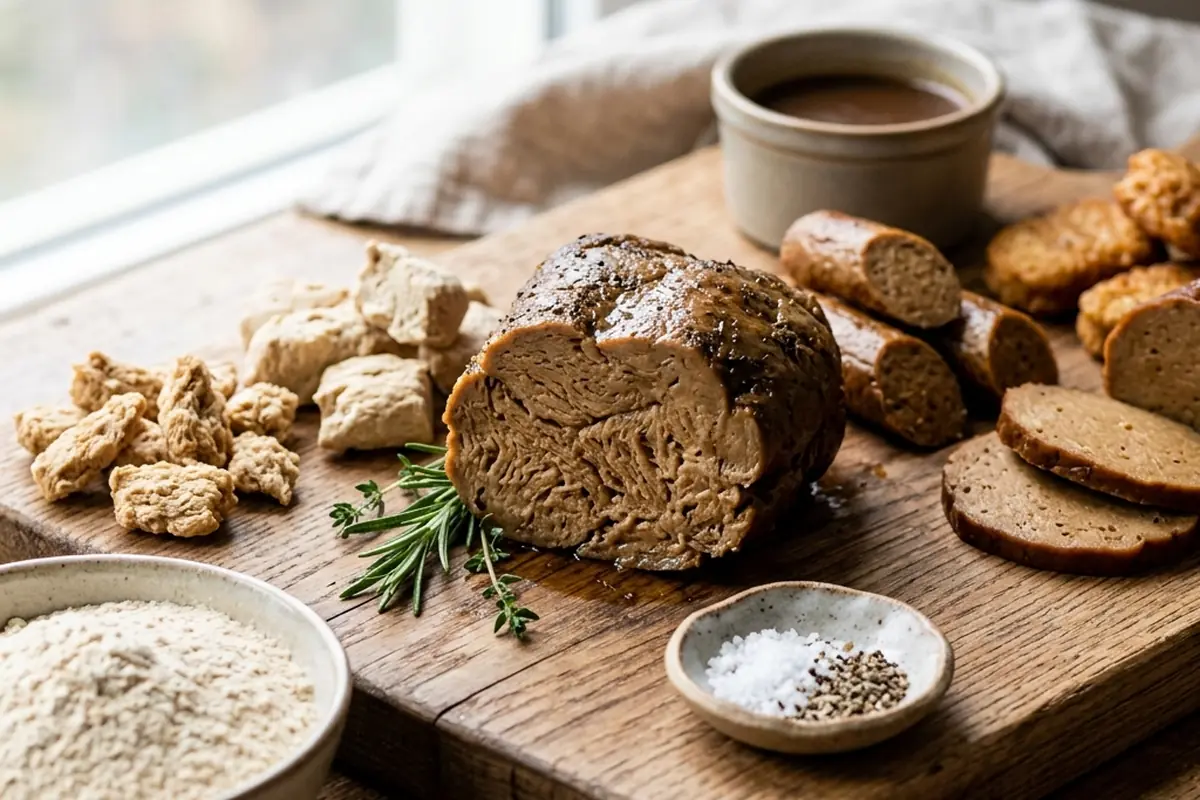
Seitan. Seitan is wheat gluten, full stop. It is made by washing the starch out of wheat dough until only the stretchy gluten protein remains. It is one of the most common vegan meat substitutes precisely because gluten gives it a chewy, meaty texture. For a celiac, seitan is one of the single most dangerous foods on a vegan menu.
Mock meats and veggie burgers. Many plant-based burgers, sausages, deli slices, and chicken-style products use vital wheat gluten as a binder and texturizer. Some newer brands are gluten free, but you cannot assume it. The ingredient to hunt for is “vital wheat gluten” or just “wheat gluten.”
Soy sauce and marinades. Standard soy sauce is brewed with wheat, so it carries gluten, and it hides in countless vegan stir-fries, dressings, and marinades. Tamari is the gluten-free alternative, but only if the bottle says so.
Vegan baked goods, cereals, and snacks. Vegan cookies, crackers, pasta, and bread are usually made with wheat flour. Vegan does not mean grain free. Malt-flavored cereals add barley. A vegan cookie is still a wheat cookie unless it specifically says gluten free.
There is a cruel irony here for new celiacs who go vegan, or new vegans who get a celiac diagnosis. The convenience foods that make each diet easier on its own, the mock meats for vegans and the gluten-free breads and pastas for celiacs, often cancel each other out. A vegan deli slice is convenient but usually contains wheat gluten, while a gluten-free sandwich bread is convenient but often contains egg or dairy. The path of least resistance for someone doing both is to lean less on processed substitutes and more on whole ingredients, which sidesteps the whole problem.
The Foods That Are Naturally Both
The encouraging part is that a huge amount of food is naturally vegan and gluten free at the same time, and these are the building blocks of an easy combined diet. Here is how they break down by role on the plate.
| Role | Naturally vegan and gluten-free foods |
|---|---|
| Protein | Lentils, chickpeas, black beans, tofu, tempeh (certified), edamame, hemp seeds |
| Carbohydrate | Rice, quinoa, buckwheat, millet, potatoes, corn, certified gluten-free oats |
| Produce | All fruits and vegetables, fresh, frozen, or plain canned |
| Fats | Nuts, seeds, avocado, olive oil, coconut, nut butters |
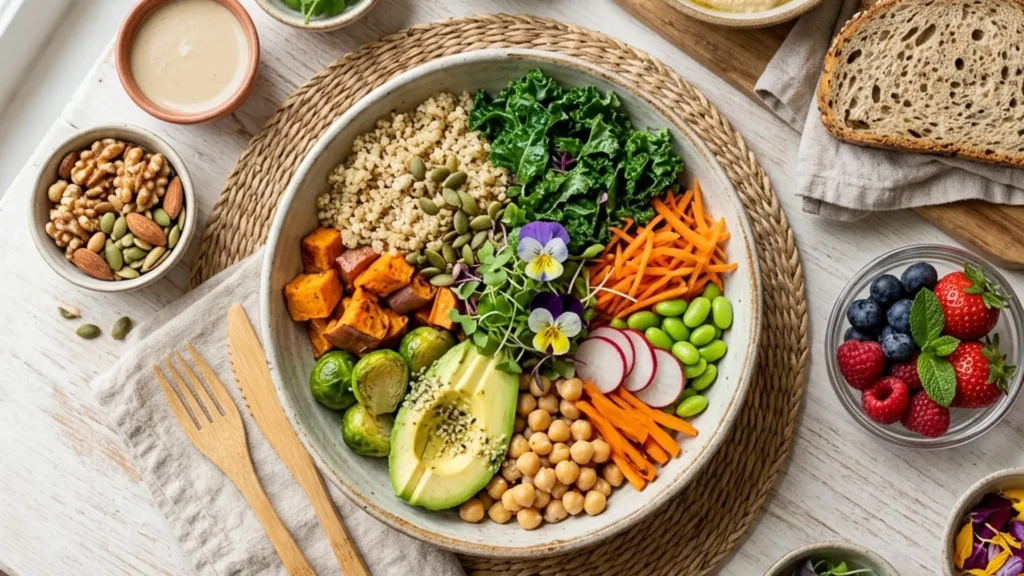
Build a meal from that table and you are safe on both counts without reading a single label. A bowl of quinoa, roasted vegetables, chickpeas, and a tamari-based dressing is vegan, gluten free, and genuinely satisfying. The trouble only starts when you reach for the processed shortcuts.
The Protein Problem When You Cut Seitan
Here is a real challenge that combined eaters run into. Seitan and many mock meats are go-to vegan proteins, and once you remove them for gluten reasons, you have to rebuild your protein from elsewhere. This is solvable, but it takes a little planning, since plants are generally less protein-dense than meat.
Lean on legumes and soy. One cup of cooked lentils delivers about 18 grams of protein and is naturally gluten free. A half-cup of firm tofu runs around 10 to 11 grams, chickpeas give roughly 15 grams per cooked cup, and a 3-tablespoon serving of hemp seeds adds about 10 grams. Tempeh is excellent at around 16 grams per 3 ounces, but check the label, because some tempeh is made with added grains that can include barley or wheat. Spread these across the day and hitting your protein target is straightforward, no seitan required. My own default is a big batch of seasoned lentils in the fridge, because it makes the protein question disappear for the week.
Combining proteins through the day also covers your amino acid bases. The old worry about needing to pair specific plant proteins at every meal has been largely set aside, but eating a range of legumes, soy, nuts, and seeds across the day naturally gives you a complete amino acid profile. Quinoa is one of the few plant foods that is complete on its own, which is part of why it shows up so often in vegan, gluten-free cooking, and it makes a reliable base when you want one ingredient to carry the meal.
The Oat Caveat Everyone Forgets
Oats deserve their own warning because they are a vegan and celiac favorite that is not automatically safe. Oats do not contain gluten themselves, but they are routinely grown and processed alongside wheat, so standard oats carry a high cross-contamination risk. Only oats specifically labeled certified gluten free are safe for celiacs.
A small subset of celiacs also reacts to avenin, the oat protein, even when the oats are certified, so if you stay symptomatic on certified oats, that is worth investigating. But for the large majority, certified gluten-free oats are a perfect vegan, gluten-free breakfast staple. Regular bulk-bin oats are not, no matter how plant-based they look.
Cross-Contamination When You Cook and Eat Out
Following both diets at home is mostly about ingredients, but eating out adds the contamination layer. A vegan kitchen is not a gluten-free kitchen. The same cutting board that sliced seitan, the same pot of water that boiled wheat pasta, and the same fryer that crisped breaded mock chicken can all transfer gluten to your otherwise-safe plant meal.
At a restaurant, I use a two-part question. First, is the dish vegan, which most plant-based spots can answer instantly. Second, and separately, is it gluten free, which means no soy sauce, no seitan, no wheat-based mock meat, and no shared fryer or pasta water. Vegan restaurants are often the worst offenders here, because seitan and soy sauce are everywhere in their kitchens, and the staff may assume “plant-based” covers your needs. Be explicit that gluten is a medical issue, not a preference, and ask the two questions as two separate things. That single habit has kept me safe at more vegan spots than I can count.
Nutrition Gaps to Watch on a Combined Diet
Eating both vegan and gluten free removes two big categories of food, so a few nutrients need deliberate attention or you can drift into deficiency without noticing. This is not a reason to fear the diet, just a short list to plan around.
Vitamin B12 is the main one. It is found almost exclusively in animal products, so every vegan needs a reliable source, and that means a supplement or consistently fortified foods. Many fortified breakfast cereals add B12, but those cereals are often wheat-based, so a gluten-free eater loses that easy source and should plan on a supplement or fortified gluten-free options. Iron is another, since plant iron is less easily absorbed than the iron in meat. Pair iron-rich foods like lentils, spinach, and pumpkin seeds with a vitamin C source such as bell peppers or citrus to boost absorption.
Then there is fiber and the gut. Gluten-free processed foods are often lower in fiber than their wheat counterparts, while whole vegan foods are high in it. A combined whole-foods diet usually lands in a healthy range, around 25 to 38 grams of fiber a day, but if you rely on processed gluten-free substitutes you can fall short. Calcium, vitamin D, omega-3s, and zinc round out the list worth a glance with a dietitian if you are doing both diets long term. The fix is rarely complicated: a B12 supplement, a variety of beans and seeds, and fortified plant milk cover most of the gap.
A Simple Week of Vegan, Gluten-Free Meals
Abstract food lists are less useful than seeing how a few days actually come together, so here is a realistic rotation built entirely from naturally-both foods. For breakfast, certified gluten-free oats cooked with fortified plant milk, topped with banana, berries, and 2 tablespoons of hemp seeds for protein. Another morning, a tofu scramble with peppers, onions, and turmeric served over a corn tortilla.
Lunch leans on batch-cooked staples: a grain bowl with quinoa, roasted sweet potato, black beans, avocado, and a tamari-lime dressing, or a big lentil soup with carrots and celery. Dinner can be a stir-fry of tofu and vegetables over rice with tamari instead of soy sauce, or rice pasta tossed with a tomato-and-white-bean sauce. For snacks, hummus with carrot sticks, a handful of almonds, or a certified gluten-free granola bar.
Nothing in that week requires a specialty product beyond tamari and certified oats, and the protein adds up easily across lentils, tofu, beans, and seeds. That is the whole point: once your pantry is set, the combined diet runs on simple, repeatable meals rather than constant label anxiety. I cook the lentils and quinoa in bulk on Sunday, and the rest of the week assembles itself.
Building a Combined Vegan and Gluten-Free Kitchen
Stock the pantry around naturally-both staples and you remove most daily friction. Keep tamari instead of soy sauce, certified gluten-free oats instead of regular, and a rice or chickpea pasta instead of wheat pasta. Build proteins from legumes, tofu, and tempeh you have label-checked. Treat anything processed, especially anything marketed as a meat replacement, as guilty until the label proves it gluten free.
The combined diet has a reputation for being restrictive, but in practice it pushes you toward whole foods that are cheap, filling, and naturally safe on both counts. The places that trip people up are predictable: seitan, soy sauce, mock meats, oats, and shared cooking surfaces. Learn those five and the rest is mostly produce, beans, and grains you can eat without a second thought.
Combining Vegan and Gluten-Free Cooking
The overlap between vegan and gluten-free cooking is where the most useful recipes live, since a dish that satisfies both is built from whole ingredients that almost anyone can eat. The same care you take with a processed meat substitute applies to sauces and broths, where a single splash of soy sauce can undo a clean plate, much like the broth surprises covered in the guide to pho noodles and broth. And when you want a reliable gluten-free carbohydrate base, a properly made loaf changes everything, which is exactly what the walkthrough on baking gluten-free bread is built around.
For plant-forward, tested recipes that lean on whole ingredients, America’s Test Kitchen has a strong vegetable and grain library at America’s Test Kitchen, and Bon Appetit publishes a deep set of vegan and gluten-free cooking ideas at Bon Appetit if you want inspiration that already respects both diets.
Frequently Asked Questions
Is all vegan food gluten free?
No. Vegan means no animal products, not no gluten. Many vegan foods contain wheat, including seitan, many mock meats, soy sauce, and vegan baked goods. Whole plant foods like fruits, vegetables, beans, and rice are naturally both, but processed vegan products need a gluten check.
Is seitan gluten free?
No, seitan is the opposite of gluten free. It is made from vital wheat gluten, the stretchy protein left after the starch is washed out of wheat dough. It is one of the most dangerous foods for a celiac on a vegan menu, even though it is fully plant-based.
Can you be vegan and gluten free at the same time?
Yes, and it is very doable. Build meals from naturally-both foods like legumes, tofu, rice, quinoa, vegetables, nuts, and seeds. The main adjustments are replacing seitan with legume and soy proteins, swapping soy sauce for tamari, and using certified gluten-free oats.
Are veggie burgers gluten free?
Not always. Many plant-based burgers and sausages use vital wheat gluten as a binder, which contains gluten. Some brands are certified gluten free. Read the ingredient list for wheat or wheat gluten, and do not assume a vegan burger is safe just because it is meat-free.
Is soy sauce vegan and gluten free?
Standard soy sauce is vegan but not gluten free, because it is brewed with wheat. Use tamari labeled gluten free instead, which is also vegan. Soy sauce hides gluten in many vegan stir-fries, dressings, and marinades, so it is one of the most common traps.
Are oats vegan and gluten free?
Oats are vegan and do not contain gluten naturally, but regular oats are often cross-contaminated with wheat during growing and processing. Only oats labeled certified gluten free are safe for celiacs. A rare subset of celiacs also reacts to the oat protein avenin.
Bottom Line
Vegan food is not automatically gluten free, and conflating the two is how a careful celiac gets glutened at a plant-based restaurant. Vegan removes animal products, gluten free removes wheat, barley, and rye, and the overlap is large but full of exceptions. Seitan is wheat gluten, many mock meats and veggie burgers hide it, soy sauce carries it, and vegan baked goods are usually made of wheat. The good news is that the foundation of a combined diet, beans, lentils, tofu, rice, quinoa, produce, nuts, and seeds, is naturally safe on both counts. Learn the five usual traps, swap in tamari and certified oats, and ask the two separate questions when you eat out. Do that and eating vegan and gluten free becomes a whole-foods routine rather than a daily puzzle.