Is sake gluten free? In almost every case, yes. Sake is brewed from rice, water, koji mold, and yeast, and none of those four ingredients contains gluten, so the vast majority of sake on American shelves is safe for people on a gluten-free diet. The grain that makes sake is rice, not wheat, barley, or rye, which means the protein that harms people with celiac disease is simply not part of the recipe. There is one real caveat, and it concerns a category of cheap, additive-heavy sake that is rarely sold in the United States, plus the usual cross-contamination questions that apply to any processed drink. This guide walks through exactly how sake is made, which grades to trust, the one grade to be careful with, and the related products like mirin and cooking sake that need a second look.
Sake gets lumped in with beer in a lot of people’s minds because both are brewed and both are sometimes called rice wine or rice beer, and that loose association is where the gluten worry starts. But the brewing of sake has nothing in common with the malted barley that makes beer dangerous for celiacs. Once you see how sake is actually made, the safety of the standard grades becomes obvious.
The Short Answer
Standard sake, and especially anything labeled with one of the premium grades, is gluten free and safe for people with celiac disease. It is fermented from polished rice using koji, a mold that converts rice starch into fermentable sugar, with no wheat or barley anywhere in the process. The only sake worth a second thought is futsu-shu, the cheapest ordinary grade, which is allowed to contain unlisted additives and is mostly sold within Japan rather than exported. If you choose a sake labeled junmai, ginjo, daiginjo, or honjozo, you are on safe ground. When in doubt, junmai is the cleanest choice of all.
How Sake Is Made, and Why That Keeps It Gluten-Free
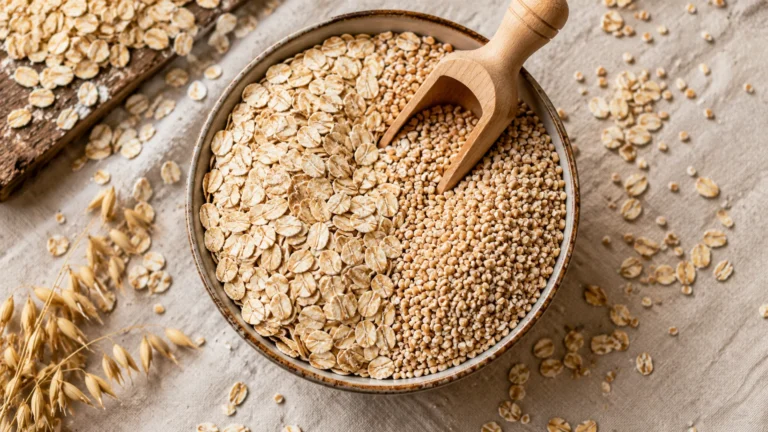
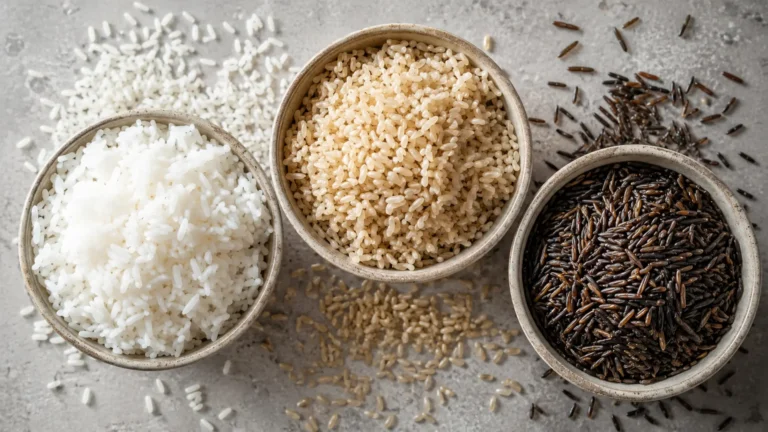
Sake brewing starts with rice that has been milled to remove the outer layers, then washed, soaked, and steamed. The brewer introduces koji, a cultured mold grown on rice, whose enzymes break the rice starch down into sugars. Yeast then ferments those sugars into alcohol, much as it does in wine, and the result is filtered and bottled. Every input in that chain is gluten free: the rice is gluten free, the water is gluten free, the koji is grown on rice and is gluten free, and the yeast is gluten free. There is no malted barley, no wheat, and no rye at any stage, which is the structural reason sake is fundamentally different from beer. The same naturally gluten-free quality of rice is what makes related staples safe, as our guide to whether quinoa is gluten free explains for another grain people often question.
Premium Grades Are the Safe Bet
Japanese sake is sorted into special-designation grades, and all of the premium ones are gluten free. The terms to look for on a label are junmai, honjozo, ginjo, daiginjo, junmai ginjo, junmai daiginjo, tokubetsu junmai, and tokubetsu honjozo. These eight designations are regulated, which means a sake carrying one of them is held to a defined standard for ingredients and rice polishing. Junmai means pure rice, with nothing added beyond rice, water, koji, and yeast, which makes it the simplest and most reliably gluten-free style. The ginjo and daiginjo grades use more highly polished rice for a lighter, more aromatic result, and the honjozo grades include a small amount of added distilled alcohol, which we will come back to. For anyone with celiac disease who wants certainty, choosing a bottle labeled junmai removes essentially all doubt, since there is nothing in it but rice and the brewing organisms.
The One Grade to Watch: Futsu-shu
The single category that earns the cautious phrasing in this article is futsu-shu, the ordinary, non-premium grade that makes up the bulk of sake produced in Japan. Unlike the premium grades, futsu-shu is not held to the same ingredient standards and is permitted to include additives such as extra distilled alcohol, sugars, and flavor adjusters. These additives are not always disclosed in detail, and in principle some flavoring could be derived from a gluten-containing source. In practice, futsu-shu is rarely exported and seldom appears on American shelves, so most US drinkers will never encounter it, but it is the honest reason no one can say one hundred percent of all sake everywhere is guaranteed gluten free. If a bottle carries no grade designation at all and is unusually cheap, treat it as futsu-shu and either skip it or confirm with the producer.
What About the Added Brewer’s Alcohol?
The honjozo, ginjo, and daiginjo grades, as opposed to the junmai versions, contain a small measured amount of added distilled alcohol, sometimes called brewer’s alcohol or jozo alcohol. This addition is used to lift aroma and lighten the body, not to cut cost, and it raises a common gluten question. The reassuring part is twofold. First, the brewer’s alcohol used in sake is typically distilled from sugarcane or rice rather than grain. Second, even when a spirit is distilled from wheat or barley, the distillation process removes the gluten protein, which is why distilled spirits are generally considered safe for people with celiac disease by major celiac organizations. So the added alcohol in premium non-junmai sake does not introduce a gluten risk. If you would rather avoid the question entirely, the junmai grades contain no added alcohol of any kind.
Cross-Contamination and Labeling
Because sake is made in dedicated breweries from a short list of gluten-free ingredients, cross-contamination is a much smaller concern than it is for foods milled or packed alongside wheat. A sake brewery is not handling barley malt the way a beer brewery is. That said, no mainstream sake carries a certified gluten-free seal the way some specialty foods do, so people with the most severe sensitivity who want absolute certainty should look for a producer that explicitly states gluten-free status or contact the importer. For the large majority of gluten-free drinkers, a premium-grade sake from a reputable brewery is a safe pour without needing a certification mark. The label habit that matters most is simply reading the grade: a designated premium grade is your green light.
Mirin, Cooking Sake, and Sake in Recipes
Drinking sake is the easy case. The trickier products are the sake relatives used in cooking. Mirin, the sweet rice seasoning used in teriyaki and glazes, is made from rice and is usually gluten free, but some inexpensive aji-mirin style seasonings add ingredients and should be label-checked. Cooking sake sold specifically for the kitchen sometimes has salt and other additives mixed in to make it non-potable for tax reasons, and those additives deserve a label read. The bigger trap in Japanese cooking is not the sake at all but what it is paired with: regular soy sauce is brewed with wheat and is not gluten free, so a teriyaki or marinade built on sake plus standard soy sauce is unsafe. Swap in tamari or a certified gluten-free soy sauce and the dish is fine. When a recipe calls for sake and you cannot find a confirmed gluten-free bottle, a dry sherry or a splash of rice vinegar with water makes a workable substitute, and both flavors play nicely in the kind of rice-based dishes where sake usually shows up. For broader pairing ideas, the recipe testing at Bon Appetit covers how to cook with sake and its substitutes in depth, and the technique guidance at America’s Test Kitchen is reliable on gluten-free soy sauce swaps.
How to Read a Sake Label for Gluten Safety
Reading a sake label is easier than reading most processed-food labels, because the information you need is usually right in the name. The grade designation is the key. If the bottle says junmai, junmai ginjo, junmai daiginjo, ginjo, daiginjo, honjozo, or tokubetsu anything, you are looking at a regulated premium grade that is gluten free. Junmai on the label is the strongest single signal of simplicity, since it guarantees the contents are nothing but rice, water, koji, and yeast. If the bottle carries no grade at all and reads simply as sake or rice wine with no further designation, and it is priced very low, treat it as ordinary futsu-shu and either confirm with the producer or choose a graded bottle instead. Beyond the grade, scan for the word junmai if you want to avoid added alcohol entirely, and note that the rice-polishing ratio, often printed as a percentage, tells you about quality and style but not about gluten, so do not let it distract you. The one phrase that should give you pause is any mention of added flavorings or seasonings, which points toward a cooking product or a flavored novelty rather than a straight brewing sake. For straight drinking sake, the grade name does almost all the work, and a premium grade is your reliable signal that the bottle is safe.
It also helps to know what you will not find on a sake label, so you do not waste time looking for it. Mainstream sake does not carry a certified gluten-free seal, because the category has never needed one the way specialty baked goods do, and its absence says nothing about safety. You also will not usually see an allergen statement listing wheat, because there is no wheat in the recipe. If you have severe celiac disease and want documented assurance, the most reliable move is to contact the importer or brewery and ask directly, since reputable producers are happy to confirm that their premium sake contains only rice, water, koji, and yeast. For most gluten-free drinkers, though, the grade on the front of the bottle is all the label-reading required.
Flavored and Novelty Sake
One corner of the sake world genuinely deserves caution, and it is the growing category of flavored and novelty sake. Sparkling sake, fruit-infused sake, and sweet dessert-style bottles often add ingredients beyond the four basics, and those additions are exactly where an unlisted or gluten-adjacent flavoring could appear. A plum or yuzu sake, for instance, has fruit and sugar added, and while most such products are still gluten free, the longer the ingredient list, the more reason to check it or confirm with the maker. Nigori, the cloudy unfiltered style, is not a gluten concern in itself, since the cloudiness is simply rice solids left in the brew, so a nigori made to a premium grade is as safe as any other premium sake. The rule of thumb is that the closer a bottle stays to plain, straight sake in a recognized grade, the safer it is, and the more it leans toward a sweet, flavored, or novelty product, the more a label read is worth your time. None of this makes flavored sake dangerous as a rule; it simply moves it into the same read-the-label category as a flavored cream cheese or a flavored yogurt.
Sake Versus Beer, Soju, and Other Drinks
It helps to place sake in the wider drinks picture, because the comparison makes its safety clearer. Beer is the dangerous one: it is brewed from malted barley and often wheat, so standard beer is not gluten free, and only specially produced gluten-removed or gluten-free beers are safe. Wine, including grape wine and most fruit wines, is naturally gluten free. Distilled spirits like vodka, gin, whiskey, and rum are considered gluten free even when made from grain, because distillation removes the gluten protein. Sake sits comfortably with wine and spirits rather than with beer, because its base grain is rice and its process never touches barley malt. Soju, a Korean spirit, is usually distilled and generally gluten free, though some modern flavored soju adds ingredients worth checking. The headline is simple: of the brewed drinks, beer is the one to avoid, and sake is not in that camp.
Serving and Storing Sake on a Gluten-Free Diet
Once you have chosen a safe bottle, serving sake involves no further gluten concerns, but a few practical notes round out the picture. Sake is served at a range of temperatures, from chilled for delicate ginjo and daiginjo grades to gently warmed for many junmai and honjozo styles, and the temperature has nothing to do with gluten, only flavor, so serve it however the style suggests. The cups, flasks, and warmers used for sake are not a contamination concern the way a shared cutting board might be, since they hold only the sake itself. If you are hosting a mixed gathering where beer is also served, the usual cross-contamination caution applies to glassware and pour spouts rather than to the sake, so a clean cup for the gluten-free drinker is all that is needed. Storing sake is simple: keep premium and unpasteurized styles refrigerated and drink them reasonably fresh, since sake does not improve with long aging the way some wines do. None of these steps adds gluten risk, which means that with a safe bottle chosen, a gluten-free drinker can enjoy sake exactly as anyone else would, with no special handling required at the table.
If you are buying sake as a gift for someone who is gluten free, the safest and most thoughtful choice is a junmai or junmai ginjo from a reputable brewery, since it removes every question at once with its pure-rice recipe. That single guideline, choose junmai, turns a potentially fraught purchase into an easy one, and it works whether you are shopping at a specialty store or a well-stocked supermarket.
Frequently Asked Questions
Is sake gluten free for people with celiac disease?
Yes, in nearly all cases. Sake is fermented from rice, water, koji, and yeast, none of which contain gluten. Premium grades such as junmai, ginjo, and daiginjo are reliably safe. The only exception is cheap futsu-shu grade sake, which can contain unlisted additives and is rarely sold in the United States.
Which sake is the safest choice?
Junmai sake is the cleanest option, because junmai means pure rice with nothing added beyond rice, water, koji, and yeast. There is no added alcohol or flavoring to question. Any bottle labeled junmai, junmai ginjo, or junmai daiginjo is an easy, low-risk pick for a gluten-free drinker.
Does the added alcohol in some sake contain gluten?
No. The brewer’s alcohol added to honjozo and ginjo grades is usually distilled from sugarcane or rice, and even grain-distilled alcohol loses its gluten during distillation. Major celiac organizations consider distilled spirits safe. If you prefer to avoid the question, choose a junmai grade, which has no added alcohol.
Is mirin or cooking sake gluten free?
Usually, but check the label. Mirin is made from rice and is typically gluten free, though some budget seasoning versions add ingredients. Cooking sake may include salt or additives. The bigger risk in Japanese cooking is regular soy sauce, which contains wheat, so use tamari or certified gluten-free soy sauce.
Can I cook with sake on a gluten-free diet?
Yes, as long as the sake itself is a confirmed gluten-free grade and the other sauces in the dish are safe. The classic pitfall is pairing sake with wheat-based soy sauce. Swap in tamari, use a gluten-free bottle of sake, and the dish stays safe.
Is sake the same as rice wine or beer?
Sake is often called rice wine, but it is brewed more like beer than wine, just with rice and koji instead of malted barley. The crucial difference from beer is the grain: sake uses gluten-free rice and never barley malt, so it is safe where beer is not.
Bottom Line
So, is sake gluten free? For practical purposes, yes. Brewed from rice, water, koji, and yeast, sake contains none of the wheat, barley, or rye that harms people with celiac disease, and the premium grades you find in the United States are safe to drink without worry. Choose junmai if you want the simplest, most reliable pour, and treat the cheap unlabeled futsu-shu grade as the only category worth questioning, which you are unlikely to meet outside Japan. The added brewer’s alcohol in some grades is not a gluten risk thanks to distillation. The real care belongs in the kitchen, where sake often partners with wheat-based soy sauce, so reach for tamari and a confirmed bottle when you cook. Read the grade on the label, keep your sauces gluten free, and sake earns a permanent place at the gluten-free table.