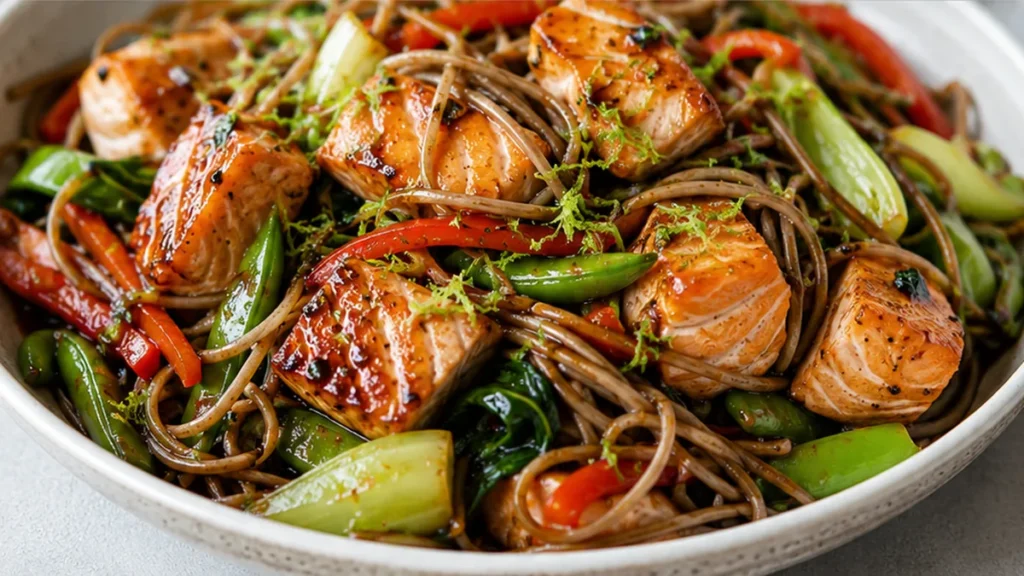
This salmon stir-fry is a quick, healthy, and flavorful weeknight meal. It combines marinated salmon with soba noodles and crisp vegetables for a satisfying dish.
Key takeaways
- Pat salmon completely dry before searing for a golden crust.
- Whisk sauce ingredients vigorously to create a stable emulsion.
- Cook soba noodles al dente and rinse with cold water to prevent mushiness.
- Adjust sauce seasoning (sweet, sour, salty) before adding final ingredients.
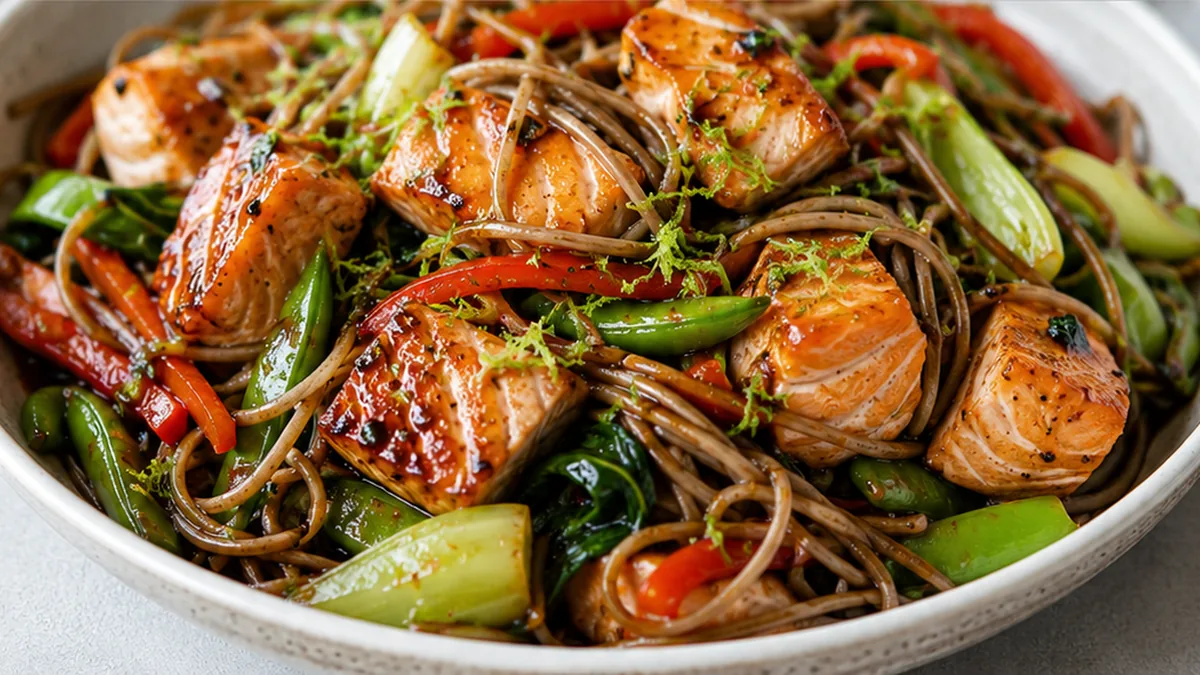
Honey Lime Salmon Stir-Fry: Quick & Zesty!
Ingredients
Method
- Whisk together 1/3 cup tamari, lime zest, lime juice, 2 tablespoons honey, grated ginger, minced garlic, and red pepper flakes for the salmon marinade. Place the salmon, skin-side up, in the marinade and refrigerate for 30 minutes. Preheat oven to 400°F. Pour off marinade, flip salmon, and bake for 15 minutes.
- Meanwhile, cook soba noodles in boiling water for 2-4 minutes until al dente. Rinse with cool water to stop cooking.
- Whisk together 1/3 cup tamari and 1 tablespoon honey for the stir-fry sauce; set aside.
- In a large skillet, heat 1 tablespoon coconut oil over medium heat. Add 1 teaspoon grated ginger, 1 clove minced garlic, and sliced scallions; cook for 1 minute until fragrant. Add sliced mushrooms and cook for 2-3 minutes. Then add red bell pepper and cook for another 3-4 minutes. Finally, add the cooked noodles and shredded cabbage.
- Pour in the stir-fry sauce and toss to combine using tongs. Cook until noodles are hot and cabbage is slightly wilted.
- Serve the stir-fry topped with the baked salmon. Enjoy immediately!
Notes
– For crispier vegetables, cook them quickly over higher heat before adding the noodles and sauce.
– Store leftover salmon stir-fry in an airtight container in the refrigerator for up to 3 days. Reheat gently in a skillet over medium heat or in the microwave. Nutrition information is an estimate, calculated automatically. Values vary with brands, substitutions and portion sizes.
The technique that makes it
The success of this Honey Lime Salmon Stir-Fry hinges on two key techniques: achieving a proper sear on the salmon and creating a well-emulsified sauce. For the salmon, it’s crucial to pat the filets completely dry before searing. Moisture is the enemy of a good sear, as it steams the fish rather than browning it. High heat is also essential; the pan should be hot enough to create a golden-brown crust quickly, locking in moisture and flavor. Avoid overcrowding the pan, which lowers the temperature and leads to steaming. For the sauce, the combination of tamari, lime juice, honey, ginger, garlic, and red pepper flakes needs to be whisked vigorously to emulsify. This process helps to bind the oil (from the ginger and garlic) and the liquid components, creating a cohesive sauce that coats the ingredients evenly rather than separating into layers.
Troubleshooting
- Problem: Salmon is dry and crumbly. Fix: Ensure salmon was not overcooked. Salmon cooks quickly; aim for an internal temperature of 130-135°F (54-57°C) for medium. Also, make sure the pan was sufficiently hot for searing, and the salmon was patted dry.
- Problem: Sauce is watery and separates. Fix: Whisk the sauce ingredients vigorously to emulsify. If the sauce is already cooked and separated, try whisking in a teaspoon of cornstarch slurry (1 tsp cornstarch mixed with 2 tsp water) over medium heat until thickened.
- Problem: Noodles are mushy. Fix: Cook soba noodles according to package directions, usually just a few minutes. Rinse immediately under cold water to stop the cooking process and prevent sticking. Add them to the stir-fry at the very end, just to coat with sauce.
- Problem: Stir-fry is too sweet or too sour. Fix: Taste and adjust the sauce before adding the salmon and noodles. Add more tamari for saltiness and depth, more lime juice for acidity, or a touch more honey for sweetness.
Substitutions
- Tamari: Use regular soy sauce. The result will be saltier and may not be gluten-free.
- Honey: Maple syrup or agave nectar can be used. The flavor profile will be slightly different but will provide the necessary sweetness.
- Soba Noodles: Whole wheat spaghetti or even rice noodles can be substituted. Cooking times may vary, and the texture will differ.
- Red Pepper Flakes: A pinch of cayenne pepper or a dash of sriracha can be used for heat. Adjust quantity based on desired spice level.
Pro tips
- Don’t overcook the salmon; check for an internal temperature of 145°F (63°C) for perfect flakiness.
- For crispier vegetables, cook them quickly over higher heat before adding the noodles and sauce.
- Store leftover salmon stir-fry in an airtight container in the refrigerator for up to 3 days. Reheat gently in a skillet over medium heat or in the microwave.
This honey lime salmon stir-fry offers a wonderful balance of sweet, tangy, and savory flavors. Experiment with different vegetables or try adding a sprinkle of sesame seeds for extra crunch. Enjoy your delicious and healthy meal!
Frequently asked questions
How do I prevent the salmon from sticking to the pan?
Ensure your pan is adequately heated before adding the salmon. Use a non-stick skillet or a well-seasoned cast-iron pan. Patting the salmon completely dry is also crucial, as moisture prevents proper searing and promotes sticking.
Can I use a different type of noodle?
Yes, you can substitute other noodles like spaghetti, linguine, or rice noodles. Adjust the cooking time according to the package directions. Keep in mind that the texture and flavor profile of the dish will change slightly.
What vegetables can I add to this stir-fry?
Feel free to add other quick-cooking vegetables such as broccoli florets, snap peas, carrots, or bok choy. Add them in stages based on their cooking time, starting with denser vegetables first.
How can I make the sauce thicker if it’s too thin?
If the sauce is too thin after cooking, you can thicken it by whisking in a slurry made from 1 teaspoon of cornstarch mixed with 2 teaspoons of water. Simmer for another minute until the sauce reaches your desired consistency.
Try this next: Keto Salmon Perfection: Easy & Delicious Low-Carb Meal
More from Gluten-Free Dinners & Mains →