Gluten free BBQ sauce should be the easy part of a cookout, since the core of a barbecue sauce is tomato, vinegar, sugar, and spice, none of which contains gluten. The catch is everything that gets added around that core. Soy sauce, malt vinegar, certain thickeners, and some flavorings sneak wheat-derived ingredients into bottles you would never suspect, which is why a sauce that looks safe on the surface can quietly carry gluten. I read barbecue sauce labels the way a mechanic listens to an engine, because after years of doing it I know exactly which sounds mean trouble. This guide tells you which mainstream brands are genuinely gluten free, the specific ingredients that betray a sauce, how to read a label fast at the store, and a five-minute homemade version that takes the question off the table entirely.
Whether you are glazing ribs, dressing pulled pork, or brushing chicken in the air fryer, the goal is the same: a sticky, tangy, smoky sauce you can trust. So I will cover the safe brands, the traps, and the scratch route, with enough detail that you can walk the condiment aisle with confidence instead of guesswork.
Why BBQ Sauce Is Risky Even Though Tomatoes Are Safe
The base of nearly every barbecue sauce is naturally gluten free. Tomato paste or ketchup, vinegar, brown sugar or molasses, and a spice blend make up the backbone, and on their own those are all fine. The risk lives in the flavor-boosters that manufacturers layer on top. The single most common offender is soy sauce, which is traditionally brewed with wheat and shows up in many sweet-and-savory and Asian-style barbecue sauces. The next is malt, in the form of malt vinegar or barley malt flavoring, both of which come from barley and are not gluten free. After that come modified food starch and certain natural flavors, which can be wheat-derived and are not always spelled out.
Because the dangerous ingredients are additives rather than the base, you cannot judge a barbecue sauce by its category or its color. A sweet sauce, a Carolina vinegar sauce, and a smoky brown sauce can each be safe or unsafe depending on which boosters the maker chose. That is why the label, not the style, is the thing to read. For background on how the sauce category evolved and why regional styles use such different ingredients, the overview of barbecue sauce is a useful primer.
Mainstream Brands That Are Gluten Free
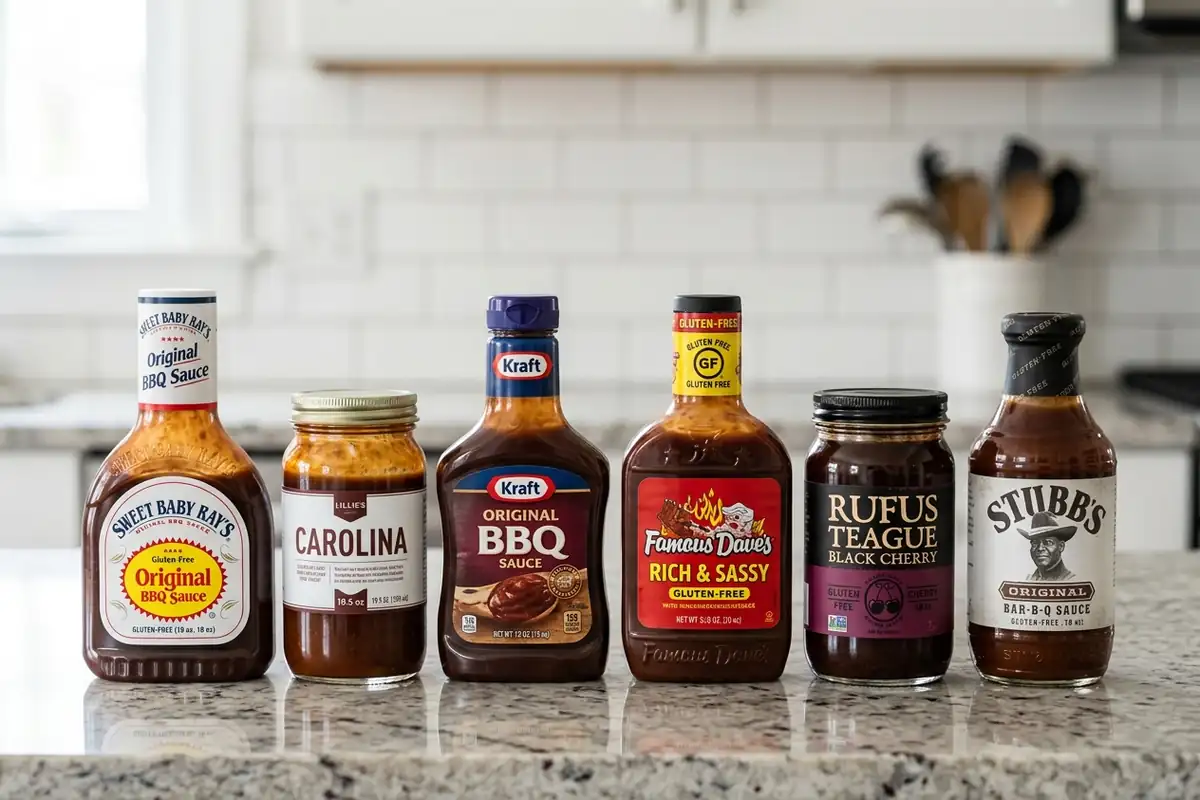
The good news is that the barbecue category has become much friendlier to gluten free shoppers, and several widely available brands now make sauces that are labeled gluten free. Some major names carry gluten-free versions of their flagship sauces, and a growing set of dedicated and specialty brands build their whole line to be gluten free, non-GMO, and free of the usual additives.
Rather than chase a brand list that changes every season, learn the tiers. The table below groups the landscape by how much verification each option gives you, which is more durable than memorizing labels that get reformulated.
For a current, regularly updated rundown of specific gluten free barbecue brands, the roundup at Celiac.com is a solid reference, since it tracks which mainstream and specialty sauces carry the gluten free label. Use a list like that to build a short personal roster of two or three sauces you trust, then verify the label each time you buy in case the formula has changed.
The Soy Sauce Problem, Explained
Soy sauce deserves its own section because it is the single most common reason a barbecue sauce is not gluten free, and the reason trips people up. Traditional soy sauce is brewed from soybeans and wheat, fermented together, so despite the name it is very much a wheat product. When a barbecue sauce wants a deep, savory, umami backbone, soy sauce is the cheapest and most common way to get it, which is why it shows up in so many sweet-and-savory and Asian-inspired sauces. If the ingredient list says soy sauce without a gluten free qualifier, treat the sauce as unsafe.
The good news is that there are clean substitutes that deliver the same savory depth, and the better sauces use them. Tamari is a soy sauce made without wheat, and certified gluten free tamari is widely available. Coconut aminos, made from coconut sap, give a similar salty-sweet umami with no soy or wheat at all. When you see one of those on a label instead of plain soy sauce, it is a sign the maker built the sauce with gluten free eaters in mind. The history of how soy sauce came to rely on wheat is a useful bit of context, because it explains why the swap to tamari is necessary rather than optional.
This is also why making your own sauce is so reliable: by reaching for tamari or coconut aminos from the start, you get all the savory complexity of a soy-spiked sauce with zero gluten risk. It is the same one-ingredient swap that turns dozens of risky recipes safe, and once it is a habit you stop missing the original entirely.
How to Read a BBQ Sauce Label in Ten Seconds
You do not need to read the whole ingredient panel like a contract. There is a fast triage that catches almost every problem. First, look for a gluten-free label or certification mark on the front or back, because that single claim, when present, does the work for you. If there is no label, run three checks on the ingredient list. Scan for soy sauce, since that is the most common wheat carrier in barbecue sauce. Scan for malt, including malt vinegar and malt flavoring, which come from barley. Scan for wheat in the allergen statement at the bottom, which is legally required to flag wheat if it is present.
If all three come back clean and the maker is reputable, the sauce is very likely safe even without a formal label, though for celiac disease the labeled or certified option is always the stronger choice. The reason this triage works is that gluten in barbecue sauce almost always arrives through one of those three doors. Close all three and you have closed the risk. This same soy-and-malt vigilance carries over to other condiments, which is why a bottle of gluten-free Worcestershire sauce deserves the same quick scan, since traditional Worcestershire often contains both malt vinegar and soy.
Watch the Companion Sauces
A barbecue meal rarely involves just one sauce, and the sides are where people get caught. A safe barbecue sauce next to a wheat-thickened gravy, a malt-based steak sauce, or a soy-heavy marinade puts gluten right back on the plate. The same scrutiny you give the barbecue bottle belongs on every sauce at the table. If you like Asian-style glazes, for instance, a homemade gluten-free hoisin sauce lets you get that sweet-savory depth without the wheat that hides in most store-bought hoisin. Controlling the companion sauces is half the battle.
The Five-Minute Homemade BBQ Sauce
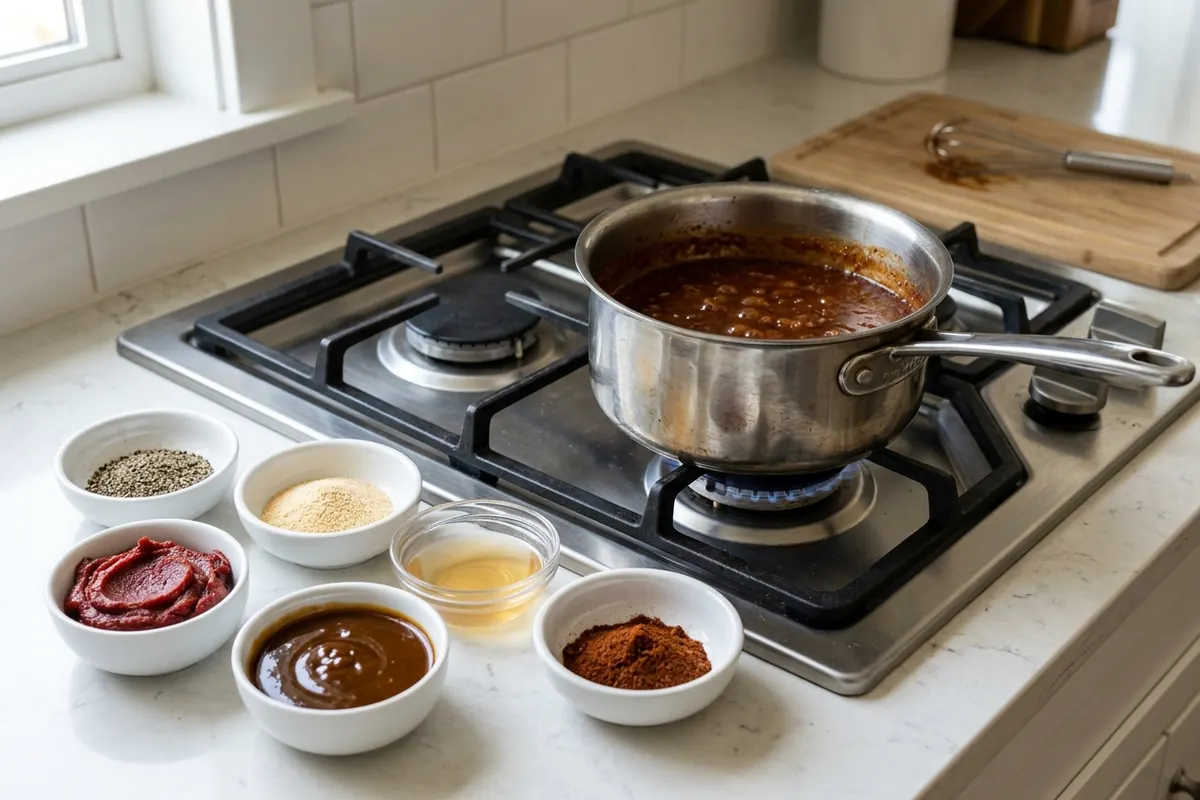
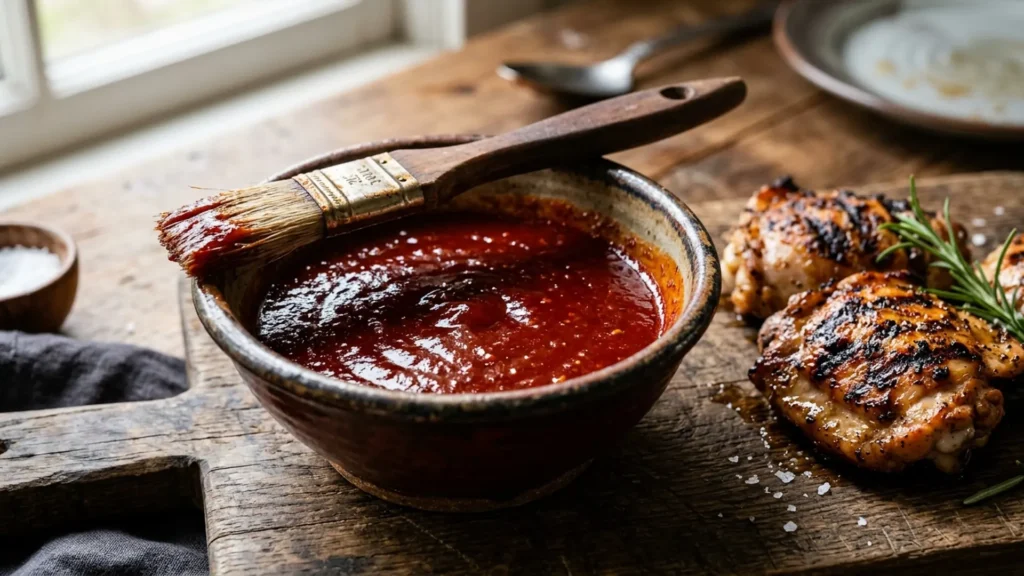
The most reliable gluten free barbecue sauce is the one you make, because you control every ingredient and it takes less time than a trip to the store. The base is forgiving and endlessly adjustable. Start with ketchup or tomato paste for body, add apple cider vinegar for tang, brown sugar or molasses for sweetness and color, and a spice blend of smoked paprika, garlic powder, onion powder, and a little mustard powder. For depth where a recipe would normally use soy sauce, reach for a certified gluten free tamari or coconut aminos, which give you the same savory backbone without the wheat.
Simmer it gently for a few minutes to meld the flavors and thicken slightly, then taste and balance: more vinegar for tang, more sugar for stickiness, a pinch of cayenne or a dash of liquid smoke for heat and smoke. That is the whole method. A full walk-through with measurements lives in my five-minute gluten-free BBQ sauce recipe, which is the version I make on repeat all summer. Homemade also lets you tune the sauce to the dish, a thinner mop for ribs, a thicker glaze for wings, which no bottle can match.
If you would rather explore styles before committing, browsing a range of barbecue and finishing sauces helps you decide what flavor profile you want to recreate. The bbq sauces collection is a good place to see how sweet, smoky, and vinegar-forward styles differ, so you can aim your homemade batch at the profile you actually crave.
Regional Styles and Where Gluten Hides in Each
Barbecue sauce is not one thing, and the regional styles carry different risk profiles worth knowing. Kansas City style is the thick, sweet, tomato-and-molasses sauce most people picture, and its risk is usually the sweetener and any added soy sauce for depth, so scan for those. Carolina styles split into two camps: the vinegar-and-pepper eastern sauce, which is often naturally gluten free because it is mostly vinegar and spice, and the mustard-based South Carolina gold sauce, which is usually safe but can hide gluten in a malt vinegar base. Check the vinegar type on any tangy sauce.
Texas-style sauces tend to be thinner, beefier, and less sweet, sometimes built on a stock that could carry gluten, so the broth is the thing to verify there. Alabama white sauce, the mayonnaise-and-vinegar specialty, is usually gluten free but occasionally uses a Worcestershire that contains malt. And the sweet, sticky Asian-influenced sauces, the ones leaning on hoisin or soy, are the highest-risk group by far, because both of those base ingredients traditionally contain wheat. Knowing the style tells you which door to check first, which speeds up your label reading considerably once you internalize the pattern.
The takeaway is that no style is automatically safe or automatically off-limits. A vinegar sauce skews safer and a soy-heavy glaze skews riskier, but the only way to know is the label or the recipe. When you make your own, you can recreate any of these styles with safe substitutions, which is the real freedom of a scratch sauce.
Storing Homemade BBQ Sauce
A batch of homemade gluten free barbecue sauce keeps well, which makes it worth doubling. Because it is high in vinegar, sugar, and salt, all natural preservatives, a finished sauce stays good in an airtight jar in the refrigerator for two to three weeks. Let it cool fully before you seal it, and use a clean spoon each time rather than dipping a brush that has touched raw meat, which is the main thing that shortens its life. The flavor actually improves after a day in the fridge as the spices meld, so making it ahead is a feature, not a chore.
For longer storage, barbecue sauce freezes cleanly. Portion it into small containers or a freezer bag laid flat, and it keeps for several months with no loss of quality. Thaw it in the fridge overnight and give it a stir, since a little separation is normal. Freezing in small portions means you can pull exactly what you need for a single cookout without thawing the whole batch. With a safe sauce in the fridge and a backup in the freezer, you are never tempted to grab a questionable bottle at the last minute.
Using Gluten Free BBQ Sauce in Real Cooking
A great sauce is only as good as how you apply it, and barbecue sauce has a quirk: the sugar in it burns. Because most barbecue sauces are sweet, brushing them on too early over high heat scorches the sauce before the meat is done. The fix is timing. Cook the protein most of the way through first, then apply the sauce in the last several minutes so it caramelizes into a sticky glaze without turning to char. This is true on the grill, in the oven, and in the air fryer.
The air fryer in particular has become a favorite for saucy, sticky foods, since it concentrates heat and crisps the exterior fast. Brush a gluten free sauce onto chicken in the final few minutes and you get a lacquered, glossy finish, the technique behind a lot of the recipes in the air fryer chicken collection. The same late-glaze logic turns a plate of gluten-free fried chicken into a sticky barbecue version without sogging the crust. Apply early and you get burnt sugar, apply late and you get the glossy, restaurant-style finish everyone wants.
FAQ
Is barbecue sauce naturally gluten free?
The base usually is, since tomato, vinegar, sugar, and spices contain no gluten. The risk comes from additives, most often soy sauce brewed with wheat, malt vinegar or barley malt flavoring, and occasionally a wheat-derived thickener or natural flavor. Because the trouble is in the add-ins, you have to read the specific bottle rather than assume the category is safe.
What ingredients make a BBQ sauce not gluten free?
The three most common are soy sauce that contains wheat, malt in the form of malt vinegar or barley malt flavoring, and sometimes modified food starch or natural flavors that are wheat-derived. Scan the ingredient list for soy sauce and malt, and check the allergen statement for wheat. If all three are clear, the sauce is very likely safe.
Are major brand BBQ sauces gluten free?
Several widely available brands now label specific sauces gluten free, and some specialty brands build their entire line to be gluten free. Brands and formulas change, so rely on the gluten-free label on the bottle in your hand rather than a memorized list, and keep a short personal roster of two or three sauces you have verified.
How do I make gluten free BBQ sauce at home?
Combine ketchup or tomato paste, apple cider vinegar, brown sugar or molasses, and a spice blend of smoked paprika, garlic powder, onion powder, and mustard powder. For savory depth, use certified gluten free tamari or coconut aminos instead of soy sauce. Simmer a few minutes, then balance the tang, sweetness, and heat to taste. It takes about five minutes.
The Bottom Line
Gluten free BBQ sauce is easy once you know the three doors gluten walks through: soy sauce, malt, and the occasional wheat-based thickener. Read for those, favor a labeled or certified bottle for celiac safety, and keep a short roster of sauces you trust. When you want zero doubt, make your own in five minutes with tamari standing in for soy sauce, and tune it to whatever you are cooking. Then sauce late, let it caramelize, and enjoy a cookout where the barbecue sauce is the last thing anyone has to worry about.