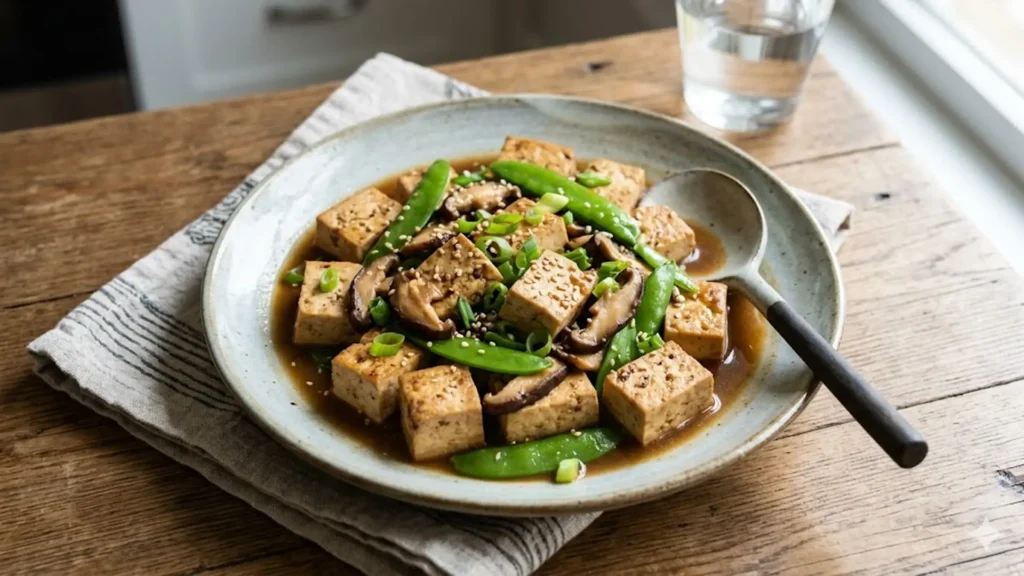
Is tofu gluten free? Plain tofu is naturally gluten free. It is made from three things: soybeans, water, and a coagulant such as calcium sulfate or magnesium chloride (nigari). None of those carry gluten, so a block of plain firm or silken tofu is safe for most people on a gluten free diet. The catch is everything that happens after the plain block: marinades, sauces, breaded coatings, and shared fryers are where gluten sneaks in.
I have shopped the tofu cooler for years cooking for a household that includes a celiac, and I can tell you the question is rarely about the tofu itself. It is about the label, the brand, and the dish on the menu. So let me walk you through the parts that actually matter, with brand names, real numbers, and a decision tree you can use in the store.
Why Plain Tofu Starts Out Gluten Free
Soybeans are a legume, not a grain. Gluten is a protein found in wheat, barley, and rye. Soy sits in a completely different plant family, so the bean itself contains zero gluten. To make tofu, soybeans get soaked, ground, and boiled into soy milk, then a coagulant pulls the proteins together into curds that get pressed into a block. Read that ingredient list again: soy, water, coagulant. That is the whole story for plain tofu.
The U.S. Food and Drug Administration sets the gluten free label limit at less than 20 parts per million. Any product carrying a “gluten free” claim has to stay under that ceiling. Plain tofu sails under it with room to spare because there is no gluten ingredient anywhere in the recipe. That is why a basic block of House Foods firm tofu or Nasoya extra firm does not need a certification stamp to be safe, though many brands carry one anyway.
The One Real Risk With Plain Tofu
Cross contamination. Soybeans and wheat are sometimes rotated through the same fields or run through shared equipment at processing plants. The actual gluten transfer from this is usually tiny, often well below that 20 ppm line, but if you have celiac disease and you react to trace amounts, it is worth choosing a brand that tests. More on which brands do that below.
It helps to put the risk in proportion. The plant-field rotation concern gets repeated a lot online, but soybeans are processed into soy milk through soaking, grinding, boiling, and filtering, and each of those steps washes away surface residue. By the time the curds form, there is very little chance any stray wheat protein survived in measurable amounts. The bigger practical worry is a facility that runs seitan or wheat-based mock meats on the same line, which is exactly why the “may contain wheat” line exists. Read it, weigh your own sensitivity, and decide.
Firm, Silken, Sprouted: Do the Types Matter?
They do not change the gluten answer. Firm and extra firm tofu, silken tofu, soft tofu, smoked tofu blocks, and sprouted tofu all start from the same soy-water-coagulant base. The difference between them is water content and how the curds are pressed, not the ingredient list. Extra firm has the least water and crisps best for baking and stir-fry. Silken is the smoothest and works for sauces, smoothies, and dairy free desserts. Sprouted tofu uses germinated soybeans for a slightly nuttier flavor. None of those processes introduce a grain, so every plain type stays gluten free. The only type to read twice is anything labeled “flavored,” “baked,” or “teriyaki,” because that label is the signal that something was added after the plain block was made.
The Tofu Gluten Decision Tree
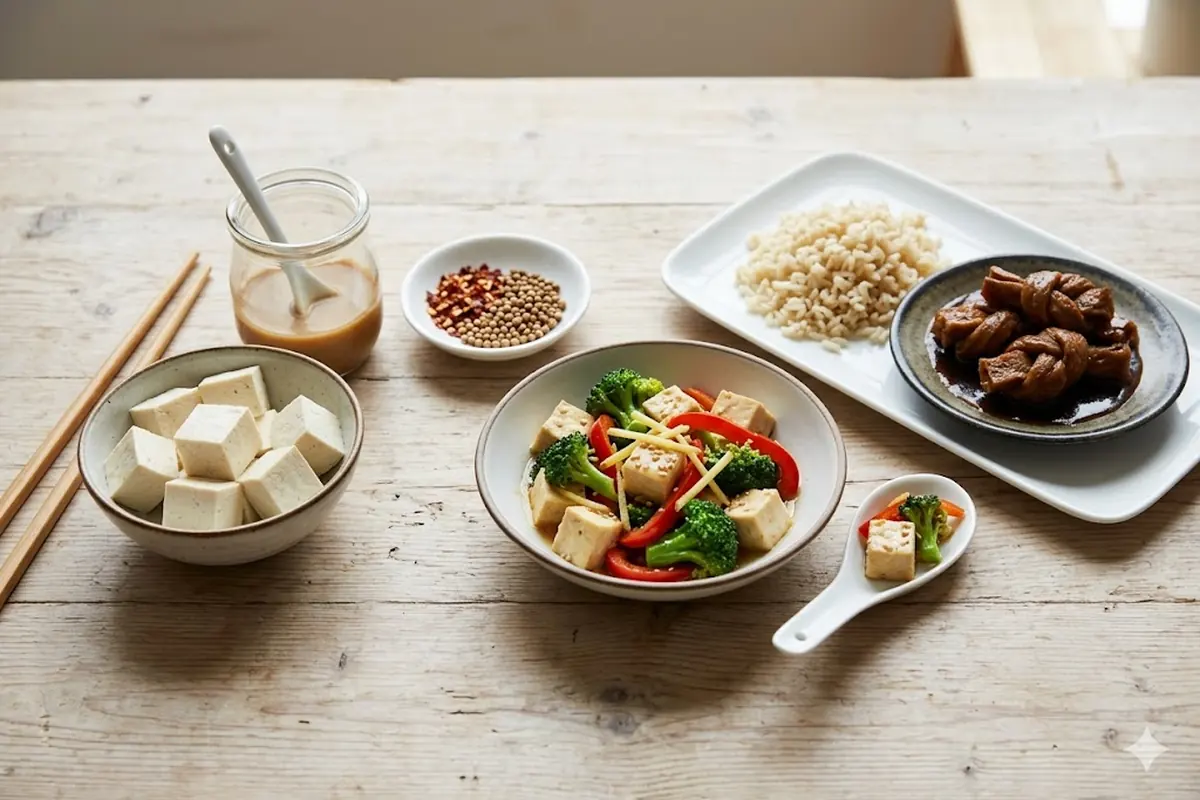
Here is the flow I run through every time. It takes about ten seconds and it catches almost every gluten trap.
- Is it plain (water-packed, no flavor)? Safe. Buy it. The only flag is a “may contain wheat” warning, which points to shared equipment, not an ingredient.
- Is it flavored, smoked, or baked in the package? Stop and read. Teriyaki and some “savory” baked tofus use soy sauce or malt, both of which can carry gluten.
- Is it marinated by you at home? Your marinade decides. Regular soy sauce has wheat. Swap in tamari labeled gluten free.
- Is it breaded or fried? Assume gluten until proven otherwise. Most breading is wheat flour, and most fry oil is shared with breaded items.
- Is it from a restaurant? Ask about the sauce and the fryer. Agedashi tofu is the classic trap because the coating is often regular flour.
That tree is the single most useful thing on this page. None of the top guides for this question lay it out as a flow, and it is the difference between a confident buy and a guess.
Gluten Free Tofu Brands: A Quick Certification Table
Plain tofu from these common U.S. brands is gluten free. The difference is whether they carry a third-party certification, which matters most for sensitive celiacs.
| Brand | Plain tofu | Notes |
|---|---|---|
| Mori-Nu (silken) | Gluten free, certified | Shelf-stable, carries a gluten free certification |
| Nasoya | Gluten free | Plain blocks safe; check the flavored TofuBaked line |
| House Foods | Gluten free | Plain firm and extra firm are clean; skip the marinated cubes if unsure |
| Hodo | Plain gluten free | Flavored varieties use sauces, read each one |
| Wildwood | Gluten free | Sprouted tofu, plain block is safe |
When a brand carries a gluten free certification, an outside lab has verified the under-20-ppm threshold. If your celiac symptoms flare from trace gluten, pay the small premium for a certified block like Mori-Nu and you remove the cross contamination worry entirely.
Flavored, Smoked, and Marinated Tofu: Where Gluten Hides
This is the section that the thin guides skip. Once tofu leaves “plain” territory, it can pick up gluten three ways.
Soy sauce. Standard soy sauce is brewed with wheat. A teriyaki or “Asian” flavored tofu almost certainly used it. If you love soy-marinated tofu, marinate it yourself with tamari, which is the gluten free cousin of soy sauce. I keep a bottle of gluten free tamari next to the stove for exactly this. If you want to go deeper on the soy sauce question, recipesbend has a full breakdown in a guide to fish sauce and gluten that covers the same brewed-condiment trap.
Malt and “natural flavors.” Smoked or savory baked tofu sometimes lists malt vinegar or malt extract, both barley-derived. “Natural flavors” is a catch-all that can hide a wheat carrier. When the label is vague, treat it as not gluten free unless the package also says gluten free.
Thickeners and coatings. Some pre-baked tofu gets dusted with a starch before baking. Usually it is cornstarch or potato starch, which are fine, but wheat starch shows up too. The package will tell you if you read the allergen line.
The Agedashi and Stir-Fry Restaurant Trap
Eating out is where I see the most accidental gluten exposure with tofu. Two dishes deserve a warning.
Agedashi tofu. This is fried tofu in a dashi broth, and it is delicious. The problem is the coating. Traditionally it is dusted in potato starch, which is gluten free, but plenty of kitchens use plain wheat flour because it is cheaper and on hand. The dashi-based sauce often contains soy sauce too. Ask two questions: “Is the coating potato starch or flour?” and “Does the sauce have soy sauce?” If the answer is flour or regular soy sauce, skip it.
Stir-fried tofu. The tofu is fine. The sauce and the wok are not guaranteed. Stir-fry sauces lean on soy sauce, oyster sauce, and hoisin, all of which usually carry gluten. A shared wok that just cooked a breaded dish is another vector. Ask for the dish made with a gluten free sauce, or order it plain with steamed vegetables and add tamari yourself at the table.
Hiyayakko, the chilled tofu appetizer, is the safe bet at a Japanese restaurant as long as you skip the drizzle of soy sauce and use tamari instead. Cold tofu, bonito flakes, ginger, scallion: nothing fried, nothing breaded.
A quick story from my own kitchen on this. The first time I made agedashi tofu at home, I reached for all-purpose flour out of habit because that is what most recipes call for. My celiac family member caught it before the oil even got hot. We swapped in potato starch, and not only was it safe, the coating actually came out lighter and crisper. That swap stuck. Now potato starch is the only thing I dust fried tofu with, and it taught me to assume every fried tofu dish is a flour question until proven otherwise.
Cooking Gluten Free Tofu at Home With Real Numbers
Once you have a plain block, the kitchen is yours. Here is how I get crispy, safe tofu without any gluten anywhere near it.
Press the block first. Wrap it in a clean towel, set a heavy pan on top, and leave it 15 to 30 minutes to push out water. Drier tofu crisps better. Cut it into one-inch cubes, toss with a tablespoon of cornstarch (not flour), and a little oil. Bake at 400 degrees F for 25 to 30 minutes, flipping once, until the edges are golden. The cornstarch gives you that crackly shell with zero gluten risk. For the sauce, whisk gluten free tamari, a teaspoon of honey, grated ginger, and a clove of garlic. That is a complete gluten free meal in under an hour.
If you bread tofu for a katsu-style cutlet, use gluten free panko, which is made from rice. The texture is nearly identical to wheat panko and it fries up just as crisp. Pair it with a side that you already trust, like the naturally gluten free options in the recipesbend look at grits and how they fit a gluten free plan, and you have a dinner with no question marks.
What Most Tofu Gluten Guides Get Wrong
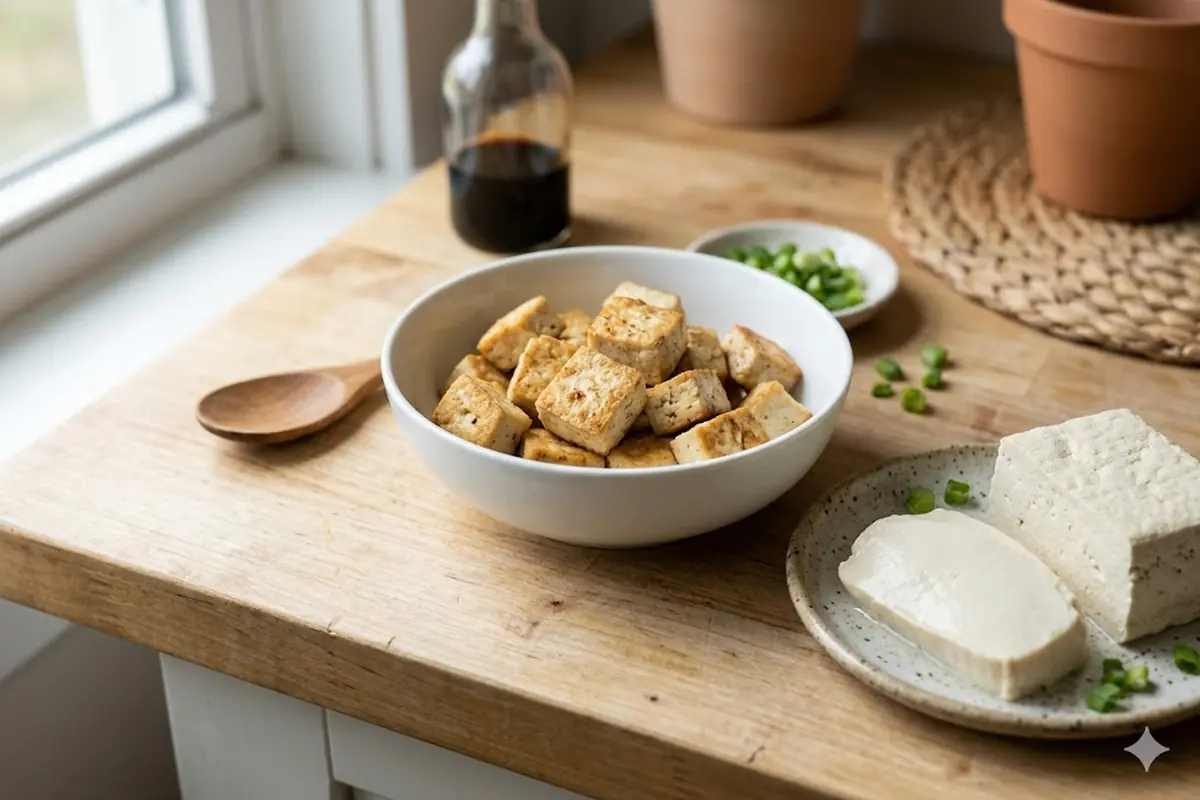
Most pages that answer this question stop at “tofu is made from soybeans, so it is gluten free,” slap a 6 out of 10 confidence score on it, and move on. That leaves the reader with the easy half and none of the hard half. The hard half is the marinade, the fryer, and the restaurant menu, and that is exactly where people on a gluten free diet actually get glutened. A confidence score with no brand names and no decision tree does not help you in the store at 6 p.m. trying to figure out if the teriyaki block in your hand is safe.
Here is the practical truth those guides skip: plain tofu is one of the cheapest certified gluten free proteins you can buy. A 14-ounce block runs roughly 2 to 3 dollars and delivers around 8 grams of protein per 3-ounce serving, all of it naturally gluten free. Compare that to gluten free bread or specialty pasta, which carry a steep premium. Tofu is the rare gluten free staple that costs the same as the regular-diet version, because the regular-diet version is the same product. That value angle is the real reason tofu belongs in a budget-conscious gluten free kitchen, and no other guide for this keyword says it.
Tofu and Soy Cross-Reactivity: A Quick Note for Celiacs
A handful of articles raise whether celiacs react to soy itself. This is a separate issue from gluten. A small minority of people with celiac disease also have a soy sensitivity, where the immune system responds to soy protein even though it contains no gluten. If you eat clean, certified gluten free tofu and still feel off, soy intolerance is worth discussing with your doctor. But that is intolerance to soy, not gluten contamination, and the two should not be confused. For most people with celiac disease, plain tofu is a reliable, affordable protein.
For a broader view on building a gluten free pantry around proteins like this, the team over at vegan bowls on veganstove leans heavily on tofu, and many of those builds are naturally gluten free once you swap the sauce.
Common Tofu Gluten Mistakes and How to Avoid Them
After years of cooking around a gluten free diet, the same slip-ups come up again and again. Here are the ones worth memorizing.
Trusting “vegetarian” to mean gluten free. A flavored tofu can be fully vegetarian and still loaded with wheat-based soy sauce. The two labels are not related. Vegetarian tells you there is no meat. It tells you nothing about gluten.
Using regular soy sauce in a marinade. This is the most common one. People buy a clean block of plain tofu, then drown it in a soy sauce marinade that undoes the whole point. Keep tamari on hand and the problem disappears.
Reusing fry oil. If you fried breaded chicken or onion rings in a pot of oil, that oil now carries gluten. Frying tofu in it afterward contaminates the tofu. Use fresh oil for gluten free frying, or bake instead.
Skipping the press. This one is about quality, not safety, but it matters. Wet tofu steams instead of crisping, which sends people reaching for flour coatings to force a crust. Press the block 15 to 30 minutes and you will not need a heavy coating at all, which keeps the dish naturally gluten free.
Forgetting the sauce at the table. You can cook a perfect gluten free tofu dish and then ruin it by setting a bottle of regular soy sauce next to it. Pour the tamari instead and tell anyone sharing the meal which bottle is safe.
How to Read a Tofu Label in Five Seconds
Flip the package and run this check. One, scan the ingredient list for “soy sauce,” “wheat,” “malt,” or “barley.” Two, read the allergen line at the bottom; it must call out wheat if present. Three, look for a “gluten free” claim or certification logo if you are sensitive. Four, treat “may contain wheat” as a shared-equipment note, lower risk but real. Five, when a flavored variety is vague, default to no. Plain blocks almost never trip any of these, which is exactly why plain is the smart buy.
America’s Test Kitchen has solid, tested guidance on getting tofu crispy if you want to go deeper on technique; their methods translate cleanly to a gluten free kitchen since the only swap is cornstarch for flour. You can find their tofu work at America’s Test Kitchen, and Bon Appetit also publishes reliable tofu-pressing and marinating breakdowns at Bon Appetit.
FAQ
Is plain tofu always gluten free?
Yes. Plain water-packed tofu is made from soybeans, water, and a coagulant, none of which contain gluten. The only caveat is shared-equipment cross contamination, which is usually below the 20 ppm gluten free threshold. Sensitive celiacs can choose a certified brand like Mori-Nu to remove even that risk.
Does tofu have wheat in it?
Plain tofu has no wheat. Wheat can appear in flavored, marinated, smoked, or breaded tofu through soy sauce, malt, or flour coatings. Always read the ingredient and allergen lines on flavored varieties, since that is the only place wheat would show up.
Is marinated tofu gluten free?
It depends on the marinade. Store-bought teriyaki or savory marinated tofu often uses regular soy sauce, which contains wheat. If you marinate at home, use gluten free tamari instead of soy sauce and the dish stays gluten free.
Is fried tofu gluten free at a restaurant?
Not reliably. Agedashi tofu is often coated in wheat flour rather than potato starch, and stir-fried tofu usually sits in a soy-based sauce that carries gluten. Shared fryers add risk. Ask whether the coating is potato starch and whether the sauce is gluten free before ordering.
Is silken tofu gluten free?
Yes. Silken tofu, like Mori-Nu, is made the same way as firm tofu with soy milk and a coagulant, so it is naturally gluten free. Mori-Nu also carries a gluten free certification, which makes it a safe pick for blended sauces, smoothies, and desserts.
Can celiacs eat tofu every day?
Yes, as long as it is plain or prepared with gluten free ingredients. Tofu is an inexpensive, high-protein, naturally gluten free food. The only people who should limit it are the small number of celiacs who also have a separate soy intolerance, which is unrelated to gluten.
What can I use instead of soy sauce to keep tofu gluten free?
Use tamari labeled gluten free, which has the same savory depth as soy sauce without the wheat. Coconut aminos is another swap, slightly sweeter and lower in sodium, and it works well in marinades and stir-fry sauces.
Bottom Line
Is tofu gluten free? Plain tofu, yes, every time, made from nothing but soy, water, and a coagulant. The risk lives in what gets added: soy sauce in flavored blocks, wheat flour in fried coatings, and shared sauces at restaurants. Buy plain, swap soy sauce for tamari, use cornstarch instead of flour for crisping, and choose a certified brand if you react to trace amounts. Do that and tofu becomes one of the easiest, cheapest, most flexible proteins in a gluten free kitchen.