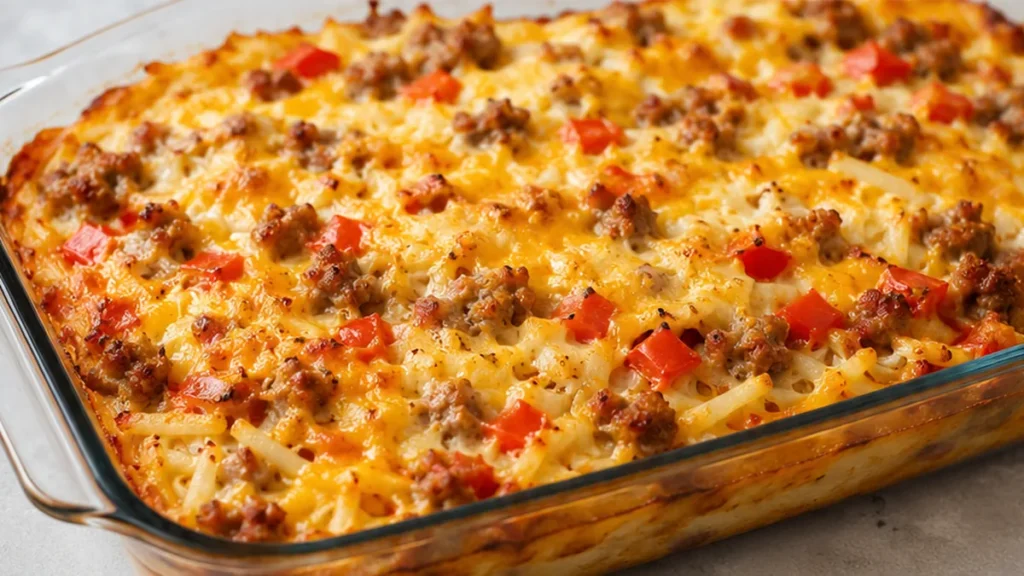
This breakfast casserole recipe combines savory sausage and crispy hashbrowns for a hearty morning meal. It’s a simple, satisfying bake perfect for feeding a crowd.
Key takeaways
- Properly brown the sausage to render fat and build flavor.
- Drain excess liquid from hashbrowns to prevent sogginess.
- Don’t over-mix the egg mixture to avoid a rubbery texture.
- Bake until the center is just set; it will firm up upon resting.
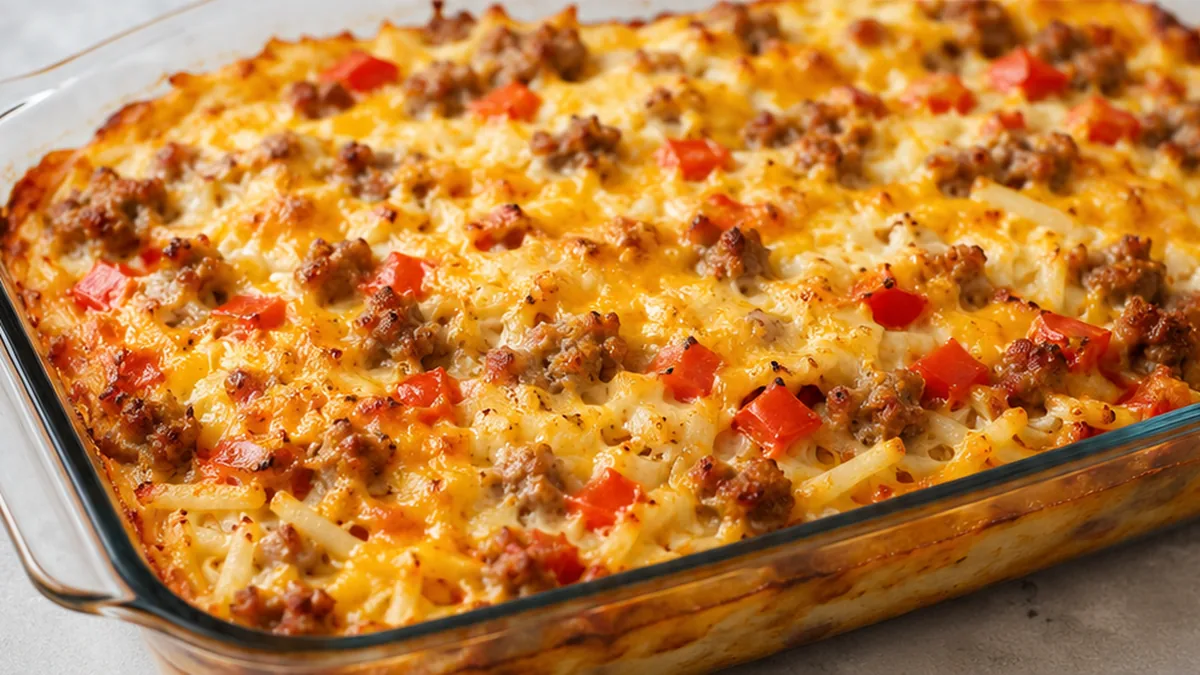
” Sausage Hashbrown Casserole: Breakfast Bake!”
Ingredients
Method
- Preheat the oven to 350°F. Lightly grease a 9×13 baking dish.
- Heat a skillet over medium-high heat. Add the sausage, onion, and red pepper. Break up sausage into small pieces and cook until the vegetables have softened and the sausage is no longer pink. Drain any excess grease.
- Add the spinach and cook for another 1-2 minutes. Remove from the heat and let cool slightly.
- In a large bowl, combine the hashbrowns, eggs, salt, pepper, milk, and 1 cup shredded cheddar.
- Add the cooled sausage mixture to the egg mixture and mix until totally combined.
- Pour the mixture into the prepared baking dish. Top with the remaining cheese.
- Bake for 25-30 minutes, uncovered, until the eggs are set.
- Let cool slightly before serving. Enjoy!
Notes
– Doneness Check: The eggs in your breakfast casserole should be fully set, but not rubbery. An internal temperature of 160°F (71°C) indicates safe doneness.
– Storage and Reheating: Store leftover casserole in an airtight container in the refrigerator for up to 3 days. Reheat individual slices in the microwave for 1-2 minutes or in a preheated oven at 300°F for 10-15 minutes until warmed through. Nutrition information is an estimate, calculated automatically. Values vary with brands, substitutions and portion sizes.
The Science Behind a Perfect Sausage Hashbrown Casserole
Achieving the Right Texture and Flavor
The success of this sausage hashbrown casserole hinges on a few key culinary principles. First, the browning of the breakfast sausage is crucial. This Maillard reaction develops deep, savory flavors and renders out excess fat, preventing a greasy final product. Ensure your skillet is hot enough before adding the sausage, and don’t overcrowd the pan, which would lead to steaming rather than browning. Dicing the red pepper and onion uniformly ensures they soften and integrate into the casserole without becoming mushy or remaining too raw. The hashbrowns, when thawed and lightly pressed to remove excess moisture, will absorb the egg mixture effectively, contributing to a tender, cohesive bake. Over-mixing the egg and milk mixture can incorporate too much air, potentially leading to a rubbery texture; a gentle whisking until just combined is ideal. Finally, the baking temperature and time are critical for setting the eggs without overcooking them, which results in a dry, crumbly casserole. The goal is a puffed, slightly jiggly center that firms up as it cools.
Troubleshooting Common Casserole Issues
- Problem: Casserole is watery or greasy. Fix: Ensure you thoroughly drain the rendered fat from the cooked sausage before adding other ingredients. Also, press excess moisture from the thawed hashbrowns.
- Problem: Eggs are rubbery or dry. Fix: Avoid over-baking. The casserole is done when the edges are set and the center is just slightly jiggly. It will continue to cook as it rests.
- Problem: Hashbrowns are soggy. Fix: Make sure the hashbrowns are fully thawed and gently pressed to remove as much liquid as possible before incorporating them into the egg mixture.
- Problem: Casserole lacks flavor. Fix: Don’t skip browning the sausage properly. Season the egg mixture adequately with salt and pepper, and consider adding a pinch of garlic powder or a dash of hot sauce for extra depth.
Smart Substitutions for Flexibility
- Sausage: Ground turkey or chicken sausage can be used for a leaner option, though the flavor profile will be milder. Ensure they are well-seasoned.
- Vegetables: Diced bell peppers of any color, mushrooms, or zucchini can replace or supplement the red pepper and onion. Adjust cooking time if using denser vegetables.
- Milk: Unsweetened almond milk or even heavy cream (for richness) can be used instead of whole milk or coconut milk. Water is a less ideal substitute as it won’t add richness.
- Cheese: Monterey Jack, Colby, or a Mexican blend can be substituted for sharp cheddar. For a dairy-free option, use a shredded vegan cheddar alternative.
Pro tips
- Make-Ahead Magic: Assemble the entire breakfast casserole the night before, cover, and refrigerate. Just add 10-15 minutes to the baking time when cooking from cold. This is my go-to strategy for stress-free holiday mornings.
- Doneness Check: The eggs in your breakfast casserole should be fully set, but not rubbery. An internal temperature of 160°F (71°C) indicates safe doneness.
- Storage and Reheating: Store leftover casserole in an airtight container in the refrigerator for up to 3 days. Reheat individual slices in the microwave for 1-2 minutes or in a preheated oven at 300°F for 10-15 minutes until warmed through.
This sausage hashbrown breakfast casserole is a versatile and comforting dish that’s sure to become a family favorite. Customize it with your favorite veggies or cheeses, and enjoy a delicious start to your day!
Frequently asked questions
Can I make this casserole ahead of time?
Yes, you can assemble the casserole up to the point of baking and refrigerate it overnight. Allow it to sit at room temperature for about 30 minutes before baking, and you may need to add a few extra minutes to the baking time to ensure it’s fully cooked through.
What kind of hashbrowns work best?
Frozen shredded hashbrowns are recommended for this recipe. They are convenient and provide the right texture. If using homemade or fresh shredded potatoes, ensure they are well-drained of excess moisture to prevent a watery casserole.
How can I make this casserole spicier?
To add heat, you can incorporate a pinch of cayenne pepper or red pepper flakes into the egg mixture. Alternatively, use a spicy breakfast sausage or add a diced jalapeño along with the other vegetables during the sautéing step.
Can I add other meats to this casserole?
Certainly. Cooked and crumbled bacon or diced ham can be added along with the sausage. Ensure any additional meats are fully cooked before adding them to the casserole mixture to maintain food safety and optimal texture.
Try this next: Crispy Tater Tot Breakfast Casserole
More from Gluten-Free Breakfast & Brunch →