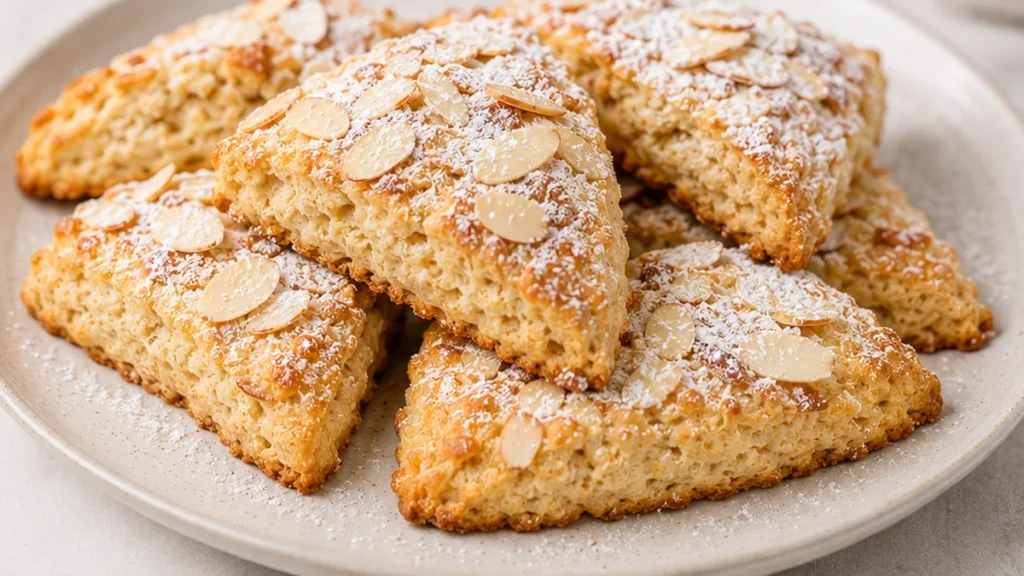
These almond scones are a delightful gluten-free alternative to traditional baked goods. Crafted with simple ingredients, they offer a tender crumb and a subtly sweet flavor that pairs perfectly with a morning coffee or afternoon tea. Ideal for those avoiding gluten or looking for a healthier treat, this recipe is straightforward enough for beginners while delivering a sophisticated taste and texture. The natural richness of almond flour makes these scones incredibly satisfying.
Key takeaways
- Almond flour requires gentle mixing to avoid toughness.
- Ensure baking powder is fresh for proper lift.
- Accurate ingredient measurements are crucial for texture.
- Chilling the dough can prevent excessive spreading.
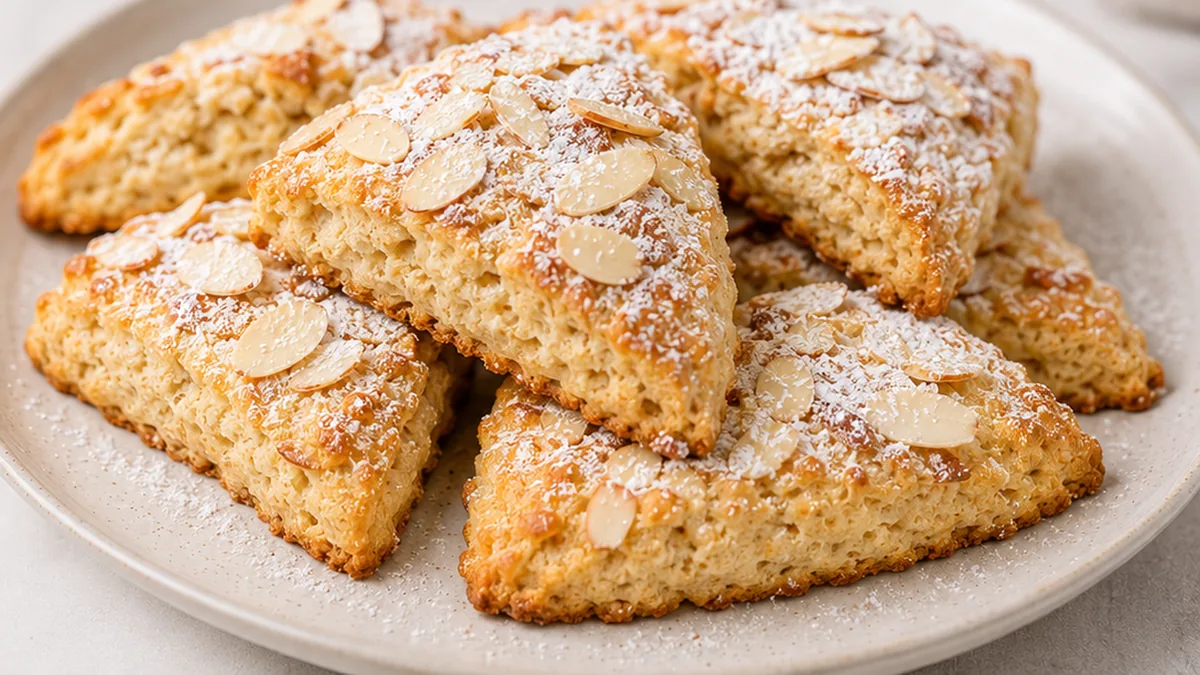
Golden Almond Scones: The Ultimate Gluten-Free Treat!
Ingredients
Method
- Preheat oven to 350°F (175°C) and line a baking tray with parchment paper.
- In a medium bowl, whisk together almond flour, salt, and baking powder.
- In a large bowl, mix melted butter and sugar. Stir in the egg and vanilla extract until fully incorporated.
- Add the dry ingredients to the wet ingredients and mix until just starting to combine.
- Add the milk and mix until a soft dough forms.
- Chill the dough in the freezer for 10-15 minutes to make it more workable.
- Shape the dough into a ball on a clean surface, then flatten it into a thick disc and cut into 6 triangles.
- Transfer triangles to the prepared baking tray. Sprinkle with slivered almonds and brush tops with milk.
- Bake for 18-20 minutes, or until golden brown. Let cool slightly before drizzling with powdered sugar glaze.
Notes
– Do not overmix the dough after adding the milk, as this can make the scones tough.
– Chilling the dough is crucial for easier handling and a better scone shape.
– For a richer glaze, use heavy cream instead of milk. Allergens: Tree nuts, Wheat. Nutrition information is an estimate, calculated automatically. Values vary with brands, substitutions and portion sizes.
The technique that makes it
The success of these golden almond scones hinges on understanding the role of almond flour and proper mixing technique. Unlike wheat flour, almond flour lacks gluten, the protein network that provides structure and chewiness in traditional baked goods. This means we need to be careful not to overmix, as this can still lead to a tough scone, even without gluten. The key is to incorporate the wet ingredients just until the dry ingredients are moistened. Overworking the dough can compress the almond flour particles, resulting in a denser, less tender scone. The melted butter also plays a crucial role; it coats the almond flour particles, contributing to a tender crumb and preventing the scones from becoming dry, which is a common challenge with gluten-free baking. Baking powder is essential for leavening, creating those desirable airy pockets. Ensure it’s fresh for optimal lift. The addition of a small amount of milk helps bind the ingredients and adds a touch of moisture, but too much will make the dough sticky and difficult to handle, impacting the final texture.
Troubleshooting
- Failure: Scones are dry and crumbly. Fix: This often occurs if the dough is overworked or if too much almond flour was used. Ensure accurate measuring of almond flour. Next time, try adding an extra teaspoon of milk or butter, incorporating it gently.
- Failure: Scones are too dense and heavy. Fix: This can be caused by overmixing the wet and dry ingredients, which compacts the almond flour. Mix only until just combined. Also, ensure your baking powder is fresh and active for proper leavening.
- Failure: Scones spread too much during baking. Fix: The dough might be too wet. Reduce the milk slightly in your next batch. Chilling the dough for 15-20 minutes before baking can also help them hold their shape better.
- Failure: Scones are not golden brown. Fix: Your oven temperature might be too low, or they may not have baked long enough. Ensure your oven is preheated accurately. Brush the tops with milk before baking for enhanced browning, and consider adding a few extra minutes to the bake time if needed.
Substitutions
- Almond Flour: For a different nutty flavor profile, you can try substituting half of the almond flour with finely ground hazelnut flour. The texture might be slightly different, but the flavor will be enhanced.
- Butter: Coconut oil (solid or melted) can be used as a dairy-free alternative to butter. Ensure it’s at a similar consistency to the melted butter called for in the recipe for best results.
- Milk: Any non-dairy milk, such as almond milk or oat milk, can be used in place of dairy milk. The scones may have a slightly different moisture content, so adjust as needed.
- Sugar: For a less sweet scone, you can reduce the granulated sugar slightly. For the glaze, maple syrup can be used as a sweetener, though it will alter the color and flavor profile.
Pro tips
- Ensure your almond flour is finely ground for the best texture.
- Do not overmix the dough after adding the milk, as this can make the scones tough.
- Chilling the dough is crucial for easier handling and a better scone shape.
- For a richer glaze, use heavy cream instead of milk.
Enjoy these delightful almond scones warm from the oven, perhaps with a dollop of jam or clotted cream. They are a testament to how delicious gluten-free baking can be.
Try this next: Easy Almond Banana Muffins!
More from Gluten-Free Breakfast & Brunch →
Read also on TastyBend: Saltines Nutritional Value: Expert RD Guide to Cracker Facts 2026.
Frequently asked questions
Can I use a different nut flour instead of almond flour for these scones?
Yes, you can substitute cashew flour or even a finely ground hazelnut flour. However, almond flour provides the best texture and flavor for these golden scones. Ensure your chosen nut flour is finely ground for a smooth consistency. Avoid coarser flours like pecan meal, as they can result in a gritty texture.
How do I know when the gluten-free scones are fully baked?
The scones are done when they are golden brown on top and around the edges. A toothpick inserted into the center should come out clean. They should feel firm to the touch. Avoid overbaking, as gluten-free baked goods can dry out quickly. Check for doneness around the 18-20 minute mark.
Can I make the dough for these almond scones ahead of time?
Yes, you can prepare the dough up to 24 hours in advance. Wrap it tightly in plastic wrap and refrigerate. When ready to bake, let the dough sit at room temperature for about 15-20 minutes to soften slightly before shaping and baking. This makes them a convenient option for brunch or special occasions.
How should I store leftover gluten-free almond scones?
Store cooled scones in an airtight container at room temperature for up to 2 days. For longer storage, freeze them in a single layer in a freezer-safe bag or container for up to 2 months. Reheat gently in a low oven or toaster oven to refresh their texture before serving.