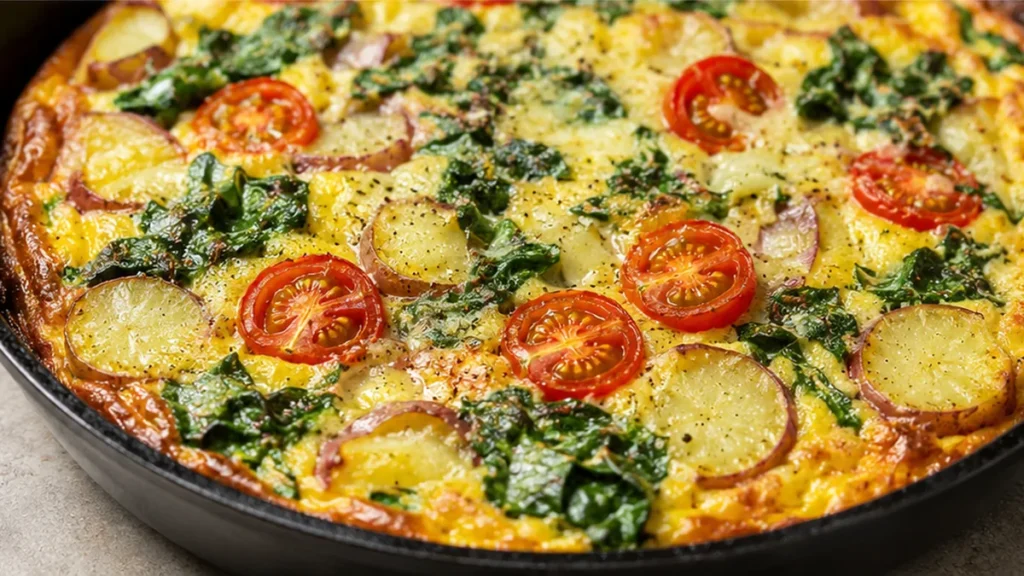
This potato frittata is the ultimate recipe for a versatile and satisfying meal, perfect for any time of day. Combining tender potatoes, fresh spinach, and rich cheese, this dish is both hearty and light. It’s an excellent choice for a weekend brunch or a quick, healthy weeknight dinner. Crafting a delicious potato frittata doesn’t have to be complicated. This recipe simplifies the process, ensuring a perfectly set, flavorful frittata every time. It’s a fantastic way to incorporate vegetables and protein into your diet with minimal effort.
Key takeaways
- Pre-cook potatoes thoroughly for even texture.
- Whisk eggs well to emulsify for a fluffy result.
- Manage heat carefully during final cooking to prevent burning and ensure a set center.
- Don’t overcook the eggs to avoid a rubbery texture.
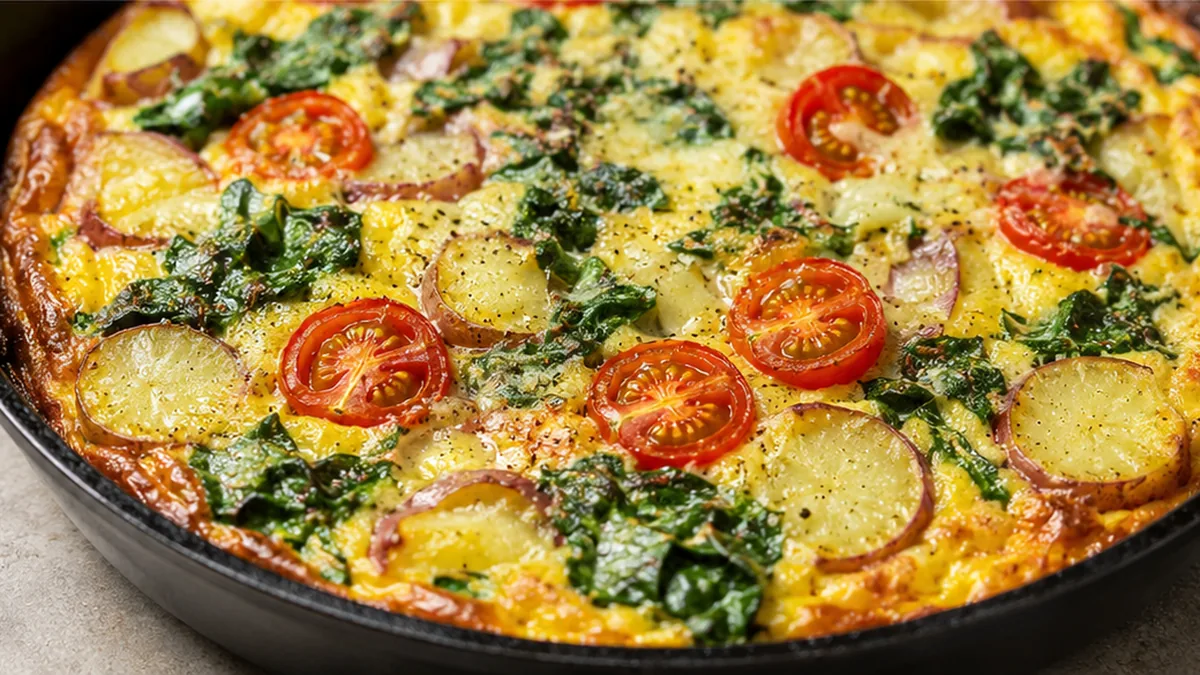
Fluffy Frittata Fiesta: Potato & Spinach Delight!
Ingredients
Method
- Preheat the oven to 375F.
- Heat 1 tablespoon of olive oil in a non-stick, oven-safe pan (or cast iron skillet) over medium heat. Add the potatoes and saute for 7-10 minutes until tender.
- Meanwhile, whisk the eggs, basil, cheese, and salt together in a bowl until well combined. Remove the potatoes from the pan and set aside.
- Add the remaining olive oil and cook the green onion, tomatoes, and frozen peas for 3-4 minutes over medium heat. Add the spinach and garlic and cook for another 30 seconds or so.
- Pour in the egg mixture and reduce the heat. Scramble the eggs for 1 minute then add in the potatoes. Cook for another 3-4 minutes until the egg starts to set. Smooth into an even layer and place in the oven for 10-12 minutes until the eggs have set.
- Slice and serve topped with more basil and cheese if desired. Enjoy!
Notes
– For a richer flavor, use a mix of cheeses like sharp cheddar and Gruyère. I find the blend adds a wonderful depth that a single cheese can’t quite achieve.
– Ensure the eggs are set in the oven; gently shaking the pan should show no liquid jiggle in the center. For safe egg consumption, the internal temperature should reach 160°F (71°C).
– Leftover frittata can be stored in an airtight container in the refrigerator for up to 3 days. Reheat gently in the microwave or a warm oven. Nutrition information is an estimate, calculated automatically. Values vary with brands, substitutions and portion sizes.
The Technique That Makes It: Even Cooking and Emulsified Eggs
The key to a perfect potato frittata lies in achieving even cooking for both the vegetables and the eggs, and ensuring the eggs are properly emulsified. For this recipe, we start by sautéing the potatoes until they are tender and slightly golden. This pre-cooking step is crucial because raw potatoes take significantly longer to cook than eggs, and without it, you’d end up with a frittata that’s either undercooked in the center or burnt on the outside. The thin slicing of the potatoes helps them cook through more quickly and evenly.
Next, we incorporate the other vegetables. Sautéing the green onions and garlic briefly before adding the tomatoes and spinach builds a foundational flavor. The spinach wilts quickly, releasing moisture. It’s important not to overcook the vegetables at this stage; they should be tender-crisp.
The eggs are the binder and the body of the frittata. Whisking the eggs thoroughly with the basil helps to break down the proteins and incorporate air, leading to a lighter, fluffier texture. Adding the cheese directly into the egg mixture before pouring it over the vegetables ensures it melts evenly throughout the frittata, rather than pooling at the bottom or top.
The final cooking phase, whether on the stovetop or in the oven, requires careful heat management. A medium-low heat on the stovetop allows the bottom and sides to set without burning, while the residual heat and steam cook the center. If finishing in the oven, a moderate temperature ensures the eggs cook through gently and evenly, resulting in a tender, custardy interior. The goal is a fully set frittata with a beautiful golden-brown top and a moist, not rubbery, texture.
Troubleshooting
- Problem: Frittata is watery and doesn’t set. Fix: Ensure vegetables, especially spinach and tomatoes, are not overly wet before adding the eggs. Pat down excess moisture from sautéed ingredients.
- Problem: Bottom is burnt, but the top is still runny. Fix: Reduce the stovetop heat to low or medium-low. If finishing on the stovetop, cover the pan loosely to trap steam and help the top set. Consider transferring to the oven if stovetop control is difficult.
- Problem: Frittata is rubbery or dry. Fix: Do not overcook the eggs. Remove from heat as soon as the center is just set (a slight jiggle is okay, as it will continue to cook). Avoid high heat during the final cooking stage.
- Problem: Eggs are unevenly cooked, with some parts curdled. Fix: Ensure eggs are well-whisked to emulsify them properly. Pour the egg mixture evenly over the vegetables and cook over consistent, moderate heat.
Substitutions
- Potatoes: Sweet potatoes or Yukon Gold potatoes can be used. Sweet potatoes will add a subtle sweetness and a softer texture. Yukon Golds will provide a similar creamy texture to red potatoes. Slice thinly and pre-cook as directed.
- Cheese: Monterey Jack, mild cheddar, or a blend of Italian cheeses (like mozzarella and provolone) can be substituted. These will offer slightly different melting properties and flavor profiles, with Monterey Jack being milder and mozzarella offering a more ‘stretchy’ texture.
- Herbs: Fresh parsley or chives can replace basil. Parsley offers a fresh, clean flavor, while chives provide a mild oniony note, complementing the green onions.
- Vegetables: Asparagus (chopped) or bell peppers (diced) can be added or substituted. Asparagus should be blanched or sautéed until tender-crisp. Bell peppers benefit from longer sautéing to soften.
Pro tips
- Don’t overcook the spinach and garlic; they only need a quick sauté to wilt and become fragrant.
- For a richer flavor, use a mix of cheeses like sharp cheddar and Gruyère. I find the blend adds a wonderful depth that a single cheese can’t quite achieve.
- Ensure the eggs are set in the oven; gently shaking the pan should show no liquid jiggle in the center. For safe egg consumption, the internal temperature should reach 160°F (71°C).
- Leftover frittata can be stored in an airtight container in the refrigerator for up to 3 days. Reheat gently in the microwave or a warm oven.
This potato frittata is a simple yet elegant dish that truly delivers on flavor and satisfaction. Experiment with different vegetables or herbs to make it your own. Enjoy this delightful frittata!
Frequently asked questions
Can I make this frittata ahead of time?
Yes, a potato frittata can be made ahead and served warm, at room temperature, or chilled. It reheats well in a low oven or microwave. Ensure it is fully cooked and cooled before storing in an airtight container in the refrigerator for up to 3 days.
What is the best way to cut the potatoes?
Thinly slicing the red potatoes, about 1/8-inch thick, is ideal. This ensures they cook through evenly and quickly alongside the other ingredients without becoming mushy or remaining hard in the finished frittata.
How do I know when the frittata is done cooking?
The frittata is done when the edges are set and lightly golden, and the center is just firm. A gentle shake should show minimal jiggle. If using a thermometer, the internal temperature should reach around 160°F (71°C).
Can I use different types of potatoes?
While red potatoes are recommended for their texture, Yukon Gold or even sweet potatoes can be used. If using a starchy potato like Russet, slice them thicker and ensure they are very tender after the initial sautéing step to avoid a raw center.
Try this next: Ultimate Gluten-Free Bacon Cheddar Quiche
More from Gluten-Free Breakfast & Brunch →