Are corn tortillas gluten free? Yes, in their pure form they are, because real corn tortillas are made from just three things: nixtamalized corn (masa), water, and salt. None of those carries gluten. The catch is that “pure form” does a lot of heavy lifting in that sentence, and the gap between a naturally gluten-free ingredient and a safe-for-you product is exactly where people get burned. I have spent a long time reading tortilla labels under fluorescent grocery lights, and I can tell you the answer is rarely as clean as the recipe blogs make it sound.
Here is the short version you can quote: plain corn tortillas contain no gluten by nature, but cross-contamination during milling, packaging, and especially restaurant frying turns a safe food into a risky one. If you have celiac disease, look for a certified gluten-free label (tested under 20 parts per million) rather than trusting “corn” alone. The rest of this guide is about how to tell the safe ones from the traps.
Why Corn Tortillas Are Gluten Free by Nature
Corn is a grain, but it is not a gluten grain. Gluten, the protein that makes celiacs sick, lives in wheat, barley, and rye, plus their relatives like spelt, kamut, and triticale. Corn has its own storage proteins, sometimes loosely called “corn gluten,” and that name confuses a lot of people. It is not the same protein. It does not trigger celiac disease. So when a label or a feed-store bag says “corn gluten meal,” that is a corn byproduct used in animal feed and fertilizer, not a sign that your tortillas are dangerous.
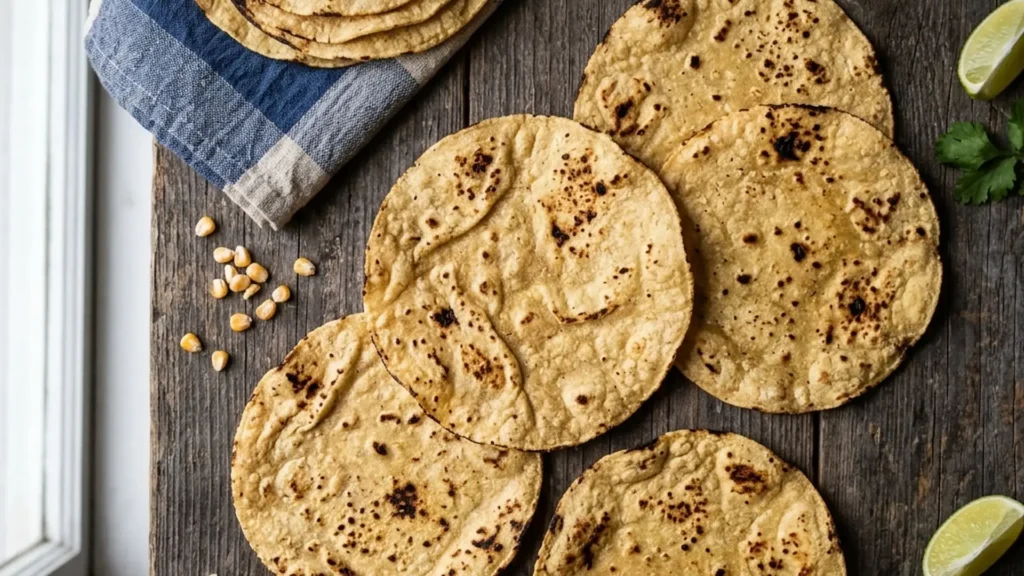
A traditional corn tortilla starts with field corn that has been cooked and soaked in an alkaline solution, usually slaked lime (calcium hydroxide). That process is called nixtamalization. It loosens the corn hulls, changes the flavor, and makes the grain easier to grind into masa. The wet masa gets pressed and griddled, or it gets dried into masa harina, the shelf-stable flour you reconstitute at home. At no point does wheat belong in that chain. That is the whole reason corn tortillas are the default safe choice at a Mexican restaurant and flour tortillas are not.
Where Gluten Actually Sneaks In
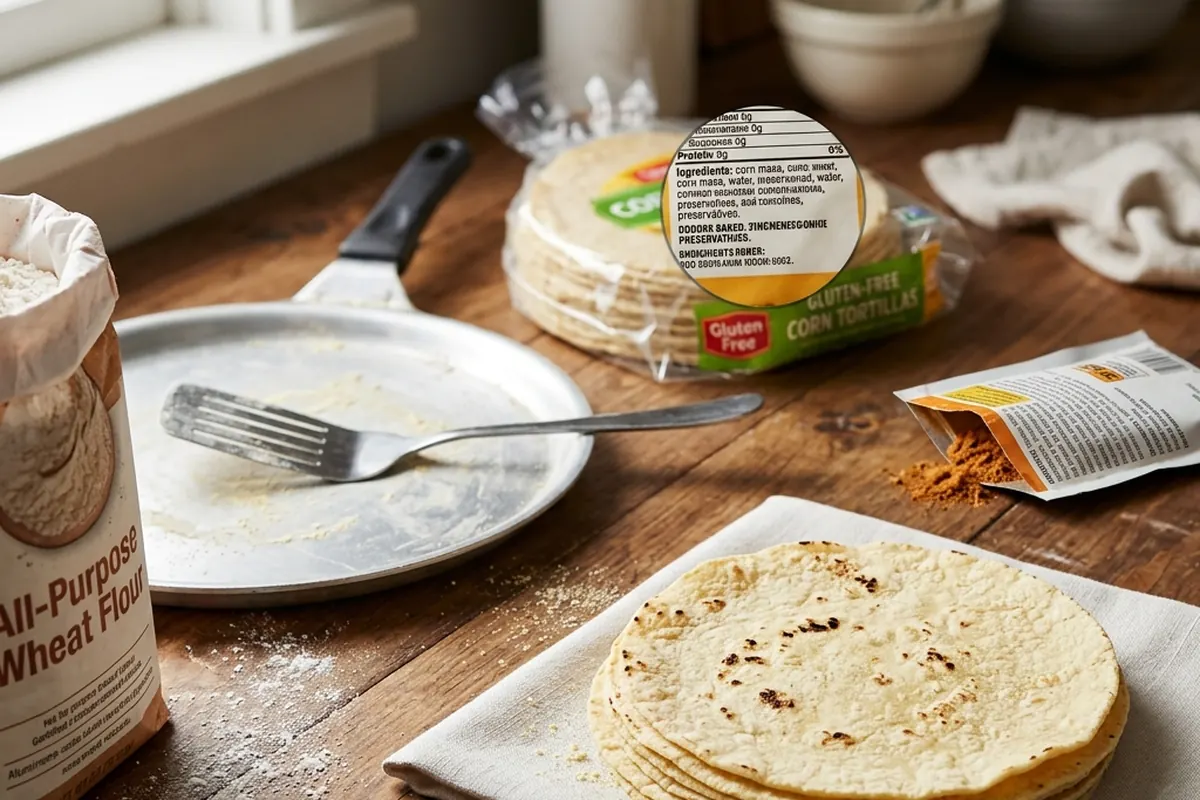
The ingredient list is the easy part. The contamination is the hard part, and it hides in four places.
Shared milling and packaging lines. A plant that runs both corn and wheat products can leave wheat residue on equipment. Plenty of corn tortilla brands are made in dedicated or cleaned facilities, but not all, and the bag will not always say so unless they bother to get certified.
Blended “corn” tortillas. This one catches people. Some products marketed as corn tortillas are actually corn-and-wheat blends, sold to improve flexibility so the tortilla folds like a flour one. Read the ingredients, not the front of the bag. If you see wheat flour listed after the masa, it is not safe.
The restaurant fryer and comal. A tortilla chip or a hard taco shell fried in the same oil as breaded chimichangas or flautas picks up gluten from that shared oil. The same griddle that toasts flour tortillas all day can transfer flour dust to your corn one. This is the single most common way celiacs get glutened by “corn” tortillas, and it has nothing to do with the tortilla itself.
The fillings and dusting flour. Some kitchens dust a stack of tortillas with regular flour to keep them from sticking. Seasoning blends, thickened sauces, and imitation crab in your taco can all carry gluten even when the tortilla is spotless.
The 20 PPM Standard, and Why “Certified” Beats “Corn”
In the United States, the FDA lets a product be labeled gluten-free only if it contains fewer than 20 parts per million of gluten. That 20 ppm figure is the threshold most celiac organizations consider safe for the large majority of patients. A certified gluten-free seal, from a body like the Gluten-Free Certification Organization (GFCO), goes a step further and tests to a stricter 10 ppm in many cases, with facility audits behind it.
Here is the practical upshot. A bag of plain corn tortillas with no certification is probably fine for someone with a mild sensitivity. For diagnosed celiac disease, the certified seal is what removes the guesswork, because it tells you the company actually tested for cross-contamination instead of assuming corn equals safe. I treat the certification as the deciding vote whenever a brand is new to me.
A Quick Decision Tree: Package, Restaurant, or Homemade
Most “is this safe” questions fall into three situations. Run yours through the matching path.
Buying a package. Check the ingredient list first (masa or corn, water, lime, salt, maybe a preservative like guar gum or propionic acid, all fine). Reject anything listing wheat. Then look for a gluten-free or certified gluten-free statement. No statement plus a multi-grain facility equals a judgment call, and for celiacs that judgment should be no.
Eating at a restaurant. Ask two specific questions: are the corn tortillas pure corn, and are the chips and shells fried in dedicated oil. If the chips share a fryer with anything breaded, skip the chips, and ask for tortillas warmed on a clean surface, not the flour-dusted griddle. A kitchen that cannot answer is a kitchen that does not track it.
Making them at home. This is the safest path and the cheapest. Buy certified gluten-free masa harina, mix with warm water and a pinch of salt, press, and cook on a dry skillet over medium-high (about 400 degrees F) for 45 to 60 seconds per side. You control every variable.
Masa, Masa Harina, Cornmeal, Corn Flour: Clearing the Name Confusion
Half the gluten-free corn confusion comes from product names that sound interchangeable but are not. This table sorts them out.
| Product | What it is | Gluten-free? |
|---|---|---|
| Masa (fresh) | Wet, nixtamalized corn dough | Yes, if not blended with wheat |
| Masa harina | Dried, ground masa (the flour) | Yes by nature; buy certified to be sure |
| Cornmeal | Ground dried corn, not nixtamalized | Yes by nature; check facility |
| Corn flour | Finely ground cornmeal | Yes by nature; check facility |
| Cornstarch | Pure starch, no protein | Yes |
The one to remember: only nixtamalized masa or masa harina makes a real corn tortilla. Cornmeal makes cornbread, not a pliable tortilla. If a recipe tells you to use cornmeal for tortillas, it has skipped a step, and your tortillas will crumble.
Brands Worth Knowing
Brand specifics shift over time, so always re-read the current bag, but here is the landscape as it stands. Mission makes corn tortillas labeled gluten-free, and the company runs a broader gluten-free line. Maseca masa harina is labeled gluten-free in the US, though it is often shelved right next to wheat flour, so handle the bag carefully and store it sealed. Bob’s Red Mill sells masa harina with its own gluten-free testing program. Smaller regional tortillerias often make pure corn tortillas but rarely carry certification, so you are trusting the ingredient list alone.
My honest preference: for celiac-level safety I reach for a certified masa harina and press my own, because a homemade tortilla off a clean skillet beats almost every bagged option on both flavor and peace of mind. When I do buy, the certified seal is non-negotiable.
The Cracking Problem Nobody Warns You About
Here is a technique gap every recipe roundup leaves out. Corn tortillas, especially gluten-free ones with no wheat to add stretch, crack and split when you fold them cold. The fix is steam and rest, not more masa. Stack your cooked tortillas inside a clean kitchen towel the moment they come off the heat and let them sit, covered, for 30 to 45 seconds before you eat. The trapped steam relaxes the starch and makes them bend instead of break.
For store-bought tortillas, wrap five or six in a damp paper towel and microwave for 30 seconds, or warm them directly over a gas flame for about 15 seconds a side until they char in spots and soften. A dry, cold corn tortilla folds like a cracker. A warm, steamed one folds like it should. This single habit fixed more of my taco-night frustration than switching brands ever did.
What About the Rest of the Taco? Hidden Gluten in Fillings and Sauces
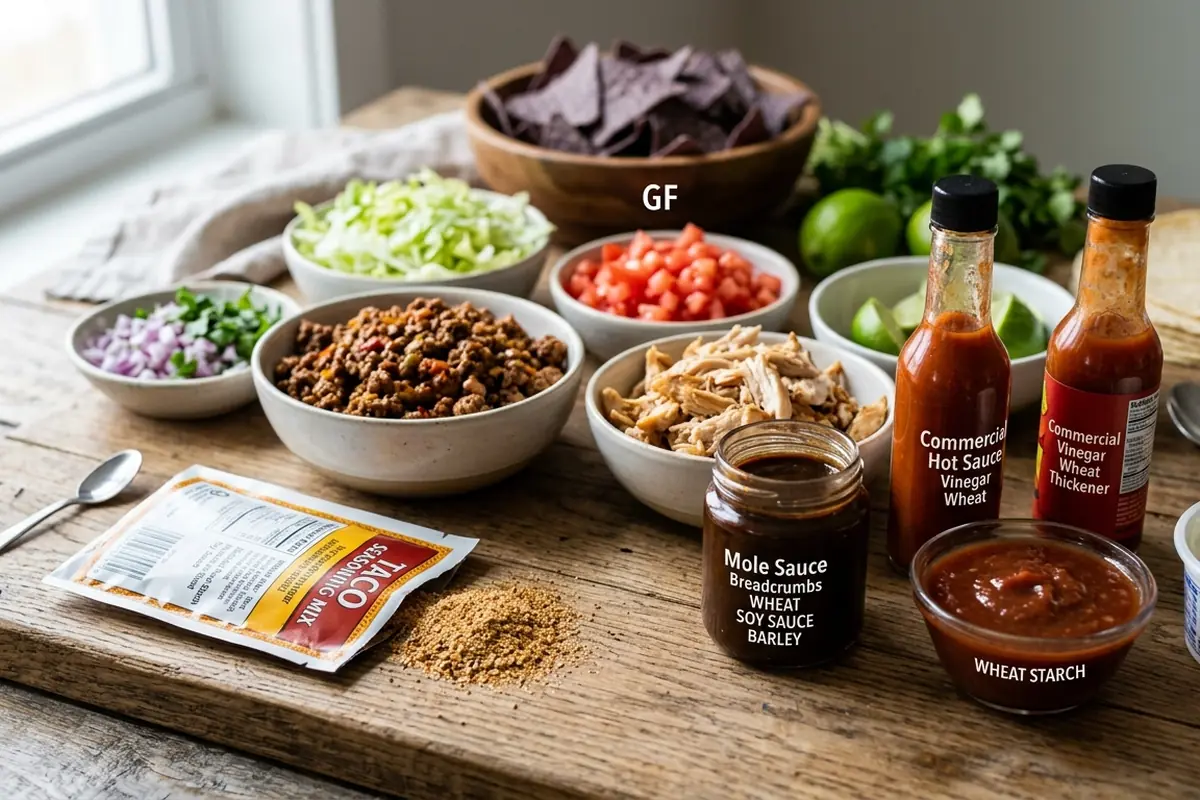
You can buy the cleanest certified corn tortilla on the shelf and still get sick if you stop paying attention at the tortilla. The fillings are where a surprising amount of hidden gluten lives, and most of it is avoidable once you know the usual suspects.
Seasoned taco meat is the classic trap. Many pre-mixed taco seasoning packets use wheat flour as a thickener and an anti-caking agent, so a “simple” beef taco can carry gluten before it ever touches the tortilla. Make your own blend with chili powder, cumin, garlic powder, onion powder, smoked paprika, oregano, and salt, and you sidestep the issue entirely. Soy sauce in a marinade is another quiet offender, since standard soy sauce is brewed with wheat. Imitation crab, common in cheaper fish tacos, is bound with wheat starch almost every time. Thickened cheese sauces and queso can be roux-based, meaning flour again.
Salsas are usually safe because they are produce, acid, and salt, but check the jarred ones with thickeners or “natural flavors” you cannot trace. Mole is the one Mexican sauce I always ask about, because traditional recipes sometimes include a torn-up piece of bread or a cracker as a thickener. None of this means you cannot eat well. It means the tortilla is step one of a three- or four-step safety check, and the steps after it are where casual cooks slip.
Celiac Disease Versus Gluten Sensitivity: How Strict to Be
How carefully you need to vet a corn tortilla depends a lot on why you are avoiding gluten in the first place, and the difference is real, not a matter of willpower.
If you have diagnosed celiac disease, your immune system reacts to even trace gluten, and the damage to your small intestine happens whether or not you feel symptoms that day. For you, the 20 ppm line and the shared-fryer question are not fussiness, they are the difference between a safe meal and intestinal damage. The certified seal earns its place here.
If you have non-celiac gluten sensitivity, your reaction is real but does not appear to cause the same autoimmune damage, and many people in this group tolerate plain, uncertified corn tortillas from a clean ingredient list without trouble. You still want to read labels for blended wheat, but you may not need to interrogate the restaurant fryer. If you are avoiding gluten by choice or for general digestion, a plain corn tortilla with no wheat in the ingredients is almost always fine.
The reason I push the stricter standard throughout this guide is simple. Writing one set of rules that protects the most sensitive readers protects everyone, and the homemade or certified route costs you very little. Erring careful is cheap insurance.
How to Store and Reheat Corn Tortillas So They Stay Usable
Gluten-free corn tortillas dry out faster than flour ones because they have no gluten network holding moisture, so storage matters more than people expect. Keep an opened pack sealed tight in the fridge, where they hold for about a week. For longer storage, freeze them with a square of parchment between each tortilla so they peel apart without tearing, and they keep well for two to three months.
To revive them, never just eat them cold from the fridge. Warm a damp paper towel around a stack of five or six and microwave 30 seconds, or set them straight on a dry skillet over medium-high heat for 20 to 30 seconds a side until they smell toasty and turn pliable. A tortilla that has been refreshed with a little heat and moisture behaves almost like a fresh one. A neglected cold one shatters. The whole difference is a minute of attention.
Corn Tortillas in a Wider Gluten-Free Kitchen
Once you trust your tortillas, the rest of the meal is where vigilance pays off. The fillings, sauces, and sides carry their own risks. A taco built on a safe corn tortilla can still glutten you through a flour-thickened sauce or a shared spice rub. If you are sorting out which restaurant chains are workable, the same shared-fryer logic applies, and it is worth reading how the safe options stack up at places like the breakdown of Chick-fil-A waffle fries, where dedicated oil is the whole story. The same goes for broth-based dishes, where a clean noodle does not guarantee a clean bowl, as the look at pho noodles and broth spells out.
For the technically minded, America’s Test Kitchen has done careful work on corn tortilla texture and masa hydration that is worth a read, and you can find their broader cooking science at America’s Test Kitchen. Bon Appetit also keeps a useful library of taco and masa techniques at Bon Appetit if you want to push your homemade tortillas further.
Frequently Asked Questions
Are all corn tortillas gluten free?
No. Most are, because pure corn tortillas use only masa, water, and salt. But some products are corn-and-wheat blends sold for extra flexibility, and others are made in facilities that also handle wheat. Always read the ingredient list and, for celiac safety, look for a certified gluten-free seal.
Are restaurant corn tortillas safe for celiacs?
The tortilla itself usually is, but the kitchen may not be. Shared fryer oil for chips and shells, flour-dusted griddles, and gluten-containing fillings are the real risks. Ask whether chips are fried in dedicated oil and whether tortillas are warmed on a clean surface before you order.
Is masa harina gluten free?
Masa harina is gluten free by nature, since it is just dried nixtamalized corn. The variable is cross-contamination at the mill. Buy a brand that labels its masa harina gluten free or certified gluten free, especially if you have celiac disease.
What is the difference between corn gluten and wheat gluten?
They are different proteins. Wheat gluten triggers celiac disease. Corn “gluten” is a loose name for corn’s storage proteins and does not trigger celiac disease. Corn gluten meal you see in feed or fertilizer is a corn byproduct, not a sign your tortillas contain wheat.
Why do my gluten free corn tortillas keep cracking?
They are too dry or too cold. Steam them: stack fresh ones in a towel for 30 to 45 seconds off the heat, or warm store-bought tortillas in a damp paper towel for 30 seconds in the microwave. The trapped steam relaxes the starch so they fold instead of split.
Are corn tortilla chips gluten free?
Plain corn chips are gluten free by ingredient, but flavored varieties can contain wheat-based seasonings, and restaurant chips are often fried in oil shared with breaded items. Check the label for flavored chips and ask about the fryer at restaurants.
Bottom Line
Corn tortillas are one of the safest staples in a gluten-free kitchen, but the word “corn” is not a guarantee on its own. Pure corn tortillas carry no gluten, yet blended products, shared facilities, and restaurant fryers can all undo that. Read the ingredient list, lean on a certified gluten-free seal for celiac-level safety, ask the two restaurant questions, and steam your tortillas so they actually fold. Do that and corn tortillas become exactly what they should be: the easy, reliable base for taco night that you never have to second-guess.