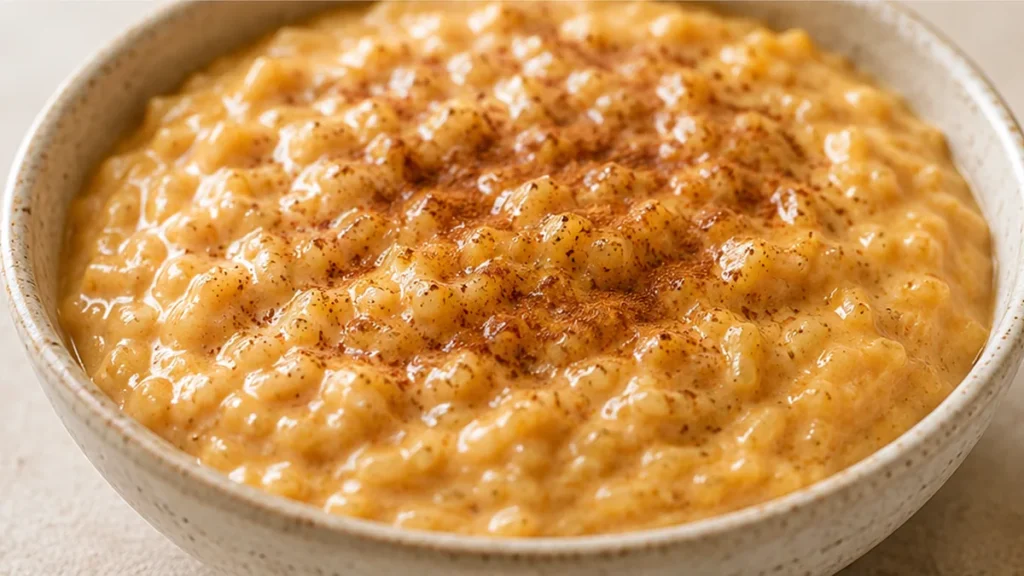
This pumpkin rice pudding recipe offers a comforting blend of tender rice, pumpkin puree, and warm spices. It’s a simple yet satisfying dessert perfect for fall. Made with creamy half-and-half, it delivers a rich texture.
Key takeaways
- Rinse rice to prevent gumminess.
- Temper egg carefully to avoid scrambling.
- Simmer gently and stir to develop creaminess.
- Incorporate dairy slowly for best texture.
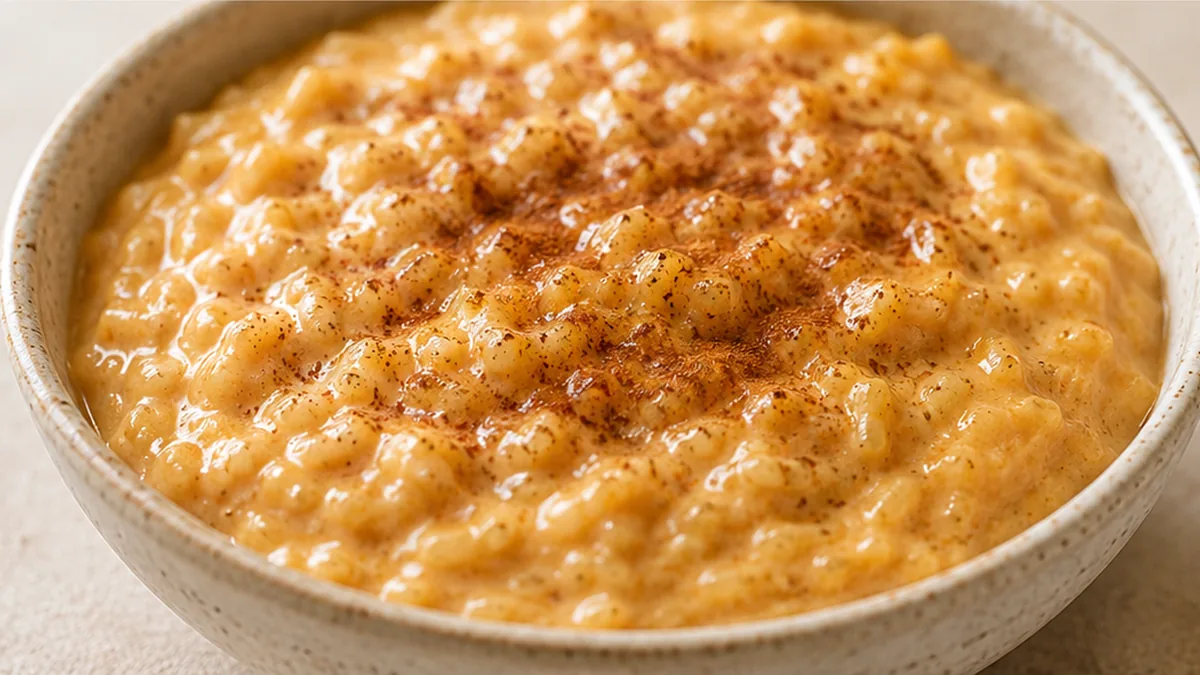
Creamy Pumpkin Rice Pudding: Fall Obsession!
Ingredients
Method
- In a medium heavy-bottomed saucepan, combine the rice, water, and salt. Bring to a boil, stir once, then reduce to a simmer on the lowest heat and cover for 8 minutes.
- Stir in 4 cups of half-and-half along with the sugar. Simmer uncovered for 20-25 minutes, until the rice is very soft, stirring often.
- Once the rice is totally soft, slowly stir in the beaten egg followed by the pumpkin, maple syrup, and spices. Cook for another 1 minute then remove from the heat.
- Add the remaining cup of half-and-half and vanilla. Stir well. Pour into a bowl, and cover with plastic wrap. Serve warm or chilled.
Notes
– Ensure the rice is truly soft before adding the egg and pumpkin to prevent a grainy texture. If it’s still a bit firm, simmer for a few extra minutes.
– If you prefer a thinner pudding, add a little extra half-and-half (or milk) at the end until it reaches your desired consistency. You can also adjust the maple syrup to your sweetness preference. Nutrition information is an estimate, calculated automatically. Values vary with brands, substitutions and portion sizes.
The Technique That Makes It Creamy
The key to achieving a luxuriously creamy pumpkin rice pudding lies in controlled simmering and the careful incorporation of dairy and egg. We begin by rinsing the basmati rice. This removes excess surface starch, which, if left on, would contribute to a gummy texture rather than a creamy one. The initial cooking of the rice in water until it just absorbs the liquid is crucial for starting the hydration process without scorching. Then, we introduce the half-and-half gradually. This slow addition allows the rice to absorb the liquid and release its starches gently, thickening the pudding naturally. The half-and-half provides both fat and protein, which contribute significantly to the rich mouthfeel. The sugar is added at this stage to help with the texture and sweetness. The most critical step for creaminess and richness is tempering the egg. By beating the egg separately and then slowly whisking in some of the hot pudding mixture, we gently raise the egg’s temperature. This prevents the egg from scrambling when added to the main pot. The egg proteins then coagulate gently within the pudding, thickening it further and adding a velvety smoothness. Finally, the pumpkin puree, maple syrup, vanilla, and cinnamon are stirred in off the heat to preserve their flavors and ensure the pudding doesn’t curdle from prolonged high heat.
Troubleshooting
- Grainy Texture: Ensure rice is rinsed thoroughly before cooking to remove excess surface starch. Simmer gently, stirring occasionally, to prevent starch clumping.
- Too Thin: If the pudding is too thin after cooking, it likely needs more time to simmer and thicken. For a quicker fix, you can create a slurry of 1 tablespoon cornstarch mixed with 2 tablespoons cold water and stir it into the simmering pudding until thickened.
- Scrambled Egg Bits: This happens if the egg is added too quickly to the hot pudding. Always temper the egg by slowly whisking in a ladleful of hot pudding before adding the egg mixture back to the pot.
- Rice Not Cooked Through: Ensure sufficient liquid (half-and-half) was used and the pudding was simmered long enough. If the rice is still firm, add a little more milk or water and continue to cook on low heat until tender.
Substitutions
- Half-and-Half: You can substitute with whole milk for a slightly less rich but still creamy pudding, or use a combination of heavy cream and whole milk (e.g., 2.5 cups heavy cream and 2.5 cups whole milk) for an even richer result. Coconut milk (full-fat) can be used for a dairy-free option, though it will impart a distinct coconut flavor.
- Basmati Rice: Arborio or Carnaroli rice (risotto rice) can be used. These varieties have a higher starch content, which will result in a thicker, creamier pudding even faster. Adjust cooking time as needed.
- Granulated Sugar: Brown sugar can be used for a deeper, molasses-like flavor. Maple syrup can also be increased and sugar reduced, but this will alter the final flavor profile significantly.
- Pumpkin Puree: Sweet potato puree can be substituted for a similar color and texture, though the flavor will be different. Ensure it’s unsweetened puree, not pie filling.
Pro tips
- For an even richer flavor, I sometimes toast the dry basmati rice lightly in a dry pan for a few minutes before adding water; it deepens the nutty undertones.
- Ensure the rice is truly soft before adding the egg and pumpkin to prevent a grainy texture. If it’s still a bit firm, simmer for a few extra minutes.
- If you prefer a thinner pudding, add a little extra half-and-half (or milk) at the end until it reaches your desired consistency. You can also adjust the maple syrup to your sweetness preference.
This Pumpkin Rice Pudding offers a delightful balance of creamy texture and warming fall spices. Enjoy it warm for instant comfort, or chilled for a refreshing twist. Don’t hesitate to garnish with a sprinkle of cinnamon or a dollop of whipped cream for an extra special touch!
Frequently asked questions
Why do I need to rinse the rice?
Rinsing the basmati rice removes excess surface starch. This prevents the pudding from becoming overly gummy or clumpy, allowing the rice grains to cook more distinctly while still contributing to a creamy base through gentle starch release during simmering.
My pudding is too thick, what can I do?
If your pudding has become too thick, you can thin it out by stirring in a small amount of additional half-and-half or milk, a tablespoon at a time, until you reach your desired consistency. Gently reheat if necessary.
Can I use regular milk instead of half-and-half?
Yes, you can substitute whole milk for half-and-half. The pudding will be slightly less rich and creamy, as half-and-half contains more fat. For a richer result, you could use a mix of heavy cream and whole milk.
How do I prevent the egg from scrambling?
The key is tempering the egg. Before adding the beaten egg to the pot, slowly whisk in a ladleful of the hot pudding mixture into the egg. This gradually raises the egg’s temperature, preventing it from cooking too rapidly and forming curds.
Try this next: Creamy Gluten-Free Pumpkin Pie
More from Gluten-Free Desserts & Sweets →