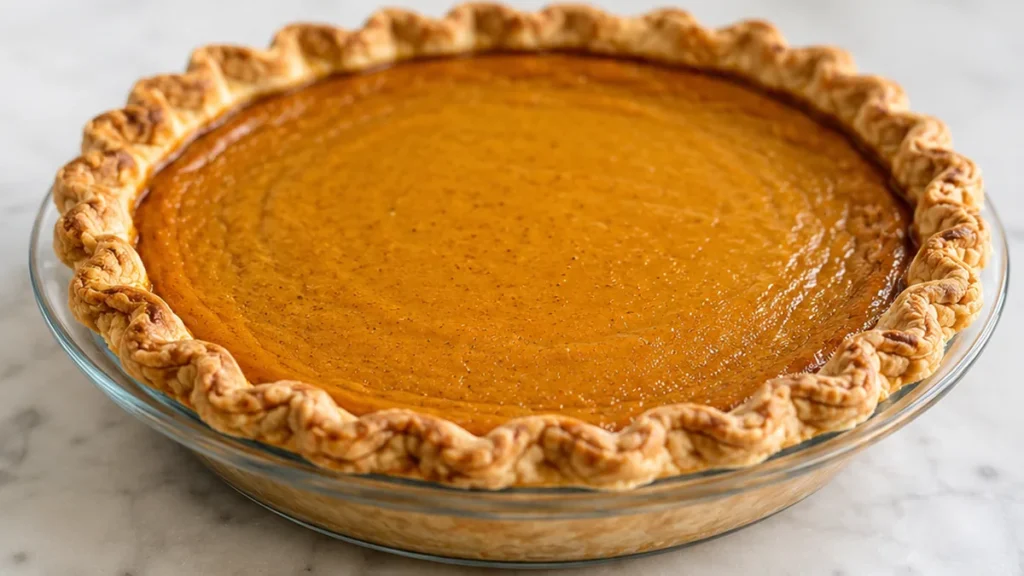
This gluten-free pumpkin pie recipe delivers a creamy, spiced filling and a tender crust. It’s a comforting dessert perfect for fall gatherings or quiet evenings at home.
Key takeaways
- Use very cold butter and ice water for a flaky gluten-free crust.
- Whisk filling ingredients gently to avoid over-aeration and cracking.
- Bake until the center is mostly set but still has a slight jiggle.
- Cool the pie gradually to prevent the filling from cracking.
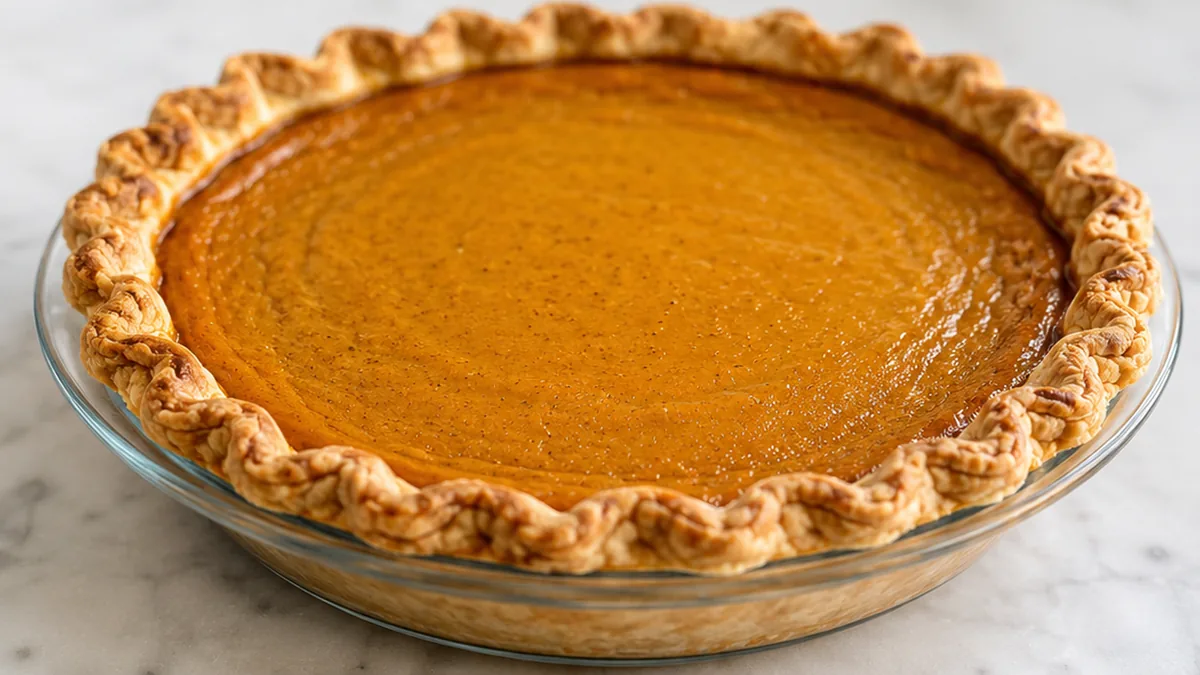
Creamy Gluten-Free Pumpkin Pie
Ingredients
Method
- In a large bowl, whisk together the gluten-free 1:1 baking flour, 1 teaspoon sugar, and salt. Cut 8 tablespoons of cold butter into small pieces and add to the flour mixture. Use a pastry blender or your fingertips to cut the butter into the flour until it resembles coarse crumbs with some pea-sized pieces of butter remaining.
- In a small bowl, whisk together 3 tablespoons ice water, 1 1/2 tablespoons sour cream, and 1 1/2 teaspoons white vinegar. Gradually add the liquid mixture to the flour mixture, a tablespoon at a time, mixing until the dough just comes together. Form the dough into a disc, wrap in plastic, and refrigerate for at least 30 minutes.
- On a lightly floured surface (using gluten-free flour), roll out the chilled dough into a 12-inch circle. Carefully transfer the dough to a 9-inch pie plate. Trim and crimp the edges as desired. Refrigerate the pie crust while you prepare the filling.
- Preheat oven to 375°F (190°C). For the filling: In a large bowl, whisk together 2/3 cup sugar, 1 teaspoon cinnamon, and 1/2 teaspoon ginger. Add 15 ounces pumpkin puree, 2 large eggs, and 1 cup heavy cream. Whisk until smooth and well combined.
- Pour the pumpkin filling into the chilled pie crust. Bake for 50-60 minutes, or until the edges of the filling are set but the center still jiggles slightly. If the crust starts to brown too quickly, cover the edges with foil.
- Remove the pie from the oven and let it cool completely on a wire rack for at least 2-3 hours before slicing and serving. The pie will continue to set as it cools.
Notes
– For a dairy-free version of this gluten-free pumpkin pie, simply swap the butter for a good quality vegan butter alternative and use full-fat coconut cream (chilled overnight, scoop out the thick cream) instead of sour cream.
– To check for doneness, an inserted knife near the edge should come out clean, but the center should still have a slight wobble. This ensures a perfectly creamy texture without overbaking. Nutrition information is an estimate, calculated automatically. Values vary with brands, substitutions and portion sizes.
The Science Behind the Perfect Gluten-Free Crust and Creamy Filling
Gluten-Free Pie Crust Hydration and Fat Distribution
Creating a flaky gluten-free pie crust relies on similar principles to traditional crusts, but with a few key adjustments due to the absence of gluten. The gluten-free flour blend, typically containing rice flour, tapioca starch, and potato starch, lacks the protein network that develops elasticity and structure in wheat flour. Our recipe uses a combination of cold butter, ice water, sour cream, and vinegar to achieve tenderness and flakiness. The cold butter is cut into the flour to create small pieces. When baked, the water in these butter pieces turns to steam, puffing up and separating the flour layers, resulting in flakiness. The sour cream adds fat and acidity, contributing to tenderness and a slight tang that complements the sweet filling. The vinegar also tenderizes the dough and helps prevent toughness, a common issue in gluten-free baking. Proper hydration is crucial; the ice water should be added gradually until the dough just comes together. Overworking or adding too much water will result in a tough, dense crust.
Achieving a Silky, Even Pumpkin Filling
The creamy texture of the pumpkin filling is a result of the interaction between the pumpkin puree, eggs, and heavy cream. The pumpkin puree provides the base flavor and body. Eggs act as a binder and contribute to the richness and custard-like consistency. The heavy cream adds significant fat, which is essential for a smooth, velvety mouthfeel and prevents the filling from becoming watery or grainy. Whisking the ingredients gently until just combined is key. Over-beating can incorporate too much air, leading to a puffed-up pie that may crack during baking or have an undesirable spongy texture. The sugar and spices are evenly distributed to ensure consistent flavor throughout the filling. Baking at the correct temperature and for the appropriate duration allows the filling to set without overcooking, which can cause curdling or a rubbery texture.
Troubleshooting
- Problem: Crust is crumbly and won’t hold together.
Fix: Ensure you used cold butter and ice water. If the dough still seems too dry, add a tiny bit more ice water, 1 teaspoon at a time, until it just forms a cohesive ball. Avoid over-mixing. - Problem: Filling is watery after baking.
Fix: This often indicates under-baking. The center should be mostly set with a slight jiggle. You may need to bake for an additional 5-10 minutes, or until a knife inserted near the center comes out clean. Ensure you used pure pumpkin puree, not pumpkin pie filling. - Problem: Pie cracked on top.
Fix: A cracked top usually means the filling was overcooked or the oven temperature was too high. Try reducing the oven temperature slightly and baking until the center is just set. Cooling the pie gradually on a wire rack can also help prevent cracking. - Problem: Crust is soggy on the bottom.
Fix: Pre-baking the crust (blind baking) for about 10-15 minutes before adding the filling can help prevent a soggy bottom. Ensure the oven is fully preheated before baking.
Substitutions
- Gluten-Free Flour Blend: You can substitute with another reputable gluten-free 1:1 baking flour blend. The results should be very similar, as these blends are designed to mimic the properties of all-purpose flour.
- Sour Cream: Plain Greek yogurt or crème fraîche can be used instead of sour cream. This will provide a similar tang and richness, resulting in a tender crust.
- Heavy Cream: Half-and-half can be used, but the filling may be slightly less rich and creamy. Full-fat coconut milk (the thick cream from the top of the can) is another option for a dairy-free alternative, which will yield a very rich filling.
- Vinegar: Lemon juice can be substituted for vinegar. It will provide the necessary acidity to tenderize the crust, and the flavor will complement the pumpkin.
Pro tips
- When I first tried making a gluten-free pie crust, I struggled with it crumbling. The trick is to ensure your butter is very cold and to not overmix the dough; just enough to bring it together.
- For a dairy-free version of this gluten-free pumpkin pie, simply swap the butter for a good quality vegan butter alternative and use full-fat coconut cream (chilled overnight, scoop out the thick cream) instead of sour cream.
- To check for doneness, an inserted knife near the edge should come out clean, but the center should still have a slight wobble. This ensures a perfectly creamy texture without overbaking.
This gluten-free pumpkin pie will undoubtedly become a treasured recipe in your kitchen. Enjoy the rich flavors and satisfying texture, and share your baking triumphs with loved ones!
Frequently asked questions
Can I make the pie crust ahead of time?
Yes, you can prepare the gluten-free pie dough a day in advance. Wrap it tightly in plastic wrap and refrigerate. Let it sit at room temperature for about 15-20 minutes before rolling it out to prevent it from becoming too brittle.
What is the best way to tell if the pumpkin pie is done?
The pie is done when the edges are set, and the center is mostly firm but still has a slight wobble. A knife inserted about an inch from the center should come out clean. Avoid over-baking, which can lead to cracking.
Can I use pumpkin pie filling instead of pumpkin puree?
No, you should not use pre-made pumpkin pie filling. It already contains sugar and spices, which will alter the flavor and sweetness of your pie. Always use plain pumpkin puree for this recipe.
How should I store leftover gluten-free pumpkin pie?
Leftover pie should be covered loosely with plastic wrap or foil and refrigerated. It will keep well in the refrigerator for up to 3-4 days. Allow it to come to room temperature slightly before serving for the best texture.
Try this next: Gluten-Free Pumpkin Pie Cupcakes Recipe
More from Gluten-Free Desserts & Sweets →