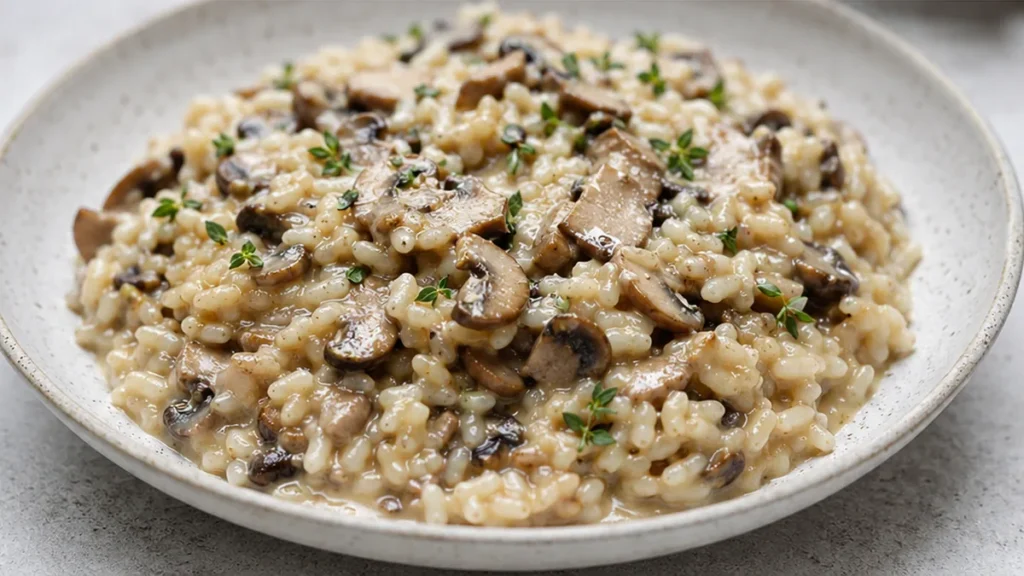
Mushroom risotto is a dish that evokes comfort and elegance, but many home cooks shy away, fearing its reputation for being tricky. However, achieving that perfect creamy consistency and rich flavor is more about technique than difficulty. The first time I tried making mushroom risotto, I was amazed at how a simple act of stirring could transform humble rice into such a luxurious meal. This mushroom risotto recipe focuses on building layers of flavor, starting with perfectly seared mushrooms and aromatic shallots. It’s a comforting dish that’s surprisingly approachable, perfect for a cozy weeknight or a special occasion. This guide will help you create a restaurant-quality dish right in your own kitchen.
Key takeaways
- The key to creamy risotto is the slow release of starch from Arborio rice through gradual liquid addition and constant stirring.
- Searing mushrooms separately concentrates their flavor and improves texture.
- Maintain a gentle simmer throughout the cooking process for even cooking and proper starch development.
- Warm the chicken stock before adding it to the risotto to maintain cooking temperature.
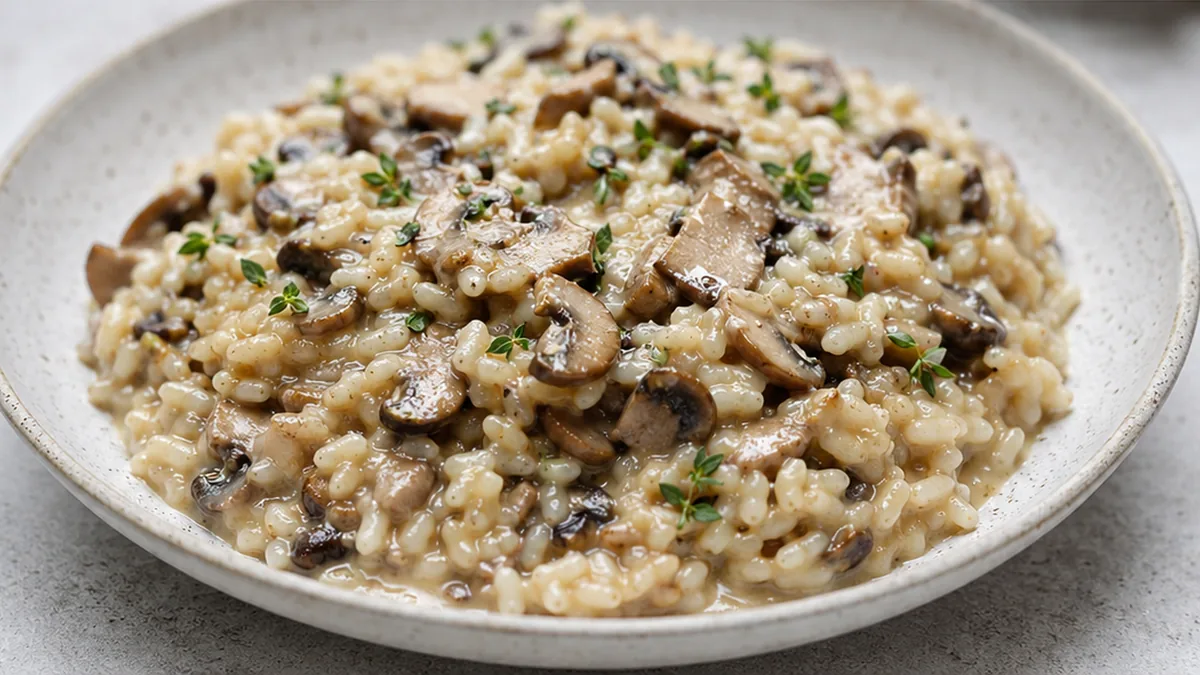
Creamy Mushroom Risotto: Restaurant Quality
Ingredients
Method
- Bring the chicken stock to a boil in a medium-size saucepan over high heat then turn the heat down to low and place a lid on top to keep it hot.
- Melt 2 Tablespoons butter in a large skillet over medium-high heat. Add mushrooms and saute for 5 minutes until liquid cooks off. Season, then saute until golden brown (3-4 minutes). Add thyme and half the garlic, saute for 1 minute, then set aside.
- Melt the remaining 2 Tablespoons butter in the skillet over medium heat. Add shallots, season, and saute until softened (2-3 minutes). Add the remaining garlic and saute for 1 minute.
- Add rice, stir to coat, and cook for one minute. Add wine and stir until absorbed. Continue adding hot stock 1/2 cup at a time, stirring until nearly absorbed, for 35-40 minutes.
- When 1 ladleful of stock remains, scrape mushrooms into the skillet and continue stirring. Turn off the heat.
- Stir in parmesan cheese and a small amount of lemon juice. Taste and adjust seasoning. Serve immediately with optional truffle powder/oil and extra parmesan.
Notes
– Add hot stock gradually, allowing each ladleful to be fully absorbed before adding the next; this is key to creamy mushroom risotto.
– Don’t overcook the rice! It should be al dente, meaning still firm to the bite but not hard.
– For a richer flavor, consider using dried porcini mushrooms rehydrated in hot water, adding their soaking liquid (strained) along with the chicken stock. Nutrition information is an estimate, calculated automatically. Values vary with brands, substitutions and portion sizes.
The Technique That Makes Creamy Mushroom Risotto
The magic of a truly restaurant-quality mushroom risotto lies in the patient, controlled release of starch from the Arborio rice. This isn’t just boiling rice; it’s a deliberate process of hydration and agitation. Arborio rice, with its high amylopectin content, is key. As the rice grains rub against each other during stirring, they release this starch, which then emulsifies with the cooking liquid and fat (butter and parmesan) to create the signature creamy texture without the need for heavy cream. The process requires constant attention and gradual addition of warm chicken stock. Adding the stock too quickly will result in mushy, overcooked rice, while adding too little will prevent the proper starch release. The heat must be managed carefully – a gentle simmer is crucial to allow the rice to absorb the liquid slowly and cook evenly without burning the bottom of the pan. Searing the mushrooms separately before adding them to the risotto is also vital. This develops their flavor through the Maillard reaction, concentrating their earthy notes and preventing them from becoming waterlogged and bland within the creamy rice.
Troubleshooting
- Problem: Risotto is too thick and gummy.
Fix: Stir in a little more warm chicken stock, a tablespoon at a time, until the desired consistency is reached. The starch has likely absorbed too much liquid too quickly. - Problem: Risotto is too soupy or watery.
Fix: Continue cooking over gentle heat, stirring frequently, allowing more liquid to evaporate and the rice to absorb it. If it’s still too thin after a few minutes, stir in a bit more Parmesan cheese to help thicken it. - Problem: Rice is crunchy or undercooked.
Fix: Ensure the heat is low enough for a gentle simmer and continue adding warm stock, stirring, until the rice is tender but still has a slight bite (al dente). This may take longer than initially expected. - Problem: Mushrooms are watery and lack flavor.
Fix: Ensure mushrooms are sautéed in a separate pan with adequate heat until browned before adding them to the risotto. Avoid overcrowding the pan, which causes steaming instead of searing.
Substitutions
- Chicken Stock: Vegetable broth can be used for a vegetarian version. The flavor will be slightly less rich but still delicious.
- Thyme: Fresh sage or rosemary can be substituted, offering a different but complementary herbal note. Use sparingly as they can be more potent than thyme.
- Shallot/Onion: Leeks (white and light green parts only, finely chopped) can be used for a milder onion flavor.
- Parmesan Cheese: Pecorino Romano can be used for a sharper, saltier flavor. A blend of Parmesan and Pecorino also works well.
Pro tips
- Use a wide, heavy-bottomed skillet to ensure even cooking and evaporation.
- Add hot stock gradually, allowing each ladleful to be fully absorbed before adding the next; this is key to creamy mushroom risotto.
- Don’t overcook the rice! It should be al dente, meaning still firm to the bite but not hard.
- For a richer flavor, consider using dried porcini mushrooms rehydrated in hot water, adding their soaking liquid (strained) along with the chicken stock.
This mushroom risotto recipe proves that gourmet flavors are achievable at home with a bit of patience and the right technique. Enjoy this comforting and elegant dish, and feel free to experiment with other seasonal vegetables to make it your own!
Frequently asked questions
Why do I need to stir risotto constantly?
Constant stirring is essential for releasing the starch from the Arborio rice. This starch acts as a natural thickener, creating the signature creamy texture of risotto without needing cream. It also prevents the rice from sticking to the bottom of the pan.
Can I use a different type of rice?
While Arborio rice is highly recommended due to its high starch content, other short-grain Italian rice varieties like Carnaroli or Vialone Nano can be used. These will also yield a creamy result, though the texture might vary slightly.
My risotto seems too dry. What can I do?
If your risotto is too thick or dry, you can loosen it by stirring in a little more warm chicken stock or even a splash of warm water, a tablespoon at a time, until it reaches your desired creamy consistency.
How do I prevent the mushrooms from being soggy?
Sauté the mushrooms in a separate pan over medium-high heat with a little butter or oil until they are nicely browned before adding them to the risotto. This caramelization process removes excess moisture and concentrates their flavor.
Try this next: Creamy Veggie Gnocchi Skillet Dinner
More from Gluten-Free Dinners & Mains →