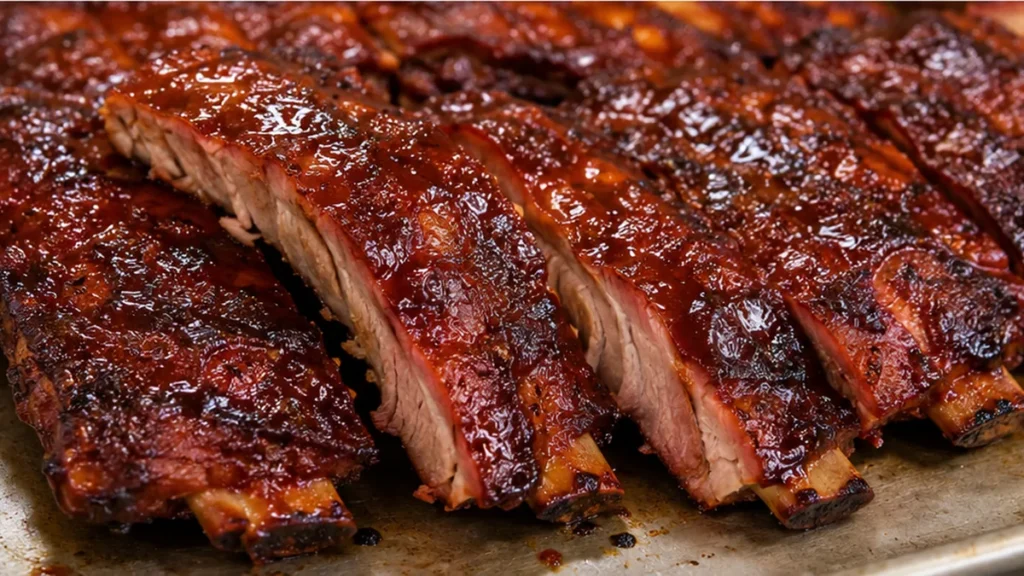
Achieving fall-off-the-bone baked ribs doesn’t require a smoker or special equipment; your oven can deliver incredibly tender and flavorful results. The secret lies in low and slow cooking, allowing the connective tissues to break down gradually, resulting in meat that practically melts in your mouth. This baked ribs recipe is perfect for anyone looking to impress with minimal fuss, transforming a simple slab of ribs into a culinary masterpiece. It’s a fantastic choice for family dinners, game day gatherings, or when you simply crave deeply savory, satisfying meat.
Key takeaways
- Low and slow cooking breaks down connective tissue for tenderness.
- Wrapping ribs in foil during cooking traps steam and moisture.
- Apply BBQ sauce in the final stage to prevent burning and allow caramelization.
- Ensure the spice rub adheres well by patting ribs dry first.
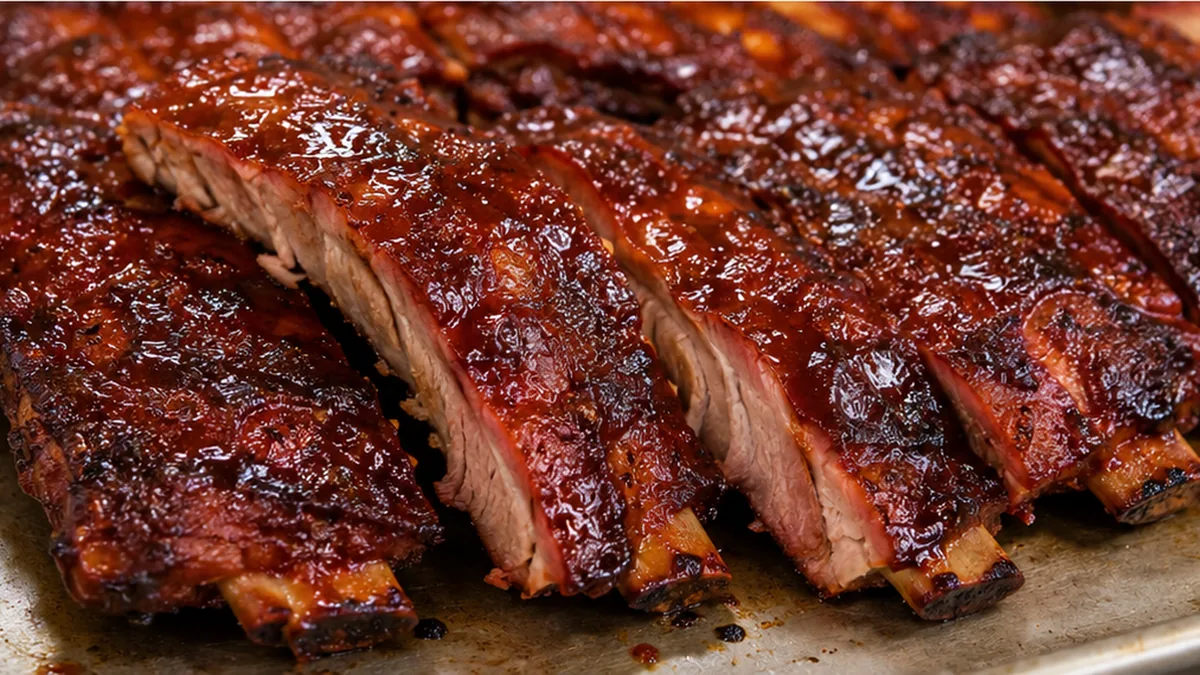
” Fall-Off-The-Bone Baked Ribs”
Ingredients
Method
- Line a half sheet pan with foil, ensuring it covers the entire surface.
- Peel the silver skin away from the back of the rib rack if present, then trim off any large pieces of excess fat, leaving a good portion for flavor.
- For the Spice Rub: Combine salt, black pepper, garlic powder, onion powder, cumin, smoked paprika, and cayenne pepper in a small bowl. Sprinkle half the mixture over the top of the ribs and rub to coat. Flip, sprinkle the remaining seasonings, and rub to coat. Wrap the ribs in saran wrap and refrigerate for at least 2 hours, or up to 24 hours.
- Preheat the oven to 250 degrees F. Unwrap the ribs and place them directly onto the foil-lined baking sheet. Cover tightly with another piece of foil and bake for 3-1/2 hours.
- Carefully remove the top piece of foil and drain any excess liquid from the pan. Brush the BBQ sauce generously over the top of the ribs, then bake for an additional 30 minutes or until the top is caramelized.
- Let the ribs rest for 15 minutes before slicing and serving to retain juices.
Notes
– The low oven temperature of 250°F (120°C) is crucial for slowly rendering the fat and tenderizing the meat without drying it out.
– For perfect doneness, the meat should pull away easily from the bone when twisted. Pork ribs are safe to eat when they reach an internal temperature of 145°F (63°C) with a 3-minute rest, but for fall-off-the-bone tenderness, they typically cook to a much higher temperature (around 190-205°F / 88-96°C).
– Leftover baked ribs can be stored in an airtight container in the refrigerator for up to 3-4 days. Reheat gently in the oven at 300°F (150°C) for 15-20 minutes, covered with foil, until warmed through. Nutrition information is an estimate, calculated automatically. Values vary with brands, substitutions and portion sizes.
The Science of Tender Ribs
Achieving fall-off-the-bone tenderness in baked ribs relies on a combination of low, slow cooking and moisture management. The initial rub, a blend of salt, pepper, and spices, acts as a dry brine. Salt, in particular, begins to break down the tough connective tissues (collagen) in the ribs through osmosis, converting it into gelatin. This process tenderizes the meat and adds flavor. Cooking the ribs at a moderate temperature, like 300°F (150°C) or even lower, is crucial. High heat can cause the proteins to seize up and toughen, while low heat allows the collagen to slowly render into gelatin without overcooking the muscle fibers. Wrapping the ribs tightly in foil during a portion of the cooking time (often referred to as the ‘braising’ stage) traps steam, further aiding in the breakdown of connective tissue and keeping the meat incredibly moist. The final basting with BBQ sauce at a higher temperature encourages caramelization of the sugars in the sauce, creating a desirable crust and adding a final layer of flavor, but this should be done briefly to avoid burning.
Troubleshooting
- Problem: Ribs are tough and chewy.
Fix: The cooking temperature was likely too high, or the cooking time was insufficient for the connective tissues to break down. Try wrapping the ribs tightly in foil and returning them to a lower oven (around 275°F/135°C) for an additional 30-60 minutes.
- Problem: Ribs are dry and falling apart too easily.
Fix: This indicates overcooking, where the muscle fibers have lost too much moisture. Ensure you are using a slab of ribs with a good amount of marbling, and consider reducing the total cooking time by 15-30 minutes in future attempts. Wrapping in foil helps retain moisture.
- Problem: The rub fell off the ribs.
Fix: The rub needs a binder. Lightly brushing the ribs with a thin layer of mustard or even water before applying the spice rub can help it adhere better. Ensure the ribs are patted dry before applying the rub.
- Problem: The BBQ sauce is burnt.
Fix: The sugars in BBQ sauce caramelize quickly. Apply the sauce during the last 15-20 minutes of cooking, and if it’s browning too fast, loosely tent the ribs with foil.
Substitutions
- Spice Rub: If you don’t have all the individual spices, a good quality store-bought BBQ rub can be used in the same quantity. The flavor profile will change slightly depending on the specific rub, but it will still provide a savory base.
- BBQ Sauce: Any style of BBQ sauce you prefer can be used. A vinegar-based sauce will add tang, while a sweeter sauce will create a more caramelized crust. For a spicier kick, use a hot and spicy BBQ sauce.
- Baby Back Ribs: Pork spare ribs or St. Louis-style ribs can be substituted. Note that these are typically thicker and may require a longer cooking time to achieve tenderness. Adjust cooking time accordingly, checking for doneness.
- Cayenne Pepper: For a different kind of heat, a pinch of red pepper flakes can be used instead of cayenne. The flavor will be slightly different, but the heat level can be comparable.
Pro tips
- For the most tender baked ribs, ensure you remove the silver skin from the back of the ribs. I once skipped this step, and the ribs weren’t nearly as tender.
- The low oven temperature of 250°F (120°C) is crucial for slowly rendering the fat and tenderizing the meat without drying it out.
- For perfect doneness, the meat should pull away easily from the bone when twisted. Pork ribs are safe to eat when they reach an internal temperature of 145°F (63°C) with a 3-minute rest, but for fall-off-the-bone tenderness, they typically cook to a much higher temperature (around 190-205°F / 88-96°C).
- Leftover baked ribs can be stored in an airtight container in the refrigerator for up to 3-4 days. Reheat gently in the oven at 300°F (150°C) for 15-20 minutes, covered with foil, until warmed through.
These baked ribs are a testament to how simple techniques can yield extraordinary results. Give this recipe a try and enjoy perfectly tender, flavorful ribs right from your kitchen!
Frequently asked questions
How long should I bake the ribs?
Bake the ribs at 300°F (150°C) for approximately 2 to 2.5 hours, or until tender. They should be wrapped in foil for the majority of this time, with the sauce applied in the last 15-20 minutes.
Do I need to remove the membrane from the ribs?
Yes, removing the thin, papery membrane from the bone-side of the ribs is highly recommended. It can become tough and chewy when cooked, hindering the tenderization of the meat underneath.
Can I make these ribs ahead of time?
Yes, you can bake the ribs until they are tender (before adding the sauce), let them cool, wrap them tightly, and refrigerate. Reheat them gently in the oven, then apply the BBQ sauce and finish as directed.
What temperature should the ribs reach?
For fall-off-the-bone tenderness, the internal temperature of the ribs should be around 195-205°F (90-96°C). However, visual cues like the meat pulling back from the bone are often more reliable indicators of doneness than temperature alone.
Try this next: Crispy Baked Chicken Thighs
More from Gluten-Free Dinners & Mains →