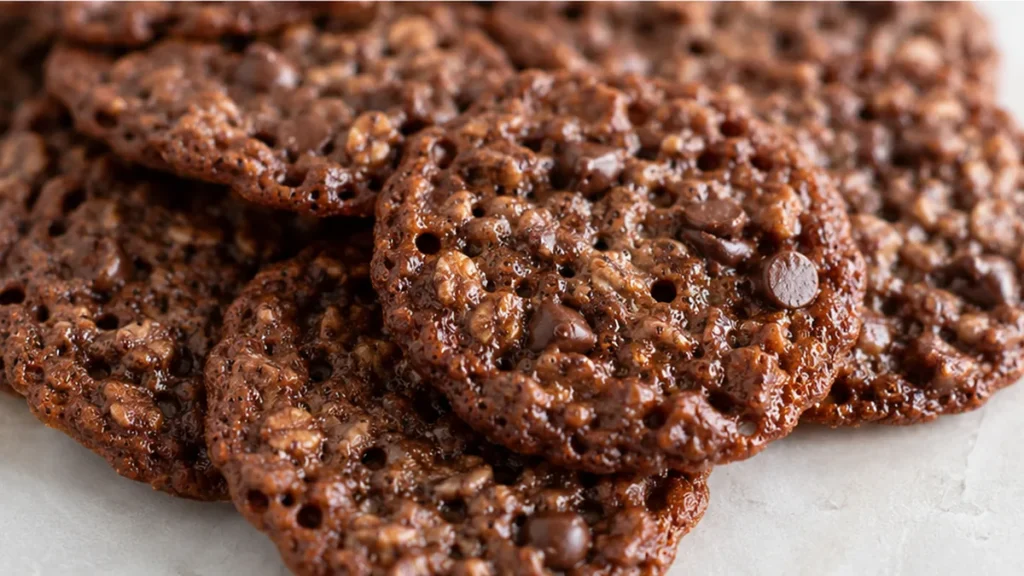
Lace cookies are known for their delicate, crispy texture. This gluten-free lace cookies recipe delivers that classic crunch with a rich chocolate dip.
Key takeaways
- Achieve the lacy texture through proper batter spread and controlled baking.
- Ensure adequate spacing on baking sheets to prevent cookies from merging.
- Bake until edges are golden brown; cookies will crisp as they cool.
- Add chocolate after baking for a drizzle effect, not mixed into the batter.
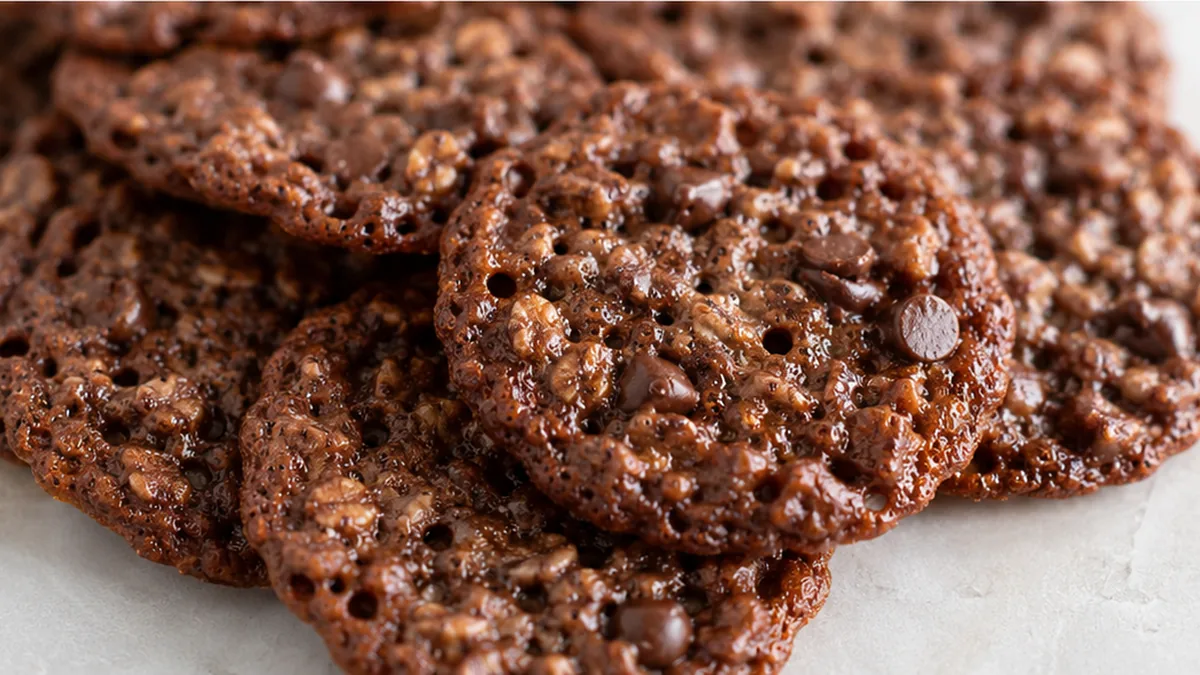
Melty Chocolate Lace Cookies! So Crispy & Delicious!
Ingredients
Method
- Preheat oven to 350°F. Line a baking sheet with a Silpat liner or parchment paper.
- Melt the butter in a saucepan over medium heat. Once the butter is melted, whisk constantly. It will foam, then brown on the bottom. Turn off heat as soon as solids turn brown and a nutty aroma appears.
- Add the sugar to a medium bowl. Pour the brown butter over top, scraping the bottom of the pot for all milk solids. Whisk to combine. Add the egg and vanilla, then whisk until smooth.
- Add the quick oats, flour, and salt and mix with a spatula to combine. Drop the dough by teaspoonfuls on the prepared baking sheet, leaving about 2 1/2 inches between the cookies. You should fit 12 per sheet; do not crowd them as they spread.
- Bake for 12-14 minutes until the cookies turn golden brown. Remove from the oven and cool on the pan for 2-3 minutes.
- Use a small spatula to flip 6 cookies over on the baking sheet. Top these with 10-12 chocolate chips, letting the pan’s heat melt the chocolate. If it doesn’t melt, return to oven for 1 minute. Spread the chocolate into a thin layer, then top with a second cookie. Transfer to a cooling rack to cool completely.
- Store in an airtight container or resealable bag at room temperature for up to 4 days. Cookies can be frozen in a resealable bag for up to 3 months. Enjoy!
Notes
– Don’t skip the browning butter step; it adds a rich, nutty depth that elevates the flavor of these lace cookies.
– If your cookies are too brittle, they might be overbaked. Aim for golden edges and a slightly soft center when they come out of the oven. They will crisp up as they cool.
– Store cooled lace cookies in an airtight container at room temperature for up to 4 days, separated by parchment paper to prevent sticking. They also freeze well for up to 3 months. Nutrition information is an estimate, calculated automatically. Values vary with brands, substitutions and portion sizes.
The Science Behind the Lace
The signature characteristic of these lace cookies is their delicate, lacy structure, achieved through a combination of high sugar content and a relatively thin batter that spreads significantly during baking. The high ratio of sugar to flour and oats, along with the melted butter, creates a syrup-like consistency when heated. As the cookies bake, this syrup spreads thinly across the baking sheet. The gluten-free oats and flour provide structure, but the lack of significant gluten development (inherent in gluten-free baking) means the cookies don’t become tough; instead, they crisp up beautifully. The key is the balance: enough structure from the oats and flour to hold the shape, but enough liquid and sugar to allow for maximum spread and a brittle, lacy texture. The relatively low oven temperature and moderate baking time prevent the sugar from burning too quickly, allowing the cookies to dehydrate and crisp into their characteristic lace pattern.
Troubleshooting
- Problem: Cookies spread too much and became one giant cookie.
Fix: Ensure your baking sheets are not overcrowded. Leave ample space (at least 3 inches) between cookie dough mounds to allow for spreading. Also, check that your oven temperature is accurate; an oven that is too hot can cause premature spreading before the structure sets. - Problem: Cookies are too hard and brittle, not crisp.
Fix: This can happen if they are overbaked, leading to excessive dehydration. Reduce the baking time by 1-2 minutes. They should be golden brown around the edges and still slightly soft in the center when removed from the oven; they will crisp up as they cool. - Problem: Cookies are chewy or soft after cooling.
Fix: This usually indicates underbaking or insufficient cooling time on the baking sheet. Ensure cookies are baked until the edges are golden brown. Let them cool on the baking sheet for at least 5-7 minutes to allow them to set and crisp up before transferring them to a wire rack. - Problem: Chocolate melted off or burned during baking.
Fix: The chocolate is added after the cookies have baked and slightly cooled. If adding chocolate chips to the batter, they will melt and spread excessively. For a chocolate-drizzled effect, melt the chocolate separately and drizzle over cooled cookies.
Substitutions
- Gluten-free quick oats: Rolled oats (ensure they are certified gluten-free if needed) can be used, but they may result in a slightly chewier texture and less defined lace.
- Gluten-free 1:1 baking flour: A standard all-purpose flour can be used if gluten is not a concern. This will provide a slightly chewier cookie with a more traditional texture.
- Chocolate chips: Dark chocolate chunks, chopped chocolate bars, or even white chocolate chips can be used for the topping. The flavor profile will change accordingly.
- Vanilla extract: Almond extract or a touch of citrus zest (like orange or lemon) can be substituted for vanilla extract to add a different aromatic note.
Pro tips
- For perfectly round lace cookies, use a mini ice cream scoop to ensure uniform size before baking. This helps with even spreading.
- Don’t skip the browning butter step; it adds a rich, nutty depth that elevates the flavor of these lace cookies.
- If your cookies are too brittle, they might be overbaked. Aim for golden edges and a slightly soft center when they come out of the oven. They will crisp up as they cool.
- Store cooled lace cookies in an airtight container at room temperature for up to 4 days, separated by parchment paper to prevent sticking. They also freeze well for up to 3 months.
These gluten-free lace cookies are a true testament to how simple ingredients can create something extraordinary. Share them with loved ones or keep them all to yourself – either way, they’re sure to bring a smile. Enjoy the crispy, chocolatey goodness!
Frequently asked questions
Why are my cookies not lacy?
Insufficient spreading is the main culprit. This can be due to an oven temperature that is too low, too much flour, or not enough sugar/fat in the batter. Ensure your oven is accurately preheated and that you’ve measured your ingredients precisely according to the recipe.
Can I add the chocolate chips directly into the cookie dough?
It is not recommended to mix chocolate chips directly into the batter before baking. The heat will cause them to melt and spread excessively, potentially burning and ruining the delicate lace structure of the cookie.
How do I get perfectly thin and crispy cookies?
The key is baking them until the edges are golden brown and the centers look slightly underdone. They will continue to crisp up as they cool on the hot baking sheet. Avoid overbaking, which can lead to a burnt taste and overly brittle texture.
Why are my cookies spreading too much?
Overcrowding the baking sheet is a common reason. Make sure to leave at least 3 inches between each dough portion. Additionally, if your butter was too soft or melted completely before mixing, it can lead to excessive spreading.
Try this next: ” Chewy Gluten-Free Molasses Cookies”
More from Gluten-Free Desserts & Sweets →