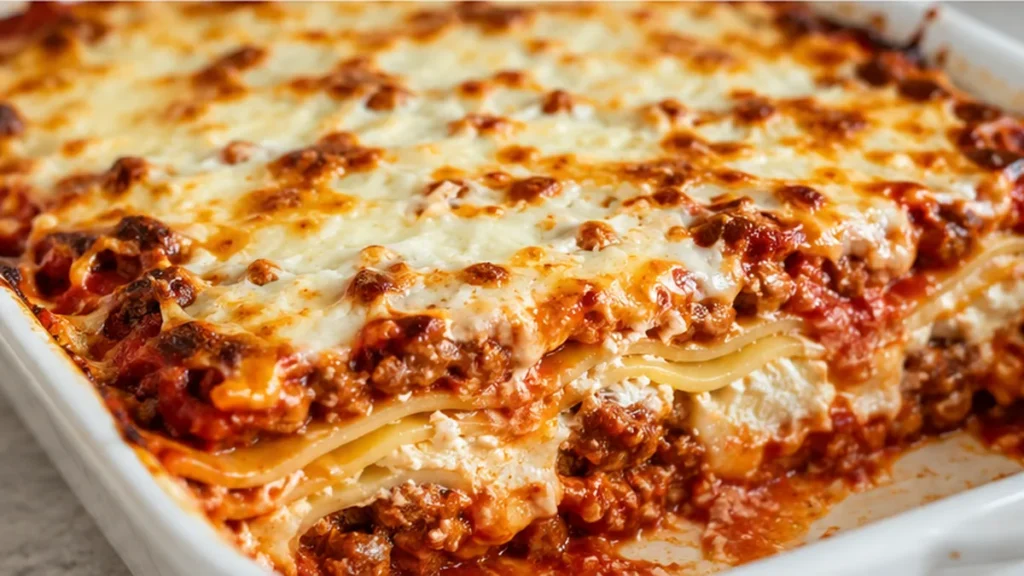
Gluten Free Lasagna offers all the comforting layers and rich flavors of a classic lasagna, proving that dietary needs don’t have to mean sacrificing taste. This recipe focuses on creating a dish so satisfying, everyone at the table will ask for seconds, regardless of their dietary preferences. Crafting a truly delicious Gluten Free Lasagna requires careful attention to noodle texture and sauce balance. I’ve found that parboiling the noodles just right prevents them from becoming either gummy or too firm, a common pitfall with gluten-free pasta.
Key takeaways
- Ensure adequate marinara sauce for noodle hydration.
- Drain excess fat from ground beef to prevent a watery lasagna.
- Season ricotta mixture and meat sauce well for optimal flavor.
- Allow lasagna to rest after baking for better structure.
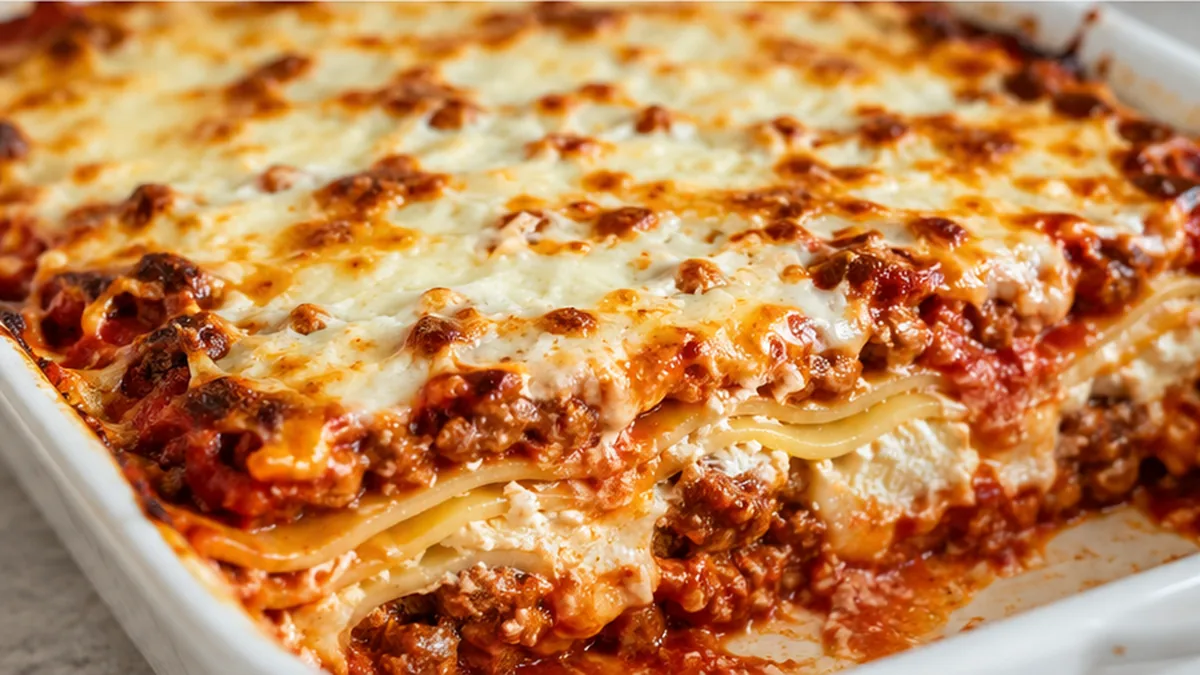
Creamy Gluten-Free Lasagna Recipe!
Ingredients
Method
- Preheat oven to 375 degrees F. Spray a 9×13
- Bring a large pot of water to a boil, season with 1 Tablespoon salt, and add gluten-free lasagna noodles. Parboil according to package directions (e.g., 5 minutes for Jovial brand), stirring often to prevent sticking. Drain and rinse under cold water until cool.
- Heat a large skillet over medium-high heat. Add ground beef, chopped onion or shallot, minced garlic, and salt and pepper to taste. Brown beef, breaking it up as it cooks, then drain. Return beef mixture to the skillet, add marinara sauce, and stir to combine. Set aside to cool slightly.
- In a medium-sized bowl, combine ricotta cheese, parmesan cheese, dried parsley flakes, pepper, and salt. Stir to combine. Scoop mixture into a gallon-size Ziplock bag and snip off one corner for easier application.
- Scoop 3/4 cup of the meat/sauce mixture into the bottom of the prepared 9×13
- Pipe 1/3 of the ricotta cheese mixture onto the noodles and spread into a thin layer. Spoon on 1/3 of the remaining meat/sauce mixture, spread evenly, and sprinkle on 1/3 of the shredded mozzarella cheese. Repeat layers two more times for a total of 3 layers.
- Cover the lasagna with a piece of nonstick sprayed foil then bake for 20 minutes. Carefully uncover then continue to bake until deep golden brown and bubbly, 20-25 additional minutes.
- Let lasagna sit for 15-20 minutes then slice into squares and serve.
Notes
– If your ricotta mixture seems too thick to pipe, add a tablespoon of milk to loosen it slightly, but avoid making it too runny.
– Leftovers can be stored in an airtight container in the refrigerator for up to 3-4 days. For reheating, cover with foil and bake at 350°F for 15-20 minutes until heated through, or microwave individual portions. Nutrition information is an estimate, calculated automatically. Values vary with brands, substitutions and portion sizes.
The Technique That Makes It: Hydration and Layering for Perfect Gluten-Free Lasagna
The success of this gluten-free lasagna hinges on two key factors: proper noodle hydration and careful layering. Unlike traditional wheat-based lasagna noodles, gluten-free noodles can vary significantly in their ability to absorb liquid and maintain structure. Overcooked gluten-free noodles can become mushy, while undercooked ones remain stiff and unpleasant. The goal is to achieve a tender but firm noodle that holds its shape. This is best managed by ensuring the marinara sauce is sufficiently liquid and that the noodles are fully submerged within the layers. The marinara sauce not only provides flavor but also acts as the primary liquid for hydrating the gluten-free noodles during baking. Insufficient sauce will lead to dry, undercooked noodles. The layering itself is crucial for even cooking and flavor distribution. Starting with a thin layer of sauce at the bottom prevents the first layer of noodles from sticking and burning. Alternating layers of noodles, meat sauce, ricotta mixture, and mozzarella ensures that each bite is a balanced combination of textures and tastes. The final layer of sauce and cheese creates a protective barrier, steaming the top noodles and preventing them from drying out, while also forming a desirable golden-brown crust.
Troubleshooting
- Problem: Lasagna is watery. Fix: Ensure your ground beef is drained thoroughly of excess fat after browning. Also, make sure your marinara sauce is not overly thin; if it is, simmer it for a few minutes to reduce its liquid content before assembling.
- Problem: Gluten-free noodles are hard or undercooked. Fix: Ensure you are using enough marinara sauce to fully cover the noodles in each layer. The noodles need ample liquid to hydrate properly during baking. Check the noodle package for any specific pre-cooking instructions, though this recipe is designed for no-boil noodles.
- Problem: Lasagna is dry and bland. Fix: Be generous with the marinara sauce. Season the ground beef mixture adequately with salt and pepper. Ensure the ricotta mixture is well-seasoned and that you are using a flavorful marinara sauce.
- Problem: Lasagna is mushy. Fix: Avoid over-hydrating the noodles. While they need liquid, too much sauce or letting the lasagna sit too long after baking can break down the structure. Allow the lasagna to rest for at least 10-15 minutes after baking before cutting.
Substitutions
- Noodles: If gluten-free lasagna noodles are unavailable, you can substitute with thinly sliced zucchini or eggplant (about 1/8 inch thick, salted and patted dry to remove moisture). The result will be a softer, more vegetable-forward lasagna.
- Ground Beef: Substitute with ground turkey, chicken, or a plant-based ground alternative. The flavor profile will change slightly, but the texture will remain comparable.
- Marinara Sauce: Use your favorite brand of gluten-free pasta sauce or a homemade version. Ensure it’s a good quality sauce as it significantly impacts the final flavor. The result will vary based on the sauce’s specific spice blend and sweetness.
- Ricotta Cheese: Cottage cheese (full-fat recommended for creaminess) can be used as a substitute. The texture will be slightly grainier but still provide a creamy element.
Pro tips
- For the perfect internal temperature for the ground beef, ensure it reaches 160°F (71°C) before mixing with the marinara sauce.
- If your ricotta mixture seems too thick to pipe, add a tablespoon of milk to loosen it slightly, but avoid making it too runny.
- Leftovers can be stored in an airtight container in the refrigerator for up to 3-4 days. For reheating, cover with foil and bake at 350°F for 15-20 minutes until heated through, or microwave individual portions.
This Gluten Free Lasagna is a testament to how satisfying and delicious gluten-free cooking can be. Enjoy this delightful dish and share your creations!
Frequently asked questions
Can I use regular lasagna noodles if I don’t have gluten-free ones?
No, this recipe specifically calls for gluten-free lasagna noodles. Regular wheat-based noodles contain gluten, which is what this recipe aims to avoid. Using regular noodles would alter the texture and make the dish unsuitable for those requiring a gluten-free diet.
How do I prevent the gluten-free noodles from being too hard?
The key is sufficient liquid. Ensure the gluten-free noodles are fully submerged in the marinara sauce within the layers. The sauce provides the necessary moisture for the noodles to hydrate and soften during the baking process.
Can I make the meat sauce ahead of time?
Yes, the ground beef and marinara sauce mixture can be prepared up to two days in advance and stored in an airtight container in the refrigerator. This allows the flavors to meld and saves time on assembly day.
Do I need to pre-cook the gluten-free noodles?
This recipe is designed for no-boil gluten-free lasagna noodles, so pre-cooking is not necessary. They will cook and soften in the sauce during the baking time. Always check the specific package instructions for your chosen brand of noodles.
Try this next: Award-Winning Gluten-Free Chili: Your Game Day Star!
More from Gluten-Free Dinners & Mains →