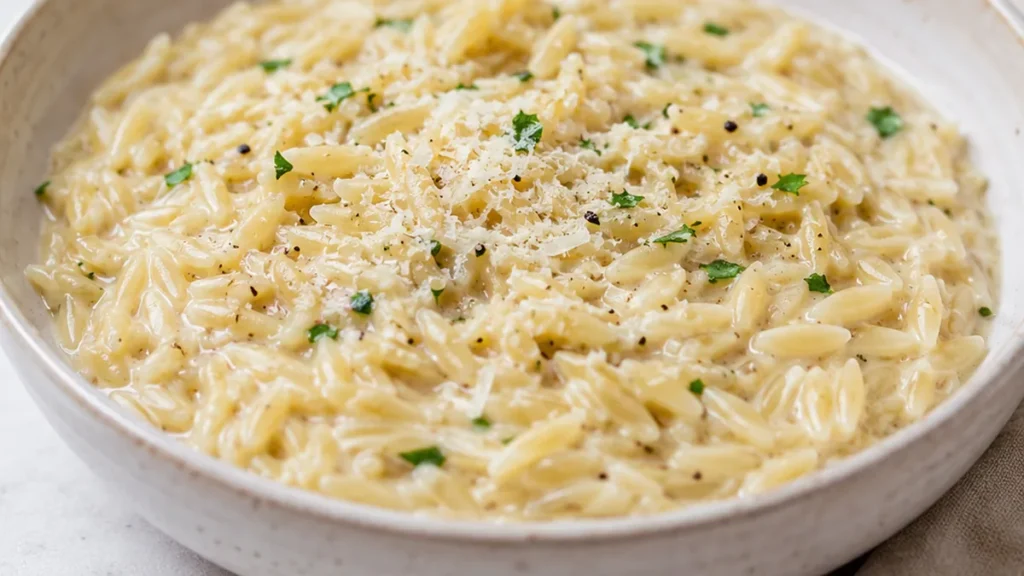
Creamy orzo is the ultimate comfort food, offering a luxurious texture and rich flavor that elevates any meal. This recipe for Creamy Parmesan Garlic Orzo is designed to be both incredibly simple to prepare and wonderfully satisfying, making it a perfect addition to your weekly rotation. I remember the first time I perfected this creamy orzo; the aroma of garlic and Parmesan filling the kitchen was just irresistible. It’s a dish that truly hits the spot, whether you’re looking for a quick weeknight side or something special to serve guests. The key to its success lies in gentle simmering and a final touch of richness.
Key takeaways
- Cook orzo in broth to release starches for natural creaminess.
- Control heat to a gentle simmer for even cooking and proper starch release.
- Stir in butter and parmesan off-heat to create a smooth, emulsified sauce.
- Adjust liquid and cooking time based on orzo type and desired consistency.
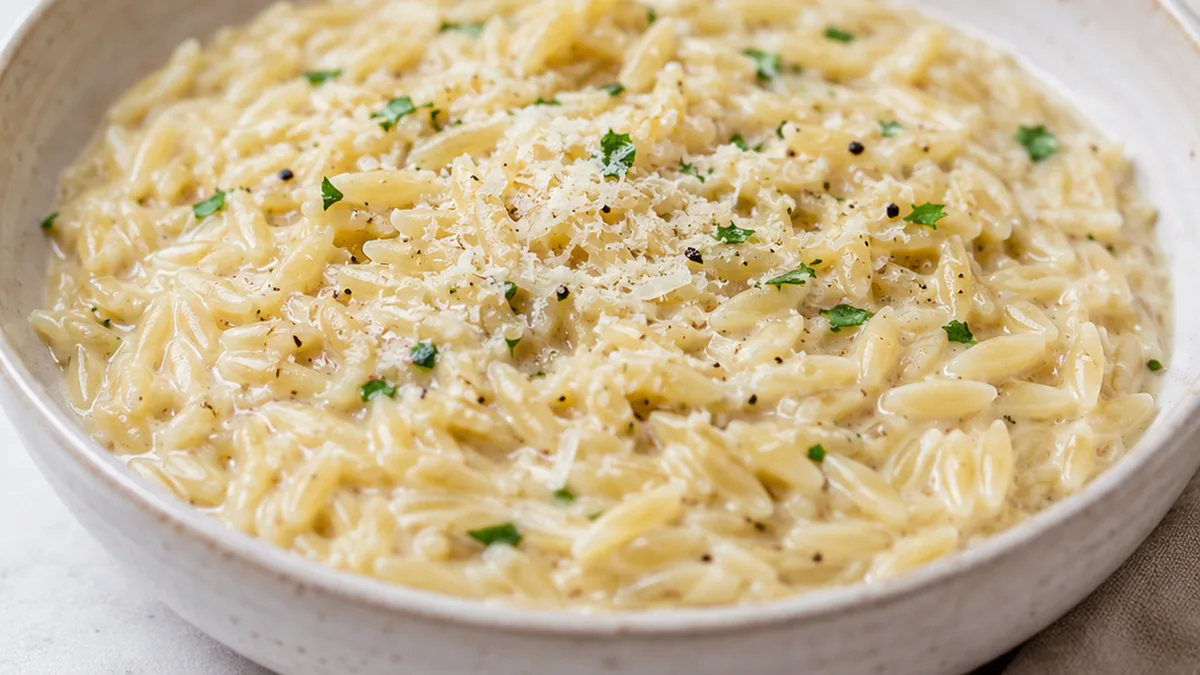
Dreamy Creamy Parmesan Garlic Orzo
Ingredients
Method
- Melt the butter in a medium-size saucepan over medium heat. Add the garlic then cook while stirring constantly until it becomes light golden brown
- Once simmering, add the orzo then stir to combine. Place a lid on top of the pot, turn the heat down to low, then gently simmer until the orzo is tender, 15-17 minutes, stirring often and adding a splash more chicken broth near the end if needed. Be sure to keep the heat on low to maintain a very gentle simmer.
- Turn the heat off then add the parmesan cheese and stir to combine. Add the half-and-half then stir to combine. Squeeze in a bit of fresh lemon juice, if using, then stir to combine. Taste then add more salt if needed. Scoop onto plates then serve
Notes
– Orzo Doneness: Simmer the orzo gently; don’t boil it vigorously. Stir often to prevent sticking. If the orzo absorbs all the liquid before becoming tender, add a splash more chicken broth. The goal is al dente, not mushy.
– Storage and Reheating: Store leftover creamy orzo in an airtight container in the refrigerator for up to 3 days. To reheat, add a tablespoon or two of chicken broth or water to a saucepan and gently warm over low heat, stirring until creamy again. Nutrition information is an estimate, calculated automatically. Values vary with brands, substitutions and portion sizes.
The Technique: Achieving Creamy Orzo Perfection
The magic behind this dreamy creamy orzo lies in a few key culinary principles that work in harmony. Primarily, it’s about controlled hydration and starch release. Unlike traditional pasta, orzo, especially when cooked directly in broth, releases its starches into the liquid. This process, similar to making risotto, is what thickens the sauce and creates that luxurious, creamy texture without relying solely on dairy. The chicken broth acts as the cooking medium, infusing the orzo with flavor as it hydrates. The key is to manage the heat: a gentle simmer allows the orzo to absorb the liquid evenly and release its starches gradually. Too high a heat can cause the orzo to cook too quickly on the outside, becoming mushy before the inside is tender, or it can cause the liquid to evaporate too fast, leaving the orzo undercooked and the sauce too thick or dry. The addition of butter and parmesan cheese at the end further enhances the creaminess through emulsification. The fat from the butter and cheese binds with the starchy liquid, creating a stable, velvety sauce that coats each grain of orzo. Stirring is crucial during this stage to ensure the cheese melts smoothly and the emulsion forms correctly.
Troubleshooting
- Problem: Orzo is mushy or gummy.
Fix: This usually means the heat was too high, causing the orzo to overcook rapidly. Reduce the heat to a gentle simmer and stir more frequently to prevent sticking and uneven cooking. Ensure you are using the correct amount of liquid; too little will concentrate the starch, leading to gumminess.
- Problem: Orzo is hard or undercooked.
Fix: The liquid likely evaporated too quickly, or not enough broth was used. Ensure the pot is partially covered to retain moisture. If the orzo is still too firm after the liquid is mostly absorbed, add a splash more broth or water and continue simmering until tender.
- Problem: Sauce is too thin.
Fix: This can happen if not enough starch was released or if too much liquid was used. Stir in the parmesan cheese and butter vigorously. The starch in the orzo, combined with the fat and protein from the cheese and butter, will help thicken the sauce. You can also let it simmer uncovered for a minute or two to allow some excess liquid to evaporate.
- Problem: Sauce is greasy or separated.
Fix: This typically occurs when the butter or cheese is added over too high heat, causing the fats to separate. Remove the pot from the heat before stirring in the butter and parmesan. Stir gently until fully incorporated and emulsified.
Substitutions
- For Chicken Broth: Vegetable broth can be used for a vegetarian option. The flavor profile will be slightly different, less rich, but still delicious. Ensure it’s a good quality broth for best results.
- For Half-and-Half/Heavy Cream: A tablespoon of cream cheese, softened, can be stirred in at the end for creaminess. Alternatively, a swirl of plain Greek yogurt or sour cream (added off-heat to prevent curdling) can provide a tangy creaminess.
- For Gluten-Free Brown Rice Orzo: Regular wheat-based orzo can be used, but cooking times may vary slightly. If using regular orzo, be mindful of starch release, as it might thicken the sauce more rapidly.
- For Fresh Lemon: A tiny pinch of lemon zest can be used instead of juice for a subtle citrus aroma without adding extra liquid.
Pro tips
- Garlic Gold: When sautéing garlic, keep the heat on medium-low and stir constantly. It can go from perfectly golden to burnt in seconds, which will make your creamy orzo taste bitter. Listen for a gentle sizzle, not a loud crackle.
- Orzo Doneness: Simmer the orzo gently; don’t boil it vigorously. Stir often to prevent sticking. If the orzo absorbs all the liquid before becoming tender, add a splash more chicken broth. The goal is al dente, not mushy.
- Storage and Reheating: Store leftover creamy orzo in an airtight container in the refrigerator for up to 3 days. To reheat, add a tablespoon or two of chicken broth or water to a saucepan and gently warm over low heat, stirring until creamy again.
This Creamy Parmesan Garlic Orzo is a testament to how simple ingredients can create extraordinary flavor. Give it a try tonight and watch it become a new family favorite!
Frequently asked questions
Can I make this orzo ahead of time?
While best served fresh, you can reheat leftovers gently on the stovetop with a splash of broth or water. Stir continuously to re-emulsify the sauce and prevent sticking. Avoid microwaving, as it can make the orzo gummy.
What if I don’t have gluten-free orzo?
You can use regular wheat-based orzo. Cooking times might be slightly shorter, and the sauce may thicken more quickly due to the higher starch content. Keep an eye on it and adjust liquid as needed.
How can I make this dish richer?
For an even richer flavor and creamier texture, use heavy cream instead of half-and-half. You can also add a touch more butter or parmesan cheese at the end, ensuring it’s incorporated off-heat.
Is it possible to add vegetables?
Yes, you can sauté vegetables like spinach, mushrooms, or peas before adding the broth and orzo. Ensure they are cooked through before adding the orzo, or add quick-cooking vegetables like spinach in the last few minutes of cooking.
Try this next: Creamy Italian Pasta Salad – GF Dream!
More from Gluten-Free Pasta & Pizza →