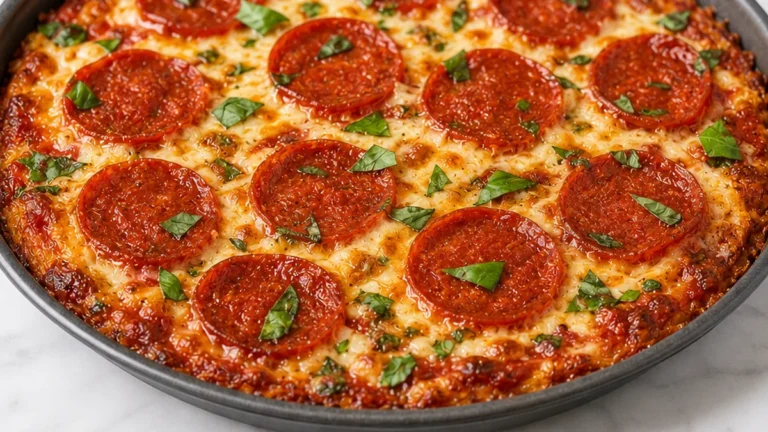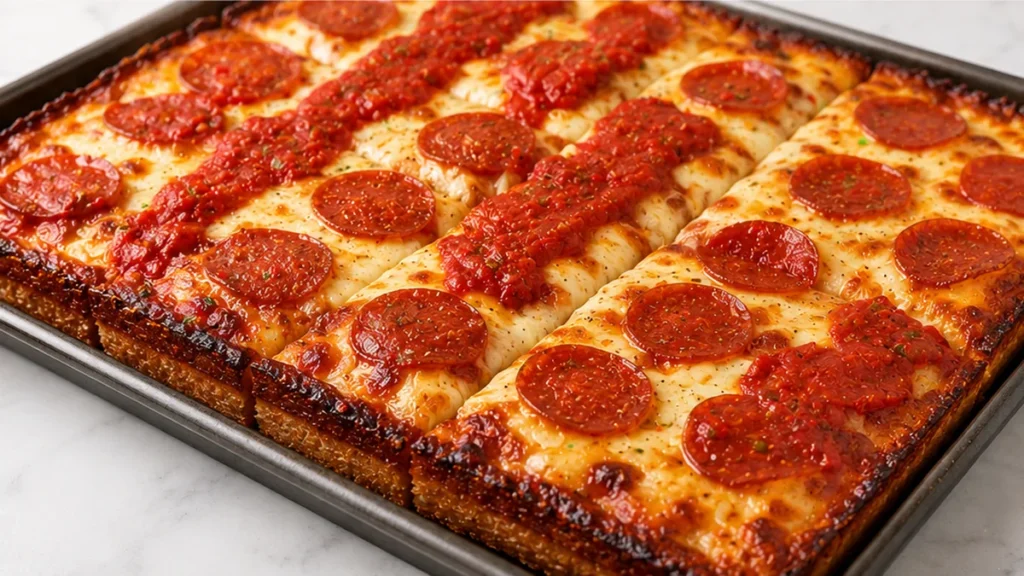
Detroit pizza, with its signature thick, airy crust and irresistible crispy cheese edges, has become a beloved classic. This recipe brings the authentic taste of Detroit pizza to your kitchen, in a gluten-free version that doesn’t compromise on flavor or texture. I remember the first time I tried a slice, I was amazed by how the dough could be so light yet so sturdy, holding up to all the delicious toppings. This version aims to replicate that experience for everyone. Crafting this gluten-free Detroit pizza is a rewarding experience, perfect for weekend baking or a special pizza night. The key to its unique texture lies in the flour blend and the pan-frying technique that creates that coveted crispy bottom and cheesy perimeter. Get ready to impress your family and friends with this exceptional Detroit pizza.
Key takeaways
- Detroit-style pizza achieves its signature crispiness through a high-hydration dough baked in a well-oiled, high-sided pan.
- The cheese is layered under the sauce, and the pan is oiled generously to fry the dough edges.
- Troubleshooting often involves adjusting oven temperature, ensuring proper dough hydration, and correct cheese layering.
- While gluten-free flour and cheese blends can be substituted, traditional methods yield the most authentic results.
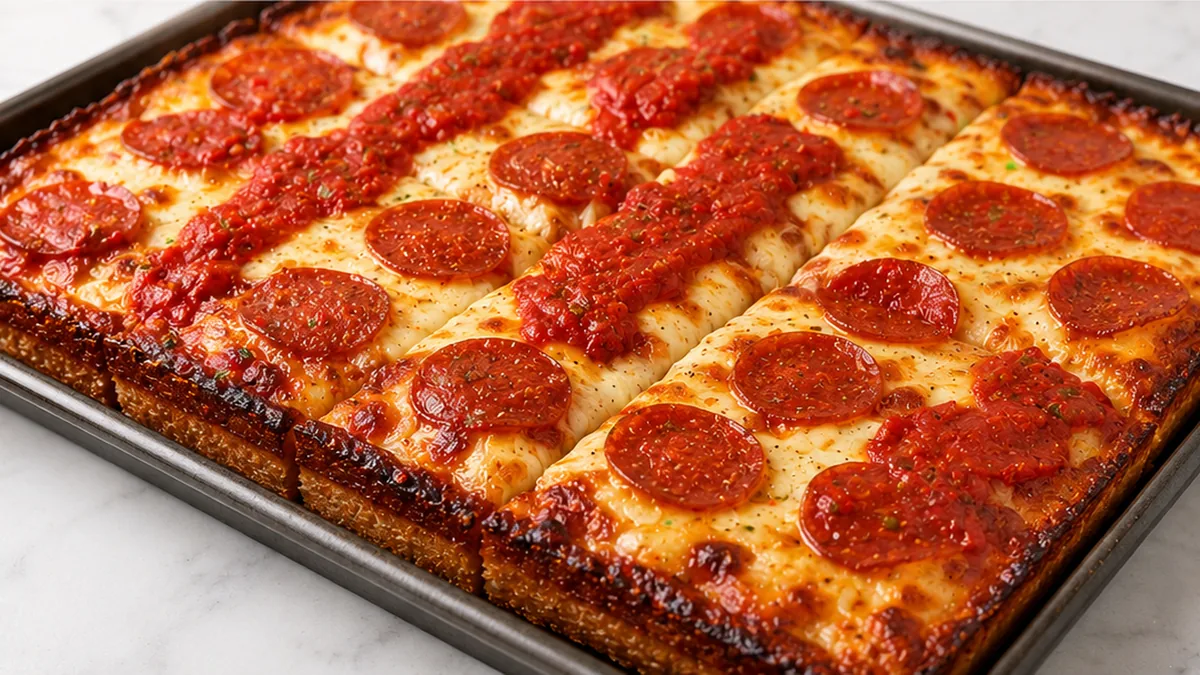
Crispy, Cheesy Detroit-Style Pizza Dream!
Ingredients
Method
- In the bowl of a stand mixer fitted with the paddle attachment, add the gluten-free pizza flour, sugar, instant yeast and salt. Mix to combine.
- With the mixer running on low, slowly add the water and olive oil. Increase the speed to medium-high and mix for 5 minutes.
- Using an oiled rubber spatula, scrape down the bottom and sides of the bowl and mix again until well-combined.
- Generously oil the bottom and sides of a 10×14-inch Detroit pizza pan. Press the dough into an even layer all the way to the edges and corners of the pan.
- Cover the pan with plastic wrap and let rise for 90-120 minutes.
- When the dough has about 30 minutes left to rise, place a pizza steel in the oven. Preheat the oven to 450°F.
- Slide the pizza directly onto the pizza steel and bake (without toppings) for 10 minutes.
- Meanwhile, mix together the preshredded cheese. Spread this cheese around the perimeter of the dough pressing it firmly into the sides of the pan.
Notes
– For a truly authentic crust, use a dark, heavy-gauge steel pan. The darker the pan, the crispier your crust will be.
– Ensure your oven is fully preheated with the pizza steel inside for at least 30 minutes before baking. This ensures a hot, even bake.
– If you want to make this Detroit pizza ahead, you can prepare the dough and let it rise in the pan. Once risen, you can cover it tightly and refrigerate for up to 24 hours before baking.
– The internal temperature of fully cooked cheese should reach 160°F (71°C) for optimal food safety and melt. Nutrition information is an estimate, calculated automatically. Values vary with brands, substitutions and portion sizes.
The technique that makes it
Detroit-style pizza is defined by its unique pan and baking method, creating a signature crispy, cheesy crust. The key lies in using a rectangular, high-sided pan, traditionally a blue steel automotive drip pan, though a 9×13 inch dark metal baking pan works well. This pan is generously oiled, creating a barrier that fries the dough edges as it bakes, resulting in a shatteringly crisp bottom and sides. The dough itself is a high-hydration, focaccia-like dough, which allows for a chewy interior. It’s pressed into the oiled pan and allowed to proof in the pan, developing air pockets. Crucially, the cheese, a blend of mozzarella and cheddar, is layered in reverse. The sauce is applied last, over the cheese. This layering prevents the cheese from burning during the relatively high-heat, extended bake time required to achieve that deep golden-brown crust.
Troubleshooting
- Soggy Bottom: Ensure your pan is well-oiled, and the dough is pressed evenly to the edges. Avoid overloading with sauce. Bake on the lowest rack of your oven to maximize heat exposure to the bottom crust.
- Burnt Edges/Undercooked Center: The oven temperature might be too high, or the bake time too long. Reduce oven temperature by 25°F (15°C) and check for doneness earlier. Ensure the dough is evenly distributed in the pan.
- Cheese Not Melty or Browned: The cheese blend might be too lean, or the oven temperature too low. Use whole-milk mozzarella for better melt. Ensure your oven is preheated thoroughly. A broiler finish for the last minute can help brown the cheese if needed, but watch carefully.
- Dough Didn’t Rise: Check the yeast’s expiration date and ensure the water temperature was lukewarm (105-115°F or 40-46°C), not hot, which can kill yeast.
Substitutions
- Gluten-Free Flour: If King Arthur Gluten-Free Pizza Flour is unavailable, a reputable 1:1 gluten-free baking blend containing xanthan gum can be used. The texture might vary slightly.
- Cheese Blend: While mozzarella and cheddar are traditional, a mix of provolone and Monterey Jack can offer a similar melt and flavor profile. For authenticity, focus on low-moisture, whole-milk cheeses.
- Pizza Sauce: Use your favorite store-bought or homemade pizza sauce. A thicker sauce is preferable to prevent excess moisture from making the crust soggy.
- Olive Oil: A neutral oil like avocado or canola oil can be used for greasing the pan if olive oil is not preferred, though olive oil contributes to the flavor.
Pro tips
- Don’t be afraid of the wet dough; it’s essential for the airy texture. Resist the urge to add more flour.
- For a truly authentic crust, use a dark, heavy-gauge steel pan. The darker the pan, the crispier your crust will be.
- Ensure your oven is fully preheated with the pizza steel inside for at least 30 minutes before baking. This ensures a hot, even bake.
- If you want to make this Detroit pizza ahead, you can prepare the dough and let it rise in the pan. Once risen, you can cover it tightly and refrigerate for up to 24 hours before baking.
- The internal temperature of fully cooked cheese should reach 160°F (71°C) for optimal food safety and melt.
This gluten-free Detroit-style pizza is a game-changer for anyone craving that iconic, cheesy crust. Experiment with your favorite toppings, but don’t skip the cheese-to-edge perfection. Enjoy this incredible pizza experience!
Try this next: Gluten-Free Artisan Pizza: Taste the Magic!
More from Gluten-Free Pasta & Pizza →
Frequently asked questions
What makes Detroit-style pizza unique?
Its defining characteristic is the thick, chewy, focaccia-like crust with incredibly crispy, almost fried edges. This is achieved by baking the dough in a high-sided, well-oiled rectangular pan, traditionally a blue steel pan, which fries the dough as it bakes.
Can I use a regular baking sheet?
A regular baking sheet is not ideal. A high-sided rectangular pan, such as a 9×13 inch dark metal baking pan, is essential to achieve the characteristic crust. The high sides and oiled surface are critical for the crispy edges.
Why is the sauce on top?
Applying the sauce last, over the cheese, is a hallmark of Detroit-style pizza. This layering protects the cheese from burning during the extended bake time needed to develop the deeply caramelized, crispy crust.
What kind of cheese is best?
Low-moisture, whole-milk mozzarella is crucial for its superior melting qualities and flavor. Cheddar is often added for sharpness. Using hand-grated cheese melts better than pre-shredded, which can contain anti-caking agents.