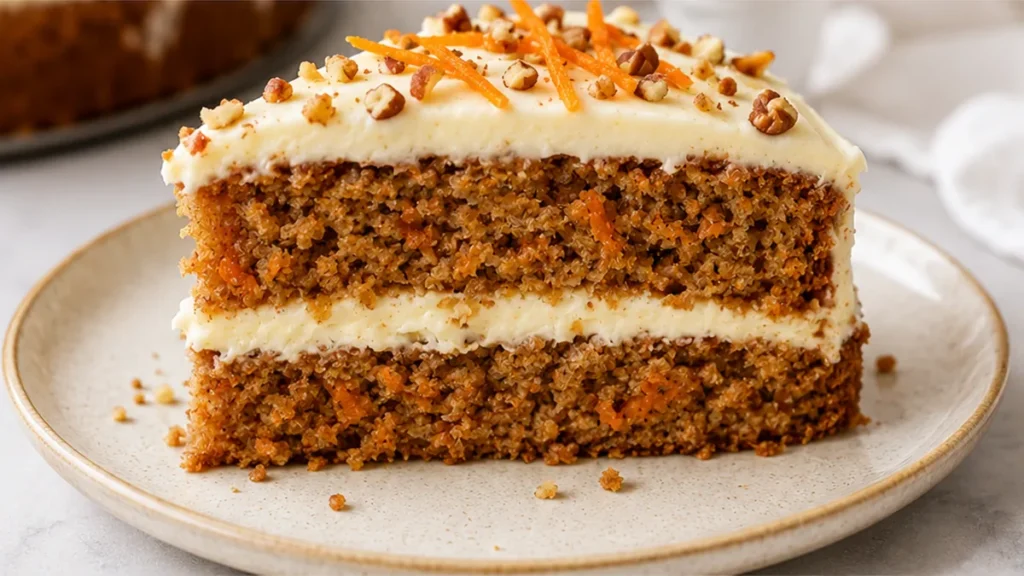
This almond flour carrot cake is the ultimate recipe for anyone seeking a moist, flavorful, and gluten-free dessert. Using finely ground almond flour instead of traditional flour creates an incredibly tender crumb, while warm spices and fresh carrots ensure a burst of delicious flavor in every bite. Perfect for birthdays, holidays, or just a special treat, this carrot cake recipe is surprisingly easy to follow. It proves that gluten-free baking can be just as decadent and satisfying as its conventional counterparts, making it a crowd-pleaser for all dietary needs.
Key takeaways
- Almond flour requires techniques to ensure moisture and binding due to the absence of gluten.
- Accurate measurement of almond flour and proper oven temperature are key to avoiding dryness.
- Overmixing the batter after adding dry ingredients can lead to a dense cake.
- Substitutions are possible but will alter the final texture and flavor profile.
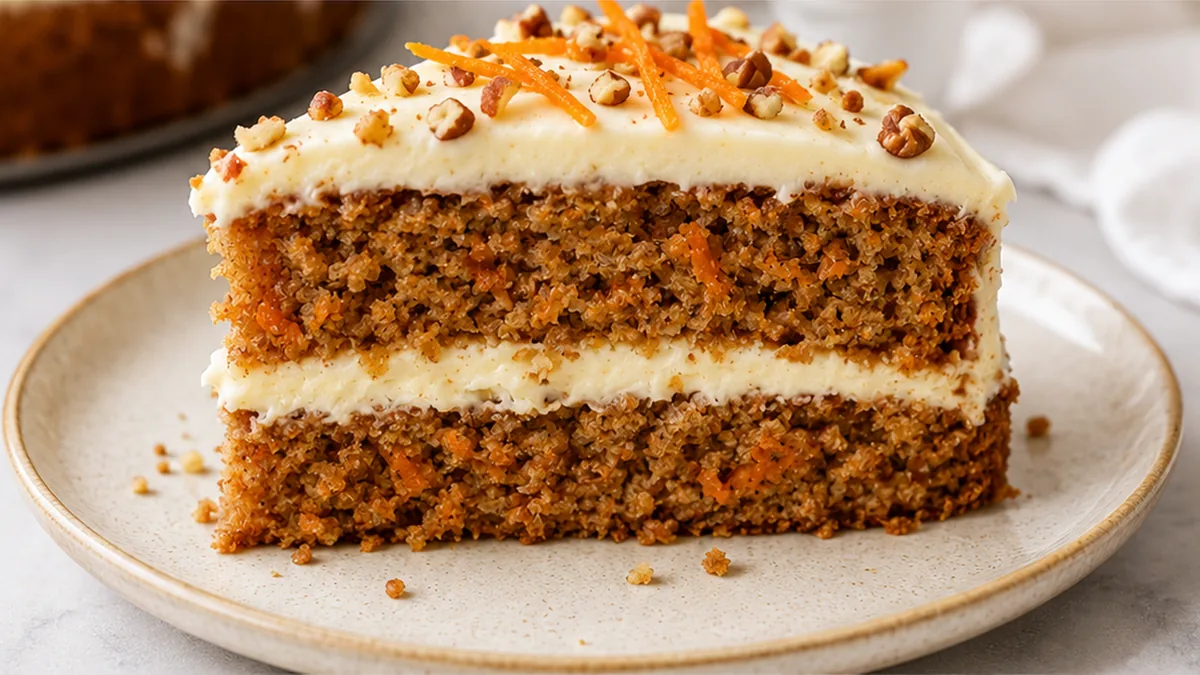
OMG! The BEST Almond Flour Carrot Cake!
Ingredients
Method
- Preheat oven to 350°F (180°C). Grease two 8×8-inch baking pans and line with parchment paper.
- In a large bowl, beat the eggs, vegetable oil, granulated sugar, brown sugar, and vanilla extract until well combined.
- Add the almond flour, baking powder, baking soda, cinnamon, and nutmeg, and mix until just combined. Do not overmix!
- Gently fold in shredded carrots, walnuts, and raisins until evenly distributed throughout the batter.
- Pour batter into the prepared pans and spread evenly to create a level surface for baking.
- Bake for 35-40 minutes, or until a toothpick inserted into the center of the cakes comes out clean.
- Let the cakes cool in the pans for 15 minutes before carefully transferring them to a wire rack to cool completely.
Notes
– Don’t overmix the batter after adding dry ingredients.
– Ensure carrots are finely shredded for even distribution and moisture.
– Let cakes cool completely before frosting to prevent crumbling. Allergens: Tree nuts, Eggs, Milk, Wheat. Nutrition information is an estimate, calculated automatically. Values vary with brands, substitutions and portion sizes.
The technique that makes it
The success of this almond flour carrot cake hinges on a few key techniques that leverage the unique properties of almond flour. Unlike wheat flour, almond flour lacks gluten, the protein network that provides structure and elasticity in traditional cakes. Therefore, achieving a moist and tender crumb requires careful attention to moisture and binding. The use of 4 large eggs is crucial; they provide not only binding but also fat and moisture, contributing significantly to the cake’s richness and preventing it from becoming dry or crumbly. The combination of vegetable oil and both granulated and brown sugar ensures a tender crumb. Oil, being a liquid fat, coats the flour particles, inhibiting gluten development (though less relevant with almond flour, it still contributes to tenderness) and keeping the cake moist. Brown sugar adds molasses, which further enhances moisture and a subtle caramel note. The leavening agents, baking powder and baking soda, work together. Baking soda reacts with any acidic components (though minimal here, it aids in browning and tenderness) and baking powder provides a more sustained lift. Properly whisking the wet ingredients together before incorporating the dry ensures even distribution of moisture and fat, which is vital for a uniform texture. Overmixing after adding the almond flour should be avoided, as it can still lead to a denser cake, even without gluten.
Troubleshooting
- Problem: Cake is dry or crumbly.
Fix: Ensure you measured the almond flour accurately. Too much can lead to dryness. Also, check oven temperature; an oven running too hot can dry out the cake quickly. Consider slightly reducing baking time if your oven runs hot. - Problem: Cake is dense or heavy.
Fix: This can happen if the almond flour was not finely ground or if the batter was overmixed after adding the dry ingredients. Ensure your almond flour is ‘finely ground’. Gently fold in the dry ingredients until just combined. - Problem: Cake has a gummy texture.
Fix: Gummy textures can result from insufficient baking time or too much moisture. Ensure the cake is fully baked by inserting a toothpick into the center; it should come out clean or with a few moist crumbs attached. - Problem: Cake sinks in the middle.
Fix: This is often due to underbaking or excessive leavening. Ensure the cake is baked through. Also, verify the freshness of your baking powder and baking soda.
Substitutions
- Almond Flour: While this recipe is specifically designed for almond flour, a blend of finely ground almond flour and a small amount of coconut flour (e.g., 3 cups almond flour + ¼ cup coconut flour) could be used. Coconut flour is highly absorbent, so you may need to slightly increase the eggs or oil. The texture will be different, potentially drier.
- Vegetable Oil: Melted coconut oil or a neutral-flavored olive oil can be substituted. This will alter the flavor profile slightly. Melted butter could also work, but it may result in a slightly less moist cake compared to oil.
- Sugars: For a lower sugar option, you can substitute part of the sugar with a sugar substitute suitable for baking, like erythritol or xylitol (use caution with xylitol if you have pets, as it is toxic to them). The texture and browning may be affected.
- Spices: If you don’t have nutmeg, you can increase the cinnamon slightly or add a pinch of ground ginger for a different warm spice note. Ensure spices are fresh for optimal flavor.
Pro tips
- Use finely ground almond flour for the best texture.
- Don’t overmix the batter after adding dry ingredients.
- Ensure carrots are finely shredded for even distribution and moisture.
- Let cakes cool completely before frosting to prevent crumbling.
Enjoy this delightful almond flour carrot cake, a perfect blend of spice, sweetness, and texture. It’s a testament to how delicious gluten-free can be!
Try this next: Bake Viral Almond Biscotti
More from Gluten-Free Desserts & Sweets →
Read also on TastyBend: Cake Pop Nutrition Facts: Complete Expert Guide to Smart Dessert Choices 2026.
Frequently asked questions
Can I make almond flour carrot cake ahead of time?
Yes, almond flour carrot cake can be made up to 2 days in advance. Store it tightly wrapped at room temperature or in the refrigerator. For best flavor and texture, allow it to come to room temperature before serving. Freezing is also an option for longer storage.
How do you know when almond flour carrot cake is done baking?
The cake is done when a toothpick inserted into the center comes out clean or with a few moist crumbs attached. The edges should be golden brown and pulling away slightly from the sides of the pan. Avoid overbaking to ensure a moist crumb.
What is the best way to store leftover almond flour carrot cake?
Store leftover almond flour carrot cake in an airtight container at room temperature for up to 2 days. If your kitchen is warm or if it contains cream cheese frosting, refrigerate it. Ensure it’s well-wrapped to prevent drying out.
Can I substitute coconut flour for almond flour in carrot cake?
Substituting coconut flour for almond flour is not a direct 1:1 swap due to different absorption properties. Coconut flour is much more absorbent. You would need to significantly reduce the amount of coconut flour and likely increase the liquid and eggs. It’s generally not recommended without specific recipe adjustments.