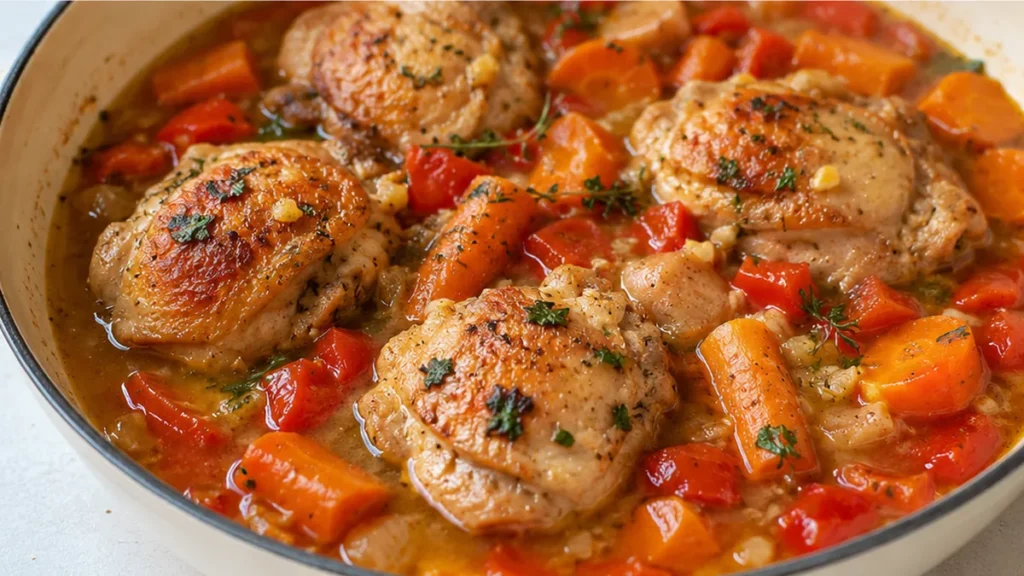
Learning to master a truly comforting chicken stew means understanding how to build layers of flavor, starting with a good sear on the chicken. The first time I made this, I rushed the browning step and the stew lacked that deep, savory base. Taking the time here truly transforms the dish. This chicken stew recipe focuses on tender chicken thighs and a medley of aromatic vegetables, simmered to perfection in a flavorful broth. It’s a wholesome meal that brings warmth and satisfaction to any table, especially on a chilly evening.
Key takeaways
- Sear chicken thighs well for deep flavor.
- Sauté aromatics until softened to build the flavor base.
- Deglaze the pot with wine to capture browned bits.
- Simmer gently to allow flavors to meld without overcooking ingredients.
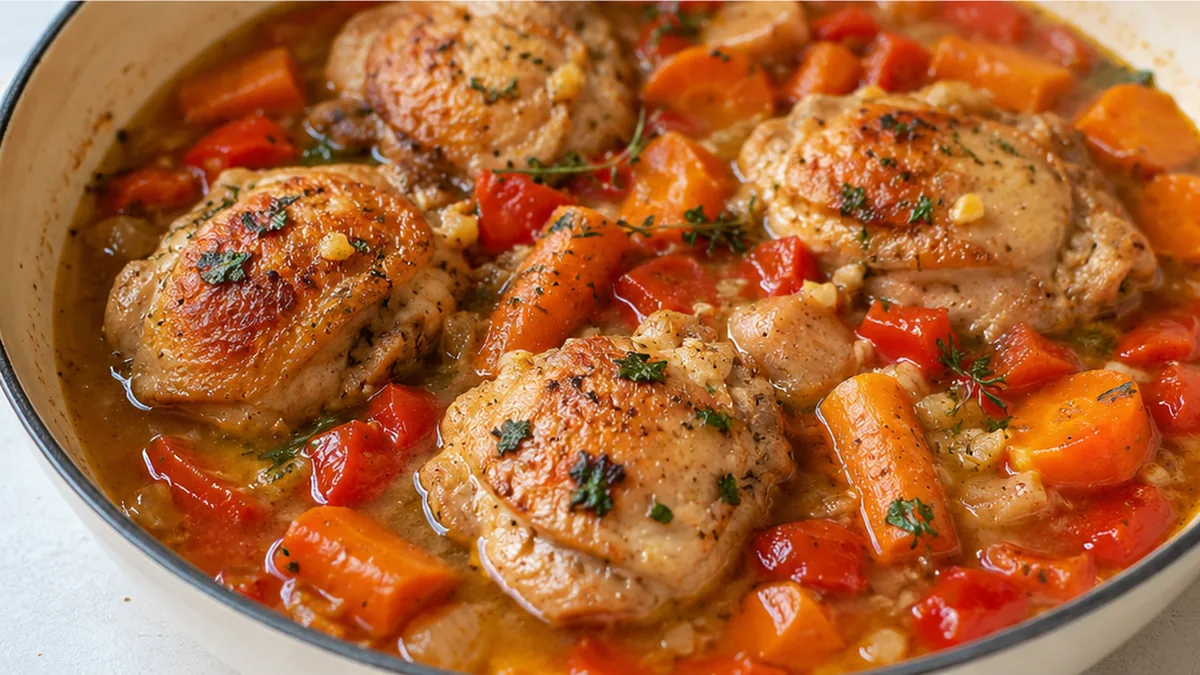
Easy Chicken Stew: Comfort in a Bowl
Ingredients
Method
- Season chicken thighs with salt and pepper.
- Sear chicken thighs in olive oil until golden brown (2-3 minutes per side). Transfer to a plate.
- Sauté carrots, celery, bell pepper, and onion in olive oil and butter for 10-12 minutes. Add garlic for 1-2 minutes.
- Deglaze with white wine, scraping up brown bits, and cook until mostly evaporated (1-2 minutes).
- Stir in flour for one minute, then gradually add chicken stock and dried herbs. Bring to a simmer.
- Return chicken to the pot, cover, and simmer for 20 minutes, flipping halfway. Shred chicken and set aside.
- Add potatoes to the pot, cover, and simmer for 20-30 minutes until tender. Stir in shredded chicken, season, and serve.
Notes
– For a richer flavor, don’t skimp on searing the chicken. Those browned bits (fond) at the bottom of the pot are essential for developing depth.
– Leftover chicken stew can be stored in an airtight container in the refrigerator for up to 3-4 days, or frozen for up to 3 months. Thaw overnight in the fridge and reheat gently on the stove or in the microwave. Nutrition information is an estimate, calculated automatically. Values vary with brands, substitutions and portion sizes.
The Technique That Makes It: Building Flavor Layers
This chicken stew achieves its depth of flavor through a series of deliberate steps that build upon each other. The initial searing of the bone-in, skin-on chicken thighs is crucial. This process, known as the Maillard reaction, creates complex browned compounds on the surface of the chicken, contributing significantly to the stew’s savory base. Leaving the skin on and searing it helps render fat, which then becomes part of the flavor foundation for sautéing the aromatics. Deglazing with white wine after sautéing the vegetables lifts these browned bits (fond) from the bottom of the pot, incorporating them into the liquid. This fond is pure flavor. The slow simmering allows the flavors from the chicken, vegetables, herbs, and stock to meld and deepen. Using Yukon Gold potatoes is also a technique; their waxy texture holds up well to simmering without becoming mushy, absorbing the rich broth while maintaining their shape.
Troubleshooting
- Problem: Stew is too thin. Fix: Remove the chicken and potatoes. In a separate bowl, whisk together 2 tablespoons of flour with 1/4 cup of cold water or stock to create a slurry. Bring the stew to a simmer and slowly whisk in the slurry until thickened. Let it simmer for a few more minutes to cook out the raw flour taste.
- Problem: Chicken is dry. Fix: Ensure you are not overcooking the chicken during the initial searing. For the stew itself, bone-in, skin-on thighs are more forgiving. If it does happen, the long simmering time will help rehydrate the meat. Avoid shredding the chicken too early.
- Problem: Vegetables are mushy. Fix: Ensure vegetables are cut to a uniform size (1-inch for potatoes, finely chopped for mirepoix). Do not overcrowd the pot when sautéing aromatics, as this will steam them instead of browning. Add potatoes later in the cooking process if they tend to break down quickly.
- Problem: Stew lacks depth of flavor. Fix: Ensure you properly seared the chicken and sautéed the aromatics until softened and slightly caramelized. Don’t skip the deglazing step with wine, as it captures the fond. Taste and adjust seasoning (salt, pepper, herbs) at the end of cooking.
Substitutions
- Chicken: Boneless, skinless chicken thighs can be used. Sear them for less time until golden brown. The stew may be slightly less rich without the rendered skin fat.
- Potatoes: Sweet potatoes or parsnips can be substituted for Yukon Golds. They will add a different sweetness and texture profile. Adjust cooking time as needed, as they may cook faster or slower.
- White Wine: Chicken stock or an equal amount of water can be used if you prefer not to use alcohol. You will lose some of the acidic brightness and complexity the wine adds.
- Herbs: Fresh herbs can be used. Add them during the last 15-20 minutes of simmering for a brighter flavor, or add them with the dried herbs if you prefer a more infused taste. Use about 1 tablespoon of fresh chopped herbs per teaspoon of dried.
Pro tips
- To ensure perfectly cooked chicken, use an instant-read thermometer. Poultry should reach an internal temperature of 165°F (74°C).
- For a richer flavor, don’t skimp on searing the chicken. Those browned bits (fond) at the bottom of the pot are essential for developing depth.
- Leftover chicken stew can be stored in an airtight container in the refrigerator for up to 3-4 days, or frozen for up to 3 months. Thaw overnight in the fridge and reheat gently on the stove or in the microwave.
This chicken stew is more than just a meal; it’s a comforting experience. Try this recipe to bring warmth and delicious flavors to your kitchen, and share your own variations!
Frequently asked questions
Can I make this chicken stew ahead of time?
Yes, chicken stew often tastes even better the next day as the flavors have more time to meld. Reheat gently on the stovetop or in the microwave, adding a splash of stock or water if it has become too thick.
What kind of pot is best for making this stew?
A heavy-bottomed pot, such as a Dutch oven or a large saucepan, is ideal. This ensures even heat distribution, preventing scorching and allowing for effective searing and simmering.
How can I make the stew spicier?
To add heat, you can incorporate a pinch of red pepper flakes when sautéing the aromatics, or stir in a dash of hot sauce at the end of cooking. Adjust the amount to your preferred level of spice.
Is it necessary to use bone-in, skin-on chicken thighs?
While bone-in, skin-on thighs provide the richest flavor and most tender results due to the fat and collagen, boneless, skinless thighs can be used. Adjust searing time accordingly.
Try this next: Instant Pot Chicken Tortilla Soup
More from Gluten-Free Dinners & Mains →