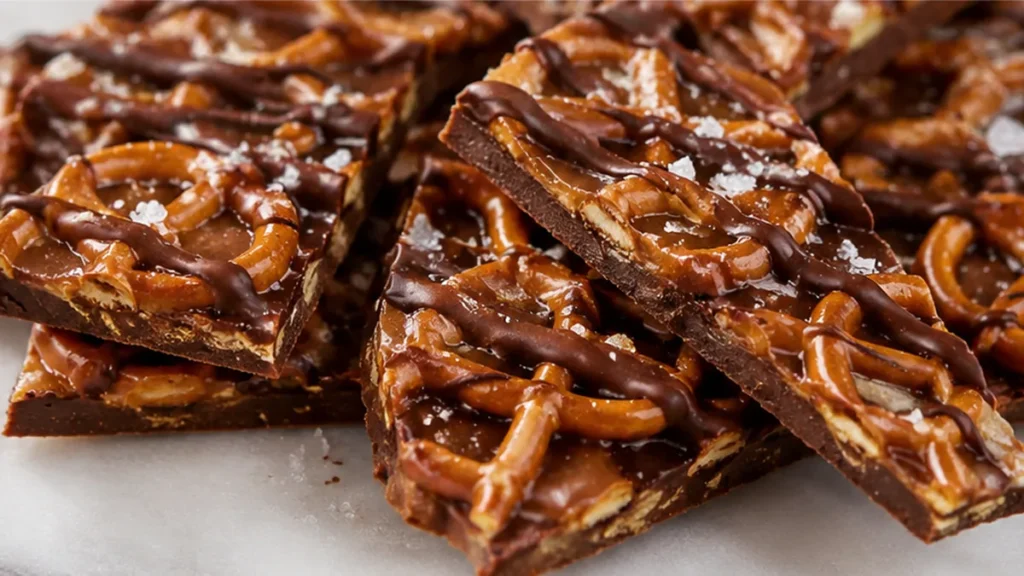
This caramel pretzel bark recipe balances sweet and salty flavors with a satisfying crunch. It’s simple to make, featuring crunchy pretzels and rich caramel.
Key takeaways
- Achieve a smooth, non-crystallized caramel by controlling heat and adding cream gradually.
- Ensure chocolate is melted gently and without moisture to prevent seizing.
- Use quality ingredients for the best flavor and texture.
- Balance the sweet caramel with the salty crunch of pretzels and a sprinkle of flaky salt.
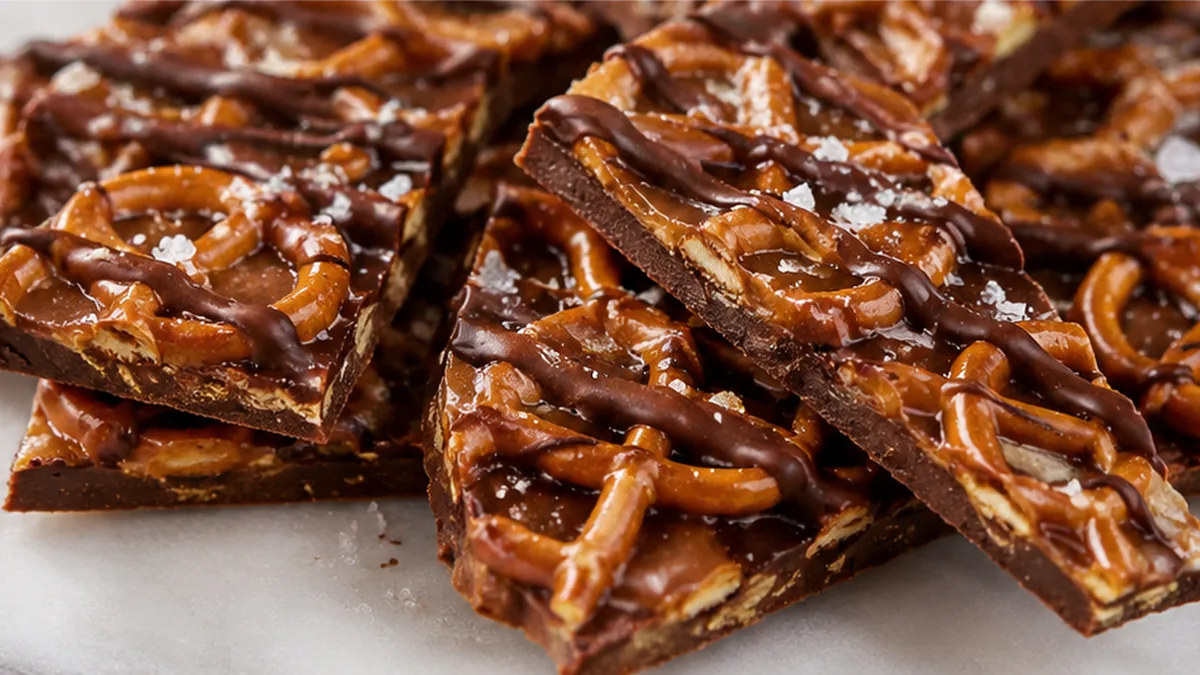
Salty Sweet Perfection: Caramel Pretzel Bark!
Ingredients
Method
- Line a large baking sheet with parchment paper or a silicone baking mat.
- In a medium heavy-bottomed saucepan over medium-low heat, combine the sugar, ½ cup of the heavy cream, corn syrup, butter and salt. Let the ingredients melt together slowly, stirring occasionally, until the mixture is completely smooth and the butter is fully melted.
- Once smooth, slightly increase the heat to bring the mixture to a gentle simmer. Clip a digital thermometer to the side of the saucepan, making sure the tip is fully submerged but not touching the bottom. Do not stir anymore. Let the caramel simmer over medium-low heat without stirring until it reaches 236°F.
- Carefully pour in the remaining ½ cup of heavy cream—again, no stirring! Let the mixture continue cooking until the temperature reaches 245-248°F. Remove from heat and stir in the vanilla.
- While the caramel cools, place the chocolate chips and coconut oil in a large microwave-safe bowl. Microwave on 50% power for 20-second increments, stirring after each increment until completely melted and smooth.
- Pour about ⅔ of the melted chocolate onto the prepared pan and spread it into an even layer. Scatter the pretzels over the top, pressing them gently into the chocolate. It’s okay if they overlap slightly!
- Pour the caramel evenly over the pretzels, making sure it touches as many of them as possible—this is what holds the bark together.
- Drizzle the remaining melted chocolate over the top. You can use a spoon or transfer the chocolate to a small plastic bag, snip off a corner and pipe it on for a more controlled drizzle. Sprinkle with flaky salt.
Notes
– If you notice your caramel crystalizing, resist stirring it. Instead, gently brush down the sides of the saucepan with a wet pastry brush to dissolve any sugar crystals.
– For easier cutting and clean edges, chill the bark in the refrigerator for at least 1 hour, or until completely firm, before breaking or slicing. This prevents the chocolate from cracking unevenly.
– Store leftover caramel pretzel bark in an airtight container at room temperature for up to 1 week, or in the refrigerator for up to 2 weeks. For longer storage, freeze for up to 1 month, wrapped tightly. Nutrition information is an estimate, calculated automatically. Values vary with brands, substitutions and portion sizes.
The Science Behind Salty Sweet Perfection
The Art of Caramelization and Emulsification
The magic of this caramel pretzel bark lies in two key culinary techniques: controlled sugar caramelization and the creation of a stable emulsion. Granulated sugar, when heated beyond its melting point, undergoes caramelization – a complex process where sugars break down and reform, developing rich, nutty, and complex flavors. However, uncontrolled heating can lead to bitterness. Maintaining a steady, medium heat is crucial to achieve a beautiful amber color without scorching. The addition of corn syrup helps to inhibit crystallization, ensuring a smoother caramel.
Simultaneously, we are creating an emulsion by incorporating heavy cream and butter into the hot sugar mixture. Emulsification is the process of combining two liquids that normally don’t mix, like oil (from butter and cream) and water (from cream). The lecithin in the egg yolks (if using, though not in this recipe) or the proteins in the cream act as emulsifiers, helping to bind the fat and water molecules together. Adding the cream gradually and whisking constantly stabilizes this emulsion, preventing the caramel from separating into a greasy or grainy texture. The butter contributes not only richness but also further aids in creating a smooth, glossy caramel. The final addition of vanilla extract and salt not only enhances flavor but also helps to further stabilize the emulsion and cut through the sweetness.
Troubleshooting Common Issues
- Caramel Crystallized or Grainy: This often happens if sugar crystals are agitated too much during the initial heating or if impurities are present. Ensure your pot and utensils are clean. Avoid stirring vigorously once the sugar starts to melt; swirl the pan instead. If it crystallizes, you can sometimes save it by adding a tablespoon of water and reheating gently until dissolved, then proceeding with the recipe.
- Caramel Burned or Bitter: This is due to overheating. Use medium heat and watch the color closely. If it starts to turn dark brown too quickly, remove it from the heat immediately. You may need to discard it and start over, focusing on lower heat and constant observation.
- Caramel Separated (Oily): This indicates a broken emulsion. It usually happens if the cream is added too quickly or is too cold. Ensure the cream is at room temperature or slightly warmed, and add it in a slow, steady stream while whisking vigorously.
- Chocolate Seized (Hardened): This occurs when chocolate comes into contact with even a small amount of water. Ensure your bowl and utensils are completely dry. If using a double boiler, make sure the bottom of the bowl doesn’t touch the simmering water.
Ingredient Substitutions and Their Effects
- Heavy Cream: You can substitute with half-and-half, but the caramel may be slightly less rich and potentially a bit thinner due to the lower fat content. Avoid milk as it lacks sufficient fat and will likely result in a very thin, watery caramel that may not set properly.
- Butter: Margarine can be used, but it may alter the flavor profile and richness. Ensure it’s a good quality margarine. For a dairy-free option, use a plant-based butter substitute, noting that flavor and texture might vary.
- Semi-Sweet Chocolate Chips: Milk chocolate chips can be used for a sweeter bark, while dark chocolate chips (60-70% cacao) will provide a more intense chocolate flavor that balances the sweet caramel. White chocolate can also be used for a different flavor profile, but it tends to melt at a lower temperature.
- Gluten-Free Pretzels: Regular pretzels can be used if gluten is not a concern. The texture might be slightly different, with gluten-free pretzels sometimes being more delicate.
Pro tips
- Use a reliable candy thermometer to ensure your caramel reaches the correct temperature; this is crucial for the right consistency and helps avoid a grainy texture.
- If you notice your caramel crystalizing, resist stirring it. Instead, gently brush down the sides of the saucepan with a wet pastry brush to dissolve any sugar crystals.
- For easier cutting and clean edges, chill the bark in the refrigerator for at least 1 hour, or until completely firm, before breaking or slicing. This prevents the chocolate from cracking unevenly.
- Store leftover caramel pretzel bark in an airtight container at room temperature for up to 1 week, or in the refrigerator for up to 2 weeks. For longer storage, freeze for up to 1 month, wrapped tightly.
This homemade salted caramel pretzel bark is a truly delightful treat that combines textures and flavors perfectly. Give this recipe a try and enjoy the magic of sweet, salty, and crunchy in every bite!
Frequently asked questions
Why is my caramel hard and brittle?
Hard, brittle caramel often results from cooking the sugar mixture to too high a temperature, exceeding the hard crack stage. For this recipe, aim for a deep amber color, which typically corresponds to the soft ball stage or slightly beyond, ensuring a chewy yet firm texture suitable for bark.
Can I use a different type of chocolate?
Yes, you can substitute semi-sweet chocolate chips with milk chocolate for a sweeter bark or dark chocolate (around 60-70% cacao) for a more intense flavor. White chocolate also works but melts at a lower temperature, so handle it with care.
My caramel looks oily. What went wrong?
An oily appearance usually means the emulsion has broken. This can happen if the heavy cream was added too quickly or was too cold. Try adding the cream slowly in a thin stream while whisking constantly to help emulsify the fats and sugars properly.
How do I store caramel pretzel bark?
Store the bark in an airtight container at room temperature. If your kitchen is particularly warm, it’s best to store it in the refrigerator to prevent the caramel from becoming too soft or the chocolate from melting.
Try this next: Melt-in-Your-Mouth Christmas Pretzel Treats!
More from Gluten-Free Desserts & Sweets →