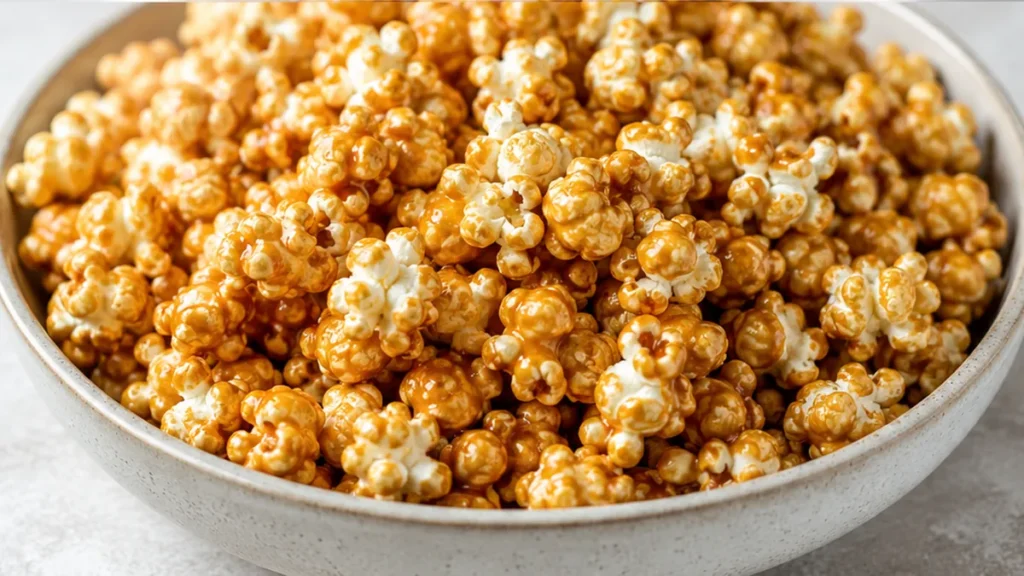
Mastering the art of perfect caramel corn is simpler than you think, transforming humble popcorn kernels into an extraordinary treat. This caramel corn recipe delivers an unbelievably crispy texture and a rich, buttery caramel coating that’s truly addictive. I remember the first time I tried to make caramel corn; I pulled it out too early and it was chewy instead of crunchy. The key is in the baking process, allowing the caramel to set and crisp up beautifully. This recipe guides you through each step to ensure a flawless batch every time, perfect for movie nights, parties, or simply satisfying a sweet craving. It’s designed for home cooks seeking that quintessential sweet and salty crunch.
Key takeaways
- Achieve the soft-ball stage (235-245°F) for the correct caramel consistency.
- Incorporate baking soda at the end to aerate the caramel for a lighter texture.
- Ensure popcorn is freshly popped and completely dry for proper coating.
- Avoid over-stirring the caramel mixture once boiling to prevent crystallization.
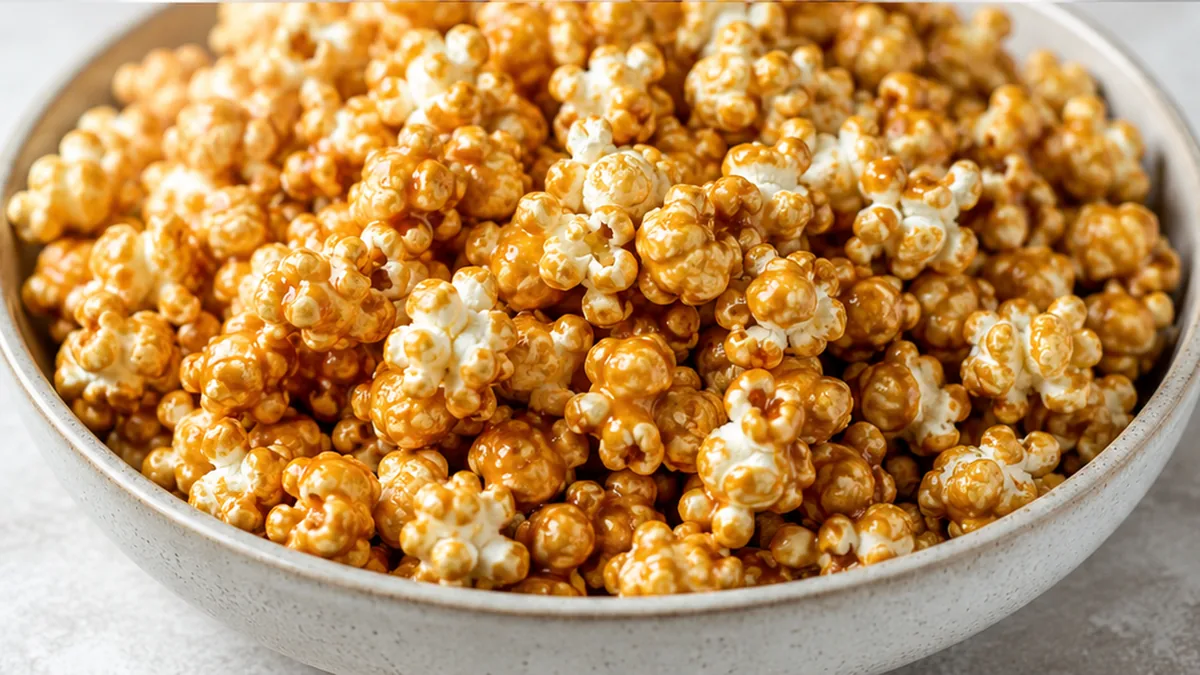
Irresistible Caramel Corn Recipe
Ingredients
Method
- Preheat oven to 250°F. Pop the popcorn kernels in an air-pop popcorn machine until fully popped.
- Divide the popcorn evenly between 2 large baking sheets lined with silicone baking mats or parchment paper, leaving behind unpopped kernels.
- In a medium saucepan, combine the butter, light brown sugar, light corn syrup, and kosher salt. Melt slowly over medium heat, stirring constantly until smooth.
- When mixture comes to a full boil, continue to boil for 5 minutes, stirring constantly.
- Remove from heat and add the baking soda. Mix in baking soda carefully as the mixture will expand.
- Divide the caramel between the 2 large baking sheets and mix well to coat the popped kernels evenly.
- Bake for 1 hour, stirring every 15 minutes until golden brown. Cool completely and enjoy!
Notes
– Stir frequently during boiling: This prevents the caramel from burning and sticking to the bottom of the pan.
– Coat evenly: Ensure all popcorn is coated for consistent flavor and texture. Work quickly but thoroughly.
– Storage: Store completely cooled caramel corn in an airtight container at room temperature for up to 1 week to maintain crispness. Nutrition information is an estimate, calculated automatically. Values vary with brands, substitutions and portion sizes.
The Science Behind Perfect Caramel Corn
Creating truly irresistible caramel corn hinges on careful temperature control and the proper emulsification of the caramel sauce. The process begins with melting butter, brown sugar, and corn syrup. This mixture is then brought to a boil. The critical stage is reaching the soft-ball stage, approximately 235-245°F (113-118°C). At this temperature, the sugar syrup has thickened enough to form a soft ball when dropped into cold water, indicating it has reached the right consistency to coat the popcorn without becoming brittle or runny. Adding baking soda at the end is crucial. It reacts with the acidic brown sugar to create carbon dioxide gas, which aerates the caramel, making it lighter, chewier, and less dense. This also helps prevent the caramel from becoming too hard and crystalline. Ensuring the popcorn is freshly popped and completely dry is vital for optimal coating; any moisture will prevent the caramel from adhering properly and can lead to sogginess.
Troubleshooting
- Caramel is too hard/brittle: The caramel sauce was likely cooked to too high a temperature (hard-ball stage or higher). Next time, aim for 235-245°F (113-118°C) and remove from heat immediately.
- Caramel is too soft/runny: The caramel sauce was not cooked to a high enough temperature. Ensure your thermometer is accurate and cook until the soft-ball stage is reached.
- Caramel corn is soggy: The popcorn may have had too much moisture, or the caramel was not cooked sufficiently to set properly. Ensure popcorn is very dry and cooled slightly before coating.
- Caramel is clumpy or crystallized: This can happen if the sugar mixture is agitated too much during boiling or if sugar crystals form on the sides of the pan and fall in. Avoid stirring vigorously once boiling, and brush down pan sides with a wet pastry brush if needed.
Substitutions
- Brown sugar: You can substitute with an equal amount of granulated sugar, but the caramel will be less moist and potentially harder. The flavor profile will also change, lacking the molasses notes.
- Light corn syrup: Use an equal amount of golden syrup or another liquid invert sugar. Avoid honey, as its distinct flavor can overpower the caramel, and its water content may affect texture.
- Unsalted butter: Salted butter can be used, but reduce the added kosher salt to 1/2 teaspoon to compensate for the salt in the butter. The flavor may be slightly different.
- Kosher salt: Fine sea salt can be used in a slightly smaller quantity (about 3/4 teaspoon) due to its finer grain and potentially more intense saltiness.
Pro tips
- Don’t rush the caramel: Melting the butter, sugar, and corn syrup slowly ensures a smooth, even caramel.
- Stir frequently during boiling: This prevents the caramel from burning and sticking to the bottom of the pan.
- Coat evenly: Ensure all popcorn is coated for consistent flavor and texture. Work quickly but thoroughly.
- Storage: Store completely cooled caramel corn in an airtight container at room temperature for up to 1 week to maintain crispness.
Once you try this homemade caramel corn, you’ll never go back to store-bought. Enjoy the delightful crunch and rich flavor, and feel free to customize it with nuts or chocolate drizzles. Happy snacking!
Frequently asked questions
Why is my caramel corn hard?
Your caramel likely reached too high a temperature during cooking, exceeding the soft-ball stage. Aim for 235-245°F (113-118°C) and remove from heat promptly. Ensuring the baking soda is added correctly also helps prevent excessive hardness.
What happens if I don’t use corn syrup?
Omitting corn syrup can lead to a more crystallized and harder caramel. Corn syrup is an invert sugar that helps prevent sugar crystallization, ensuring a smoother, chewier texture. If substituting, use another liquid invert sugar like golden syrup.
Can I make caramel corn without baking soda?
While possible, omitting baking soda will result in a much denser, harder, and potentially brittle caramel corn. The baking soda reacts with the brown sugar to create carbon dioxide, which aerates the mixture, making it lighter and chewier.
How do I get the caramel to coat the popcorn evenly?
Ensure your popcorn is very dry and slightly cooled. Pour the hot caramel mixture over the popcorn gradually while tossing gently. Spreading the coated popcorn on parchment paper immediately after mixing helps prevent clumping and ensures even coating as it cools.
Try this next: Crispy Golden Pakora: Your New Favorite Snack
More from Gluten-Free Snacks & Sides →