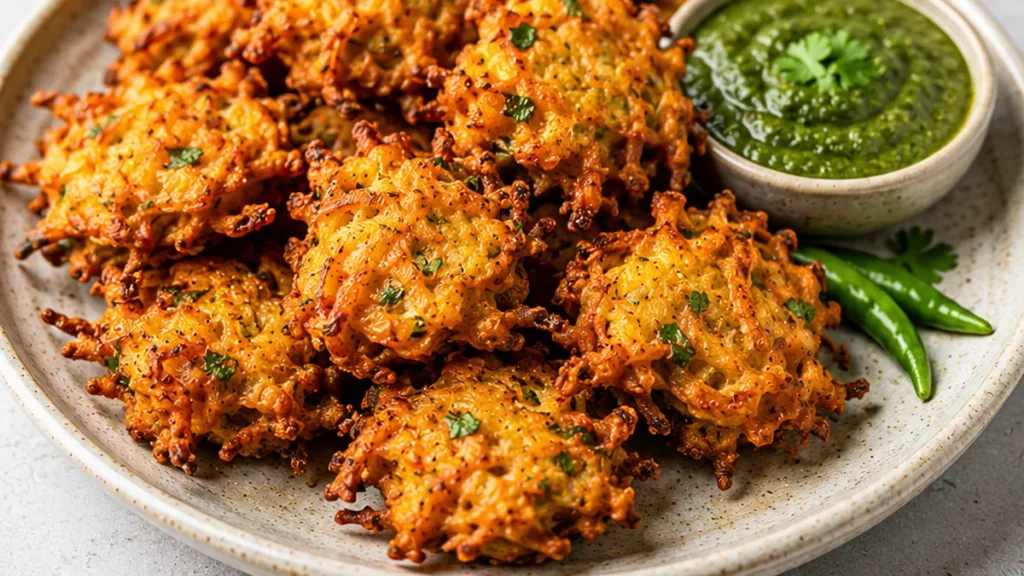
This pakora recipe offers a delightful crunch and aromatic spice blend, making it a perfect snack or appetizer. Combining chickpea flour, rice flour, and grated potato, these fritters are fried to a golden crispness. Ideal for both beginners and experienced cooks, this pakora recipe is sure to become a favorite. Mastering the art of pakora making is simple with this guide. We’ll walk you through creating the perfect batter and achieving that signature crispy texture for your pakora.
Key takeaways
- Crispy pakoras rely on the right batter consistency and oil temperature.
- Squeeze excess water from grated vegetables for maximum crispiness.
- Fry in small batches at 350-375°F (175-190°C) to avoid greasiness.
- Rice flour is key for achieving a truly crisp texture.
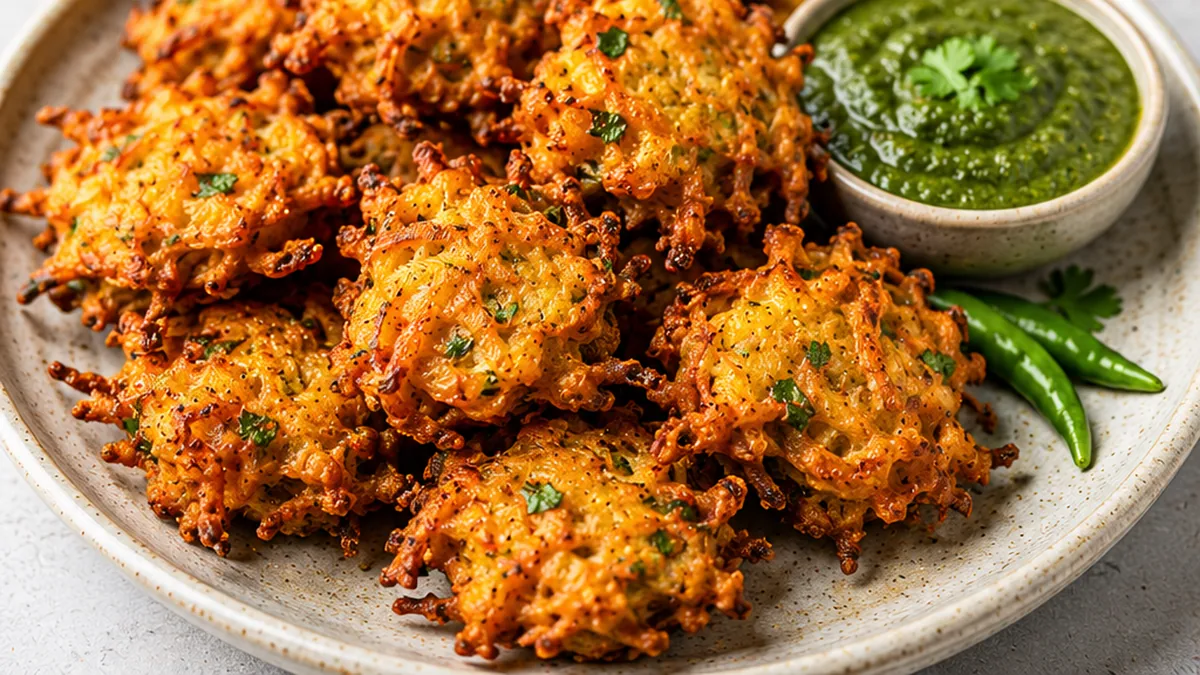
Crispy Golden Pakora: Your New Favorite Snack
Ingredients
Method
- In a bowl, whisk together chickpea flour, rice flour, coriander powder, turmeric powder, chili powder, garam masala powder, salt, and cumin powder.
- Gradually add water, stirring until a thick batter forms (like a soft paste).
- Fold in the grated potato, ensuring it is well-coated with the batter.
- Heat oil in a deep pan over medium heat until hot (about 350°F). Drop spoonfuls of batter into the hot oil, frying in batches to avoid overcrowding.
- Fry for 3–4 minutes per side until golden brown and crispy.
- Remove and drain on paper towels. Serve warm and enjoy!
Notes
– Squeeze excess water from grated potato for a crispier texture.
– Fry in batches to prevent overcrowding and ensure even cooking. Nutrition information is an estimate, calculated automatically. Values vary with brands, substitutions and portion sizes. Allergens: Wheat.
The technique that makes it
The key to achieving perfectly crispy pakoras lies in the batter consistency and the frying temperature. The combination of chickpea flour (besan) and rice flour is crucial. Chickpea flour provides the structure and a slightly nutty flavor, while rice flour contributes significantly to the crispiness. Ensure the batter is thick enough to coat the vegetables but not so dense that it becomes heavy or doughy. It should be like a thick pancake batter. If it’s too thin, the pakoras will absorb too much oil and become greasy. If it’s too thick, the interior might not cook through properly, and the exterior could burn before becoming golden. The grated potato needs to have excess water squeezed out thoroughly. This is vital because water in the potato will steam the pakora from the inside, preventing it from becoming truly crisp and potentially making the batter soggy. When frying, maintaining a consistent oil temperature of around 350-375°F (175-190°C) is paramount. Too low a temperature will lead to oily, heavy pakoras, while too high a temperature will cause them to brown too quickly on the outside, leaving the inside undercooked. Fry in small batches to avoid overcrowding the pan, which can drastically lower the oil temperature and result in uneven cooking and a loss of crispiness.
Troubleshooting
- Problem: Pakoras are greasy and not crispy.
Fix: Ensure your oil temperature is consistently between 350-375°F (175-190°C). Overcrowding the pan lowers the oil temperature. Also, check that you squeezed all excess water from the grated potato and that your batter is not too thin. - Problem: Pakoras are burnt on the outside and raw inside.
Fix: Your oil temperature is too high. Reduce the heat slightly and fry in smaller batches. Ensure the potato is grated finely enough to cook through. - Problem: Pakoras are falling apart during frying.
Fix: The batter might be too thin, or you may not have used enough chickpea flour to bind the ingredients. Try adding a tablespoon more chickpea flour to the batter. Ensure the vegetables are well-coated before frying. - Problem: Pakoras are too hard or dense.
Fix: The batter might be too thick, or you may have overmixed it. Mix the batter just until combined. Alternatively, the oil temperature might have been too low, causing them to absorb excess oil and become dense.
Substitutions
- Vegetables: While potato is classic, you can substitute or add other vegetables. Finely chopped onions, spinach, cauliflower florets, or bell peppers work well. Adjust frying time based on the vegetable’s density. Onions will soften faster than potatoes.
- Flour: If chickpea flour is unavailable, a mix of all-purpose flour and a small amount of cornstarch might be used, but the texture and flavor will differ. The crispiness from rice flour is hard to replicate perfectly with other starches.
- Spices: The spice blend can be customized. Add a pinch of asafoetida (hing) for an authentic Indian flavor, or increase the chili powder for more heat. A touch of ginger-garlic paste can also be added to the batter for extra flavor.
- Binding: For a slightly different texture, a small amount of finely chopped fresh cilantro or mint can be added to the batter for freshness and visual appeal.
Pro tips
- Ensure oil is at the correct temperature (350°F / 175°C) for crispy pakoras.
- Squeeze excess water from grated potato for a crispier texture.
- Fry in batches to prevent overcrowding and ensure even cooking.
Enjoy these homemade pakoras as a delightful snack or appetizer. Customize with your favorite vegetables for a unique twist!
Try this next: Crispy Homemade Potato Chips: The Ultimate Snack Hack!
More from Gluten-Free Snacks & Sides →
Frequently asked questions
Can I make pakora ahead of time?
Pakora are best enjoyed fresh, but you can prepare the batter and chop the vegetables a few hours in advance. Store them separately in the refrigerator. Fry just before serving for maximum crispiness. Reheating leftovers in an oven or air fryer can help restore some crispness, but they won’t be as good as freshly made.
What can I substitute for gram flour in pakora?
While gram flour (besan) is traditional and provides the best texture, you can substitute a gluten-free all-purpose flour blend. Rice flour or chickpea flour can also be used, but they may alter the flavor and crispness slightly. Ensure your chosen substitute is finely ground for the best results.
How do I know when pakora are done?
Pakora are done when they are golden brown and crispy. They should float to the surface of the oil and maintain a steady sizzle. Carefully remove one piece and break it open to ensure the inside is cooked through and no longer has a raw batter taste. Adjust oil temperature if they brown too quickly.
What to serve with pakora?
Crispy pakora are delicious served with a variety of dips and chutneys. Mint or cilantro chutney, tamarind chutney, or a cooling yogurt-based dip are popular choices. They also pair well with a simple side salad or can be served as a appetizer before an Indian meal. Enjoy them hot!