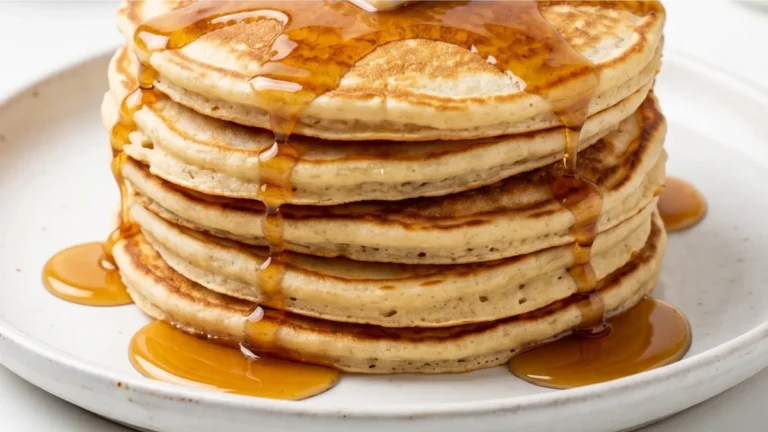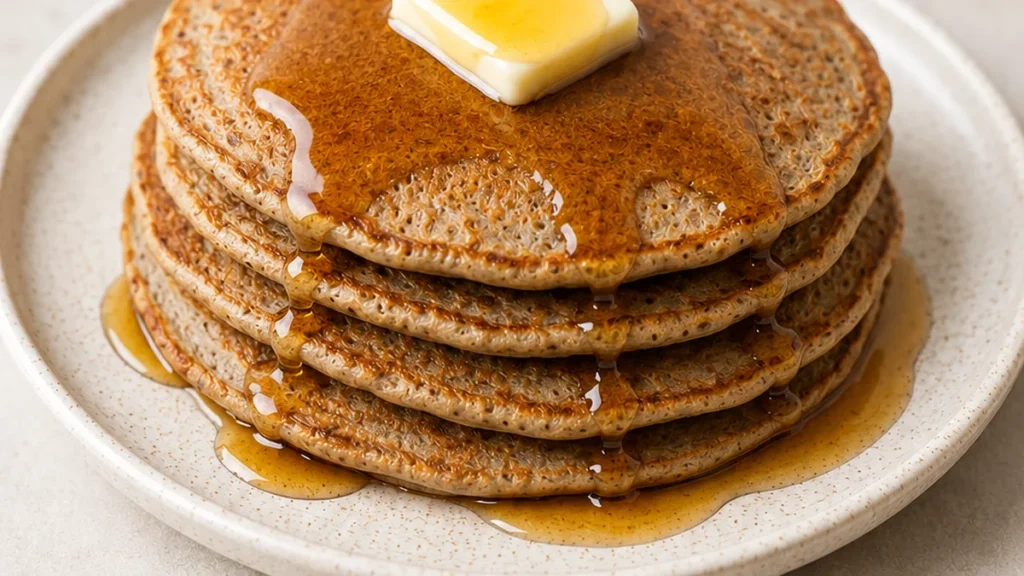
This recipe for buckwheat pancakes offers a simple way to make a gluten-free breakfast. These pancakes are flavorful and cook up quickly, making them ideal for any morning.
Key takeaways
- The combination of baking powder and baking soda activated by buttermilk is crucial for light buckwheat pancakes.
- Avoid overmixing the batter; a few lumps are acceptable and even beneficial.
- Proper griddle temperature and greasing are essential to prevent sticking and ensure even cooking.
- Buttermilk can be easily substituted with milk and an acid like lemon juice or vinegar.
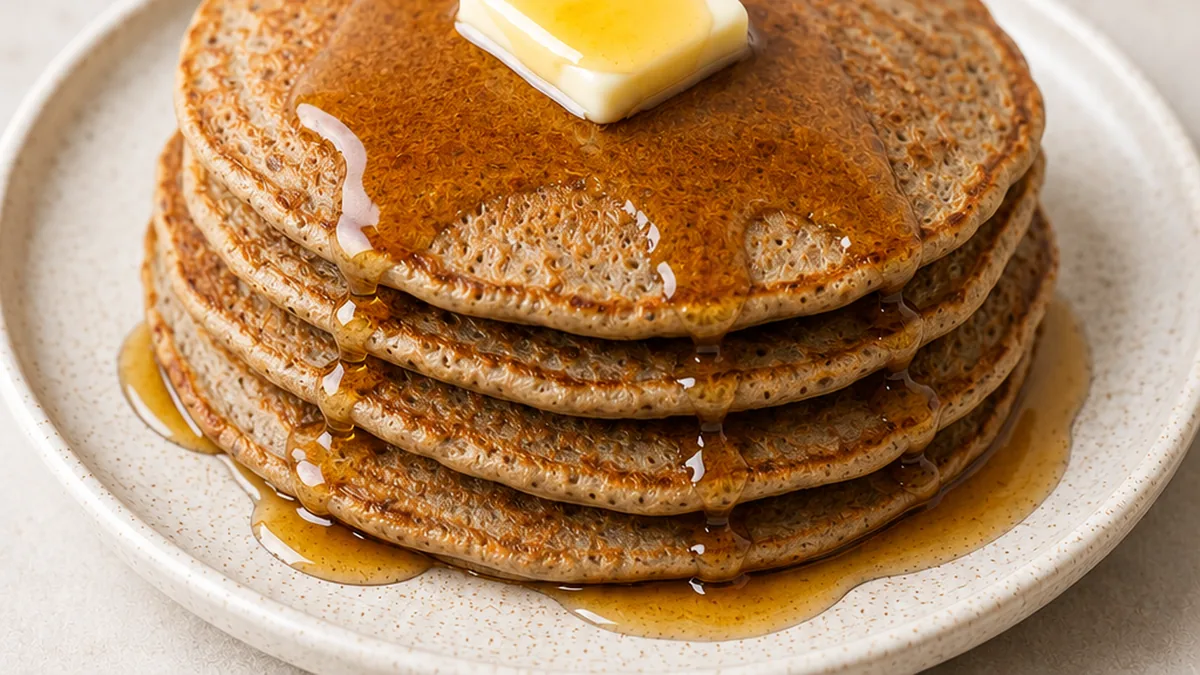
Dreamy Buckwheat Pancakes: Easy & Delicious!
Ingredients
Method
- Whisk together 1 cup buckwheat flour, 1 teaspoon baking powder, 1/2 teaspoon baking soda, and 1/4 teaspoon salt in a bowl.
- Whisk the egg, buttermilk, melted butter, sugar, and vanilla extract in a separate bowl.
- Pour the wet ingredients into the dry ingredients and stir until smooth. Let the batter rest for 5 minutes.
- Preheat a non-stick skillet over medium heat and lightly grease with butter or oil.
- Pour 1/4 cup of batter onto the pan for each pancake. Cook for 2–3 minutes until bubbles form, then flip and cook for another 1–2 minutes until golden brown.
- Serve warm with maple syrup, butter, fruits, or yogurt.
Notes
– Don’t overmix the batter; a few lumps are okay.
– Let the batter rest for 5 minutes to allow the flour to hydrate. Allergens: Eggs, Milk. Nutrition information is an estimate, calculated automatically. Values vary with brands, substitutions and portion sizes.
The technique that makes it
The key to achieving light and fluffy buckwheat pancakes lies in the leavening agents and the batter’s resting time. Buckwheat flour, while delicious, can sometimes result in dense pancakes due to its protein structure. To combat this, we use a combination of baking powder and baking soda. Baking powder is a double-acting leavener, providing an initial lift when it gets wet and a secondary lift when heated. Baking soda, on the other hand, requires an acidic ingredient to activate. In this recipe, the buttermilk provides that necessary acidity, reacting with the baking soda to produce carbon dioxide gas, which creates air pockets and contributes to a lighter texture. The melted butter adds richness and tenderness, while the sugar aids in browning and adds a subtle sweetness. It’s crucial to not overmix the batter once the wet and dry ingredients are combined. Overmixing develops the gluten in any residual wheat flour (if using a blend) or overworks the buckwheat proteins, leading to tough pancakes. A few lumps are perfectly acceptable and even desirable. Allowing the batter to rest for 5-10 minutes before cooking lets the flour hydrate fully and the leavening agents begin their work, further enhancing the texture and flavor.
Troubleshooting
- Problem: Pancakes are dense and heavy.
Fix: Ensure your baking powder and baking soda are fresh. Check the expiration dates. Also, avoid overmixing the batter; a few lumps are fine. Allow the batter to rest for at least 5 minutes before cooking. - Problem: Pancakes are sticking to the griddle.
Fix: Make sure your griddle or pan is adequately preheated and properly greased with butter or oil. Medium heat is ideal; too high and the outside burns before the inside cooks, too low and they won’t brown properly. - Problem: Pancakes are gummy or doughy in the center.
Fix: This usually indicates the heat was too high, causing the outside to cook too quickly. Reduce the heat to medium and ensure each side cooks for 2-3 minutes until golden brown. Don’t overcrowd the pan, as this can lower the temperature. - Problem: Buckwheat flavor is too strong.
Fix: While this recipe is balanced, if you’re new to buckwheat, consider starting with a blend of buckwheat and all-purpose flour (e.g., 50/50). You can also increase the sugar slightly or add a pinch more vanilla extract to mellow the flavor.
Substitutions
- Buttermilk: If you don’t have buttermilk, you can make a substitute by adding 1 tablespoon of lemon juice or white vinegar to 1 1/4 cups of regular milk. Let it sit for 5-10 minutes until it appears slightly curdled. This will provide the necessary acidity for the baking soda. The result will be very similar in texture and rise.
- Buckwheat Flour: For a milder flavor or different texture, you can substitute half of the buckwheat flour with all-purpose flour or whole wheat flour. This will create a less intensely earthy pancake, and the gluten in the wheat flour will contribute to a slightly chewier texture.
- Melted Butter: Unsalted butter can be replaced with a neutral-flavored oil like vegetable oil or melted coconut oil. This will still provide moisture and tenderness but may slightly alter the richness and flavor profile.
- Sugar: For a less sweet pancake, you can reduce the sugar to 1/2 tablespoon or omit it entirely. Alternatively, you can use a liquid sweetener like maple syrup or honey, though this might slightly affect the batter’s consistency and browning.
Pro tips
- Use fresh baking powder and soda for the best rise.
- Don’t overmix the batter; a few lumps are okay.
- Let the batter rest for 5 minutes to allow the flour to hydrate.
Enjoy these delightful buckwheat pancakes as a wholesome and delicious breakfast or brunch option. Experiment with your favorite toppings!
Try this next: Golden Buckwheat Crepes: Gluten-Free Perfection!
More from Gluten-Free Breakfast & Brunch →
Frequently asked questions
Can I substitute regular flour for buckwheat flour?
While buckwheat flour provides a unique nutty flavor and texture, you can substitute a gluten-free all-purpose flour blend. However, the final pancake will have a different taste and consistency. For best results, stick to buckwheat flour as specified in the recipe for that signature ‘dreamy’ quality.
How do I make sure my buckwheat pancakes are cooked through?
Cook each pancake for about 2-3 minutes per side. You’ll know it’s time to flip when small bubbles start to form on the surface and the edges look set. A gentle lift with a spatula should reveal a golden-brown underside. Avoid over-flipping, which can make them tough.
Can I make the buckwheat pancake batter ahead of time?
Yes, you can prepare the buckwheat pancake batter up to 24 hours in advance. Store it covered in the refrigerator. Whisk it well before cooking, as it may thicken. You might need to add a splash of milk or water to reach the desired consistency if it becomes too stiff.
How should I store leftover buckwheat pancakes?
Allow leftover pancakes to cool completely before storing. Place them in an airtight container or wrap them tightly in plastic wrap and then aluminum foil. They will keep well in the refrigerator for up to 3 days. Reheat them in a toaster, oven, or microwave until warm.