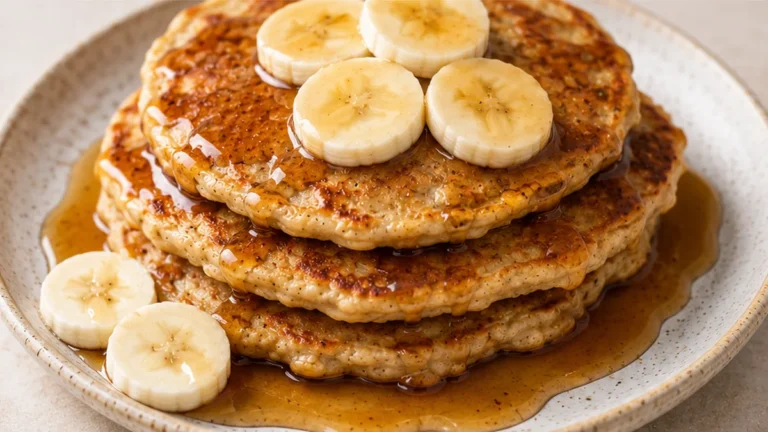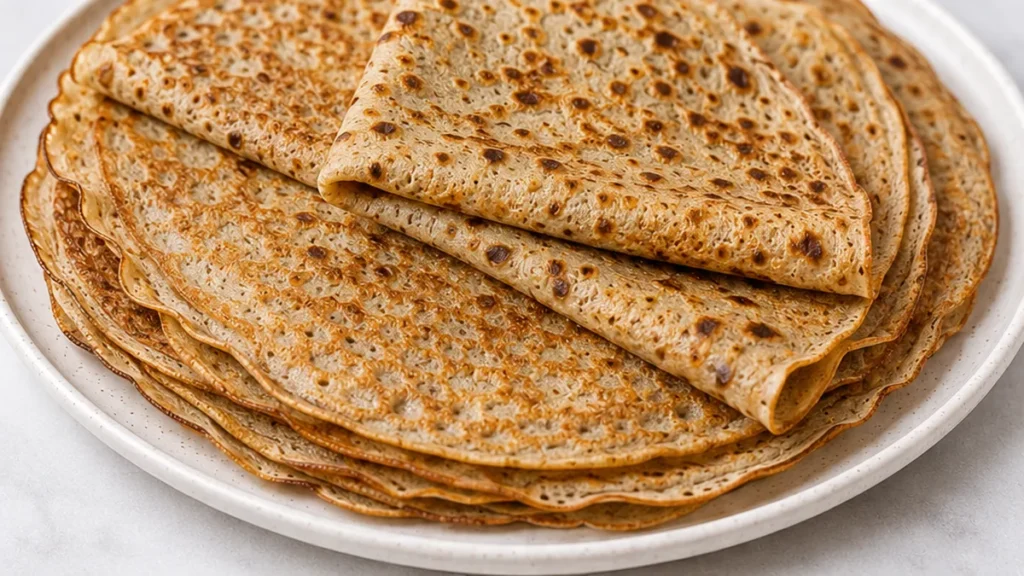
This ultimate buckwheat crepes recipe offers a delightful gluten-free alternative to traditional crepes. Made with simple ingredients and a quick blending process, these golden crepes are perfect for a healthy breakfast or a light dessert. Whether you follow the classic frying pan method or use a crepe maker for ultra-thin results, this buckwheat crepes recipe is designed for ease and deliciousness, ensuring a satisfying meal every time.
Key takeaways
- Allowing the buckwheat crepe batter to rest is crucial for optimal texture.
- Use medium-high heat and swirl the batter quickly for thin, even crepes.
- Properly grease the pan between each crepe to prevent sticking.
- Adjust batter consistency with milk if it's too thick or thin.
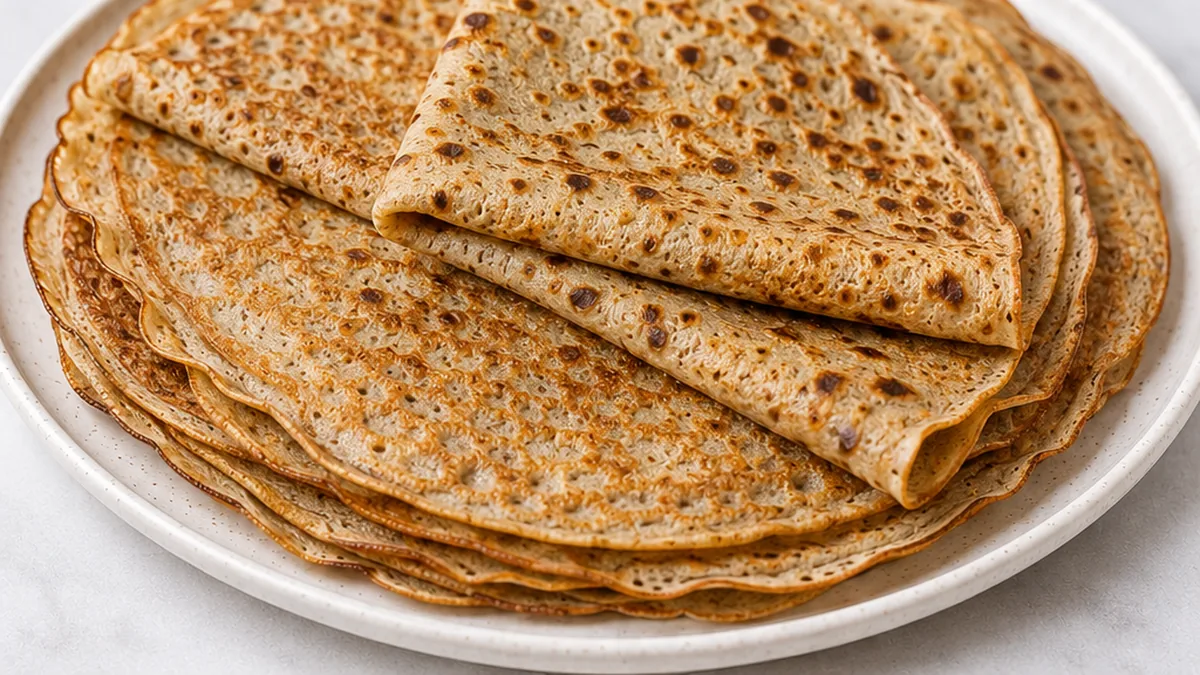
Golden Buckwheat Crepes: Gluten-Free Perfection!
Ingredients
Method
- Combine milk, buckwheat flour, eggs, and salt in a high-powered blender. Blend on high speed until smooth, about 30 seconds.
- Heat a 10” frying pan over medium-high heat or preheat your crepe maker.
- Frying Pan Method: Just before adding batter, spray the hot frying pan with non-stick cooking spray. Repeat between each crepe to prevent sticking.
- Lift the pan off the heat, tilt it, and pour in about 1/3 cup of batter. Rotate the pan quickly to spread the batter into a thin, even circle about 8” in diameter.
- Place the pan back on the heat and cook for 1-2 minutes until the edges are set and slightly lifted.
- Gently flip the crepe with a silicone spatula and cook the other side for 1-2 minutes until set. Repeat with remaining batter.
- Crepe Maker Method: If using a crepe maker, follow its specific instructions. This method creates thinner crepes.
- Place cooked crepes on a plate. Serve immediately or stack with parchment paper between them for later.
Notes
– Ensure your pan or crepe maker is thoroughly preheated for best results.
– Use a thin, even layer of batter for delicate crepes.
– Stack crepes with parchment paper to prevent sticking if not serving immediately. Allergens: Eggs, Milk. Nutrition information is an estimate, calculated automatically. Values vary with brands, substitutions and portion sizes.
The technique that makes it
The key to perfect buckwheat crepes lies in achieving the right batter consistency and managing the cooking temperature. Buckwheat flour, being gluten-free, behaves differently from wheat flour. It doesn’t develop gluten, which means the batter won’t thicken and become elastic in the same way. Therefore, the batter needs to be sufficiently thin to spread easily into a delicate crepe. The 2 cups of milk to 1 ¼ cups of buckwheat flour ratio is crucial for this. After mixing, allowing the batter to rest for at least 30 minutes (or up to 2 hours in the refrigerator) is highly recommended. This resting period allows the buckwheat flour to fully hydrate, which results in a smoother batter and prevents a gritty texture. It also helps to relax any residual starches, contributing to a more tender crepe. When cooking, a medium-high heat is ideal. Too low, and the crepe will be pale and potentially gummy. Too high, and it will brown too quickly before cooking through, becoming brittle. The melted butter in the batter not only adds a subtle richness but also aids in browning and prevents sticking, working in conjunction with the non-stick cooking spray. Swirling the pan immediately after pouring the batter ensures an even, thin layer, which is essential for the characteristic delicate texture of a crepe.
Troubleshooting
- Problem: Crepes are tearing when flipping.
Fix: Ensure the batter is thin enough; if too thick, add a tablespoon or two of milk. Also, make sure the pan is sufficiently hot and greased. Let the first side cook until the edges appear dry and slightly golden before attempting to flip. A thin, flexible spatula is helpful. - Problem: Crepes are sticking to the pan.
Fix: The pan may not be hot enough, or it needs more non-stick spray or butter. Ensure the pan is properly preheated and consistently greased between crepes. The melted butter in the batter also helps, but additional greasing is often necessary. - Problem: Crepes are too thick and gummy.
Fix: The batter might be too thick, or the cooking temperature is too low. Add a little more milk to thin the batter to a pourable consistency. Increase the heat slightly to medium-high and ensure you’re swirling the batter quickly to create a thin layer. - Problem: Crepes are brittle and breaking apart.
Fix: This can happen if the batter is too dry or if the crepes are overcooked. Ensure the flour-to-liquid ratio is correct and consider adding a touch more milk if the batter seems too stiff. Cook until just golden, not until excessively browned.
Substitutions
- Milk: For a dairy-free version, unsweetened almond milk, oat milk, or soy milk can be used. The result will be similar in texture, though the flavor profile might be subtly altered depending on the milk chosen.
- Butter: Melted coconut oil or a neutral vegetable oil can replace the melted butter for richness and browning. This will maintain the crepe’s structure and color, though the distinct butter flavor will be absent.
- Eggs: While eggs provide binding and richness, for an egg-free version, you could experiment with a flax egg (1 tablespoon ground flaxseed mixed with 3 tablespoons water, rested for 5 minutes) per egg. The texture might be slightly denser, and the browning may be less pronounced.
- Buckwheat Flour: If buckwheat flour is unavailable, a gluten-free all-purpose blend that contains a good amount of starch (like rice flour or tapioca starch) can be used, but the flavor and texture will differ significantly from traditional buckwheat crepes.
Pro tips
- For dairy-free crepes, opt for unsweetened almond, oat, or soy milk.
- Ensure your pan or crepe maker is thoroughly preheated for best results.
- Use a thin, even layer of batter for delicate crepes.
- Stack crepes with parchment paper to prevent sticking if not serving immediately.
Enjoy these versatile buckwheat crepes with your favorite sweet or savory fillings. Experiment with different toppings for endless delicious possibilities!
Try this next: Almond Flour Crepes: Gluten-Free Perfection!
More from Gluten-Free Breakfast & Brunch →
Frequently asked questions
Can I make buckwheat crepes ahead of time?
Yes, buckwheat crepes can be made a day in advance. Allow them to cool completely, then stack them with parchment paper in between to prevent sticking. Store them in an airtight container in the refrigerator. Reheat gently in a non-stick skillet or microwave before serving.
What can I substitute for buckwheat flour?
For a gluten-free alternative, you can try a blend of brown rice flour and almond flour, or a commercial gluten-free all-purpose flour mix. Ensure the substitute flour has a similar fine texture to buckwheat flour for best crepe results. Adjust liquid slightly if needed.
How do I know when the crepes are done?
Crepes are done when the edges start to lift and turn golden brown. The surface will appear set, with few wet spots. Flip carefully with a spatula and cook the other side for about 30-60 seconds, or until lightly golden. Avoid overcooking to maintain tenderness.
What are good fillings for buckwheat crepes?
Buckwheat crepes are versatile. For sweet options, consider fresh berries with whipped cream, sautéed apples with cinnamon, or a drizzle of maple syrup and a sprinkle of nuts. Savory fillings include sautéed mushrooms and spinach, ham and cheese, or smoked salmon with cream cheese.