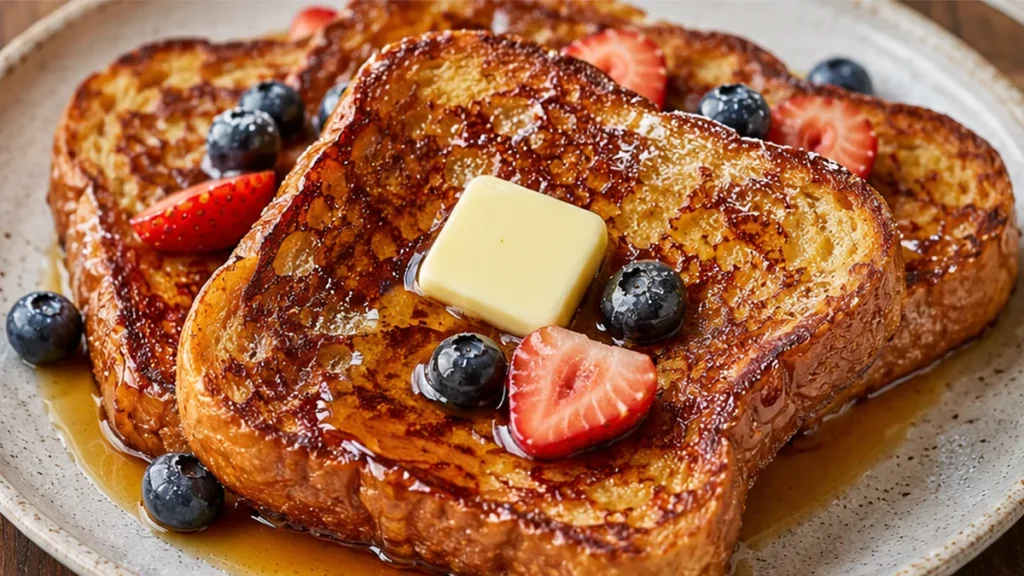
This gluten-free french toast recipe is straightforward to make. Using basic ingredients, you can achieve a golden, custardy breakfast. It’s a satisfying way to begin your day.
Key takeaways
- The success of gluten-free french toast hinges on managing the bread's absorbency.
- A balanced custard and precise soaking time are key.
- Avoid over-soaking to prevent sogginess and ensure structural integrity.
- Adjust cooking heat for even browning.
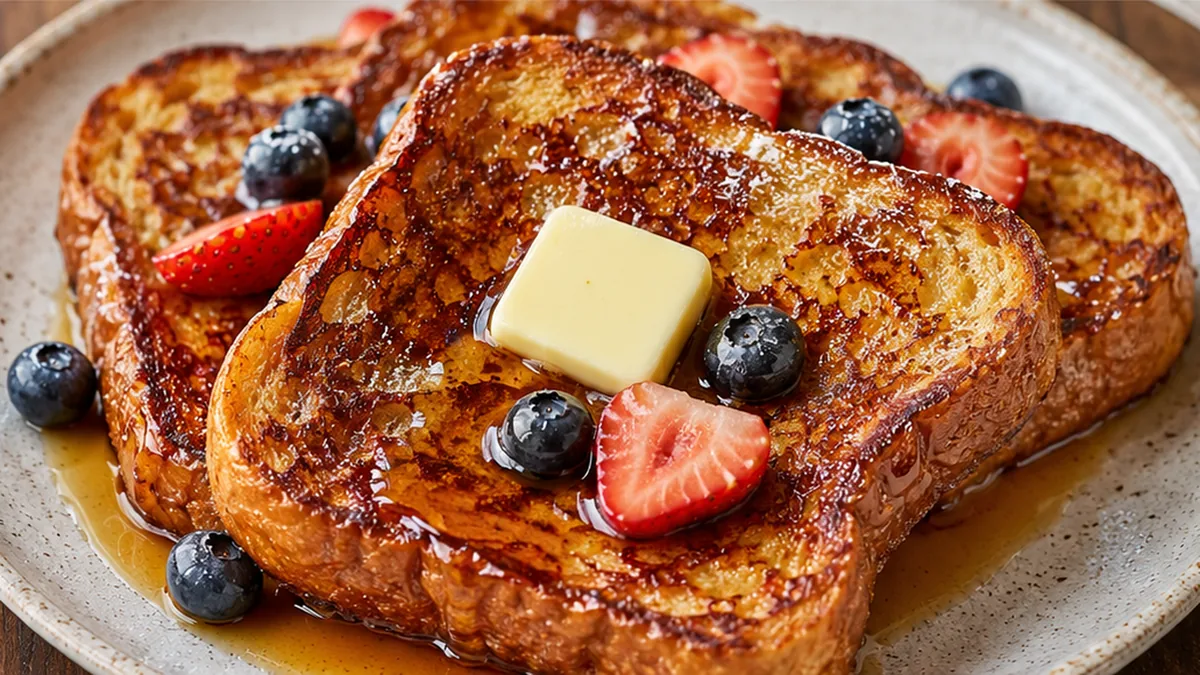
Gluten-Free French Toast: Pure Bliss!
Ingredients
Method
- Whisk together the eggs, sugar, cinnamon, nutmeg, salt, pure vanilla, and milk in a shallow dish such as a pie plate or casserole dish.
- Melt the butter over medium heat in a skillet.
- Dip the gluten-free bread in the egg mixture, flipping to make sure both sides get well coated. The longer you leave the bread in the egg mixture the more it will soak up the egg mixture and will take a little longer to cook.
- Cook the soaked bread piece on medium heat for 2-3 minutes per side until golden brown. Serve immediately. To keep the French Toast warm while cooking the additional slices, place the cooked slices on a baking sheet and in the oven at 275°F.
Notes
– Don’t overcrowd the pan; cook slices in batches to ensure even browning.
– For a richer flavor, use whole milk or half-and-half. Allergens: Eggs, Milk, Wheat. Nutrition information is an estimate, calculated automatically. Values vary with brands, substitutions and portion sizes.
The technique that makes it
The key to exceptional gluten-free french toast lies in the custard’s ability to properly hydrate the bread without it becoming mushy. Gluten-free breads, lacking the gluten network that provides structure in traditional bread, can absorb liquid very quickly and turn to paste if not handled correctly. The ratio of eggs to milk is crucial here. The eggs provide the richness and binding, while the milk thins the mixture to allow even penetration. Whisking the eggs, sugar, spices, salt, and vanilla extract thoroughly ensures the flavors are evenly distributed and the sugar dissolves, preventing a gritty texture. The spices, cinnamon and nutmeg, bloom when exposed to the wet ingredients, releasing their aromatic oils and infusing the bread with warm flavor. A brief soak – just long enough to see the bread absorb the custard but not become saturated – is essential. Over-soaking will lead to a soggy center and a french toast that falls apart during cooking. The salt enhances all the other flavors, and the vanilla extract adds a layer of aromatic sweetness that complements the spices.
Troubleshooting
- Failure: Soggy, mushy center. Fix: Reduce soaking time. Allow the bread to absorb the custard for only 10-15 seconds per side. Ensure your cooking surface is adequately hot before placing the soaked bread.
- Failure: French toast falling apart. Fix: Use slightly stale gluten-free bread, which has a firmer structure. Avoid over-soaking. Handle the soaked bread gently when transferring it to the pan.
- Failure: Bland flavor. Fix: Ensure you’ve used the full amount of spices (cinnamon and nutmeg) and vanilla extract. Taste a tiny bit of the custard before soaking to check seasoning; add a pinch more salt if needed.
- Failure: Uneven browning or burning. Fix: Maintain a medium heat for cooking. Too high heat will burn the exterior before the inside cooks. Ensure the butter or cooking spray is evenly distributed in the pan.
Substitutions
- Bread: While this recipe calls for gluten-free bread, you can use regular challah or brioche for a non-gluten-free version. The soaking time might need slight adjustment as they absorb liquid differently.
- Milk: For a richer custard, you can substitute half-and-half or heavy cream for the milk. For a dairy-free option, unsweetened almond milk or full-fat coconut milk (from a carton, not canned) works well, though coconut milk may impart a subtle flavor.
- Butter: Ghee is an excellent substitute for butter as it has a higher smoke point and adds a nutty flavor. For a dairy-free option, coconut oil or a neutral vegetable oil like canola can be used, though they will alter the flavor profile slightly.
- Sweetener: Maple syrup or agave nectar can be used instead of granulated sugar in the custard. Use an equal amount, and note that liquid sweeteners may slightly alter the custard’s consistency.
Pro tips
- Use day-old gluten-free bread for best results, as it holds its shape better.
- Don’t overcrowd the pan; cook slices in batches to ensure even browning.
- For a richer flavor, use whole milk or half-and-half.
Enjoy this delightful gluten-free French toast recipe as a weekend treat or a simple weekday indulgence. Experiment with toppings like fresh berries or maple syrup!
Try this next: Fluffy Coconut Flour Pancakes
More from Gluten-Free Breakfast & Brunch →
Frequently asked questions
What kind of bread is best for gluten-free French toast?
A sturdy, slightly stale gluten-free bread works best. Look for loaves that are dense and hold their shape well, like a gluten-free challah or brioche, or even a good quality gluten-free sandwich bread. Avoid very soft or crumbly breads, as they will fall apart when dipped in the custard.
Can I make gluten-free French toast ahead of time?
Yes, you can prepare the custard mixture and soak the bread slices ahead of time. Store the soaked bread in the refrigerator for up to 24 hours. When ready to cook, proceed with pan-frying as usual. This allows the flavors to meld and results in a more custardy interior.
How do I know when gluten-free French toast is done?
Cook the French toast for 3-5 minutes per side, or until golden brown and cooked through. The center should be firm and no longer wet. A good indicator is when the edges are crisp and the center is set, not liquid. Adjust heat as needed to prevent burning.
What are some good toppings for gluten-free French toast?
Classic toppings like maple syrup, fresh berries, or powdered sugar are always a hit. For a richer experience, try a dollop of whipped cream, a sprinkle of cinnamon, or a drizzle of fruit compote. A few toasted nuts can add a delightful crunch and extra flavor.