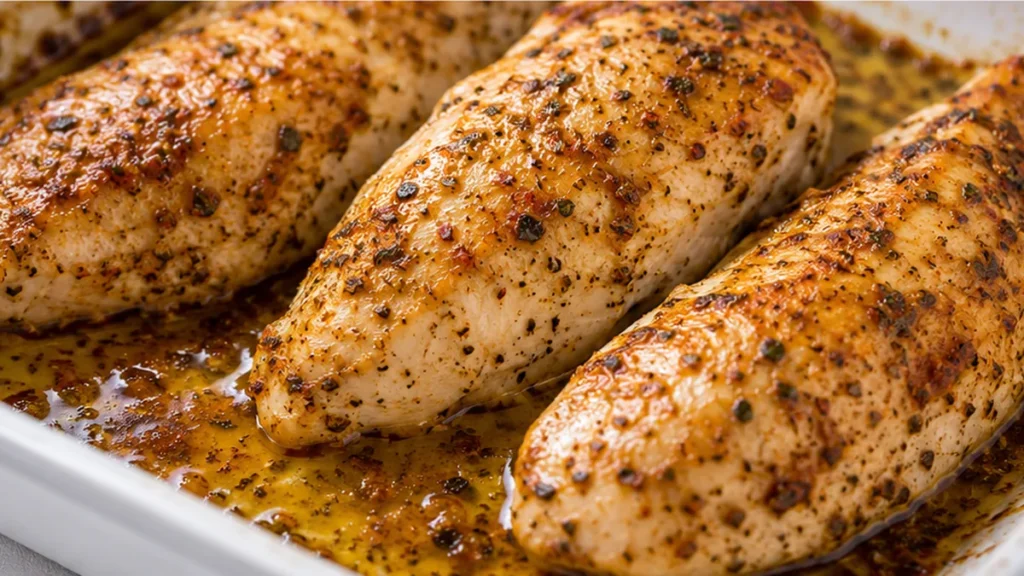
Learning to cook a consistently juicy baked chicken breast is a game-changer for any home cook. This recipe simplifies the process, transforming often-dry chicken into a tender, flavorful main course with minimal effort. The secret lies in a simple yet effective marinade that infuses moisture and taste, ensuring every bite of your baked chicken breast is a delight. This method is perfect for busy weeknights or for meal prepping healthy proteins for the week ahead. It’s a foundational skill that will elevate your cooking and make healthy eating accessible.
Key takeaways
- Pounding chicken to an even thickness ensures uniform cooking.
- The oil in the dressing helps retain moisture and conduct heat.
- Salt enhances flavor and helps the chicken retain its natural juices.
- Do not overcook; use a meat thermometer to reach 165°F (74°C).
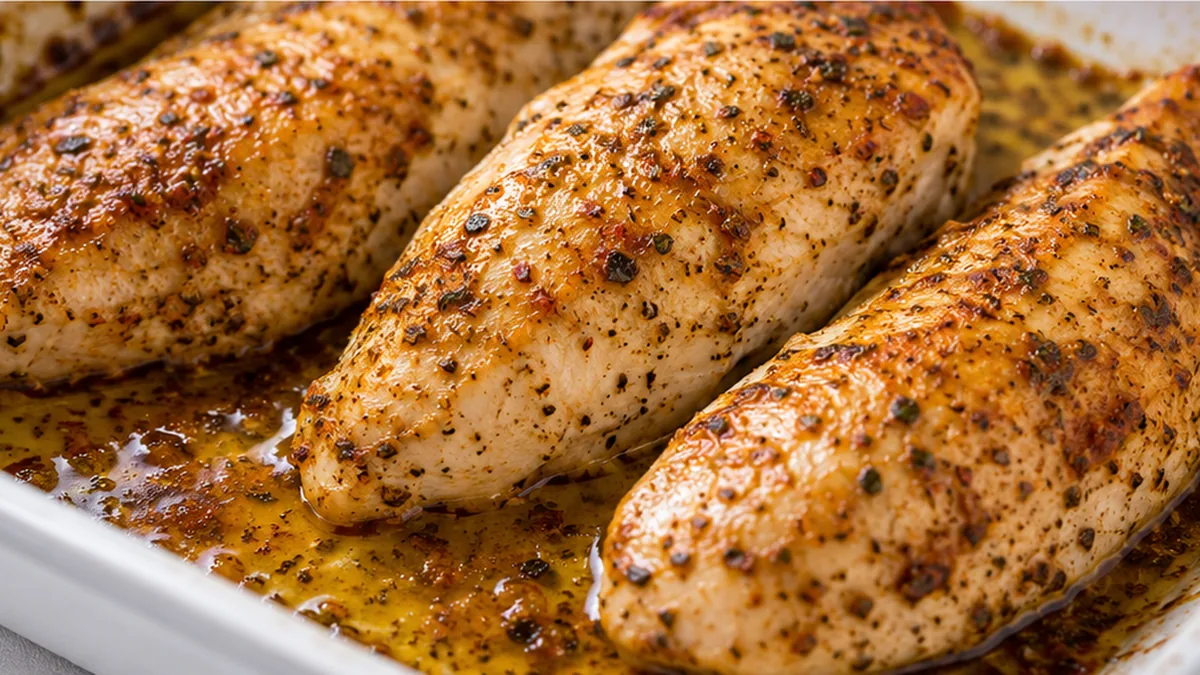
Juicy Baked Chicken Breast in 30 Mins
Ingredients
Method
- Preheat the oven to 400 degrees F (200 C) and spray a 9×13″ baking pan with nonstick spray.
- Place the chicken breasts into the baking pan, then drizzle with Italian dressing and sprinkle with salt, pepper, garlic powder, onion powder, and paprika to taste. Use tongs to flip the chicken breasts to coat evenly.
- Arrange the chicken in an even layer and bake for 20-25 minutes, or until the thickest part of the largest chicken breast reaches an internal temperature of 165 degrees F (74 C) as read by a digital instant-read thermometer.
- Let the chicken rest for 5-10 minutes before serving or slicing to retain juiciness.
Notes
– Storage: Leftover baked chicken breast can be stored in an airtight container in the refrigerator for up to 3-4 days. It also freezes well for up to 2-3 months.
– Reheating: Gently reheat sliced chicken in a skillet with a splash of broth over medium-low heat, or in the microwave on a lower power setting to prevent drying out. Nutrition information is an estimate, calculated automatically. Values vary with brands, substitutions and portion sizes.
The Science Behind Juicy Baked Chicken Breast
The key to achieving juicy baked chicken breast, especially in a relatively short 30-minute timeframe, lies in a combination of even heat distribution and moisture retention. Pounding the chicken breasts to an even thickness is crucial. This ensures that all parts of the chicken cook at the same rate, preventing the thinner ends from drying out while the thicker center is still undercooked. The Italian dressing acts as both a marinade and a source of fat and moisture. The oil in the dressing helps to conduct heat and keeps the chicken from drying out, while the vinegar and seasonings tenderize the meat and add flavor. Baking at a moderate temperature (around 400°F/200°C, which is typical for this type of recipe) allows the chicken to cook through without scorching the exterior. The salt in the seasoning blend not only enhances flavor but also plays a role in osmosis, helping the chicken retain its natural moisture during the cooking process. The other spices contribute to the Maillard reaction, developing those desirable browned flavors and aromas on the surface of the chicken.
Troubleshooting
- Problem: Chicken is dry and tough. Fix: Ensure chicken was pounded to an even thickness. Overcooking is the most common culprit; use a meat thermometer to check for an internal temperature of 165°F (74°C) in the thickest part and remove immediately.
- Problem: Chicken is bland. Fix: Ensure adequate salt was used. Allow the chicken to marinate in the dressing for at least 15-20 minutes before baking to allow flavors to penetrate.
- Problem: Exterior is browned but interior is undercooked. Fix: The oven temperature might be too high. Reduce the oven temperature slightly and ensure the chicken is pounded to an even thickness so it cooks uniformly.
- Problem: Dressing has separated or looks oily. Fix: This is normal for some dressings. Whisk the dressing well before marinating. The oil is beneficial for keeping the chicken moist during baking.
Substitutions
- Salad Dressing: Substitute with a marinade made from olive oil, lemon juice, and your favorite herbs and spices. The result will be a lighter flavor profile but still moist chicken.
- Chicken Breasts: Boneless, skinless chicken thighs can be used. They will require a slightly longer baking time but are more forgiving and tend to stay juicier.
- Spices: Use a pre-made chicken seasoning blend instead of individual spices. The flavor will be similar, depending on the blend’s composition.
- Pounding Method: If you don’t have a meat mallet, use the bottom of a heavy pan or a rolling pin. The goal is even thickness, not a specific tool.
Pro tips
- For the juiciest chicken, ensure the thickest part reaches exactly 165°F (74°C) internal temperature, then let it rest. I’ve found that resting for 5-10 minutes allows the juices to redistribute, preventing dry chicken.
- Storage: Leftover baked chicken breast can be stored in an airtight container in the refrigerator for up to 3-4 days. It also freezes well for up to 2-3 months.
- Reheating: Gently reheat sliced chicken in a skillet with a splash of broth over medium-low heat, or in the microwave on a lower power setting to prevent drying out.
Mastering this baked chicken breast recipe means you’ll always have a reliable, delicious meal solution. Experiment with different dressing flavors to keep things exciting. Enjoy your perfectly cooked chicken!
Frequently asked questions
Why do I need to pound the chicken breasts?
Pounding the chicken breasts to an even thickness is critical for ensuring they cook uniformly. This prevents thinner parts from drying out before the thicker center is cooked through, resulting in more consistently juicy and tender chicken.
Can I use a different type of dressing?
Yes, you can substitute the Italian dressing with other vinaigrette-style dressings. The oil content is important for moisture, so avoid creamy dressings. The flavor profile will change based on the dressing you choose.
How long should I marinate the chicken?
For best flavor penetration, marinate the chicken for at least 15-20 minutes. While you can bake it immediately, a short marination period allows the seasonings and the acids in the dressing to tenderize the meat and infuse it with flavor.
What is the best way to tell if the chicken is done?
The most reliable way to check for doneness is by using an instant-read meat thermometer. Insert it into the thickest part of the breast; it should register 165°F (74°C). Visually, the juices should run clear, but a thermometer is more accurate.
Try this next: ” Crispy Air Fryer Chicken Breast: Juicy Perfection!”
More from Gluten-Free Dinners & Mains →