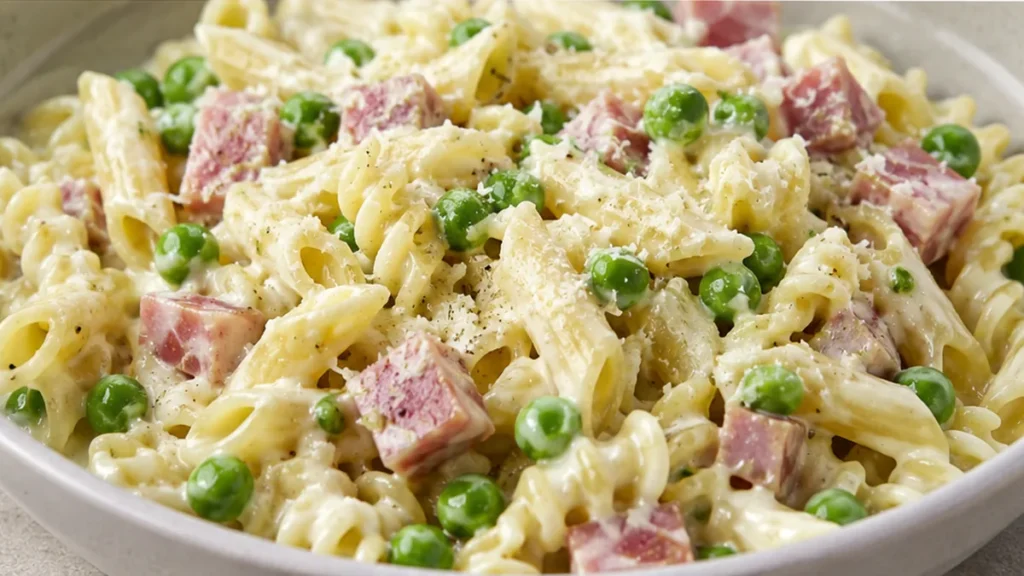
Creamy ham and pasta is a delightful and comforting dish that brings together simple ingredients for a truly satisfying meal. This recipe offers a harmonious blend of savory ham, sweet peas, and a rich, velvety sauce that clings perfectly to every piece of pasta. It’s an ideal choice for busy weeknights when you need something delicious on the table without a lot of fuss. I’ve found that the key to a truly great creamy ham and pasta lies in balancing the saltiness of the ham with the sweetness of the peas and the richness of the cream. My first attempt resulted in a sauce that was a bit too thin, but adding a touch more pasta water at the end helped it emulsify beautifully. This dish truly showcases how minimal effort can yield maximum flavor, making creamy ham and pasta a family favorite.
Key takeaways
- Cook pasta to al dente and reserve starchy water.
- Use reserved pasta water to emulsify and adjust sauce consistency.
- Add parmesan cheese off heat or on very low heat to prevent breaking.
- Incorporate frozen peas at the very end to maintain color and texture.
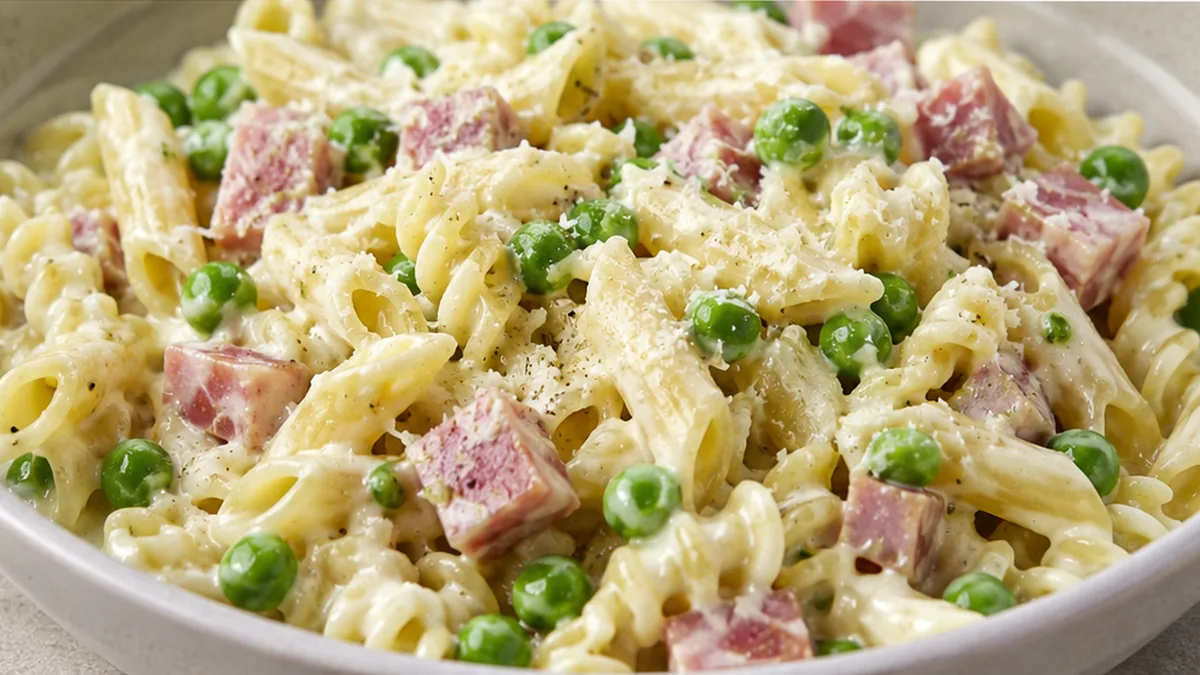
Creamy Ham & Pea Pasta: Your New Weeknight Obsession!
Ingredients
Method
- Bring a large pot of salted water to a boil then add the pasta and cook until it’s just shy of al dente – the pasta will finish cooking completely in the sauce. Before draining: carefully scoop out 1 cup pasta cooking water then drain the pasta and set it aside.
- Meanwhile, melt the butter in a large skillet with high sides over medium-high heat. Add the ham then saute until hot, 3-4 minutes. Add the garlic then saute until very fragrant, 1 minute. Add the peas then saute until hot, 1-2 minutes.
- Add the heavy creamy then bring to a simmer while stirring constantly. Once simmering, turn the heat down slightly then cook while stirring until the cream has slightly thickened and reduced, 2-3 minutes. Add the parmesan cheese then stir to combine.
- Add the drained pasta plus a splash of pasta cooking water (start with 2-3 Tablespoons) into the skillet then cook while stirring until the pasta is cooked through and the sauce clings to the pasta, 4-5 minutes. Add more pasta cooking water as needed to cook the pasta through and create a light sauce. Add pepper and a little salt then let the dish sit and the sauce thicken for 5 minutes before serving. The pasta will continue to absorb the sauce as it cools.
Notes
– Storage: Leftovers can be stored in an airtight container in the refrigerator for up to 3 days. Reheat gently on the stovetop with a little extra cream or water. Nutrition information is an estimate, calculated automatically. Values vary with brands, substitutions and portion sizes.
The Technique That Makes It
The success of this creamy ham and pea pasta hinges on two key techniques: proper pasta cooking and building a stable emulsion for the sauce. Pasta Hydration and Starch Release: Cooking the pasta to al dente is crucial. Overcooked pasta becomes mushy and releases too much starch, which can lead to a gummy sauce. Undercooked pasta will continue to cook in the hot sauce, potentially becoming overdone. Reserve about 1 cup of the starchy pasta water before draining. This water is not just for thinning the sauce; the starch in it acts as a binder, helping to emulsify the fats from the butter and cream with the cheese and other liquid ingredients. When you add the reserved pasta water gradually to the sauce, it helps to create a smooth, cohesive, and glossy coating for the pasta, rather than a greasy or watery one. Emulsification and Heat Control: The sauce relies on the fat from the butter and heavy cream to carry flavor. Adding the parmesan cheese off the heat or on very low heat is vital. High heat can cause the cheese to break, becoming oily and grainy. By incorporating the cheese into the warm (not boiling) cream and butter mixture, along with a splash of the reserved pasta water, you create an emulsion. The lecithin in the egg yolks (if using an egg-based sauce, though not in this recipe) or the proteins and starches in the cheese and pasta water help stabilize this mixture, preventing the fat and water components from separating. The residual heat of the drained pasta and the sauce is enough to melt the cheese and create a creamy coating without overcooking the ingredients.
Troubleshooting
- Problem: Sauce is too thick or clumpy. Fix: Gradually whisk in reserved pasta water, a tablespoon at a time, until the desired consistency is reached. The starch in the water will help loosen and smooth the sauce.
- Problem: Sauce is greasy or separated. Fix: Remove the pan from the heat immediately. Whisk vigorously, adding a splash of pasta water or a bit more cheese. Gentle heat and constant agitation are key to re-emulsifying.
- Problem: Pasta is mushy. Fix: This is difficult to fix once cooked. For future attempts, ensure you cook the pasta to al dente and reserve pasta water before draining. Avoid over-stirring the pasta once the sauce is added.
- Problem: Peas are too hard or too mushy. Fix: Add frozen peas during the last minute or two of pasta cooking time, or add them to the sauce just before serving to warm through. This preserves their bright color and tender-crisp texture.
Substitutions
- Ham: Diced cooked chicken or turkey can be used instead of ham. The flavor profile will be milder, and you may want to add a pinch of smoked paprika for depth.
- Heavy Cream: Half-and-half can be substituted for heavy cream, but the sauce will be less rich and potentially thinner. You may need to use slightly less pasta water or add a touch more cheese to thicken.
- Parmesan Cheese: Pecorino Romano offers a sharper, saltier flavor. Grana Padano is a good alternative with a similar texture and slightly milder taste. Ensure any substitute is finely grated for smooth melting.
- Frozen Peas: Fresh peas can be used, but they will need to be blanched or steamed separately until tender before adding to the sauce to ensure they are cooked through.
Pro tips
- Don’t rinse your pasta! The starchy water is crucial for creating a silky sauce that clings perfectly. – If your sauce becomes too thick, use a splash more reserved pasta water to thin it out to your desired consistency.
- Storage: Leftovers can be stored in an airtight container in the refrigerator for up to 3 days. Reheat gently on the stovetop with a little extra cream or water.
This Creamy Ham & Pea Pasta is a testament to how simple ingredients can create extraordinary comfort food. Give it a try and share your own weeknight pasta creations with us!
Frequently asked questions
Can I use pre-shredded Parmesan cheese?
While pre-shredded cheese is convenient, it often contains anti-caking agents that can prevent it from melting smoothly into the sauce, potentially leading to a grainy texture. For the creamiest sauce, always opt for freshly grated Parmesan cheese.
What if I don’t have any ham steak?
You can substitute diced cooked ham from the deli counter, or even leftover baked ham. Ensure it’s diced into small, uniform pieces. The key is that the ham is already cooked and just needs to be heated through in the sauce.
How can I make the sauce richer?
For an even richer sauce, you can add a tablespoon or two of cream cheese along with the heavy cream and Parmesan. Alternatively, a small knob of butter added at the very end, whisked in until melted, can add extra gloss and richness.
Is it possible to make this dish vegetarian?
Yes, you can omit the ham and sauté some mushrooms or a diced zucchini in the butter before adding the garlic. Ensure you still use the pasta water and cheese to create a creamy sauce base.
Try this next: Creamy Italian Pasta Salad – GF Dream!
More from Gluten-Free Pasta & Pizza →