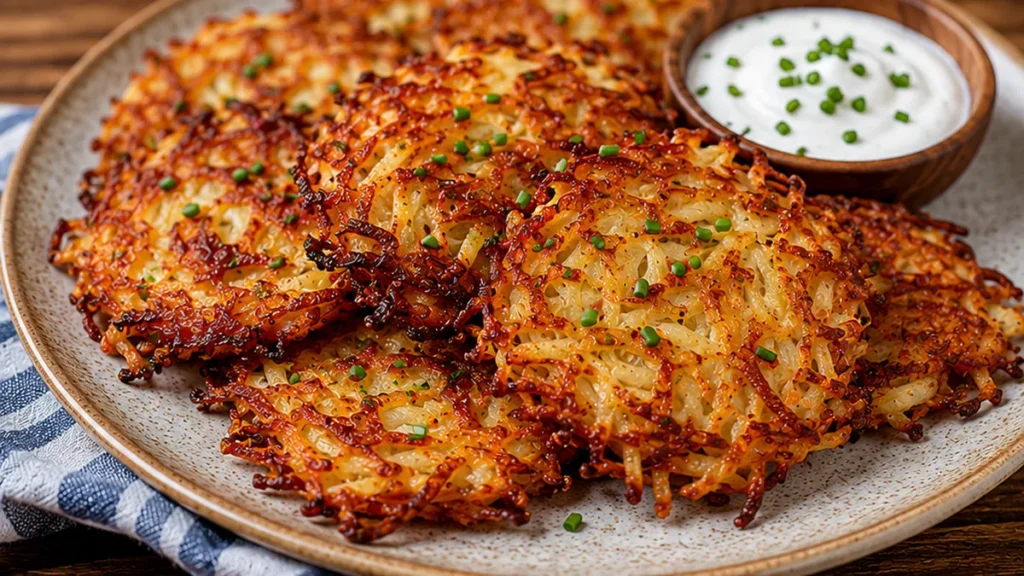
Discover the ultimate gluten-free potato latkes recipe that will become a family favorite. These latkes are incredibly crispy on the outside and perfectly fluffy on the inside, all without a hint of gluten. This recipe simplifies the process of making traditional potato latkes, ensuring everyone can enjoy this comforting dish. Perfect for holidays or a special weeknight meal, these potato latkes are worth making.
Key takeaways
- Squeeze excess moisture from grated potatoes for crispiness.
- Fry latkes in hot oil (350-375°F) and in batches.
- Ensure adequate binder (egg, flour) and seasoning.
- Serve immediately for best texture.
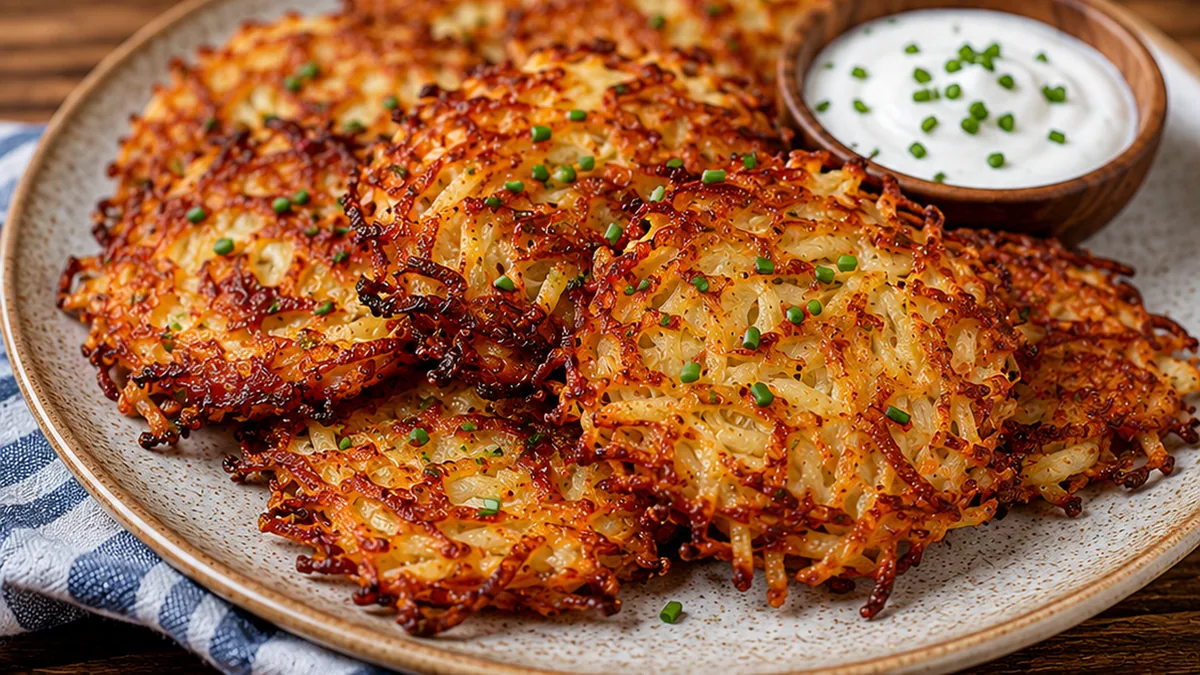
Crispy Potato Latkes: The ULTIMATE Gluten-Free Dream!
Ingredients
Method
- Peel and grate the russet potatoes until you have 4 cups loosely packed. Place grated potatoes in a large bowl, cover with cold water, and let soak for 10 minutes to rinse out excess starch.
- Grate the white onion until you have ¼ cup of grated onion.
- Drain the water from the grated potatoes. Place the grated potatoes and onion in a cheesecloth and squeeze out ALL excess liquid until dry.
- In a large bowl, combine the squeezed potato-onion mixture with the eggs, gluten-free flour, salt, and pepper. Stir until everything is well combined.
- Line a large baking sheet with parchment paper. Use a ¼-cup measuring cup to portion the mixture.
- Squeeze out any remaining excess liquid from each portion before placing it onto the parchment-lined baking sheet. Shape each latke to be about ½” thick for crispy edges and a soft middle.
Notes
– Use russet potatoes for the best texture and starch content.
– Fry the latkes in hot oil (around 375°F or 190°C) to ensure they cook through quickly and get golden brown. Allergens: Eggs, Soybeans. Nutrition information is an estimate, calculated automatically. Values vary with brands, substitutions and portion sizes.
The technique that makes it
The key to achieving truly crispy potato latkes lies in managing moisture and ensuring even cooking. Potatoes, particularly russets, contain a significant amount of starch and water. The first crucial step is to grate the potatoes and onion. For the crispiest texture, it’s essential to extract as much liquid as possible from the grated mixture. After grating, place the mixture in a fine-mesh sieve or cheesecloth and squeeze firmly. This removes excess water, preventing the latkes from becoming soggy and ensuring they develop a crisp exterior when fried. The starch released during grating, when not overly diluted by water, also contributes to binding and crispness. The gluten-free flour acts as a binder, but using too much can lead to a gummy texture. The correct ratio of potato to binder is vital. When frying, the oil must be hot enough (around 350-375°F or 175-190°C) to quickly sear the outside of the latke, creating a golden-brown crust and pushing moisture out. If the oil is too cool, the latkes will absorb excess oil and become greasy, rather than crispy. Frying in batches is also important to avoid overcrowding the pan, which lowers the oil temperature and hinders crisping.
Troubleshooting
- Latkes are soggy and greasy: This usually means the oil temperature was too low, or the pan was overcrowded. Ensure your oil is adequately heated before adding latkes and fry them in batches, leaving space between each one. Also, ensure you’ve squeezed out as much liquid as possible from the grated potatoes.
- Latkes are falling apart: Insufficient binder or too much moisture are the common culprits. Make sure your eggs are well incorporated and that you’ve squeezed the grated potato mixture thoroughly. If the mixture still seems too wet, you can add a tiny bit more gluten-free flour, but be cautious not to add too much.
- Latkes are unevenly cooked or burnt on the outside, raw inside: This indicates the oil temperature is too high. Reduce the heat slightly to allow the inside to cook through before the exterior burns. Ensure the latkes are of a consistent thickness for even cooking.
- Latkes taste bland: While salt and pepper are included, the natural sweetness of the potato and onion can sometimes dominate. Ensure you’ve seasoned adequately, and consider serving with strongly flavored accompaniments like sour cream and applesauce.
Substitutions
- Potatoes: While russets are ideal for their starch content and texture, you can substitute with Yukon Golds. They have a slightly creamier texture and may result in a less uniformly crisp latke, but will still be delicious.
- Onion: Shallots can be used for a milder, more nuanced onion flavor. Alternatively, for a different aromatic profile, a small clove of garlic, finely minced, can be added, though this will alter the traditional flavor.
- Gluten-Free All-Purpose Flour: A blend of rice flour and tapioca starch (e.g., 3 parts rice flour to 1 part tapioca starch) can be used as a binder. Alternatively, a small amount of potato starch or cornstarch can also work, but use sparingly to avoid gumminess.
- Vegetable Oil: Canola oil or any neutral-flavored high-smoke-point oil like grapeseed or sunflower oil are suitable alternatives for frying. For a richer flavor, clarified butter (ghee) can be used, but it has a lower smoke point and requires careful temperature monitoring.
Pro tips
- Squeeze out as much liquid as possible from the grated potatoes and onions. This is key for crispy latkes!
- Use russet potatoes for the best texture and starch content.
- Fry the latkes in hot oil (around 375°F or 190°C) to ensure they cook through quickly and get golden brown.
Enjoy these delicious gluten-free potato latkes as a side dish or appetizer. They are versatile and always a crowd-pleaser!
Try this next: Gluten-Free Beer Cheese Dip Recipe
More from Gluten-Free Snacks & Sides →
Frequently asked questions
Can I make latke batter ahead of time?
It’s best to prepare the latke batter just before frying for optimal crispiness. The potatoes will oxidize and turn grey if left in the batter for too long. If you absolutely must, cover it tightly and refrigerate for no more than an hour, but be prepared for a slightly less bright color.
What oil is best for frying latkes?
A neutral oil with a high smoke point is ideal for achieving crispy latkes. Canola oil, vegetable oil, or peanut oil are excellent choices. Avoid olive oil as its smoke point is too low and it can impart an undesirable flavor. Ensure the oil is hot but not smoking before adding the latkes.
How do I store leftover latkes?
Store cooled latkes in a single layer on a baking sheet lined with paper towels, then transfer to an airtight container or resealable bag. Refrigerate for up to 3 days. Reheat them in a single layer on a baking sheet in a preheated oven at 375°F (190°C) for about 5-10 minutes until crisp again.
How can I tell when latkes are done?
Latkes are done when they are golden brown and crispy on both sides. This typically takes 3-5 minutes per side, depending on the thickness and the heat of your oil. Carefully lift one with a slotted spoon to check the color and texture. They should feel firm to the touch.